
5 Co-Parenting Conflicts That Hurt Kids Most
It's a Tuesday evening. Your eight-year-old is sitting at the kitchen table, supposedly doing homework, but she hasn't written a word. She's quiet—too quiet. Finally, she asks: "Mom, are you and Dad going to fight at my recital?"
She's not thinking about her multiplication tables. She's thinking about whether the two people she loves most will make her feel safe or embarrassed this weekend. And she's been thinking about it all day.
Most co-parents genuinely believe they're shielding their children from conflict. But research consistently shows that kids absorb far more than adults realize. A 2023 study published in the Journal of Family Psychology found that children exposed to ongoing interparental conflict—even low-level tension—showed elevated cortisol levels and increased anxiety symptoms within six months. The co-parenting conflicts that hurt kids most aren't always explosive arguments. They're often the slow, simmering disputes that parents dismiss as "just adult stuff."
This article breaks down the five most damaging patterns, explains what they look like from your child's perspective, and gives you concrete steps to interrupt the cycle.
Key Takeaways
- Schedule inconsistency creates chronic anxiety in children, not just inconvenience—kids internalize unpredictability as a reflection of their own worth.
- Using your child as a messenger or information source forces them into a loyalty bind that damages their relationship with both parents.
- Badmouthing your co-parent in front of your child doesn't win your child's alliance; it fractures their sense of identity.
- Disagreements about rules and discipline between households are less damaging when each parent provides internal consistency, even if the two homes differ.
- Financial conflict that spills into a child's awareness teaches them that they are a burden, not a priority.
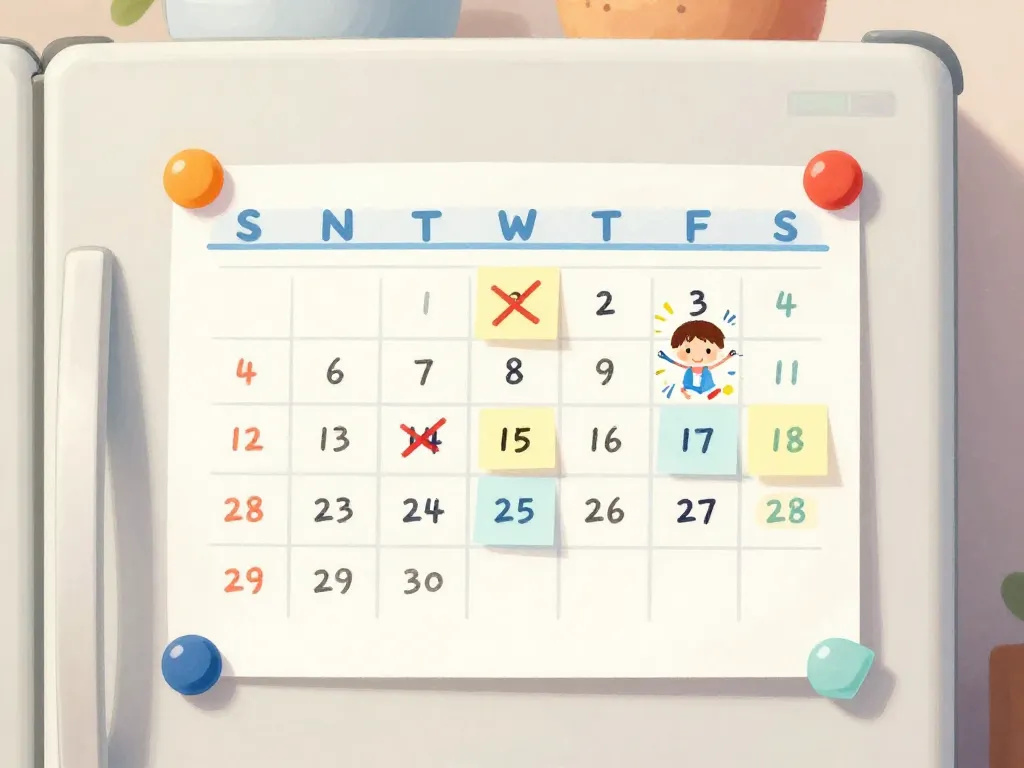
1. The Schedule Tug-of-War: When Inconsistency Becomes the Norm
What It Looks Like From the Outside
One parent regularly shows up late for pickups. The other retaliates by making last-minute changes. Holidays become negotiations that stretch into December. Weekend swaps are proposed, rejected, counter-proposed, and left unresolved until the morning of.
What Your Child Actually Experiences
For a child, an unpredictable schedule doesn't feel like a logistics problem. It feels like the ground shifting beneath their feet. Children rely on routine to build a sense of safety, and when transitions between homes are chaotic, they begin to associate moving between parents with stress rather than love.
Consider a child named Marcus, age ten. His parents frequently changed the custody schedule based on work conflicts and social plans. Marcus started packing a bag every night "just in case," even on days he wasn't supposed to transition. His teacher noticed he couldn't focus on Fridays—the day plans most often changed.
Marcus wasn't being dramatic. His nervous system was doing exactly what it's designed to do: stay on high alert when the environment is unpredictable.
What You Can Do Today
- Establish a shared digital calendar that both parents update at least 48 hours before any change. Treat the calendar as a contract, not a suggestion.
- Create a "change request" protocol. Agree in writing that schedule changes require a 72-hour notice window except in genuine emergencies. Define what counts as an emergency.
- Tell your child the plan directly. Don't let them find out where they're sleeping tonight through overheard phone calls or last-minute texts. A simple "Here's what this week looks like" conversation on Sunday evening can dramatically reduce their anxiety.
- When a change is unavoidable, name it honestly. "Dad's work schedule shifted, so you'll be here tonight instead of tomorrow. I know that's different from what we said, and I'm sorry for the change." Acknowledgment matters more than perfection.
2. The Little Messenger: Putting Kids in the Middle of Adult Communication
What It Looks Like From the Outside
"Tell your father he still owes me for soccer registration." "Ask your mom if she's actually going to let you come this weekend." "What did Dad say about the summer schedule?"
Sometimes it's subtler: a sigh when the child mentions the other parent's name, a pointed silence, a facial expression that says everything words don't.
What Your Child Actually Experiences
When a child is used as a go-between, they're not just carrying a message. They're carrying the emotional weight of two adults who can't—or won't—talk to each other. Every relayed message forces the child to read the room, translate emotions, and decide which parent to worry about disappointing.
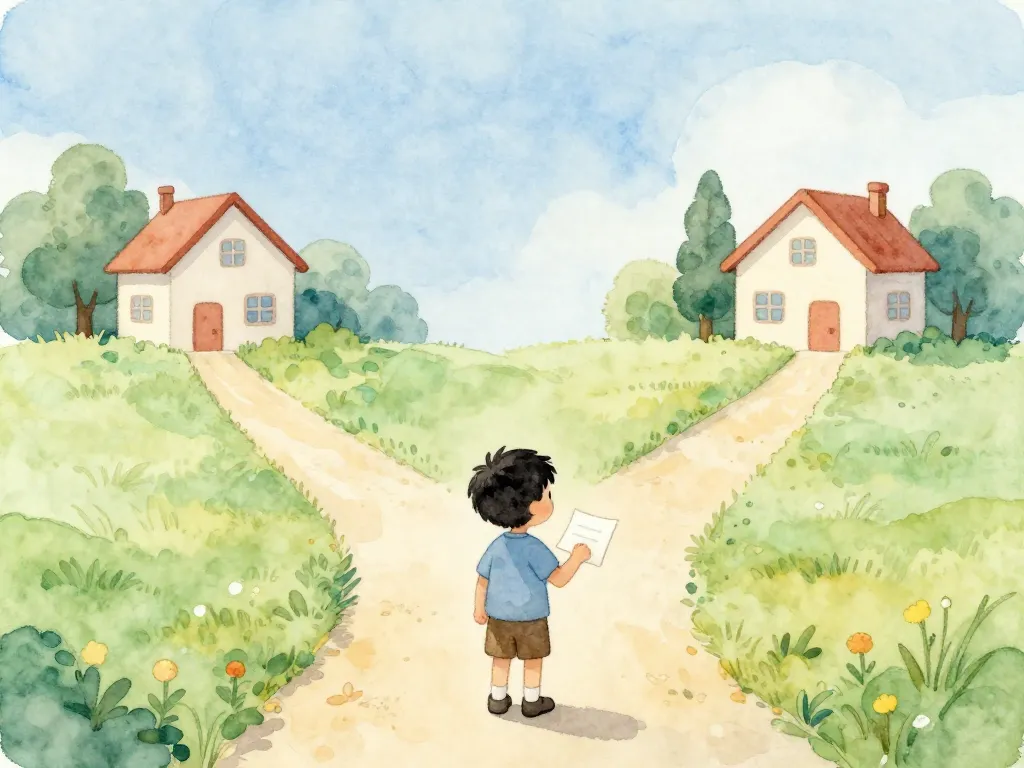
Researchers call this triangulation, and its effects are well-documented. Children caught in the middle report feeling responsible for their parents' emotions, guilty for loving both parents, and exhausted from managing information flow. Over time, many develop people-pleasing behaviors or withdraw entirely.
A twelve-year-old named Priya once described it to a family therapist this way: "I feel like a spy who works for both sides. And both sides think the other side is the enemy. But I love both sides."
What You Can Do Today
- Commit to direct, adult-to-adult communication for all logistics. Text, email, or a co-parenting app—pick a channel and use it consistently. Tools like Servanda can help co-parents create structured, written agreements that reduce the need for back-and-forth negotiation through your child.
- Practice the "would I hand this note to a coworker's kid?" test. If you wouldn't ask a colleague's child to relay a financial or scheduling message to their parent, don't ask your own child to do it either.
- When your child voluntarily shares information from the other household, respond neutrally. "Thanks for telling me" is almost always a better response than follow-up questions. Resist the urge to investigate.
- If your co-parent uses your child as a messenger, don't correct the behavior through the child. Instead, contact your co-parent directly: "I noticed some messages are coming through [child's name]. Can we handle scheduling through text instead?"
3. Badmouthing: The Conflict Kids Internalize as Identity
Why This One Cuts Deepest
Of all the co-parenting conflicts that hurt kids, badmouthing is perhaps the most corrosive—because children don't just hear criticism of their other parent. They hear criticism of half of themselves.
A child is a biological and emotional blend of both parents. When one parent says, "Your mother is so irresponsible," the child hears an implicit question: Am I irresponsible too? When one parent mocks the other's habits, choices, or character, the child's internal identity map—this is where I come from, this is who made me—starts to crack.
The Spectrum of Badmouthing
Badmouthing isn't always obvious insults. It exists on a spectrum:
| Level | Example | What the Child Absorbs |
|---|---|---|
| Overt | "Your dad is a liar and always has been." | "One of my parents is a bad person, and I'm half that person." |
| Passive | Eye roll when child mentions other parent's new partner | "Talking about Dad/Mom makes people upset. I should hide parts of my life." |
| Subtle | "Well, that's how things work at your mother's house." | "My two homes are opponents. I have to pick a team." |
| Displaced | Letting a grandparent or new partner badmouth the co-parent without correcting it | "The adults around me agree that my other parent is a problem." |
What You Can Do Today
- Adopt a "sealed lips" policy around your child regarding your co-parent's character. You can feel whatever you feel. Vent to a therapist, a friend, a journal. But not to your child. Not even indirectly.
- Monitor your nonverbal reactions. Children are expert readers of facial expressions. Practice a neutral response when your child mentions the other parent's home, partner, or decisions.
- If you've already badmouthed your co-parent in front of your child, repair it directly. "I said something unkind about your dad last week. That wasn't fair, and it wasn't your job to hear that. Your dad loves you, and I shouldn't have said that."
- Set boundaries with extended family. Grandparents, aunts, uncles, and new partners need to follow the same rule. Your child's emotional safety is not a group discussion topic.
4. The Rules War: Conflicting Discipline and Expectations
What It Looks Like From the Outside
At Mom's house, bedtime is 8:30, screens are limited, and homework happens before play. At Dad's house, the schedule is looser, bedtime is flexible, and weekends are a free-for-all. Neither parent is wrong, exactly—but both are frustrated that the other "undermines" their approach.
What Your Child Actually Experiences
Here's what's surprising: research shows that different rules in different homes are not inherently harmful. Children are remarkably adaptable. They navigate different expectations at school, at a friend's house, and at grandma's house without lasting confusion.
What is harmful is when the difference becomes a weapon.
When one parent says, "I can't believe your mother lets you stay up that late," the child doesn't hear concern about sleep. They hear: My parents are fighting again, and I'm the reason.
When parents undermine each other's rules in real time—"Don't worry about what Dad said, you can have the candy"—the child learns that rules are meaningless and that adults can't be trusted to hold a boundary.
What You Can Do Today
- Focus on internal consistency rather than cross-household uniformity. Your rules should be clear, predictable, and compassionate within your home. You don't need identical rules in both houses—you need reliable rules in each one.
- Identify 2-3 non-negotiable shared agreements. Most co-parents can agree on the big things: seatbelts, age-appropriate content, medication schedules, school attendance. Write those down. Let the rest go.
- Never use your rules as evidence of superior parenting. "At least in this house, we..." is a sentence that should never reach your child's ears.
- When your child tests boundaries by citing the other parent's rules ("But Dad lets me!"), respond without taking the bait: "That may be how it works at Dad's house, and that's okay. Here's how it works here."
5. Financial Conflict: When Money Stress Becomes the Child's Burden
What It Looks Like From the Outside
Child support disputes. Arguments about who pays for extracurriculars. Passive-aggressive comments about the other parent's spending. A child asking for new cleats and hearing, "Ask your father—he's the one with money."
What Your Child Actually Experiences
Financial conflict between co-parents teaches children one devastating lesson: I am expensive, and I am the reason my parents fight.
Children don't understand the nuances of child support calculations, income disparities, or legal agreements. What they understand is tone. And when money conversations carry resentment, bitterness, or contempt, children absorb a toxic conclusion: their needs are a problem.
A fourteen-year-old named Deon stopped asking for anything—school supplies, new shoes, field trip fees—because every request triggered a text exchange between his parents that left his mother crying and his father angry. Deon's grades dropped. He told a counselor he felt "guilty for needing things."
What You Can Do Today
- Make all financial discussions completely invisible to your child. Every conversation about money—child support, expenses, reimbursements—should happen through a private channel your child never accesses.
- Never link your child's request to the other parent's financial obligation. If your child asks for soccer registration, your answer should be about soccer, not about who's paying. Work out the money with your co-parent separately.
- Create a shared expense protocol. Agree in advance on a method for handling costs that fall outside regular support: how requests are made, what the approval timeline is, and how reimbursement works. Written agreements prevent repeated arguments.
- If finances are genuinely tight, be honest without blaming. "We need to choose between basketball and art this semester because our budget is limited" is honest. "We can't afford it because your dad doesn't pay what he should" is weaponized.
The Compound Effect: Why These Conflicts Do More Damage Together
Rarely does only one of these patterns exist in isolation. A schedule conflict spills into a financial argument, which triggers badmouthing, which leads to using the child as a messenger. The conflicts compound, and the child experiences not five separate problems but one overwhelming environment of instability.
The antidote isn't perfection. No co-parent gets it right every time. The antidote is pattern interruption—recognizing when you've slipped into one of these dynamics and correcting course before it calcifies into a habit.
Every time you choose to handle a disagreement outside your child's awareness, you deposit something into their emotional bank account. Every time you respond to a provocation with restraint instead of retaliation, your child's nervous system gets the message: I am safe. The adults in my life can handle this.
Frequently Asked Questions
How do co-parenting conflicts affect children long-term?
Children exposed to sustained co-parenting conflict are at higher risk for anxiety, depression, difficulty trusting relationships, and lower academic performance. The effects aren't limited to childhood—longitudinal studies show that unresolved parental conflict can shape attachment patterns well into adulthood. The good news is that reducing conflict at any stage produces measurable improvements in a child's well-being.
What should I do if my co-parent refuses to cooperate?
Focus on what you can control. You can't force your co-parent to change, but you can stop participating in destructive patterns from your side. Shift to a parallel parenting approach: minimize direct communication, use written channels for logistics, and don't engage with provocations. If your co-parent's behavior is harmful to your child, document patterns and consult a family law attorney or mediator.
Is it ever okay to have different rules at each parent's house?
Absolutely. Different households having different routines is normal and manageable for most children. What matters is that each home is internally consistent and that neither parent uses their rules to criticize the other. Children adapt well to "at Mom's house we do X, at Dad's house we do Y" as long as no one is framing the difference as a competition.
How do I know if my child is being affected by co-parenting conflict?
Watch for behavioral shifts: withdrawal, increased anxiety around transitions, reluctance to talk about the other parent's home, people-pleasing behaviors, sleep disruptions, or declining school performance. Some children become parentified—taking on the role of caretaker or mediator between their parents. If you notice these signs, consider connecting your child with a therapist who specializes in children of divorce.
At what age do kids start noticing co-parenting conflict?
Earlier than most parents expect. Children as young as two can detect tension between caregivers through tone of voice, body language, and emotional shifts. By age six or seven, most children can identify and describe conflict between their parents in detail. Teenagers may appear unfazed but often internalize conflict and express it through withdrawal, irritability, or risk-taking behavior.
Moving Forward: Small Shifts, Significant Impact
You don't need to overhaul your entire co-parenting relationship overnight. Lasting change starts with one pattern, one conversation, one decision to handle something differently than you did last time.
Choose the conflict on this list that feels most familiar—the one that made you uncomfortable because you recognized it. Start there. Establish one new boundary, one new protocol, one new habit. Then build from it.
Your child doesn't need perfect co-parents. They need co-parents who are willing to put the child's experience at the center of every decision, even when—especially when—it's hard. The fact that you read this far suggests you're exactly that kind of parent.
The conflicts won't disappear. But your child's experience of them can transform entirely based on what you choose to do next.