
The Cofounder Dating Phase Most Startups Skip
You met at a hackathon. Or maybe a mutual friend introduced you. You riffed on an idea for three hours over coffee, and it felt electric — like finding the missing piece. Within two weeks, you'd split the equity 50/50, filed an LLC, and started building.
Six months later, you're barely speaking.
This story plays out thousands of times a year. According to research by Noam Wasserman, author of The Founder's Dilemmas, 65% of high-potential startups fail due to cofounder conflict — not market failure, not lack of funding, not bad product. The people. And the root cause is almost always the same: founders skipped the cofounder dating phase and went straight to marriage.
The good news? There's a practical way to stress-test a cofounder relationship before you're legally and financially entangled. This article walks you through exactly how to do it.
Key Takeaways
- Most cofounder breakups trace back to skipping the pre-commitment phase. Founders rush into partnerships based on excitement and overlapping skills, without testing for alignment on values, working styles, and conflict resolution.
- A structured 30-90 day "dating" period can surface dealbreakers early — before you've split equity, signed a lease, or raised money.
- The five critical alignment conversations cover vision, roles, money psychology, conflict style, and exit scenarios. Having them early is uncomfortable but far cheaper than having them with lawyers later.
- A trial project together is worth more than a hundred conversations. Building something small under real constraints reveals what words can't.
- Formalize what you've learned. The dating phase should end with a written agreement that captures decisions, not assumptions.
Why Founders Skip the Cofounder Dating Phase
Startup culture glorifies speed. "Move fast and break things." "Launch yesterday." When you meet someone who shares your enthusiasm and complements your skill set, slowing down feels like losing momentum.
But there are deeper psychological forces at work:
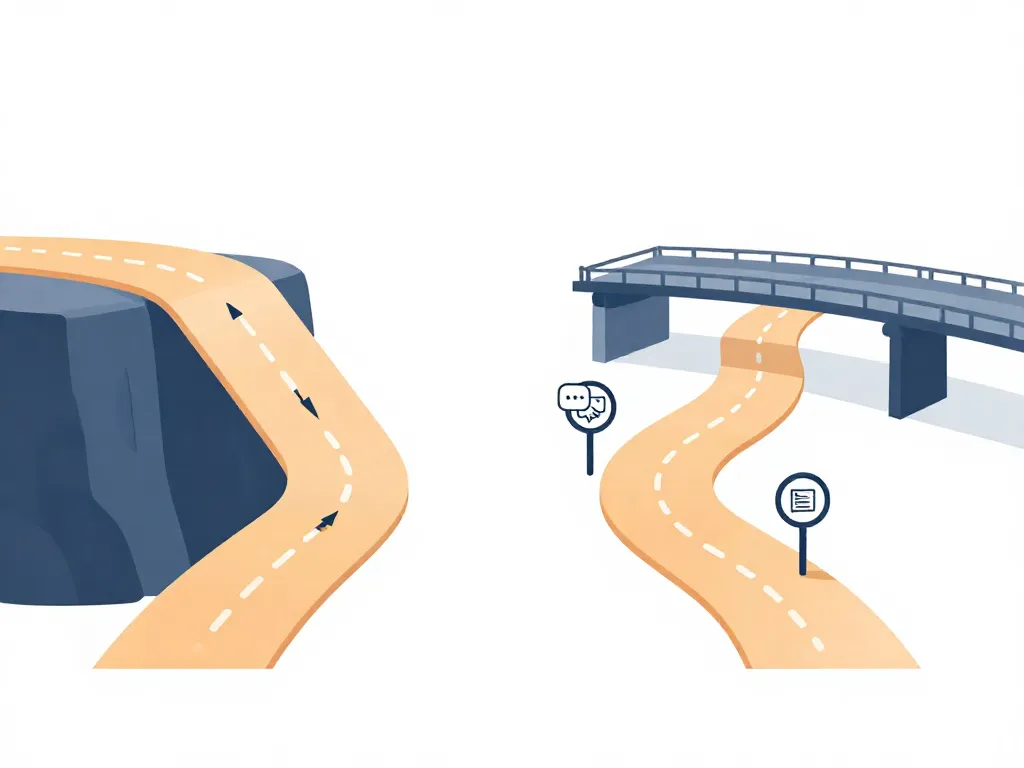
The Infatuation Bias
Early cofounder chemistry mirrors romantic infatuation. Neuroscience research shows that novelty and shared excitement trigger dopamine release — the same reward circuitry activated during new romantic relationships. You literally can't see red flags because your brain is too busy celebrating the match.
The Scarcity Mindset
"Good cofounders are impossible to find." This belief — repeated endlessly in founder communities — creates urgency that overrides due diligence. You've finally found someone who gets it, and you're afraid that if you pump the brakes, they'll move on.
The Awkwardness Avoidance
Asking someone hard questions about money, control, and worst-case scenarios feels transactional. It feels like you're saying, "I don't fully trust you." So most founders avoid it entirely, defaulting to vague verbal agreements and the assumption that they'll "figure it out as we go."
They don't figure it out. Or rather, they figure it out at the worst possible moment — when there's money on the table, employees watching, and lawyers charging by the hour.
The Pre-Commitment Framework: A 30-90 Day Cofounder Trial
Think of this as a structured probationary period — not because you doubt the other person, but because you respect the partnership enough to build it on a real foundation.
Phase 1: The Five Alignment Conversations (Week 1-2)
These aren't casual coffee chats. Set aside dedicated time for each one. Take notes. The goal isn't to agree on everything — it's to understand where you align, where you diverge, and whether those divergences are manageable.
Conversation 1: Vision and Time Horizon
- What does success look like in 3 years? In 10?
- Is this a "build to sell" or a "build to run" company?
- Are you optimizing for personal wealth, impact, lifestyle, or legacy?
- How long are you willing to work on this before pivoting or quitting?
A common dealbreaker surfaces here: one founder wants to build a venture-scale business and the other wants a profitable lifestyle company. Both are legitimate — but they're incompatible.
Conversation 2: Roles, Decision Rights, and Authority
- Who owns which domains?
- What happens when you disagree on a decision that spans both domains?
- Who has final say on hiring? On spending? On product direction?
- How do you feel about the CEO title, and what does it mean to you?
Conversation 3: Money Psychology
- How much runway do you personally have?
- What's your minimum acceptable salary once there's revenue?
- How do you feel about personal debt for the company?
- What's your relationship with financial risk — honestly?

Conversation 4: Conflict and Communication Style
- When you're frustrated, do you go quiet or confront directly?
- Describe your worst professional conflict. What happened?
- How do you prefer to receive critical feedback?
- What would you do if you thought I was making a serious mistake?
This conversation alone eliminates a shocking number of future blowups. A founder who processes conflict through silence paired with a founder who needs immediate resolution will struggle under pressure — not because either style is wrong, but because the mismatch creates a doom loop.
Conversation 5: The Prenup Conversation
- What happens if one of us wants to leave?
- What happens if one of us stops performing?
- How do we handle equity if we part ways at month 6 vs. year 3?
- What are our vesting terms, and do we both genuinely understand them?
Yes, this conversation is uncomfortable. But consider the alternative: a $50,000 legal battle over equity that was never properly discussed, which is exactly what happened to two Y Combinator founders in 2019 whose friendship and company both dissolved over a handshake equity split.
Phase 2: The Trial Project (Week 3-8)
Conversations reveal intentions. Working together reveals behavior.
Pick a small, bounded project that mirrors the pressure of actual startup work. This could be:
- Building and shipping an MVP feature in two weeks
- Running a small paid pilot with real customers
- Completing a competitive analysis and presenting a go-to-market strategy together
- Participating in a weekend startup competition
The project itself matters less than what it exposes. Pay attention to:
- Work ethic and pace. Does one person consistently outwork the other? Does that create resentment?
- Decision-making under pressure. Who freezes? Who rushes? Who consults?
- Quality standards. Is one person a perfectionist while the other ships rough drafts?
- Accountability. When something goes wrong (and it will), does each person own their part?
A pair of founders I spoke with — let's call them Maya and Derek — decided to run a three-week trial building a landing page and running $500 in ads before committing to their startup. During the trial, Maya discovered that Derek consistently agreed to deadlines and then missed them without communicating delays. She also noticed that when she raised it, he became defensive and redirected the conversation.
Maya walked away. It was painful — they'd been friends for years, and the idea was genuinely good. But she told me later: "If that pattern showed up in three weeks with zero stakes, imagine what it would look like during a fundraise."
She was right.
Phase 3: The Debrief and Decision (Week 8-12)
After the trial project, sit down for a structured retrospective. This isn't a performance review — it's a mutual assessment.
Ask each other:
- What surprised you about working together?
- What felt natural and energizing?
- What felt draining or frustrating?
- On a scale of 1-10, how excited are you to do this for the next five years?
- Is there anything you've been avoiding saying?
That last question is the most important. If either person can't answer it honestly, that's data in itself.
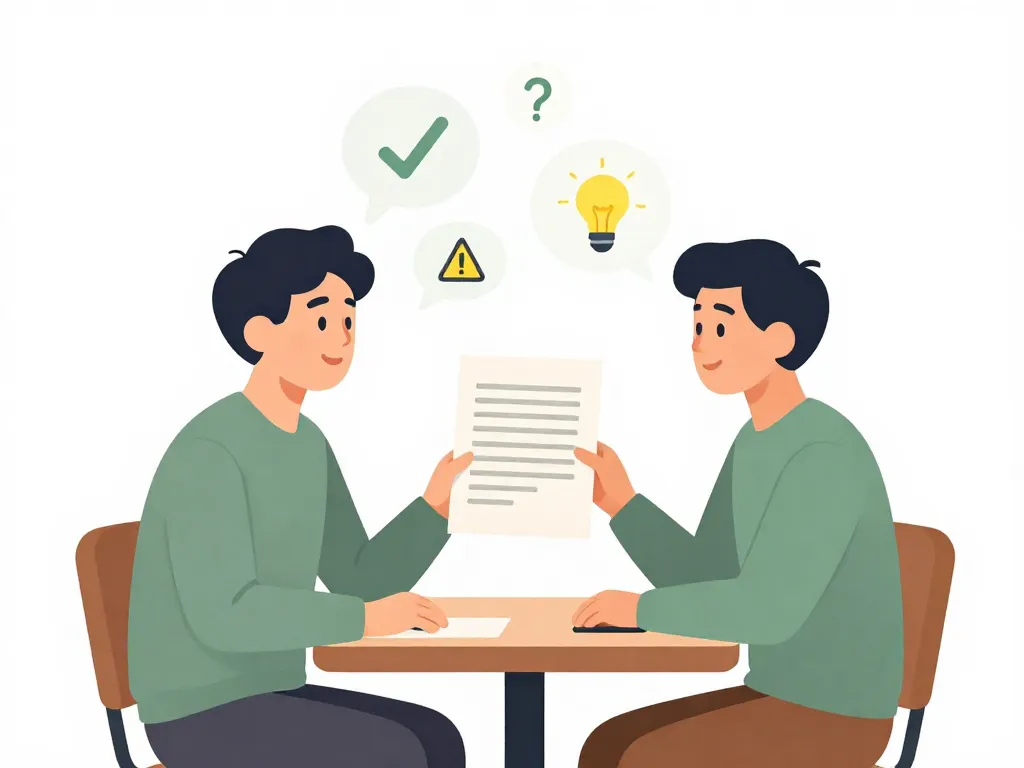
What to Formalize After the Dating Phase
If you decide to move forward, don't let the goodwill of the dating phase evaporate into another handshake. Write things down.
At minimum, document:
- Equity split and vesting schedule (4-year vesting with a 1-year cliff is standard, but discuss why you're choosing what you're choosing)
- Roles and decision-making authority
- Time and financial commitments — is everyone full-time? When?
- Exit and separation terms — what triggers a buyout, and how is equity handled?
- Dispute resolution process — how will you handle disagreements before they become legal disputes?
Tools like Servanda can help cofounders turn these conversations into structured written agreements, making it easier to formalize decisions while the relationship is healthy rather than scrambling to document them during a crisis.
The irony of cofounder agreements is that the best time to create one is when you least feel you need it.
Red Flags You Should Never Ignore During the Dating Phase
Not every incompatibility is a dealbreaker. But some patterns are reliably predictive of cofounder breakups:
- They resist putting anything in writing. "We trust each other, we don't need a contract" is not a green flag — it's a refusal to engage with reality.
- Your risk tolerances are dramatically different. One person wants to bootstrap; the other is already emailing VCs. This gap doesn't shrink under pressure.
- They talk about the startup as "my" company in conversations with others. Language reveals psychology.
- Feedback always flows one direction. If you're receiving criticism but your partner deflects or shuts down when you offer it, the power dynamic is already unhealthy.
- They disappeared during the trial project. Life happens. But if they went dark for a week during a low-stakes trial, that pattern will repeat when the stakes are high.
FAQ
How long should you "date" a cofounder before making it official?
Most experienced founders and investors recommend 30-90 days of structured collaboration before formalizing a partnership. The exact timeline matters less than the depth of stress-testing. A two-week hackathon under real pressure can reveal more than three months of casual coworking.
Can you do a cofounder trial if you're already working together?
Absolutely. If you've already started building, you can still retroactively apply this framework. Have the five alignment conversations, run a structured retrospective on how work has gone so far, and — most importantly — formalize your agreements if you haven't already. It's never too late to build a proper foundation, though it does get more expensive the longer you wait.
What's the most common reason cofounders break up?
Research consistently points to misaligned expectations rather than any single dramatic event. One founder expected a lifestyle business; the other wanted venture scale. One thought equity was settled; the other felt they deserved more. These disconnects fester silently for months before erupting, usually triggered by a funding event, a major hire, or a revenue milestone that forces the issue.
Should cofounders always have a vesting schedule?
Yes. Even if you're best friends. Even if you trust each other completely. A vesting schedule protects both parties by ensuring that equity is earned over time through continued contribution. Without it, a cofounder who leaves after three months could walk away with 50% of a company they barely helped build. Most investors will require one anyway.
How do you bring up the idea of a cofounder trial without offending someone?
Frame it as something you do, not something about them. "I've learned that the best partnerships start with a trial project — it helps me understand how I work with someone before we go all in. Can we try building something small together first?" Most serious potential cofounders will respect this. If someone is offended by the suggestion of due diligence, that reaction tells you something valuable.
Conclusion
The cofounder dating phase isn't about distrust. It's about building trust on evidence instead of enthusiasm.
The founders who take 30-90 days to stress-test alignment — through honest conversations, a real trial project, and a structured debrief — don't just avoid breakups. They build stronger partnerships, make better decisions under pressure, and enter their startup with the confidence that comes from knowing, not hoping, that they've chosen the right person.
Skipping this phase feels like saving time. In reality, it's borrowing time at a devastating interest rate — payable in legal fees, lost equity, and shattered friendships.
Your future cofounder is worth the diligence. And so are you.