
I Quit My Own Startup: What No One Tells You
I stopped sleeping around month fourteen. Not the dramatic, tossing-and-turning kind — the kind where you lie perfectly still at 3 a.m. running the same conversation with your cofounder through your head for the ninth time that week. The one where you said "I think we need to talk about equity," and they heard "I don't trust you." The one that ended with a door closing a little too hard.
By month eighteen, I quit my own startup. The company I had named, funded with my savings, and pitched to everyone I knew. I walked away — and for a long time, I couldn't tell anyone without feeling like I'd confessed to a crime.
Here's the thing: cofounder breakups happen in roughly 65% of startups. They are statistically normal. But we treat them like personal failures because no one writes the honest version of the story. This is the honest version.
Key Takeaways
- Quitting your own startup is not failure — it is often the most rational decision you can make when cofounder conflict becomes unresolvable.
- Your body will tell you before your brain does. Insomnia, weight changes, and chronic stress are real signals, not weakness.
- The absence of a written cofounder agreement makes everything worse. Formalize roles, equity, and exit terms before you need them.
- Walking away requires a plan — legal, financial, and emotional. Don't leave in a blaze of fury; leave with a strategy.
- Life after a startup breakup is not only survivable, it's often better. Most founders who leave go on to build stronger ventures or careers.
The Slow Erosion No One Warns You About
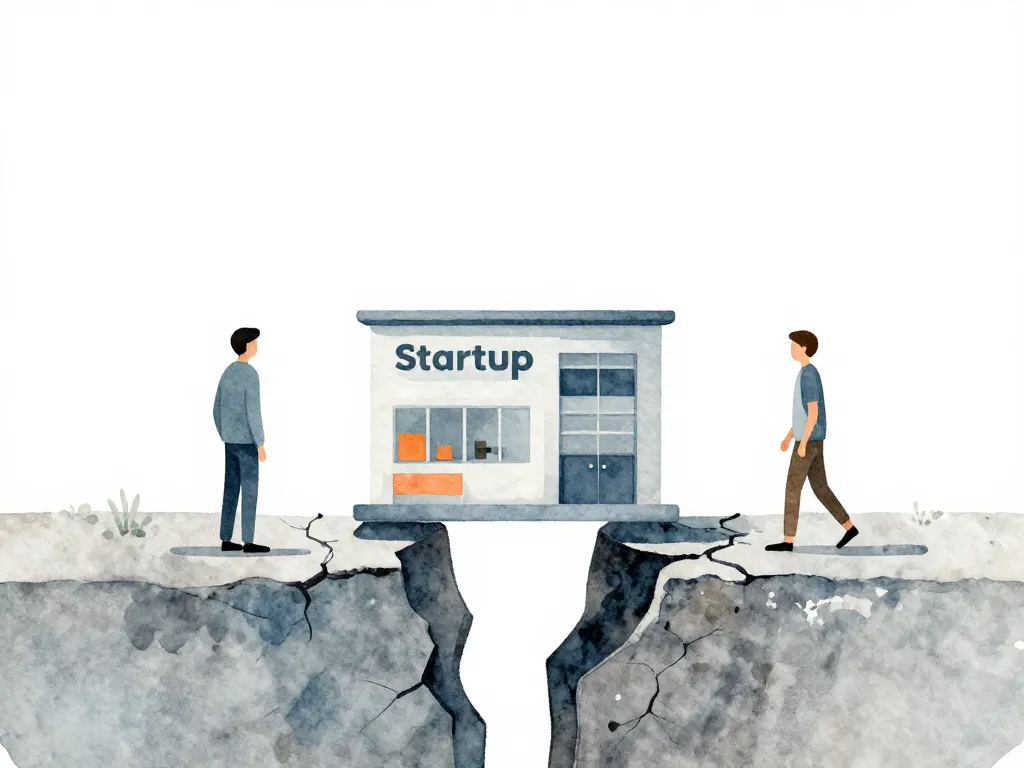
Cofounder conflict doesn't usually start with a screaming match. It starts with a slight misalignment — a different assumption about how decisions get made, or who owns what part of the vision — and compounds silently over months.
Consider two founders, let's call them Maya and Jordan. They started a SaaS company together after years of friendship. No formal operating agreement. No written equity split beyond a handshake. For the first year, shared excitement papered over every crack. Then revenue stalled, and suddenly every buried disagreement surfaced at once: who was working harder, whose strategy was right, who deserved more equity for the "real" work.
Maya started dreading Monday mornings. Jordan started making decisions without asking. Neither said "I want out" because both believed that wanting out meant they were weak.
This pattern is so common it's almost a template. The slow erosion — not the dramatic blowup — is what actually kills cofounder relationships.
What the erosion looks like day to day
- You avoid bringing up topics you know will cause tension
- Slack messages get shorter, then stop entirely on certain subjects
- You start building a mental case for why you're right and they're wrong
- You fantasize about what the company would look like without them
- You feel relief when they cancel a meeting
If you're reading this list and feeling a knot in your stomach, pay attention to that.
The Physical Toll Is Real — And It's Not Talked About Enough
Startup culture glorifies grinding through pain. But there's a difference between the productive discomfort of building something hard and the chronic distress of an unresolvable interpersonal conflict with someone who controls half your livelihood.
Founders in active cofounder conflict report:
- Sleep disruption in over 80% of cases
- Significant weight change (gain or loss)
- Increased anxiety and depression symptoms
- Strained relationships outside the company — partners, friends, family
- Decision paralysis — the inability to think clearly about anything because the conflict consumes all cognitive bandwidth
I personally lost twelve pounds in two months. Not from some disciplined routine — from forgetting to eat because my chest was tight from the moment I woke up. My partner at the time told me I had become "a different person." She was right.
When people ask me now, "How did you know it was time to leave?" the honest answer is: my body decided before I did.

Why Cofounders Stay Too Long
If leaving is so clearly the right call in many situations, why do cofounders stay trapped for months or years past the point of no return?
1. Identity fusion
When you build a startup, it becomes your identity. Introducing yourself at a dinner party, your LinkedIn headline, the answer to "so what do you do?" — it's all wrapped up in this thing. Leaving feels like amputating a part of yourself.
2. Sunk cost
You've poured money, time, relationships, and reputation into this venture. The human brain is notoriously terrible at writing off sunk costs. You think: If I just push through three more months, maybe things will shift.
3. Fear of public narrative
You know people will ask what happened. You know some will assume you were the problem. In tight startup ecosystems, reputational anxiety is a real and legitimate concern.
4. No exit playbook
Most cofounders have never done this before. There's no HR department. There's no standard resignation process. If you don't have a cofounder agreement that outlines exit terms — and most early-stage founders don't — you're staring at a legal and financial void.
5. Guilt
Especially if your cofounder is also your friend. Leaving feels like betrayal, even when staying is slowly destroying both of you.
The Moment I Actually Decided
For me, the tipping point wasn't one conversation. It was a Tuesday afternoon when I realized I had spent the entire day — eight hours — doing work designed to avoid interacting with my cofounder instead of work that actually moved the company forward. I was optimizing my schedule around a person, not a product.
I opened a blank document and wrote two lists:
What I'm getting from staying: - A title - The possibility that things improve - Avoiding an uncomfortable transition
What staying is costing me: - My health - My other relationships - My creative energy - My confidence in my own judgment - At least two years of opportunity cost
The second list was three times longer. Seeing it on paper made the decision feel less like quitting and more like math.
How to Leave Your Own Startup (Without Burning Everything Down)
If you're in this position right now, here's what I wish someone had told me.
Step 1: Get legal advice before you say a word
Before you tell your cofounder, talk to a startup attorney. Understand your equity position, your IP exposure, any vesting cliffs, and what your operating agreement (if you have one) says about departure. If you don't have a formal cofounder agreement, you need legal counsel even more urgently — because everything is ambiguous, and ambiguity breeds conflict.
Tools like Servanda can help cofounders create written agreements that prevent future conflicts — but even if you're past the prevention stage, formalizing your exit terms in writing is critical.
Step 2: Separate emotion from negotiation
Your cofounder may react with anger, guilt-tripping, bargaining, or genuine sadness. All of those are valid emotions. But your exit terms — equity, IP ownership, non-compete scope, transition timeline — need to be negotiated on facts, not feelings.
Write down your ideal terms and your walk-away terms before the conversation. Know your range.
Step 3: Have the conversation in person, with a plan
Don't send a Slack message. Don't ambush them in a meeting with investors. Have a private, face-to-face conversation where you:
- State your decision clearly (this is not a negotiation about whether you're leaving)
- Acknowledge what you built together
- Present a proposed transition plan
- Give them time to process before discussing terms
Step 4: Protect the team
If you have employees or contractors, they deserve clarity and stability. Work with your cofounder to create a joint communication plan. Don't let the team find out through Slack rumors or a mysterious all-hands.
Step 5: Grieve
This is a loss. Treat it like one. Talk to someone — a therapist, a mentor, a founder who's been through it. The startup ecosystem is full of people who have survived this exact experience and come out stronger. Find them.

What Happens After You Leave
The first two weeks were the hardest. I felt unmoored — no morning standup, no Slack channels pinging, no sense of purpose attached to a company name. I told people I was "taking some time to figure out next steps," which is founder code for "I'm terrified and grieving."
But then, slowly:
- Week three: I slept through the night for the first time in months.
- Month two: I started having ideas again — real ones, not defensive ones designed to prove my worth.
- Month four: I took a contract role that taught me an entirely new industry.
- Month eight: I started a new company. This time, with a signed cofounder agreement, a vesting schedule, and clear exit clauses. Lesson learned.
The narrative that quitting your startup means you weren't cut out for entrepreneurship is a lie. Most successful founders have a failed or abandoned venture in their past. What separates them is not that they never walked away — it's that they walked away deliberately, learned something real, and built better the next time.
What I'd Tell You If You're in This Right Now
If you're lying awake at 3 a.m. running the same conversation through your head, I want you to hear this:
- You are not a failure. The failure is staying in a situation that destroys you because you're afraid of what people will think.
- Your cofounder conflict is not unique. It feels isolating, but the majority of startups face this. You are not broken.
- Leaving is a skill, not a surrender. The way you leave — with clarity, legal preparation, and respect — defines your professional reputation far more than the fact that you left.
- The best time to formalize a cofounder agreement was day one. The second best time is right now. Whether you're staying or going, get your terms in writing.
Frequently Asked Questions
Is it normal for a cofounder to leave a startup?
Yes. Research from Noam Wasserman's The Founder's Dilemmas and data from startup accelerators suggest that cofounder turnover happens in the majority of early-stage startups. It's one of the most common events in a company's lifecycle — it's just rarely discussed publicly because of the stigma.
What happens to my equity if I quit my own startup?
It depends entirely on your cofounder agreement and vesting schedule. If you have a standard four-year vesting schedule with a one-year cliff, you keep whatever has vested. If you have no formal agreement, equity ownership can become a legal dispute. This is why having written terms is non-negotiable.
Can a cofounder breakup kill a startup?
It can, but it doesn't have to. Many companies survive — and even thrive — after a cofounder departure, especially if the transition is handled professionally. The companies that fail are typically the ones where the conflict drags on unresolved for months or where the departure becomes adversarial and public.
How do I tell investors my cofounder left?
Be direct and factual. Investors have seen this before — most experienced VCs consider cofounder dynamics a known risk. Present a clear plan for how responsibilities will be covered, and don't badmouth your former cofounder. A concise, professional narrative is always more compelling than a dramatic one.
Should I start another company after a cofounder breakup?
Many founders do, and often with better results. The key is to give yourself time to process the experience, identify what you'd do differently, and put structural protections in place from day one — written agreements, clear roles, and defined exit terms.
Moving Forward
Quitting my own startup was the hardest professional decision I've ever made. It was also one of the best. Not because the outcome was immediately positive — it wasn't. The first few months were disorienting and painful. But it gave me back my health, my clarity, and eventually, a better company built on a stronger foundation.
If you're in the thick of cofounder conflict right now, know that you have options. Leaving is one of them, and it's a legitimate one. But however you choose to move forward — whether that's repairing the relationship, restructuring roles, or walking away — do it with intention, legal protection, and written agreements in place.
You built something once. You can build again. And this time, you'll know where the fault lines are before the ground starts shaking.