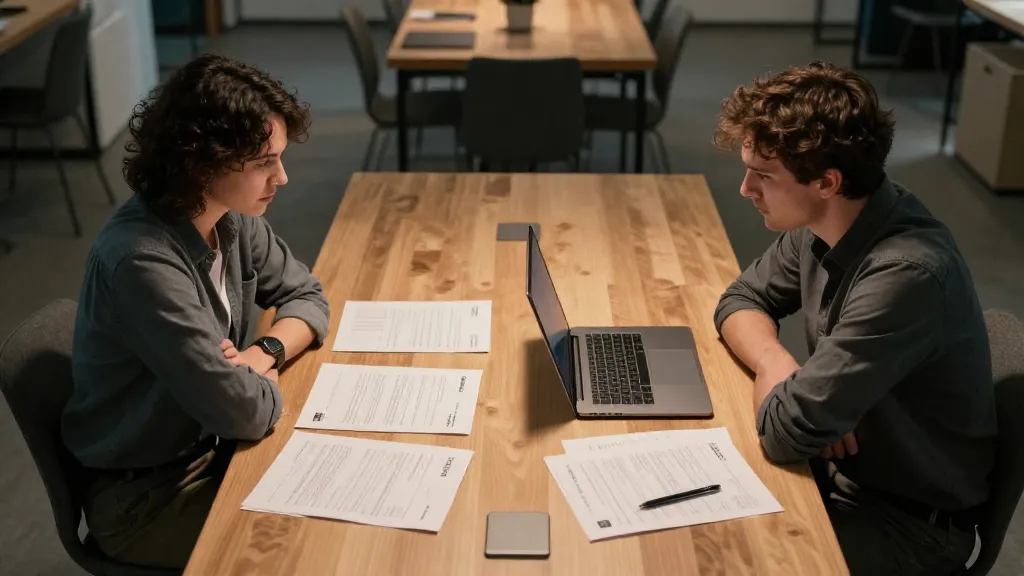
Cofounder Filed a Patent Without You: Now What?
You're scrolling through a patent database—maybe doing routine due diligence, maybe preparing for a fundraising round—and there it is. A patent application listing your cofounder as the sole inventor. The technology described? It's the core of what you built together. Your name is nowhere on it.
The shock hits first, then the anger, then the dread. If your cofounder filed a patent without you, you're facing one of the most destabilizing disputes a startup can experience. It strikes at the foundation of trust, ownership, and the future value of your company.
Before you fire off a confrontational text or call a litigation attorney: this situation is more common than you'd think, and it's not always malicious.
Why This Happens
Intentional Exclusion
Yes, sometimes a cofounder deliberately files alone to claim sole ownership of valuable IP. This might happen when:
- The relationship is already deteriorating and one founder is positioning for a split
- One cofounder plans to leave and take the technology with them
- There's a fundamental disagreement about who actually invented what
Honest Ignorance
More often than founders expect, the filing happens because of a misunderstanding of patent law. Your cofounder may genuinely believe:
- That whoever writes the code or builds the prototype is the sole "inventor" under patent law
- That listing the company as assignee is sufficient to protect both founders
- That inventorship is an administrative detail rather than a legal determination with real consequences
Bad Legal Advice (Or No Legal Advice)
Some patent attorneys focus narrowly on the claims and don't ask probing questions about who contributed to the inventive concepts. If your cofounder worked with an attorney independently, that attorney may have simply listed the person sitting across from them without investigating further.
Understanding the why matters because it shapes your strategy. A conversation with a cofounder who made a mistake looks very different from a negotiation with someone who's trying to cut you out.
Your Legal Rights When a Cofounder Files a Patent Without You
Patent law has specific rules about inventorship.
Inventorship Is a Legal Standard, Not a Business Decision
Under U.S. patent law (35 U.S.C. § 116), every person who contributes to the conception of at least one claim in a patent must be listed as an inventor. This isn't optional. It's not a courtesy. A patent with incorrect inventorship can be challenged and potentially invalidated.
The key word is conception—the formation of the definite and permanent idea of the complete invention. You don't need to have built the prototype. You don't need to have written the code. If you contributed to the core inventive idea, you have a legal right to be named.
What Counts as a Contribution to Invention
- Identifying the problem and proposing the novel solution approach
- Contributing a specific technical concept that became part of a patent claim
- Designing the architecture or method that makes the invention work
- Suggesting a non-obvious modification that distinguishes the invention from prior art
What Does NOT Count
- Providing funding
- Managing the business side while your cofounder invented
- Testing or validating someone else's fully-formed idea
- Reducing an invention to practice (building it) if you didn't contribute to conceiving it
Be honest with yourself here. If your cofounder truly conceived the invention independently and you contributed business strategy, marketing, or funding, you may not have an inventorship claim—but you likely still have ownership claims through your company's IP assignment agreements (if they exist).
Step-by-Step: What to Do Right Now
1. Document Everything Before You Say Anything
Before you confront your cofounder, gather evidence of your contributions to the invention. Look for:
- Emails and messages where you discussed the inventive concepts
- Whiteboard photos, sketches, or design documents
- Code commits with timestamps showing your contributions to the technical implementation
- Meeting notes or recordings where you proposed ideas that appear in the patent claims
- Pitch decks or investor materials that describe the invention and list you as a contributor
- Slack or Discord logs showing technical brainstorming sessions
Do this quietly and thoroughly. Save copies in a location your cofounder can't access or delete.
2. Read the Patent Application Carefully
Download the full application from the USPTO (or relevant patent office). Pay close attention to:
- The claims section: This is what defines the invention legally. Do any of these claims describe concepts you contributed to?
- The assignee: Is the patent assigned to the company, to your cofounder personally, or to no one yet?
- The filing date: How long ago was this filed? Has it been published? Has it been granted?
The assignee question is critical. If the patent is assigned to your company, the situation is less dire—you both own equity in the company that owns the IP. If it's assigned to your cofounder personally, that's a much bigger problem.
3. Consult an IP Attorney (Your Own, Not the Company's)
You need independent legal counsel. Not the company's attorney, not your cofounder's attorney. Your own. Look for a patent attorney who has experience with:
- Inventorship disputes
- Startup IP ownership conflicts
- Correction of inventorship proceedings (35 U.S.C. § 256)
A 60-minute consultation will cost $300-600, and it's the most important money you'll spend in this process. The attorney can assess whether you have a legitimate inventorship claim, evaluate your evidence, and outline your options.
4. Have the Conversation
Once you understand your legal position, approach your cofounder.
Consider saying something like:
"I noticed the patent application on [technology] lists you as the sole inventor. I believe my contributions to [specific concepts] qualify me as a co-inventor under patent law. I'd like to discuss correcting the inventorship so the filing accurately reflects our work."
What to avoid:
- Accusations of theft or fraud (even if that's what it feels like)
- Ultimatums before you've explored resolution
- Discussing this in front of employees, investors, or board members
Depending on how the conversation goes, your paths forward include:
If your cofounder agrees to correct the filing:
- A patent attorney can file a request to correct inventorship under § 256
- If the application is still pending, the correction is relatively straightforward
- If the patent has already been granted, correction is still possible but involves more process
If your cofounder refuses:
- You may need to petition the USPTO directly to correct inventorship
- In extreme cases, you may need to file a lawsuit to compel correction
- If the patent was assigned to your cofounder personally when it should have been assigned to the company, you may have additional claims for breach of fiduciary duty

The Bigger Problem: You Probably Don't Have an IP Assignment Agreement
Here's the uncomfortable truth this situation usually exposes. If your cofounder was able to file a patent in their own name without you knowing, your startup almost certainly lacks proper IP governance. Specifically, you're probably missing:
- An IP assignment agreement requiring all founders to assign inventions to the company
- An operating agreement or founders' agreement that defines who owns what IP and under what circumstances
- A joint invention disclosure process so that patent filings reflect actual contributions
Without these documents, your cofounder may not have technically done anything illegal—even if they did something deeply unfair. Under default patent law, inventors own their inventions. If there's no agreement requiring assignment to the company, your cofounder may have the legal right to keep the patent, even if the invention was developed for the startup.
This is why the dispute you're facing right now is actually two problems:
1. The immediate patent issue (correcting inventorship and/or assignment)
2. The structural gap (your startup has no formal IP framework)
Solving only the first problem leaves you vulnerable to the same thing happening again. Tools like Servanda can help cofounders create written agreements that formalize IP ownership, assignment obligations, and invention disclosure processes—so you never have to discover a solo patent filing by accident again.
Real-World Scenarios: How This Plays Out
Scenario A: The Accidental Solo Filing
Two cofounders—one technical, one business-focused—develop a SaaS platform together. The technical cofounder works with a patent attorney, who files a patent listing only the technical cofounder as inventor. The business cofounder discovers the filing during Series A due diligence.
What happened: The patent attorney asked "who built this?" and listed the person who wrote the code. But the business cofounder had conceived the novel data processing method during an early brainstorming session—an idea that became the central patent claim.
Resolution: The cofounders corrected inventorship through § 256, established an IP assignment agreement, and created a joint disclosure process. The Series A closed on schedule.
Scenario B: The Strategic Power Grab
A cofounder files patents on three company technologies in their personal name during a period of growing tension about equity splits. They then use the patents as leverage in negotiation: "Give me more equity, or I leave and take the IP."
What happened: The other cofounder retained an IP attorney, gathered extensive evidence of co-inventorship, and demonstrated that the inventions were developed using company resources and during company time.
Resolution: After formal mediation, the patents were assigned to the company. The cofounders restructured their equity arrangement and put proper IP assignment agreements in place. The relationship was damaged but the company survived.
Scenario C: The Legitimate Solo Invention
A cofounder files a patent on a technology they developed entirely on their own, on weekends, in a field adjacent to—but distinct from—the startup's core business.
What happened: The other cofounder felt betrayed but, after reviewing the patent claims and their own contributions, realized they hadn't contributed to this particular invention.
Resolution: The cofounders negotiated a licensing agreement allowing the company to use the technology, and updated their founders' agreement to clarify boundaries around side projects and adjacent inventions.
How to Prevent This From Ever Happening Again
Whether you resolve this amicably or through legal channels, use this crisis as a catalyst to build proper IP infrastructure.
Must-Have Documents
-
Confidential Information and Invention Assignment Agreement (CIIAA): Every founder, employee, and contractor signs one. All inventions created for or related to the company belong to the company.
-
Founders' Agreement with IP clauses: Specifies that all IP developed by founders in connection with the business is company property, outlines the process for patent filings, and requires mutual disclosure.
-
IP disclosure policy: A simple process where any founder or employee who develops something potentially patentable discloses it internally before any filing.
Ongoing Practices
- Quarterly IP reviews: Sit down together and discuss what's been developed, what might be patentable, and who contributed
- Joint patent filings: All patent applications should go through the company, with inventorship determined by an IP attorney based on contribution evidence
- Document contributions in real time: Keep records of who proposed what during brainstorming and development—not for paranoia, but for accuracy
Conclusion
The patent itself is the immediate problem, but the real vulnerability is the absence of agreements that should have been in place from day one. Whatever happens with this dispute, use it as the turning point where your startup gets serious about formalizing IP ownership. The founders who survive these conflicts aren't the ones who never disagree—they're the ones who build structures that make disagreements manageable.
Frequently Asked Questions
Can a cofounder legally file a patent without the other cofounder?
Under default patent law, inventors own their inventions, so if your startup lacks an IP assignment agreement, your cofounder may technically have the legal right to file in their own name. However, if you contributed to the conception of any claim in the patent, excluding you as a named inventor violates U.S. patent law (35 U.S.C. § 116) and the patent could be challenged or invalidated.
How do I prove I co-invented something for a patent dispute?
You need to show evidence that you contributed to the conception of at least one claim in the patent—not just that you helped build or test it. Look for timestamped emails, Slack messages, whiteboard photos, design documents, code commits, and meeting notes that demonstrate you proposed or shaped the specific inventive concepts described in the patent claims.
How much does it cost to fix inventorship on a patent?
If your cofounder agrees to the correction, filing a request under 35 U.S.C. § 256 is relatively straightforward and may cost a few thousand dollars in attorney and filing fees. If your cofounder refuses and you need to petition the USPTO or file a lawsuit, costs can escalate significantly into tens of thousands of dollars or more depending on the complexity of the dispute.
What's the difference between patent inventorship and patent ownership?
Inventorship refers to who conceived the invention and is a legal determination—every true inventor must be named on the patent. Ownership refers to who holds the rights to the patent, which can be transferred through assignment agreements, meaning a company can own a patent even though individual founders are the named inventors.
What startup documents prevent cofounder patent disputes?
The most critical document is a Confidential Information and Invention Assignment Agreement (CIIAA), which requires all founders to assign work-related inventions to the company. You should also have a founders' agreement with explicit IP clauses and an internal invention disclosure policy so that all potentially patentable work is reviewed jointly before any filing occurs.