Cofounder Ghosting: When They Stop Showing Up
It starts small. A missed standup. A Slack message left on read for 36 hours. A commit history that hasn't moved in two weeks. You tell yourself they're busy — maybe dealing with something personal, maybe just heads-down on a problem. Then the pattern deepens. Meetings get rescheduled, then canceled, then simply not acknowledged. Deliverables slip. The energy that once defined your working relationship evaporates, replaced by a silence that grows louder every day.
Cofounder ghosting — the slow, often wordless withdrawal of a cofounder from active participation in a startup — is one of the most disorienting experiences in entrepreneurship. Unlike a dramatic blowup or a formal resignation, ghosting leaves you stranded in ambiguity. You don't know if your cofounder is coming back, checking out, or already gone. And that ambiguity paralyzes everything: your product roadmap, your fundraising, your ability to make any decision at all.
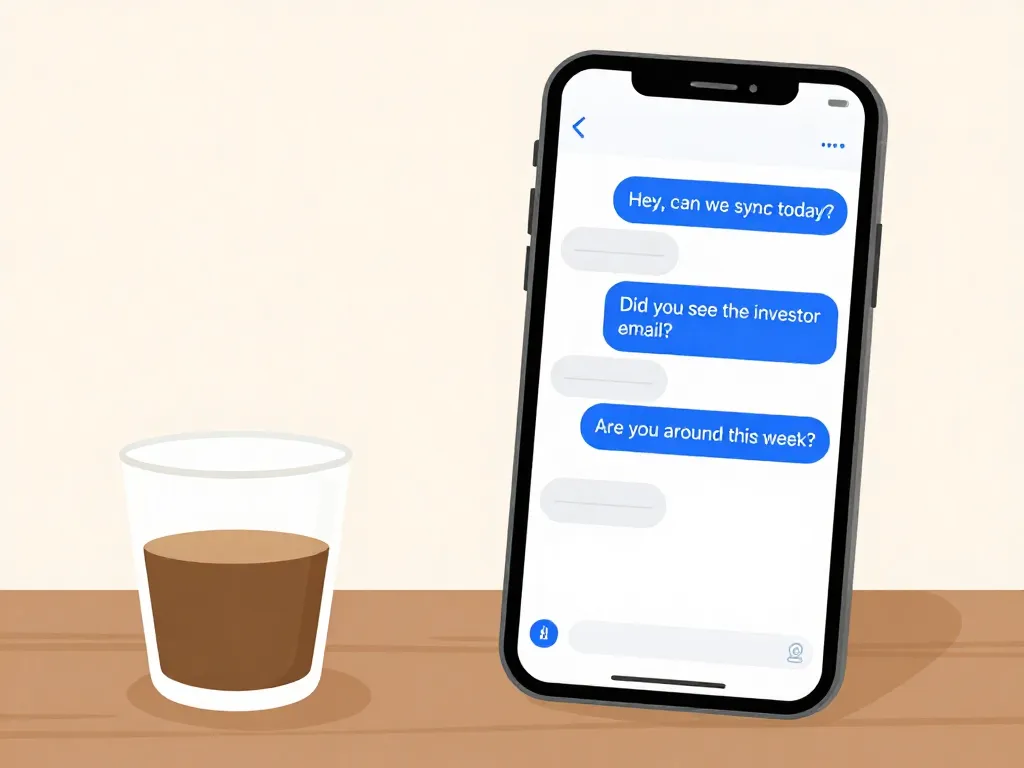
What Cofounder Ghosting Actually Looks Like
Ghosting isn't a single event but a gradient — a slow fade that makes it hard to pinpoint when things shifted.
- Response times stretch from hours to days
- Messages get shorter, vaguer, less substantive
- They stop initiating conversations about the business
-
"Let's sync later this week" becomes a recurring deflection that never resolves
-
Tasks sit incomplete without explanation
- They stop attending meetings or show up distracted and disengaged
- Their contributions shift from proactive to reactive — they'll respond if pushed, but never volunteer
-
GitHub commits, design files, sales calls — whatever their domain, the output quietly flatlines
-
They no longer share excitement about wins or concern about setbacks
- Strategic conversations feel one-sided; you're pitching ideas into a void
- When you do connect, the conversation stays surface-level
- They avoid discussing the future of the company
One founder described it this way: "It was like working with a hologram. He was technically still there — his name was on everything, he'd reply occasionally — but the actual person had already left."
Why Cofounders Ghost (It's Rarely What You Think)
The instinct when someone ghosts is to assume the worst about their character. They're lazy. They don't care. They were never serious. But ghosting is usually a symptom of something more complex — and the root cause shapes what you should do next.
They've Lost Belief in the Venture
Sometimes a cofounder stops showing up because they've quietly concluded that the startup isn't going to work. Maybe a key assumption was invalidated. Maybe the market shifted. Maybe they've done the math on runway and don't like the answer. Rather than voice that doubt — which feels like betrayal, especially early on — they disengage.
They're Overwhelmed and Ashamed
Some cofounders withdraw precisely because they care. They've fallen behind, they feel like they're failing, and the shame of that failure makes it harder to show up — which puts them further behind, which deepens the shame. It's a withdrawal spiral.
Life Intervened
Health problems. Family crises. Financial pressure that forces them to quietly take on side work. The problem isn't the life event itself — it's the failure to communicate about it, which is often driven by fear that honesty will jeopardize their equity or standing.

The Relationship Has Eroded
Sometimes the ghosting isn't about the business at all — it's about the partnership. Unresolved disagreements, perceived slights, a power imbalance that was never addressed. The cofounder isn't withdrawing from the company; they're withdrawing from you. This is particularly common when one founder holds a disproportionate share of decision-making authority.
They've Already Moved On
The hardest version: your cofounder has mentally or practically committed to something else — a new job, a different project, a return to school — but hasn't told you yet. They're still holding their equity, still technically "involved," but they've already made their decision.
What to Do When Your Cofounder Is Ghosting
The worst response to ghosting is to mirror it — to withdraw yourself, stew in resentment, and let the ambiguity compound.
Step 1: Name It Directly, Without Accusation
Break the silence with specificity. Not "we need to talk" (which triggers defensiveness) but a concrete observation paired with genuine curiosity:
"I've noticed you've missed our last three check-ins and the product spec hasn't moved since the 12th. I'm not making assumptions about why — I genuinely want to understand what's going on. Can we find 30 minutes this week?"
You're not demanding a reckoning. You're requesting a conversation.
Step 2: Create a Safe Space for Honesty
If your cofounder is ghosting because they're ashamed, scared, or conflict-avoidant, a confrontational approach will push them further away. When you do get that conversation, lead with openness:
- Acknowledge that the startup journey is hard and that doubt is normal
- Be transparent about your own uncertainties — vulnerability invites vulnerability
- Make it clear that you'd rather hear difficult truths than comfortable silence
- Explicitly state that you're open to discussing changes in their role or commitment level
Step 3: Define What You Actually Need
Before the conversation, get clear with yourself on your minimum requirements. What does active participation actually look like for your cofounder's role?
- Time commitment: How many hours per week, and on what?
- Deliverables: What tangible outputs do you need, and by when?
- Availability: What's the maximum acceptable response time for critical decisions?
- Presence: Which meetings are non-negotiable?
Having these specifics ready transforms a vague grievance ("you're not showing up") into a concrete discussion about expectations.
Step 4: Set a Decision Timeline
After your conversation, agree on a check-in window — two weeks is reasonable — where you both commit to a defined level of engagement. At the end of that window, you reconvene and make a decision together about the path forward.

Step 5: Protect the Business
While you're working through the relationship, don't neglect the practical side:
- Document everything: Keep records of communication attempts, missed commitments, and work output. This matters if things escalate.
- Review your agreements: If you have a cofounder agreement, revisit the clauses around vesting, active participation requirements, and separation. If you don't have one — and many early-stage cofounders don't — this is a wake-up call. Tools like Servanda can help you formalize expectations and agreements, which is far easier to do during a partnership than after one has collapsed.
- Consult your vesting schedule: If you have a vesting cliff or acceleration clauses, understand where your cofounder stands. This informs your options.
- Don't make unilateral moves: Resist the urge to revoke access, reassign equity, or bring in a replacement without due process. Acting rashly creates legal exposure and burns a bridge that might still be crossable.
When the Conversation Doesn't Work
Sometimes you reach out and get nothing back. Or you have the conversation, things improve for a week, and then the pattern resumes.
Scenario A: They Want Out but Won't Say It
If your cofounder is signaling departure through inaction, make it easier for them to say it out loud. Propose a structured separation:
- Agree on how vested equity will be handled
- Define a transition period for knowledge transfer
- Determine how you'll communicate the change to your team, investors, and customers
- Put it all in writing
Many cofounders ghost because they don't know how to leave gracefully. Offering a clear exit path can unlock the honesty that guilt has been blocking.
Scenario B: They Want to Stay but Can't Commit
Sometimes a cofounder wants to remain involved but can't maintain the level of engagement the startup requires. Consider restructuring:
- Shift them to an advisory role with adjusted equity
- Reduce their responsibilities to match their actual availability
- Bring in someone to fill the operational gap
This only works if both parties are honest about what's realistic.
Scenario C: True Ghosting — No Response at All
If your cofounder has genuinely disappeared — no responses to any communication, extended absence with no explanation — you need legal counsel. The specifics depend on your incorporation documents, operating agreement, and jurisdiction, but you will likely need to pursue a formal removal process.
This is the scenario a well-drafted cofounder agreement is designed to prevent. Clauses addressing inactive founders, vesting acceleration or forfeiture triggers, and dispute resolution mechanisms exist precisely for this situation.
Preventing Cofounder Ghosting Before It Starts
Build regular check-ins into your operating rhythm. Not just about tasks — about how each of you is feeling about the work, the partnership, and the trajectory. Quarterly "state of the union" conversations between cofounders are one of the highest-leverage habits you can adopt.
Normalize difficulty. Create a culture between you where it's safe to say "I'm struggling," "I'm having doubts," or "I need to adjust my commitment." The cofounders who ghost are often the ones who never felt they could voice those things.
Formalize your expectations early. A written cofounder agreement that covers roles, responsibilities, time commitments, vesting terms, and exit procedures isn't a sign of distrust — it's a sign of maturity. The conversation required to draft that agreement is itself a form of prevention.
Watch for early signals. Don't ignore the first missed meeting or the first week of radio silence. Addressing small drift early is infinitely easier than confronting a fully disengaged cofounder six months later.
Frequently Asked Questions
What should I do if my cofounder stops responding to messages?
Start by sending a specific, non-accusatory message that references observable facts — such as missed meetings or stalled work — and request a brief conversation. If you receive no response after multiple attempts across different channels, document everything and consult legal counsel, especially if you have a cofounder agreement with clauses addressing inactive founders.
Can I remove a cofounder who has ghosted and won't communicate?
Formally removing a cofounder depends on your incorporation documents, operating agreement, and jurisdiction, so you'll need legal advice specific to your situation. A well-drafted cofounder agreement with vesting forfeiture triggers and dispute resolution mechanisms makes this process significantly more straightforward.
How do I protect my startup's equity if my cofounder disappears?
Review your vesting schedule to understand how much equity your cofounder has actually earned versus what remains unvested, and check for any clauses around active participation requirements or forfeiture. If you don't have a formal cofounder agreement in place, consult a startup attorney immediately to understand your options before making any unilateral changes to equity.
Why do cofounders ghost instead of just saying they want to leave?
Cofounders often ghost because they feel ashamed of falling behind, fear that honesty will cost them their equity, or simply don't know how to leave gracefully. Offering a structured, judgment-free exit path — with clear terms for equity, transition, and communication — can unlock the honesty that guilt and fear have been blocking.
How can I prevent cofounder ghosting from happening in the first place?
Build quarterly check-in conversations into your operating rhythm that go beyond tasks to address how each of you feels about the work, the partnership, and the company's direction. Formalize roles, responsibilities, time commitments, and exit procedures in a written cofounder agreement early on, and address small signs of disengagement — like a missed meeting or a week of silence — before they become entrenched patterns.