Cofounder Wants a Salary Before Revenue: Fair or Not?
You're three months into building your startup. The product is taking shape, early user feedback is promising, and the energy between you and your cofounder has been good, until last Tuesday. Over a casual dinner, your cofounder says: "I need to start drawing a salary. I can't keep doing this for free."
Your stomach drops. There's no revenue. The bank account holds what's left of your personal savings. You're not paying yourself either, so why should they get a cofounder salary before revenue even exists?
But your cofounder is not being greedy. They are desperate. And how you respond will either strengthen your partnership or begin its slow unraveling.
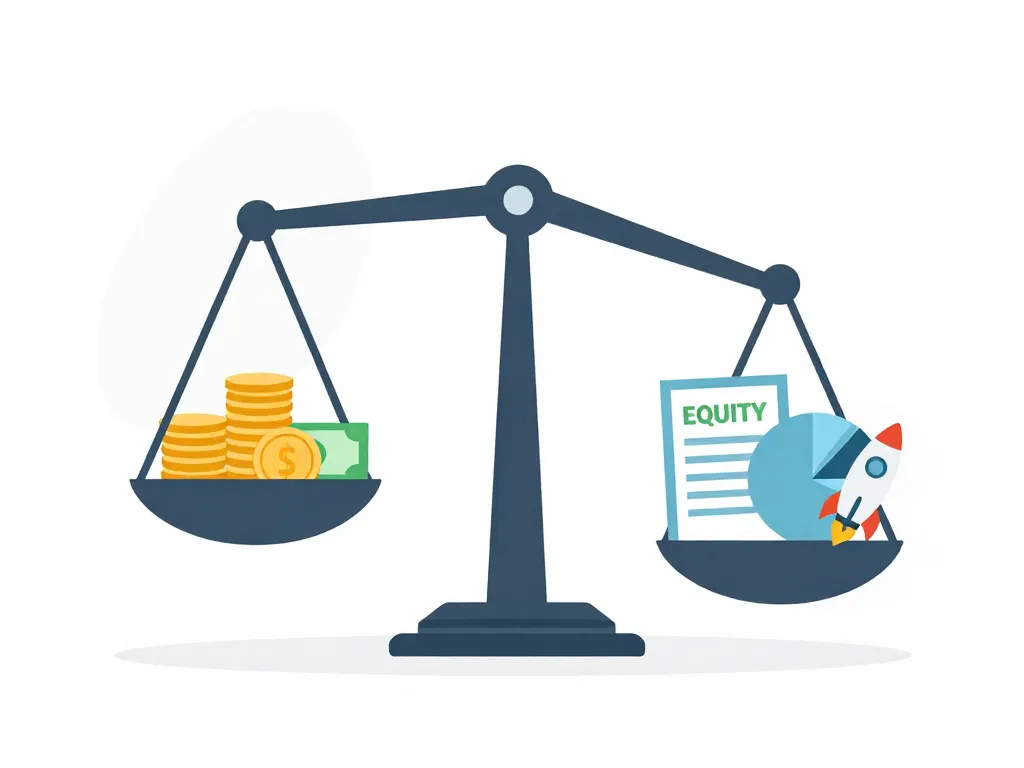
Why This Question Comes Up More Than You Think
The fantasy of startup life is two cofounders in a garage, eating ramen, grinding until the money arrives. The reality is that people have rent, student loans, kids, and aging parents. Not everyone enters a startup from the same financial position.
A 2023 survey by Founder Institute found that compensation disagreements rank among the top three reasons cofounder relationships fail, ahead of disagreements about product direction.
What typically triggers it:
- Unequal financial runways. One cofounder has savings or a working spouse; the other is burning through their last reserves.
- Unequal time contributions. One cofounder went full-time months ago while the other still has a day job.
- Life changes. A new baby, a medical bill, or a lease renewal makes the status quo unsustainable.
- Perceived inequity. One cofounder feels they're doing more work and absorbing more risk without proportional reward.
None of these are unreasonable. The problem isn't that someone asked. It's that most founding teams never discussed it.
The Case for Paying a Cofounder Before Revenue
Expecting someone to work for free indefinitely is not a business plan. It's a favor, and favors breed resentment.
Financial Survival Is Not a Character Flaw
If your cofounder needs money to keep the lights on, that's arithmetic, not a lack of commitment. A cofounder stressed about making rent is not going to do their best work. They'll start looking for freelance gigs, then a part-time job, and eventually a full-time one. You don't lose cofounders in a dramatic blowup. You lose them in a slow drift.
It Can Protect Your Equity
Paying a small salary can prevent a much larger equity renegotiation later. If a cofounder works six months unpaid while the other draws from personal wealth, the unpaid cofounder has a right to argue that the equity split should shift to reflect their sacrifice. A modest stipend keeps the original agreement intact and perceived as fair.
Skin in the Game Still Exists
A cofounder taking $2,000/month when they could earn $12,000 elsewhere is effectively investing $10,000/month of foregone income into your company. That's not someone looking for a free ride.

The Case Against
The Money Simply Doesn't Exist
If you're bootstrapping with no outside capital, every dollar paid as salary is a dollar not spent on infrastructure, marketing, or keeping the company alive. When the runway is $15,000 total, a $3,000 monthly salary means you're out of business in five months instead of surviving for twelve. This is a math problem, not a values problem.
It Creates a Precedent
If one cofounder draws a salary and the other doesn't, you've introduced an asymmetry that will color every future negotiation. Who decides when to raise salaries? What happens if the paid cofounder wants a raise before the company can afford it?
Commitment Signals Matter
Sometimes the salary request is a signal that your cofounder's commitment is conditional. That's not automatically a dealbreaker, but it's information. A cofounder who frames it as "pay me or I'm out" is telling you something different from one who says "I'm all in, but I literally cannot afford food next month."
A Framework for Deciding Together
Step 1: Put All Financial Cards on the Table
Both cofounders should share monthly personal burn rate, available savings or financial support, other income sources, and how many months they can realistically sustain zero income. You're not judging each other's lifestyles. You're establishing facts.
Step 2: Separate the Roles, Founder vs. Employee
Your cofounder is both a founder (equity holder, risk-taker) and a worker (someone performing daily labor). The equity compensates the founder role. The salary question is about the worker role.
Framed this way, the conversation shifts from "Do you deserve to be paid?" to "Can the company afford to pay its workers right now, and if so, how much?"
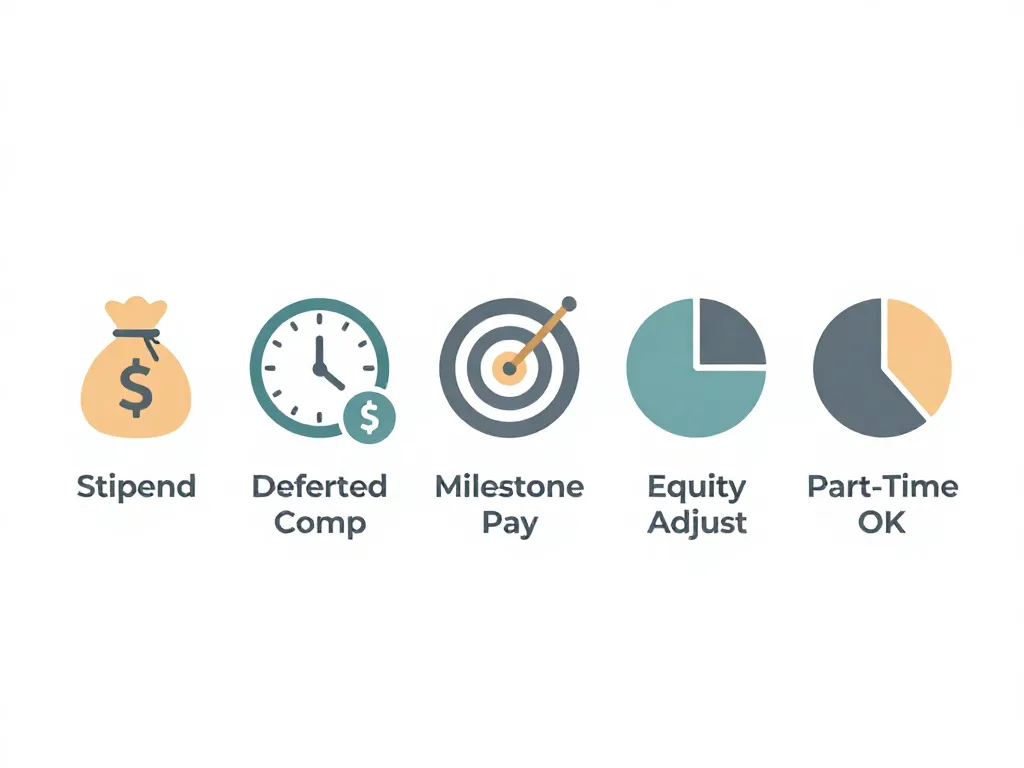
Step 3: Explore Creative Alternatives
A full market-rate salary is not possible, but "salary vs. no salary" is a false binary.
| Alternative |
Description |
| Stipends |
A small monthly amount ($500–$2,000) to cover essentials, framed as a living expense reimbursement. |
| Deferred compensation |
Track the salary that would be paid, and pay it out once revenue or funding arrives, with interest. |
| Milestone-based payments |
Tie small payments to specific deliverables: launching the MVP, closing the first customer, hitting a user target. |
| Equity adjustments |
If one cofounder draws a salary and the other doesn't, adjust the split to compensate the unpaid cofounder for the additional risk. |
| Part-time allowance |
Explicitly agree that the cash-strapped cofounder can freelance 10 hours per week without it being seen as disloyalty. |
Step 4: Set a Review Date
Agree to revisit the compensation structure at a specific date, 90 days being a good default, or when a specific trigger occurs (closing a funding round, hitting $5K MRR). This prevents either person from feeling locked into an arrangement that no longer reflects reality.
Step 5: Write It Down
Verbal agreements between cofounders are worth the paper they're not printed on. Tools like Servanda can help cofounders formalize these agreements quickly, so neither party has to rely on memory or good faith alone.
Three Scenarios
The Lopsided Runway
Marcos and Jin started a SaaS product with a 50/50 equity split. Marcos had $80,000 in savings. Jin had $6,000. After two months, Jin raised the salary conversation.
Their solution: Jin received a $1,500/month stipend from the shared fund, and they agreed that if no revenue materialized within six months, equity would shift to 45/55 in Jin's favor. Revenue arrived in month four and the adjustment was never needed, but having it in writing prevented resentment from building.
The Silent Resentment
Priya and Alex never discussed compensation. Both assumed they'd go unpaid until funding. But Priya was secretly freelancing 15 hours a week to cover bills, which meant she was doing less startup work than Alex. Alex noticed and stewed instead of asking why. By month five he accused Priya of not being committed. She accused him of not caring about her financial reality. They split up and the startup died.
The Honest No
Dana asked her cofounder Tomás for a salary three months in. Tomás said no, not because he didn't think she deserved it, but because the $20,000 in their account was earmarked for a critical product launch. He showed her the budget, offered to revisit after launch, and suggested she take on a small freelance client while he covered more of the product work.
Dana didn't love it, but she respected the transparency. They launched on time, closed their first paying customer two months later, and both started drawing modest salaries.
The Questions to Actually Ask
- What does each of us need financially to stay in this full-time for the next six months?
- What can the company afford without jeopardizing its survival?
- If one person gets paid and the other doesn't, how do we make that equitable?
- What triggers a change in this arrangement: revenue, funding, a specific date?
- What happens if one of us can no longer afford to continue without pay?
If the Conversation Gets Heated
One person feels accused of being uncommitted. The other feels accused of being selfish. To de-escalate:
- Acknowledge the awkwardness. "This is an uncomfortable conversation, and I'm glad we're having it instead of avoiding it."
- Lead with your own vulnerability. Share your own financial fears first. It invites honesty rather than defensiveness.
- Separate the person from the problem. Your cofounder wanting a salary isn't a betrayal. It's a logistics challenge.
- Propose a trial period. "Let's try this for 90 days and see how it affects our runway and our work."
Frequently Asked Questions
How much should a startup cofounder pay themselves?
Before revenue or funding, cofounder salaries range from a small stipend of $500–$2,000 per month to cover bare essentials, well below market rate. The exact amount should be determined by what the company can afford without jeopardizing its runway.
What happens if one cofounder gets paid and the other doesn't?
This creates an asymmetry best addressed through an equity adjustment that gives the unpaid cofounder a larger share to reflect their additional financial risk. Without rebalancing, the unpaid cofounder is likely to build resentment over time. Document whatever you agree on in writing.
What is deferred compensation for startup cofounders?
Deferred compensation means tracking the salary a cofounder would have been paid and agreeing to pay it out once the company reaches a specific milestone, such as closing a funding round or hitting a revenue target. It acknowledges the sacrifice without draining the company's cash in the present, and is structured with interest or a bonus multiplier to reward the wait.