How to Quit Your Own Startup Without Burning It Down
You cofounded this company. You poured years into it. And now you're lying awake at 2 a.m. with a thought you can't shake: I need to leave.
Maybe the product pivoted away from your vision. Maybe you and your cofounder can barely be in the same room. Maybe you're burned out in a way that no vacation will fix. Whatever the reason, you've arrived at one of the hardest decisions a founder can face — how to quit your own startup without destroying it, your reputation, or the relationship with the person you built it with.
Garry Tan, now president of Y Combinator, has spoken openly about walking away from Initialized Capital's day-to-day operations and the emotional complexity of stepping back from something you helped create. His experience, and many others like it, reveals a pattern: the founders who leave well aren't the ones who avoid the pain. They're the ones who plan for it.
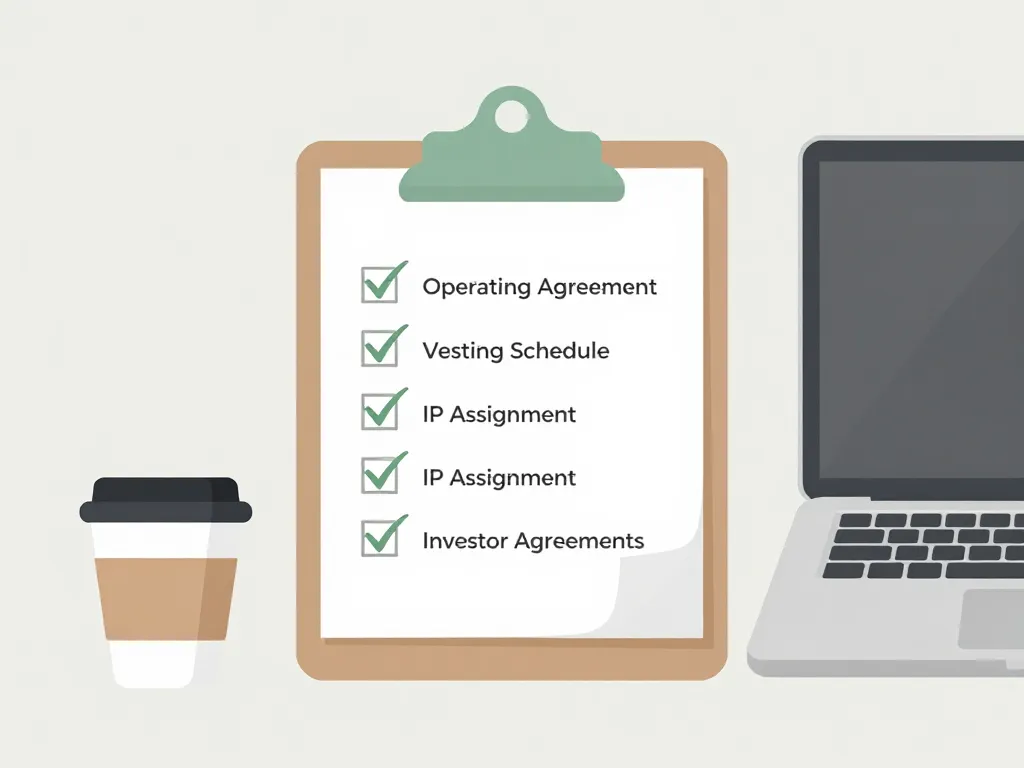
Step 1: Audit Your Legal and Financial Position First
Before you tell anyone you're thinking about leaving, get clear on what you're actually working with.
Pull out these documents:
- Operating agreement or shareholder agreement — What does it say about voluntary departure? Is there a buyback clause? A right of first refusal?
- Vesting schedule — How much of your equity has vested? Is there a cliff you haven't hit? Does your agreement include single-trigger or double-trigger acceleration?
- IP assignment agreements — Did you assign all intellectual property to the company? If not, this becomes a minefield.
- Investor side letters or SAFE agreements — Some investor agreements include founder lockup provisions or key-person clauses that trigger consequences if a named founder departs.
If you don't have a formal cofounder agreement — and an uncomfortable number of early-stage startups don't — you're negotiating from a much murkier position.
Real-world example: Two cofounders we'll call Dev and Maya launched a SaaS platform in 2021. Dev wanted out by 2023 but had never signed a formal operating agreement. What should have been a clean three-month transition turned into an eight-month legal negotiation, during which they lost two enterprise clients who sensed instability. The lesson: formalize your agreements before you need them.
Hire a startup attorney — not your company's attorney
Your company's legal counsel represents the company, not you individually. You need independent counsel who can advise you on your personal exposure, your equity rights, and the optimal structure for your departure.
Budget $5,000–$15,000 for this.
Step 2: Have the Cofounder Conversation (Before Anyone Else)
The order matters enormously. Here's the sequence:
- Your cofounder(s) — first, always
- Your board, if you have one
- Your investors
- Your leadership team
- The broader team
Telling an investor or board member before your cofounder is a betrayal that's nearly impossible to walk back. Even if your relationship is strained, your cofounder deserves to hear this from you directly.

How to structure the conversation
- Lead with your decision, not your complaints. "I've decided I need to step away from the company" lands differently than a list of grievances.
- Acknowledge what you've built together. This establishes that you're leaving and that you care about what survives.
- Come with a proposal, not just a problem. Bring a draft transition timeline. Suggest how your responsibilities could be redistributed.
- Don't negotiate equity in this conversation. Separate the emotional conversation from the financial one. Trying to do both at once almost always goes badly.
The emotional weight of this conversation is real for the person leaving and the person staying. Give the conversation room to breathe.
Step 3: Negotiate Your Equity Transition
This is where most founder departures either become functional or become lawsuits. The central question: What happens to your unvested shares?
| Scenario |
What It Means |
When It's Fair |
| Full acceleration |
All unvested shares vest immediately upon departure |
Rare; usually only in acquisition scenarios |
| Partial acceleration |
Some portion (e.g., 12 months) of unvested shares vest |
Common for "good leaver" departures |
| Cliff forfeiture |
Unvested shares are forfeited entirely |
Standard in most vesting agreements |
| Buyback at fair market value |
Company repurchases vested shares at FMV |
Common when remaining founders want a clean cap table |
| Buyback at original price |
Company repurchases vested shares at the price you "paid" (often nominal) |
Punitive; usually a "bad leaver" clause |
What to push for
- Keep your vested shares unless there's a compelling reason to sell.
- Negotiate "good leaver" status explicitly. Make sure your departure is documented as voluntary and cooperative.
- Get board observer rights or information rights if possible.
- Clarify non-compete and non-solicit terms. If your operating agreement includes a non-compete, now is the time to negotiate its scope and duration.
Consider formalizing the terms of your departure with a tool like Servanda to create a clear, written separation agreement that both parties can reference.
Step 4: Communicate With Investors Without Creating Panic
Investors have seen founder departures before. What panics them is the sense that things are unraveling without a plan.
The investor conversation framework:
- Present the transition as a decision, not a crisis. "We've planned a structured transition" is radically different from "things aren't working out."
- Name the successor or interim plan. If your cofounder is taking over your responsibilities, say so explicitly. If you're hiring a replacement, share the timeline.
- Reaffirm the company's trajectory. Share recent metrics, pipeline data, or product milestones.
- Offer a transition period. Most departing founders offer 60–90 days of advisory availability.
Real-world example: When a technical cofounder at a Series A fintech company decided to leave in 2022, the remaining CEO called each investor individually before sending a written update. She framed the departure around a pre-planned transition, introduced the new CTO (an internal promotion), and shared three months of improving unit economics. Not a single investor pulled advisory support.
Step 5: Build a 90-Day Handoff Plan
A clean departure isn't an event — it's a project.
Week 1–2: Documentation
- Write down everything in your head that isn't already written down. System architectures, vendor relationships, key customer contexts, passwords, recurring processes.
- Record Loom videos walking through complex workflows.
Week 3–6: Shadow and Transfer
- Identify who will own each of your responsibilities.
- Have them shadow you, then reverse — you shadow them while they lead.
- Introduce them to every external relationship you manage (investors, partners, key customers).
Week 7–10: Step Back Gradually
- Remove yourself from day-to-day Slack channels and meetings.
- Stay available for questions but stop initiating.
Week 11–12: Clean Exit
- Final board meeting or investor update with your name on it.
- Farewell communication to the team.
- Transfer all accounts, credentials, and admin access.
Step 6: Address the Identity Crisis
When you've been "the founder of X" for years, leaving changes your answer to "So, what do you do?" That question will hit harder than you expect.
What helps:
- Therapy or coaching, started before your last day. The adjustment period is brutal if you wait until you're already in the void.
- A structured break. Give yourself a minimum of 30 days before you start anything new.
- A small circle who knows the real story. You don't owe the world your internal narrative, but you need three or four people who understand what you're going through.
- Physical movement. Founder burnout lives in the body. Running, swimming, hiking — anything that gets you out of your head and into your nervous system.
The emotional work of stepping back from something you built is ongoing, not a one-time event.
FAQ
Can I quit my startup and keep my equity?
In most cases, you keep your vested equity. Unvested shares are typically forfeited upon departure unless you've negotiated acceleration. Some operating agreements include buyback clauses that allow the company to repurchase your vested shares, sometimes at below-market rates. Review your shareholder agreement carefully with independent legal counsel before announcing your departure.
How do I tell investors I'm leaving my startup?
Contact your lead investor first, ideally by phone or video call, and frame the departure as a planned transition rather than a sudden decision. Come prepared with a succession plan, recent company metrics, and a clear timeline for handoff.
What happens to the company if a cofounder leaves?
Companies with clear operating agreements, vesting schedules, and documented processes can survive a founder departure without significant disruption. Companies without these structures often face investor panic, team attrition, and legal disputes. The single biggest predictor of a healthy outcome is whether the departing founder and the remaining founder(s) can align on a transition plan before the news goes public.
Should I tell my startup team I'm leaving before or after investors?
Tell your cofounder first, then your board and investors, then your leadership team, and finally the broader company. Information flows downhill, and if your team hears about your departure through back channels before you've addressed it directly, trust collapses quickly. Aim to minimize the gap between telling investors and telling the team — ideally no more than a few days.
How long should a founder transition take?
Most successful founder transitions take 60–90 days from the internal announcement to the final day. Shorter than 30 days and you risk institutional knowledge loss; longer than 120 days and you create a painful limbo state where neither you nor the team can fully move forward.
Quitting your own startup is one of the most complex things you'll ever do — legally, financially, and emotionally. But "complex" doesn't mean "destructive." The founders who leave well treat their departure with the same intentionality they brought to building the company.
Audit your legal position before you speak. Talk to your cofounder before anyone else. Negotiate equity with clear heads and independent counsel. Give investors a plan. Build a real handoff. Take the identity transition seriously.
The company you built can survive your departure. In some cases, it might thrive. That's not a failure. That's a sign you built something bigger than yourself.