
How to Survive a Cofounder Breakup and Save Your Startup
You cofounded this company together. You pitched investors together, pulled all-nighters together, and told each other this was the thing you'd see through. Now one of you wants out—or worse, you both know it's over but neither of you has said it yet.
A cofounder breakup feels like a death sentence for a startup. And statistically, cofounder conflict is one of the top reasons early-stage companies fail. But here's what the survivorship data doesn't always show: many startups do make it through a founder split. Twitter survived Jack Dorsey's initial ouster. Plaid navigated a cofounder departure early on. The difference between startups that survive a cofounder breakup and those that don't isn't luck—it's process.
This article is the playbook you need right now. Not theory, not platitudes. Step-by-step guidance on how to separate from your cofounder without losing your company, your investors, or your sanity.
Key Takeaways
- A cofounder breakup doesn't have to kill your startup. With a structured process, companies routinely survive founder departures and come out stronger.
- Handle equity unwinding early and decisively. Vesting cliffs, buyback clauses, and fair valuation methods prevent months of legal warfare.
- Communicate with investors before they hear it from someone else. Frame the departure as a sign of mature leadership, not chaos.
- Protect operational continuity by mapping every responsibility the departing founder owns. Knowledge transfer is the most overlooked step in a cofounder split.
- Formalize everything in writing. Verbal agreements made during emotional conversations will not hold up—legally or relationally.

Step 1: Acknowledge the Breakup Before It Breaks You
Most cofounder breakups don't happen overnight. They simmer. One founder starts disengaging. Meetings get tense. Decisions stall because neither party trusts the other's judgment anymore.
The most dangerous phase isn't the breakup itself—it's the pre-breakup limbo where both founders know something is wrong but avoid the conversation. During this phase, your company bleeds. Hiring slows because candidates sense the tension. Product roadmaps drift because strategic alignment is gone. Investors start asking pointed questions.
How to start the conversation
Don't wait for a blowup. Schedule a dedicated conversation—not sandwiched between standups and investor calls. Here's a framework:
- State the reality without blame. "We're not aligned on where this company should go, and it's affecting the business."
- Separate the personal from the structural. You might still respect each other deeply. This isn't about character—it's about fit, vision, or capacity.
- Agree on one thing immediately: that you'll both prioritize the company's survival above your individual positions.
If the conversation keeps spiraling into accusations or defensiveness, bring in a neutral third party. This could be a mutual advisor, a board member, or an AI-powered mediation platform like Servanda that can provide structure when emotions make productive dialogue feel impossible.
Step 2: Unwind the Equity Without Unwinding the Company
Equity is where most cofounder breakups turn ugly. And understandably so—equity represents years of unpaid or underpaid work, personal risk, and emotional investment. But letting equity disputes drag on is the single fastest way to kill a startup mid-breakup.
If you have a vesting schedule
This is exactly what vesting was designed for. If the departing cofounder hasn't fully vested, the unvested shares typically return to the company's option pool. Review your stock purchase agreement and operating agreement for:
- Cliff provisions. If the departing founder is before the cliff, this is relatively clean.
- Acceleration clauses. Some agreements include single or double trigger acceleration. Know what yours says before the conversation.
- Repurchase rights. Many agreements give the company the right to buy back vested shares at fair market value (or sometimes the original purchase price).
If you don't have a vesting schedule
This is harder—and painfully common among first-time founders who split equity 50/50 on a handshake. Without a vesting schedule, a departing cofounder walks away owning half the company while contributing nothing going forward.
Your options:
- Negotiate a voluntary equity reduction. The departing founder agrees to give back a portion of their shares in exchange for a clean break, an advisory role, or a small ongoing royalty.
- Implement a reverse vesting agreement. Both founders retroactively agree to a vesting schedule applied to their existing shares. This requires mutual consent but can be structured fairly.
- Buyout at a negotiated valuation. Agree on a fair valuation method (409A valuation, revenue multiple, or a third-party appraisal) and buy back the departing founder's shares over time.
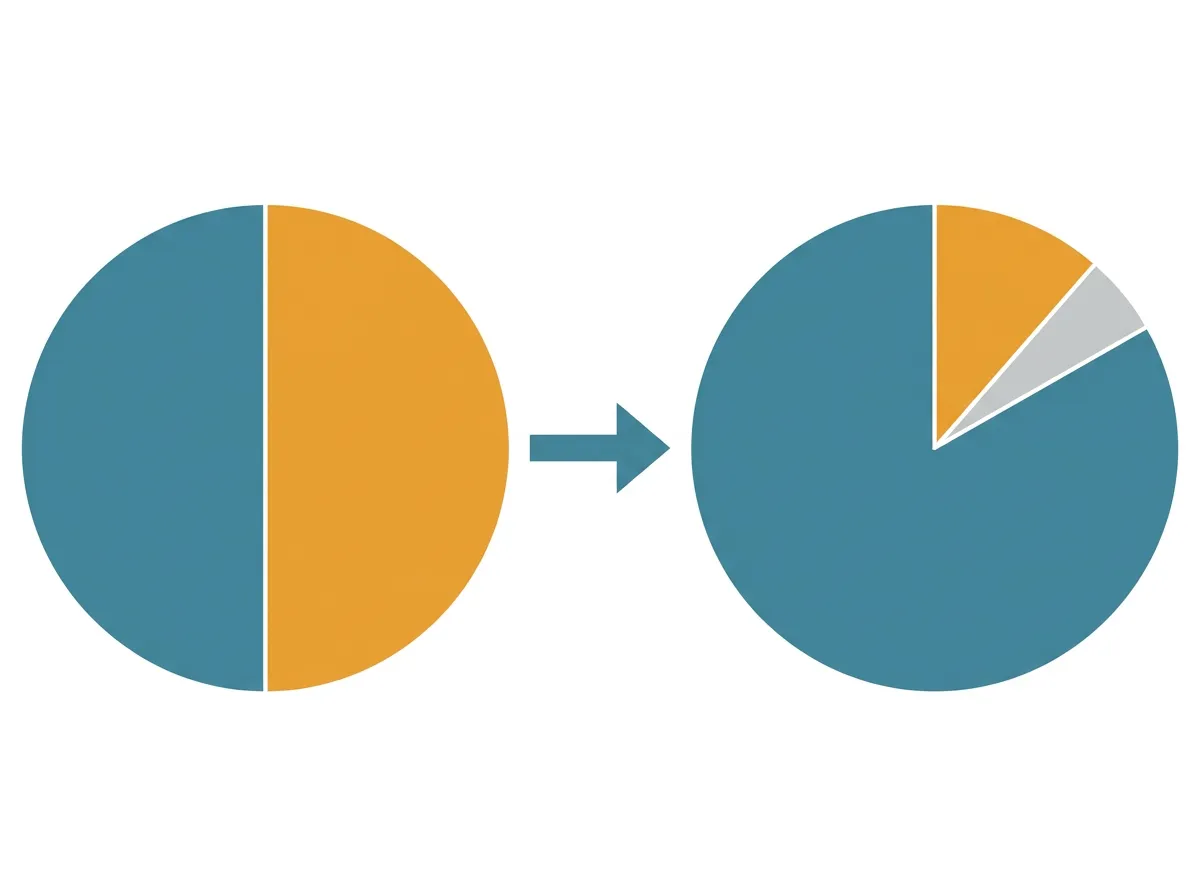
Real-world example: Two SaaS cofounders—let's call them Priya and Marcus—split 50/50 with no vesting. When Marcus wanted to leave after 18 months, Priya couldn't afford a buyout. They agreed that Marcus would keep 15% (reflecting his contribution period relative to a standard 4-year vest), forfeit the remaining 35%, and serve as a paid advisor for 12 months. It wasn't a perfect deal for either side, but the company survived and later raised a Series A.
Step 3: Tell Your Investors (Before Someone Else Does)
Founders consistently rank this as the step they dread the most. The fear is rational: investors bet on the team as much as the product, and losing a cofounder feels like removing half the foundation.
But here's what experienced VCs will tell you: they've seen this before. A lot. What concerns them isn't the departure—it's how you handle it.
How to frame the conversation
- Lead with the plan, not the problem. Don't open with "my cofounder is leaving." Open with "I want to walk you through a leadership transition we're executing."
- Show that operations are covered. Demonstrate that you've mapped the departing founder's responsibilities and have a plan for continuity (more on this below).
- Be honest about the reason without airing dirty laundry. "We realized we had fundamentally different visions for the company's direction" is both truthful and professional. You don't need to detail every argument.
- Present the equity resolution. Investors want to know the cap table is clean. Show them the agreement you've reached.
When to tell them
As soon as you and your cofounder have agreed on the separation terms—but before you announce it to the team or publicly. Investors hate surprises. Give them the courtesy of hearing it directly from you, with context and a plan.
What if investors panic?
Some will. That's their prerogative. But most sophisticated investors know that a founder who can navigate a cofounder breakup with maturity and decisiveness is exactly the kind of leader who can navigate market downturns, pivots, and scaling challenges. Frame this as evidence of your leadership, not a failure of it.
Step 4: Protect Operational Continuity
While you're handling the emotional and legal aspects of the split, your company still needs to ship product, serve customers, and make payroll. Operational continuity is where many cofounder breakups cause the most lasting damage—not because of the departure itself, but because of the knowledge that walks out the door.
Conduct a responsibility audit
Before the departing founder leaves, map every function they own:
- Technical systems. Repository access, deployment credentials, infrastructure knowledge, architectural decisions only they understand.
- Relationships. Key customer contacts, vendor relationships, investor intros in progress, partnership discussions.
- Institutional knowledge. Why was that pricing decision made? What's the context behind that product pivot? Why did you choose that vendor over the alternative?
- Ongoing commitments. Board obligations, speaking engagements, contract signatures where they're the named party.
Create a 30-day transition plan
Structure the departing founder's final month (or whatever timeline you agree on) around knowledge transfer, not feature development. Prioritize:
- Documentation of all undocumented systems and decisions
- Warm introductions to every relationship they own
- Handoff meetings with every team member who reported to them
- Transfer of all credentials, accounts, and access rights

Step 5: Communicate With Your Team
Your team already knows something is wrong. They've felt the tension. They've noticed the departing founder checking out. Trying to hide the departure or sugarcoat it will cost you credibility at exactly the moment you need it most.
What to say
- Be direct. "[Name] is leaving the company. Here's what that means for us and here's our plan going forward."
- Acknowledge the contribution. Even if the breakup was bitter, publicly respecting the departing founder's work protects your culture. Your team is watching how you treat people on their way out—it tells them how they'll be treated.
- Address their real concern. Your team's first thought isn't about your cofounder. It's: Is my job safe? Is this company going to survive? Answer that question directly.
- Don't ask people to take sides. If any team members were hired by or loyal to the departing founder, give them space. Don't test their loyalty.
Step 6: Restructure for What Comes Next
A cofounder breakup isn't just subtraction—it's an opportunity to restructure. With one less decision-maker, you have the chance to build a leadership structure that actually scales.
Immediate actions
- Revise your operating agreement to reflect the new ownership structure, decision-making authority, and any advisory role the departing founder will maintain.
- Update your cap table and ensure all legal documents reflect the equity changes.
- Assess your leadership gaps. If your cofounder was the technical lead and you're the business lead, you need a CTO—not eventually, but now. Consider whether a senior hire, a fractional executive, or a promoted internal team member is the right move.
- Revisit your board structure if applicable. A departed cofounder holding a board seat while no longer operationally involved creates misaligned incentives.
Longer-term adjustments
- Redefine your company narrative. Your pitch deck, website, and investor updates should tell a coherent story about where the company is going—not dwell on who left.
- Rebuild strategic alignment. Use this moment to sharpen your vision, kill projects that existed only because of the departed founder's enthusiasm, and double down on what's working.
What to Put in Your Separation Agreement
Every cofounder breakup should produce a written separation agreement. Without one, you're leaving the door open for future disputes over IP ownership, equity claims, non-compete violations, and customer poaching.
Your agreement should cover at minimum:
- Equity disposition. Exact share counts, vesting status, buyback terms, and timelines.
- IP assignment. Confirmation that all intellectual property created during the founder's tenure belongs to the company.
- Non-compete and non-solicit clauses. Reasonable in scope and duration—overly aggressive clauses are often unenforceable and create resentment.
- Confidentiality obligations. Both parties agree not to disparage the other or share confidential company information.
- Ongoing obligations. Advisory commitments, transition support, and any deferred compensation.
- Mutual release of claims. Both parties agree not to sue each other over matters related to the company.
Get a startup-experienced attorney to draft or review this document. The cost of legal counsel here is trivial compared to the cost of a lawsuit eighteen months later.
Frequently Asked Questions
Can a startup survive a cofounder breakup?
Absolutely. Many successful companies—including Twitter, Uber, and countless venture-backed startups—have survived cofounder departures. The key is handling the transition with a clear plan for equity, operations, and communication rather than letting it devolve into chaos.
How do you split equity when a cofounder leaves?
It depends on whether you have a vesting agreement. If you do, unvested shares typically return to the company. If you don't, you'll need to negotiate—common approaches include a voluntary equity reduction, a buyout at fair market value, or implementing a retroactive vesting schedule. An attorney experienced in startup equity can help you find a fair structure.
Should I tell investors about my cofounder leaving?
Yes, and sooner rather than later. Tell your investors directly once you've agreed on separation terms but before any public announcement. Lead with your transition plan, show that operations are covered, and present the equity resolution. Investors respect transparency and decisiveness far more than they fear a leadership change.
What if my cofounder refuses to leave or negotiate?
This is where your operating agreement and shareholder agreements become critical. If those documents include provisions for removal, deadlock resolution, or forced buyouts, follow those processes. If they don't—or if you never formalized agreements—you'll likely need legal counsel and potentially mediation to reach a resolution. This is exactly why formalizing cofounder agreements before conflict arises is so important.
How do I tell my team about the cofounder breakup?
Be direct, respectful, and focused on the future. Acknowledge the departing founder's contributions, explain the plan going forward, and address your team's primary concern: whether the company and their roles are stable. Avoid asking anyone to take sides, and create space for people to ask questions privately.
Conclusion
A cofounder breakup is one of the hardest things you'll go through as a founder. It's personal, it's stressful, and it threatens something you've poured your life into building. But it is survivable—and the companies that make it through tend to emerge with clearer leadership, sharper focus, and stronger governance.
The difference between a breakup that kills a startup and one that doesn't comes down to process: handle the equity cleanly, communicate proactively with investors and your team, protect operational knowledge, and put everything in writing. None of these steps require you to suppress your emotions or pretend this is easy. They just require you to act deliberately even when everything feels chaotic.
Your startup existed before this crisis. With the right steps, it will exist long after it.