I Quit My Own Startup: Signs It Was Already Over
I remember the exact moment I knew. It was 2:17 a.m. on a Tuesday. I was lying in bed with my heart hammering against my ribs, staring at the ceiling, replaying a Slack message my cofounder had sent six hours earlier. It was three words long: "Fine. Do whatever." Those three words carried the weight of eighteen months of slow, quiet deterioration — of conversations we stopped having, decisions we made around each other instead of with each other, and a shared vision that had split into two incompatible ones a long time ago.
I didn't quit my own startup because of a dramatic blowup. I quit because I finally admitted something I'd known in my body for months: it was already over. The business was still technically alive. We still had users, a bit of runway, a product roadmap. But the partnership — the actual engine of the thing — had seized up. And I'd been pouring fuel into a dead engine, pretending the smell of smoke was normal.
The Night My Body Told Me What My Brain Wouldn't
For months before I quit my own startup, my body had been sending signals I kept overriding. My resting heart rate, normally in the low 60s, had crept up to the mid-80s — I could see it on my watch. I'd wake up at 3 a.m. with a jaw so clenched my teeth ached. I developed a persistent knot between my shoulder blades that no amount of stretching could untangle.
I told myself this was the price of building something. Every founder blog post, every podcast, every Twitter thread normalized suffering as a badge of honor. "If it were easy, everyone would do it," I'd mutter, popping another melatonin.
There's a difference between the stress of hard work and the stress of a relationship that's slowly poisoning you. The first one feels purposeful, even exhilarating. The second feels like dread. I was marinating in dread.
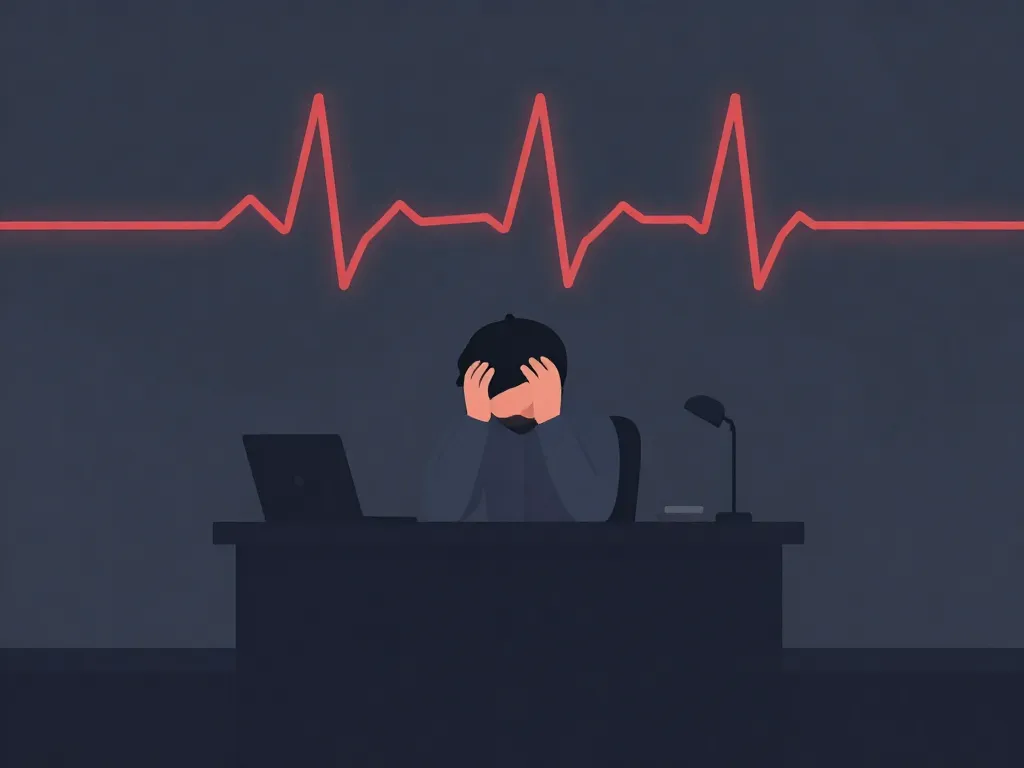
A therapist I finally saw (too late, in my opinion) put it bluntly: "Your nervous system is responding to a threat. Not a business problem. A relational one." She was right. The anxiety wasn't about product-market fit or runway. It was about my cofounder. Or more precisely, it was about what our relationship had become.
The Five Signs It Was Already Over
1. We Stopped Arguing
In our first year, my cofounder and I would debate everything — pricing models, feature priorities, hiring decisions. It was intense, sometimes uncomfortable, but it was generative. We'd walk away from those arguments with better ideas than either of us had walked in with.
Somewhere in year two, the arguing stopped. Not because we agreed on things, but because we'd each decided the other wasn't worth persuading anymore. I'd bring up a concern about our sales strategy and get a shrug. She'd suggest a pivot and I'd say "sure" without engaging, already planning to quietly do things my way.
The red flag isn't fighting. The red flag is indifference disguised as peace.
2. We Built Separate Kingdoms
Without the friction of real conversation, we drifted into parallel tracks. She owned product and engineering. I owned growth and ops. On paper, that looks like a clean division of labor. In practice, it meant we were building two different companies under the same name.
She was optimizing for technical elegance. I was optimizing for revenue. Neither of us was wrong, but we'd stopped integrating our perspectives into a single strategy. We'd show up to board meetings and present what amounted to two separate reports, barely referencing each other's work.
3. Third Parties Became Our Translators
Instead of talking to my cofounder directly, I started routing important conversations through our COO, our lead engineer, even our investors. "Can you mention to her that we need to revisit the pricing page?" I'd ask our COO, as if my cofounder were a difficult client instead of my partner.
She was doing the same thing. Our small team became a network of diplomatic back-channels, each employee unwittingly drafted into the role of mediator. Two of our best engineers left within a month of each other. In their exit interviews, both mentioned "tension at the top" as a factor.

4. I Started Fantasizing About Solo Projects
While I was supposed to be focused on our company — our shared thing — I was daydreaming about what I'd build next. Alone.
I'd sketch out product ideas in a private notebook. I'd browse domain names. I'd calculate how much runway I'd need to go solo. I rationalized it as "creative exploration," but it was emotional withdrawal. I was already leaving in my mind; my body just hadn't caught up yet.
If you find yourself mentally designing your next venture while sitting in your current company's all-hands meeting, that's worth examining honestly.
5. The Story We Told Stopped Being True
Every startup has a founding narrative: why we started this, what we believe, where we're going. Ours had been compelling — two friends who saw a gap in the market and bet on each other to fill it.
By the end, I couldn't tell that story with a straight face. We weren't two friends anymore. We were two people contractually bound to each other, performing friendship for investors and employees while privately seething. The gap between our public narrative and our private reality had become a canyon.
When the story you tell about your company no longer matches the company you're actually running, something fundamental has broken.
What I Wish I'd Done Differently
Put Agreements in Writing Before You Need Them
My cofounder and I never formalized our roles, decision-making authority, or what would happen if one of us wanted to leave. We had a basic operating agreement drafted by a lawyer, but it covered legal minimums — not the operational, emotional, and strategic questions that actually govern a partnership.
Who has final say on product decisions? What happens when we fundamentally disagree on strategy? What does a fair exit look like? We never answered these questions when things were good, and by the time things were bad, we couldn't have a rational conversation about any of them. Tools like Servanda help cofounders create written agreements that prevent this kind of collapse — and I wish something like that had existed when we started.
Schedule Structured Check-Ins (and Actually Use Them)
We had weekly syncs, but they devolved into status updates. We never carved out time to talk about us — the partnership itself. How are we feeling about our dynamic? Where are we aligned? Where are we diverging?
I'd recommend a monthly "partnership health check" that goes beyond tasks and metrics. Ask uncomfortable questions on a schedule, before they become emergencies.
Get an Outside Perspective Early
By the time I talked to a coach, the relationship was already in hospice. An outside perspective — a mutual advisor, a founder therapist, even a structured peer group — could have helped us name what was happening months earlier.
The stigma around seeking help for a cofounder conflict is absurd. You'd hire a financial advisor for your money. Why wouldn't you get help for the single most important relationship in your company?

The Aftermath: What Quitting Actually Felt Like
I expected relief. What I got was grief.
Quitting my own startup — walking away from something I'd helped build from a blank Google Doc to a real company with real users and real employees — felt like a death. Not a dramatic, sudden one. A slow one, where you mourn the future you'd imagined.
For weeks after I left, I'd catch myself checking our Slack out of habit, then remembering I no longer had access. I'd see a tweet from a competitor and instinctively start drafting a response before realizing it wasn't my fight anymore.
But underneath the grief, something else was happening. My resting heart rate dropped back to the low 60s within two weeks. My jaw unclenched. I slept through the night for the first time in months. My body was telling me what I already knew: I'd made the right call.
A Note to the Founder Reading This at 2 A.M.
If any of this sounds familiar — the insomnia, the avoidance, the quiet fantasizing about a clean exit — I'm not going to tell you to leave. That's your decision, and it depends on a thousand variables I don't know about.
But I will tell you this: the thing you're afraid to name out loud already has a name. And the longer you wait to say it, the more damage it does — to the business, to your partner, and to yourself.
You're not weak for acknowledging that a partnership isn't working. You're not a failure for admitting that two good people can become a bad team. And you're not betraying your company by prioritizing your own wellbeing.
Sometimes the most founder-like thing you can do is tell the truth.
Frequently Asked Questions
How do you know when to quit your own startup?
The clearest signal isn't financial — it's relational and physical. If your cofounder relationship has deteriorated to the point where you're avoiding direct conversation, experiencing chronic stress symptoms, and mentally disengaging from the business, those are strong indicators that the partnership has broken down. The startup might survive a pivot, but it rarely survives a broken founding team.
Can a cofounder relationship be repaired after serious conflict?
Sometimes, yes — but only if both people want to repair it and are willing to do the uncomfortable work. That means honest conversations about what went wrong, potentially with a neutral third party facilitating. It also means formalizing agreements and expectations that were previously left vague. If only one founder wants to fix things, repair is unlikely.
What should a cofounder agreement include to prevent a messy breakup?
At minimum: clearly defined roles and decision-making authority, vesting schedules with cliff provisions, a process for resolving deadlocks, and explicit exit terms including what happens to equity if someone leaves. Beyond the legal basics, include agreed-upon processes for strategic disagreements and regular partnership reviews.
Is it normal to feel grief after leaving your own startup?
Absolutely. Founders often describe leaving their startup as similar to ending a long-term relationship or experiencing a death. You're mourning not just the company but the identity you built around it, the future you imagined, and the partnership you once believed in. Give yourself permission to grieve without interpreting the grief as a sign you made the wrong decision.
How do I tell my cofounder I want to leave?
Directly and with respect. Avoid doing it over text or email. Prepare what you want to say, focusing on your own experience rather than cataloging their failures. Have a proposal ready for how to handle the transition — equity, responsibilities, communication to the team. If the relationship has deteriorated to the point where direct conversation feels unsafe, bring in a neutral advisor or mediator to facilitate.