Dorm Quiet Hours: How to Enforce Without Being Hated
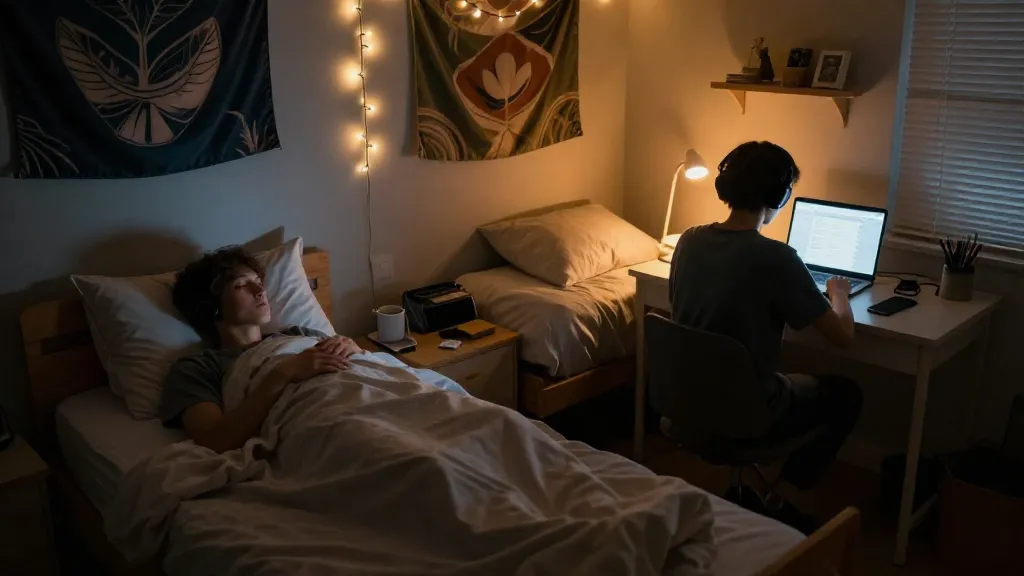
It's 1:47 a.m. on a Tuesday. You have an organic chemistry exam in six hours. Your roommate is on a FaceTime call — laughing, talking at full volume, seemingly unaware that you exist. You're lying in the dark, covers pulled up, jaw clenched, cycling between rage and the desperate wish that you could just say something without turning the rest of the semester into a cold war.
Dorm quiet hours are one of the most common flashpoints between college roommates, and the reason is simple: what counts as "quiet" is deeply personal. One person's background noise is another person's sleep-destroying nightmare. The challenge isn't just setting quiet hours — it's enforcing them in a way that doesn't make you the villain of your own living situation.
This guide walks you through exactly how to do that: create clear, fair noise boundaries and hold them with confidence, without becoming the roommate everyone dreads.

Why Dorm Quiet Hours Are So Hard to Talk About
It Feels Personal
Asking someone to be quieter can feel like asking them to be less themselves. Your roommate isn't deliberately torturing you — they're watching a show, talking to a friend, or just existing at a volume that works for them. When you bring up noise, it's easy for them to hear, "You're annoying me," instead of, "I need sleep."
There's a Power Imbalance Fear
Nobody wants to be the rule enforcer in a space that's supposed to feel like home. You might worry about being labeled "the strict one" or "the buzzkill." That fear keeps people silent for weeks, sometimes months — until the resentment boils over into a blowup that's ten times worse than an early, honest conversation would have been.
"Quiet" Is Subjective
Your university probably has official quiet hours (often 10 p.m. to 8 a.m. on weeknights). But those are minimums, not personalized agreements. They don't address mid-afternoon study sessions, weekend mornings, or the particular sounds that drive you up the wall — like keyboard clacking, speakerphone calls, or alarm snoozing.
Step 1: Define What You Actually Need (Before You Talk)
The worst way to start a quiet hours conversation is vaguely. "Can you be quieter?" gives your roommate nothing to work with. Before you say a word, figure out your specifics.
Ask yourself:
- What times do I need true quiet? Not "all the time" — get realistic. Maybe it's 11 p.m. to 7 a.m. on weeknights and study blocks before exams.
- What sounds bother me most? Is it voices, music, the TV, gaming audio, phone alarms, or something else?
- What can I tolerate with accommodations? Maybe you're fine with quiet typing but not speakerphone calls. Maybe you can handle low music if you have earplugs in.
- What am I willing to compromise on? You're going to need to flex somewhere. Knowing your non-negotiables versus nice-to-haves before the conversation prevents you from caving on things that actually matter.
Write it down. Literally. A short list on your phone is fine. This isn't about being rigid — it's about entering the conversation with clarity instead of frustration.
Step 2: Frame the Conversation as Collaborative, Not Corrective
Here's where most people go wrong. They wait until they're already annoyed, then approach the conversation as a complaint. The roommate gets defensive. Nothing changes, or it changes briefly and then slides back.
Instead, frame the conversation as a mutual planning session — ideally before a specific incident forces it.
Timing Matters
Don't bring this up at the moment of conflict (when they're being loud and you're fuming). Don't bring it up when either of you is stressed, rushing, or has been drinking. Pick a neutral moment — walking back from dining hall, a lazy Sunday afternoon, the first week of the semester before patterns even form.
Language That Works
Here are phrases that open doors instead of slamming them:
- "I want to figure out a system that works for both of us" — This signals collaboration.
- "I'm a lighter sleeper than I realized, so I want to get ahead of this before it becomes a problem" — This takes ownership without blaming.
- "What does your schedule look like? When do you need the room to be quiet?" — Asking about their needs first is disarming and genuine.
- "I'm not trying to control the room — I just want us to have a plan so neither of us has to guess" — This directly addresses the fear of being controlled.
Avoid:
- "You're always so loud at night" (accusatory, absolute language)
- "The RA said quiet hours start at 10" (hiding behind authority instead of owning your needs)
- "It's just common sense" (condescending — it's not common sense; it's personal preference)
Step 3: Build a Specific, Written Agreement
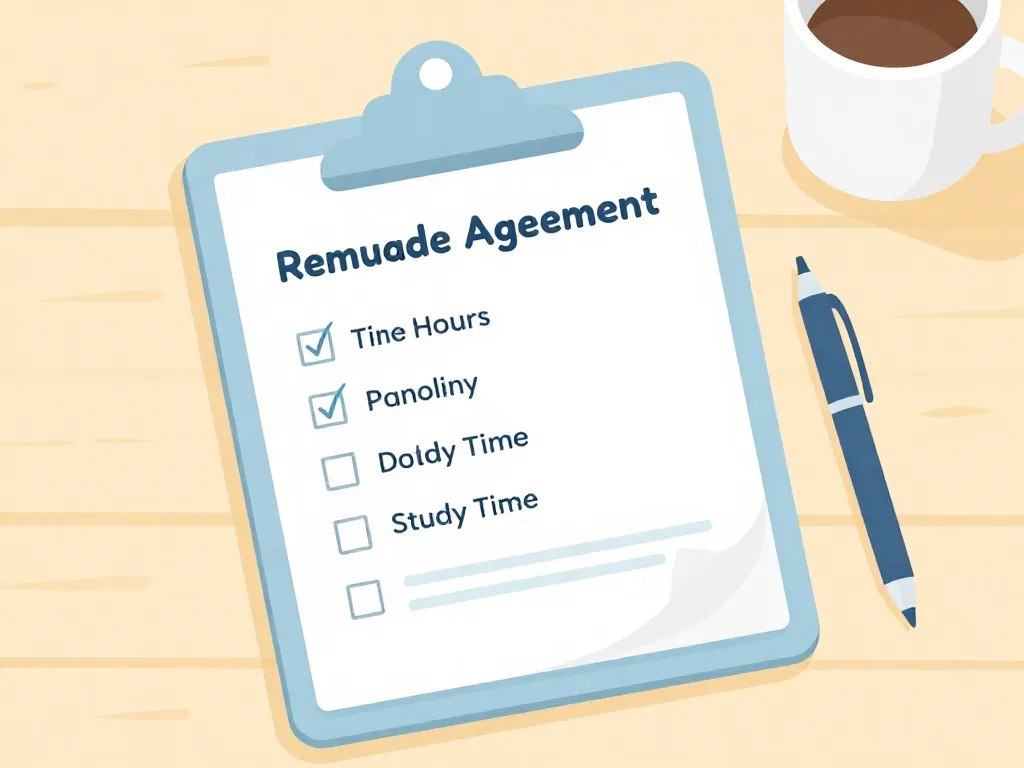
Verbal agreements dissolve. Someone remembers it differently, or the conversation gets hazy after a few weeks. A written agreement — even a casual one — creates a shared reference point that takes the emotion out of future enforcement.
Your quiet hours agreement should cover:
Core Quiet Hours
|
Weeknights (Sun–Thu) |
Weekends (Fri–Sat) |
| Quiet starts |
11:00 p.m. |
12:30 a.m. |
| Quiet ends |
7:30 a.m. |
9:00 a.m. |
(These are examples — your numbers will be different.)
What "Quiet" Means
Be specific. "Quiet" for your agreement might mean:
- Headphones required for all audio (music, videos, games, calls)
- Phone calls taken in the hallway or common room
- No guests in the room
- Alarms limited to one snooze, then turn it off
- Overhead lights off (use desk lamp only)
Study Quiet Hours
Consider adding a separate tier for study time, especially during midterms and finals:
- Either roommate can request a 2-hour "study quiet" block with at least 30 minutes notice
- During study quiet, same rules as nighttime quiet hours
- Maximum of two blocks per day to keep it fair
The Signal System
Some roommates find it helpful to have a no-confrontation signal when quiet hours need to kick in. Examples:
- A specific color sticky note on the door means "I need quiet right now"
- A quick text: "Hey, heading to bed — quiet mode?" (low-pressure, no big deal)
- Headphones already in when your roommate walks in = visual cue that you're in focus mode
Tools like Servanda can help you and your roommate create a written agreement like this digitally, so you both have a copy you can reference without it feeling like a legal document taped to the wall.
The Flexibility Clause
This is critical. Build in explicit room for exceptions:
- "If one of us has a special occasion (birthday, friends visiting from out of town), we give 24 hours notice and the other person can plan to be elsewhere or use earplugs."
- "We revisit this agreement after midterms to see if it still works."
Flexibility is what separates a livable agreement from a rigid set of rules that breeds resentment.
Step 4: Enforce Without Escalating
You have the agreement. Now your roommate breaks it. Maybe not maliciously — they just forgot, or they're caught up in the moment. This is the moment that determines whether your system works long-term.
The First Time: Assume Good Faith
A gentle, in-the-moment reminder. Keep it light:
- "Hey, it's past 11 — mind throwing on headphones?"
- Quick text if they're on a call: "Quiet hours 🙏" with nothing else
- A small wave or point to your watch if you're already in bed
No lectures. No sighing. No passive-aggression. Just a quick, friendly nudge.
The Second or Third Time: Name the Pattern
If it keeps happening, a slightly more direct follow-up — but still calm and private:
- "Hey, I've had to ask a few times about the quiet hours thing. I want to make sure we're still on the same page — is the current setup not working for you?"
This is important: ask if the agreement needs adjusting. Maybe your roommate agreed to something they can't sustain. That's useful information. It's better to renegotiate than to have a rule that exists on paper but never in practice.
If Nothing Changes: Escalate Thoughtfully
If direct, repeated conversations haven't worked, you have options — but use them in order:
- Suggest mediation through your RA. RAs are trained for this. Frame it as "we need help finding a middle ground," not "I'm reporting you."
- Request a room change. This isn't failure — it's recognizing incompatibility. Some people have irreconcilable living habits, and that's okay.
- Document the pattern. If the noise violates university policy and mediation has failed, keeping a simple log (dates, times, what happened) supports a formal complaint if it comes to that.

What to Do on Your End (The Part Nobody Wants to Hear)
Enforcing quiet hours goes both ways. If you want your roommate to respect your boundaries, you need to hold up your end — and be honest about your own noise footprint.
Invest in Your Own Sleep Infrastructure
- Quality earplugs. Not the cheap foam ones — try silicone or wax earplugs rated for sleep. This isn't about giving your roommate a free pass; it's about protecting your sleep regardless of external factors.
- A white noise machine or app. A fan or a dedicated device can mask incidental sounds without requiring total silence from your roommate.
- An eye mask. If light is part of the problem, solve what you can solve independently.
Follow Your Own Rules
Nothing kills an agreement faster than hypocrisy. If quiet hours start at 11, your phone is on silent at 11. Your alarm doesn't blare five times at 6 a.m. You take your late-night calls in the hallway too.
Check Your Sensitivity Honestly
Some sounds are unreasonable at 1 a.m. Some aren't. Your roommate turning over in bed, typing quietly, or breathing audibly — these are sounds of a shared space, not violations. If you find yourself needing absolute silence to function, a single dorm room or off-campus housing might be a better long-term fit, and that's a legitimate realization, not a personal failing.
Real-World Examples That Actually Worked
Scenario A: Two first-year students — one a morning person with 8 a.m. classes, one a night owl who studied until 2 a.m. They agreed on quiet hours from midnight to 8 a.m. The night owl studied in the library after midnight. The morning person used a silent vibrating alarm. Both invested in sleep masks. Neither loved the compromise, but both slept.
Scenario B: A roommate pair where one was a gamer who used voice chat late at night. After a tense first month, they agreed that gaming with voice chat moved to the common room after 10 p.m. on weeknights. The gamer actually preferred it — the common room had better WiFi and other gamers to hang out with.
Scenario C: Two close friends who roomed together and nearly destroyed their friendship over noise. The problem wasn't volume — it was that neither wanted to "make it weird" by setting rules. Once they sat down and wrote a simple agreement (quiet after 11, headphones always after 10, one exception night per week), the tension evaporated. The formality of writing it down actually made enforcement less awkward, not more.
The Bigger Picture: Boundaries Aren't Hostile
Setting boundaries is an act of respect, not aggression. When you tell your roommate what you need, you're trusting them enough to be honest. When you respect their quiet hours in return, you're showing that trust goes both ways.
The roommates who end up hating each other aren't usually the ones who had the awkward conversation early. They're the ones who never had it at all — who seethed silently, made passive-aggressive comments, or went straight to the RA without ever saying directly, "Hey, I need it quieter after 11."
Conclusion
Enforcing dorm quiet hours doesn't require you to become an authoritarian or sacrifice your social standing. It requires clarity about what you need, the willingness to ask for it directly, and a written agreement that removes the guesswork. Approach the conversation early, frame it as mutual problem-solving, build in flexibility, and enforce with calm consistency rather than escalating frustration.
Your living situation isn't permanent, but the skills you build here — advocating for your needs while respecting someone else's — will follow you into every shared space for the rest of your life. Start with quiet hours. The rest gets easier from there.
Frequently Asked Questions
How do I tell my roommate to be quiet without starting a fight?
The key is timing and framing — bring it up during a calm, neutral moment rather than when you're already frustrated by the noise. Use collaborative language like "I want to figure out a system that works for both of us" and ask about their needs first, which signals that you're looking for a solution together rather than issuing a demand.
What should a roommate quiet hours agreement include?
A good agreement should specify exact quiet start and end times for weeknights and weekends, define what "quiet" means (such as headphones required, no speakerphone calls, overhead lights off), and include study quiet hour rules for exam periods. It should also have a flexibility clause for special occasions and a plan to revisit the agreement periodically to make sure it still works for both of you.
What do I do if my roommate keeps ignoring quiet hours?
Start by giving a friendly, low-pressure reminder the first time, then have a private conversation naming the pattern if it continues — and ask whether the agreement needs adjusting. If direct conversations don't resolve things, escalate thoughtfully by requesting RA mediation, considering a room change, or documenting violations to support a formal complaint.
Should I just go to my RA instead of talking to my roommate about noise?
Going directly to your RA without first having an honest conversation with your roommate usually makes the situation worse and can feel like a betrayal of trust. Try a direct, calm conversation at least once or twice before involving your RA, and when you do bring them in, frame it as needing help finding a middle ground rather than filing a report.
Is it unreasonable to ask my roommate to wear headphones at night?
No — requiring headphones for all audio after a mutually agreed-upon time is one of the most common and reasonable elements of a roommate quiet hours agreement. Most roommates find this easy to comply with, and it eliminates the biggest source of nighttime noise conflicts without asking anyone to stop their activities entirely.