How to Talk to Your Roommate Without Starting a War
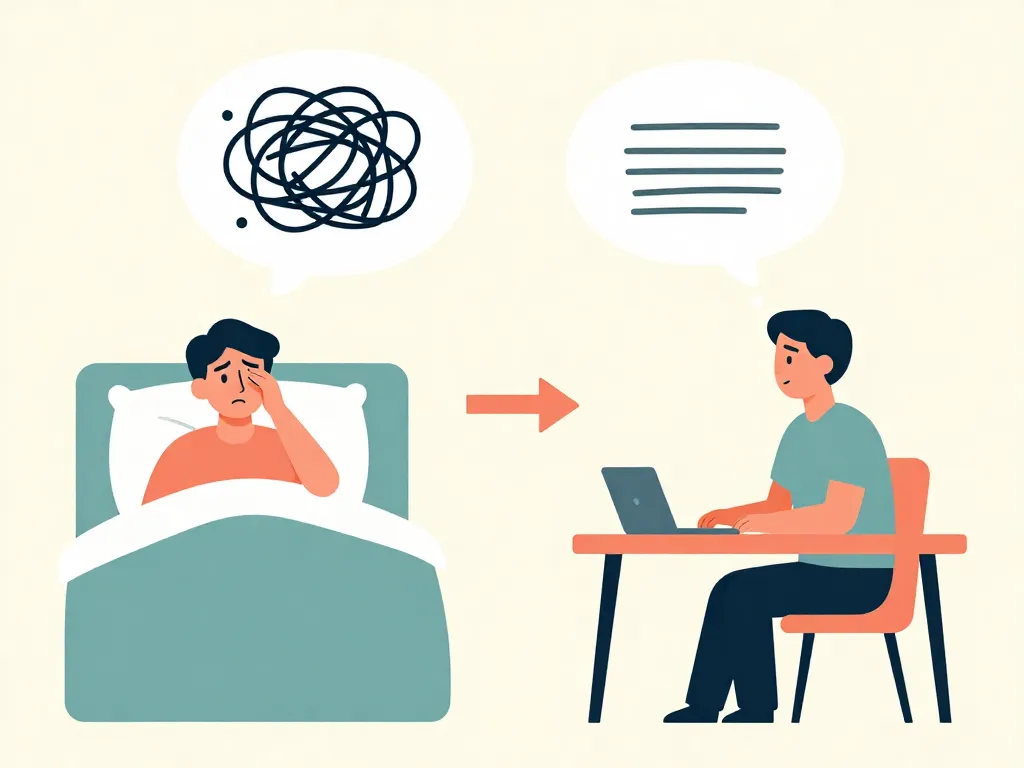
It's 11:47 p.m. on a Tuesday. You have an 8 a.m. meeting. And your roommate's speaker is thumping bass through the wall — again. You lie there staring at the ceiling, composing a furious text in your head, deleting it, rewriting it, and saying nothing. By morning, you're exhausted and resentful. By the weekend, you're slamming cabinet doors a little harder than necessary.
Roommate conflicts don't explode overnight. They simmer. You avoid the conversation because you're afraid of making things awkward — or worse, turning your living space into a battlefield. So the dishes pile up, the passive-aggressive sticky notes appear, and suddenly two people who once got along fine can barely make eye contact in the kitchen.
There's a gap between "saying nothing" and "starting a war." This article shows you how to talk to your roommate about hard things using frameworks that are practical and that preserve the relationship.
Why You Keep Avoiding the Conversation (And Why That's Making It Worse)
Your instinct to avoid conflict is human. Research in social psychology shows that people consistently overestimate how badly a difficult conversation will go. You imagine yelling, tears, a lease-breaking blowout. In reality, most roommate conversations — when handled with intentionality — end with a shrug and an "okay, yeah, that's fair."
But avoidance has a cost. Every time you swallow an irritation instead of naming it, you're adding a brick to a wall of resentment. And resentment leaks out as:
- Passive aggression — leaving their stuff outside their door, "forgetting" to pass along messages
- Venting to everyone except your roommate — friends, partners, group chats all hear about it, but the one person who could change the behavior doesn't
- Explosive reactions to minor triggers — you finally snap over a coffee mug, but the real issue is six months of unspoken frustration
The conversation you're avoiding today will be three times harder in three months.
"I" statements work because they structurally remove blame from your sentence, which means the other person's defenses stay down long enough to actually hear you.
An "I" statement follows this pattern:
"I feel [emotion] when [specific behavior] because [impact on you]. I'd like [specific request]."
Part 1: "I feel…"
Name the actual emotion. Not "I feel like you're being inconsiderate" — that's a judgment wearing an emotion costume. Try:
- "I feel anxious…"
- "I feel frustrated…"
- "I feel overwhelmed…"
Part 2: "When…"
Describe the specific, observable behavior. Not their personality. Not a sweeping generalization. What a camera would record.
- ❌ "…when you're a slob"
- ✅ "…when dishes sit in the sink for more than two days"
Part 3: "Because…"
Explain the concrete impact on your life.
- "…because I can't use the counter to cook"
- "…because I end up not being able to sleep before work"
Part 4: "I'd like…"
Make a specific, reasonable request. Not an ultimatum. A starting point for negotiation.
- "I'd like us to agree on a system where dishes get washed within 24 hours."
- "I'd like us to keep music at a lower volume after 10 p.m. on weeknights."
Real Examples, Side by Side
| Instead of this… |
Try this… |
| "You never clean up after yourself." |
"I feel stressed when the kitchen isn't cleaned up after cooking because it makes the space feel chaotic for me. Could we agree to clean up within an hour of cooking?" |
| "Your friends are here literally every night." |
"I feel drained when we have guests over on consecutive weeknights because I need quiet time to recharge. Could we set a heads-up system for weeknight hangouts?" |
| "You're so loud, it's ridiculous." |
"I feel frustrated when there's loud music after 11 because I have trouble falling back asleep. Would you be open to using headphones after a certain time?" |
Notice what's happening in the right column: nobody's character is being attacked. The problem is named. A solution is offered. The tone is collaborative.
Separate the Person from the Problem
This concept comes from the negotiation classic Getting to Yes by Roger Fisher and William Ury. Your roommate is not the problem. The problem is the problem. You and your roommate are two people on the same side, looking at an issue together.
Reframing the Narrative in Your Own Head
Before you even start the conversation, check the story you're telling yourself.
- Adversarial framing: "My roommate doesn't respect me. They're selfish and inconsiderate. I need to confront them."
- Problem-focused framing: "We have different expectations about noise levels at night. This is a solvable logistics issue."
Language That Separates Person from Problem
- Say "this situation" instead of "what you did"
- Say "we need to figure out" instead of "you need to stop"
- Say "how can we handle" instead of "why do you always"
When your roommate hears "we," their brain categorizes this as collaboration. When they hear "you" followed by an accusation, their brain categorizes it as a threat.
When and Where to Have the Conversation
Timing Rules of Thumb
- Not when either of you is hungry, tired, rushed, or already upset.
- Not in the heat of the moment. If the bass is thumping right now, a brief "Hey, could you turn that down tonight? And can we talk about a noise plan this weekend?" is fine. But the bigger conversation deserves a calm moment.
- Give a heads-up: "Hey, I want to chat about our kitchen system — nothing dramatic. When's a good time this week?" This prevents the ambush feeling.
Setting Matters
- Choose a neutral, shared space — the living room or kitchen table, not their bedroom doorway.
- In person is almost always better than text. Tone gets lost in messages. Entire roommate feuds have started over a text that was meant to be lighthearted but read as hostile.
- If things tend to get heated, consider a walk and talk. Side-by-side conversation feels less confrontational than face-to-face, and movement helps regulate emotions.
The Conversation Itself: A Step-by-Step Script
Here's a template you can adapt. Use your own words — the structure is what matters.
Step 1: Open with warmth and intention
"Hey, thanks for making time for this. I want to talk about something that's been on my mind, and I want to figure it out together — this isn't an attack."
Step 2: State the issue using your "I" statement
"I've been feeling stressed about the kitchen cleanup situation. When dishes stay in the sink for a few days, it makes it hard for me to cook, and I end up feeling frustrated."
Step 3: Invite their perspective
"I want to hear your side too — maybe there's stuff bugging you that I'm not seeing."
A conversation is not a monologue. Your roommate might have context you're missing (a brutal work schedule, a health issue, a different standard of cleanliness they grew up with). They might also have grievances of their own. Let them talk. Listen.
Step 4: Brainstorm solutions together
"What if we tried a rotation — I cook and clean Mondays and Wednesdays, you take Tuesdays and Thursdays, and we figure out weekends as they come?"
You're proposing, not dictating. If they have a different idea, consider it. The best agreements are the ones both people helped build.
Step 5: Confirm and document
"Cool, so we're agreeing on [specific plan]. Mind if we put this in our shared notes so we both remember?"
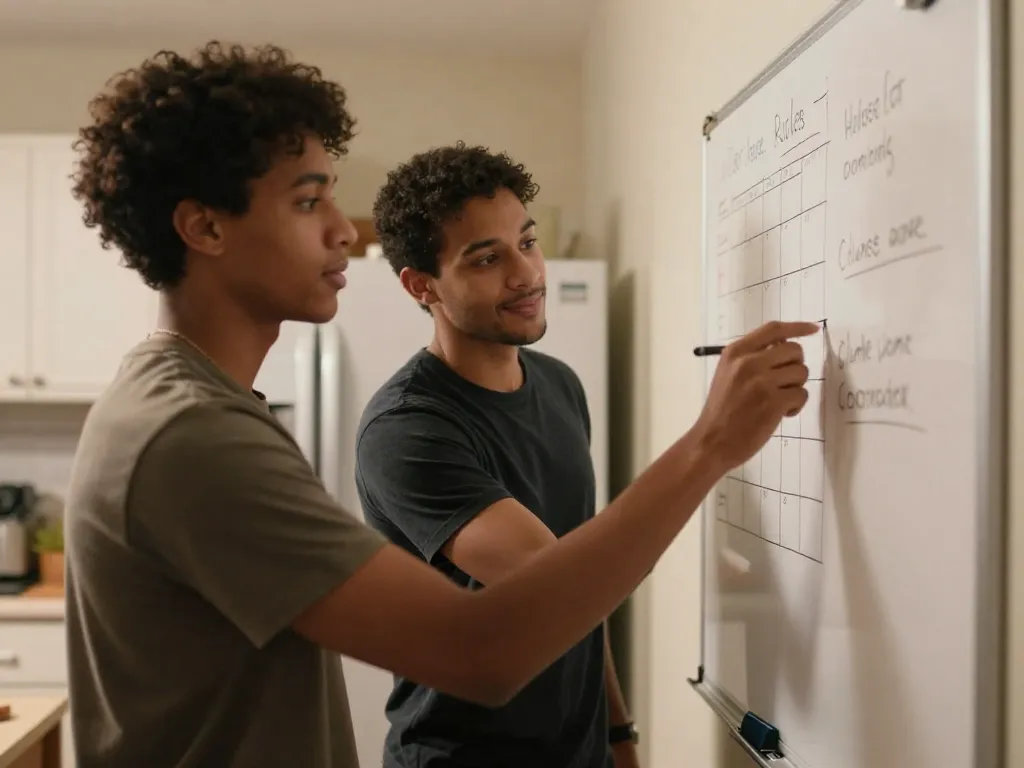
Writing it down isn't about distrust. It's about clarity. Memory is unreliable, and a quick shared document or even a whiteboard on the fridge prevents "wait, I thought we said…" arguments. Tools like Servanda can help you create structured written agreements that both roommates can reference later — especially useful when you're sorting out multiple issues at once.
What to Do When It Doesn't Go Smoothly
If They Get Defensive
- Don't match their energy. If they raise their voice, keep yours steady.
- Acknowledge their feeling: "I can tell this is frustrating to hear. That's not my intention."
- Return to the problem: "I'm not saying you're a bad roommate. I'm saying we have different preferences around noise, and I want to find something that works for both of us."
If You Start Getting Heated
- It's okay to pause: "I'm getting a little worked up, which isn't going to help either of us. Can we pick this up tomorrow?"
Taking a break isn't failure — it's self-regulation.
If They Refuse to Engage
Some roommates will stonewall: "I don't see the problem," "You're overreacting," or just silence. If this happens:
- Put your request in writing (a text or email) so there's a clear record
- Be specific about what you need and by when
- If the behavior continues and significantly impacts your quality of life, it may be time to involve a mediator, your landlord, or an RA if you're in campus housing
Building a Culture of Easy Conversations
The ultimate goal isn't to survive one hard conversation — it's to create a living situation where small issues get addressed before they become big ones.
- Weekly or biweekly check-ins. Even five minutes: "Anything bugging you? Anything working well?" Normalizing these conversations removes the weight from them.
- A shared "house notes" document. A running list of agreed-upon norms: quiet hours, guest policies, cleaning responsibilities, how you'll split shared expenses. Revisit it when something isn't working.
- Default to generous assumptions. When your roommate does something annoying, assume incompetence or obliviousness before malice. Most of the time, they genuinely don't realize they're bothering you.
- Say the positive stuff too. "Hey, thanks for taking out the trash — I noticed." Relationships that only surface issues during conflict become fragile fast. Balance matters.
Frequently Asked Questions
How do I bring up a problem with my roommate without making it awkward?
Give them a casual heads-up so it doesn't feel like an ambush: "Hey, I want to chat about our kitchen situation — nothing serious, just want to get on the same page." Framing it as a logistics conversation rather than a confrontation takes most of the awkwardness out.
What if my roommate gets mad when I try to talk about issues?
Stay calm, acknowledge their reaction without absorbing it, and refocus on the specific issue. If the conversation becomes unproductive, say, "Let's take a break and come back to this when we've both had time to think." You can't control their reaction, but you can control how you show up.
Do "I" statements actually work, or do they sound fake?
They can feel unnatural at first. The goal isn't to recite a formula perfectly; it's to shift your habit away from blame-heavy language. Use your own words. Even a rough "I" statement ("Look, I get stressed when the kitchen's a mess — can we figure something out?") works far better than "You're disgusting and never clean up."
Should I text my roommate about problems or talk in person?
In person is almost always better for anything beyond a quick, low-stakes request. Texts strip out tone, body language, and pacing — all the things that signal "I'm not attacking you." If you must text, re-read it imagining the most hostile possible interpretation before hitting send.
When is it time to involve a third party in a roommate conflict?
If you've tried direct conversation more than once, put your concerns in writing, and the behavior still hasn't changed — or if you feel unsafe — it's time to bring in outside help. That might be an RA, a landlord, a mutual friend both parties trust, or a mediation service.
Moving Forward: Conflict as a Skill, Not a Crisis
Learning how to talk to your roommate about hard things isn't about being perfectly diplomatic or never feeling annoyed. It's about building a toolkit — "I" statements, separating the person from the problem, choosing the right moment, proposing solutions — and using it before resentment turns a solvable issue into a relationship-ending one.
The conversation you've been avoiding is a ten-minute exchange that ends with "yeah, okay, that makes sense." Most roommate conflicts are not fundamental incompatibilities. They're logistical mismatches between two people who never explicitly agreed on the same expectations.
So have the conversation. Be honest. Be kind. Be specific. Remember: the goal isn't to win. It's to live well — together.