5 Mistakes That Make Roommate Cleaning Fights Worse
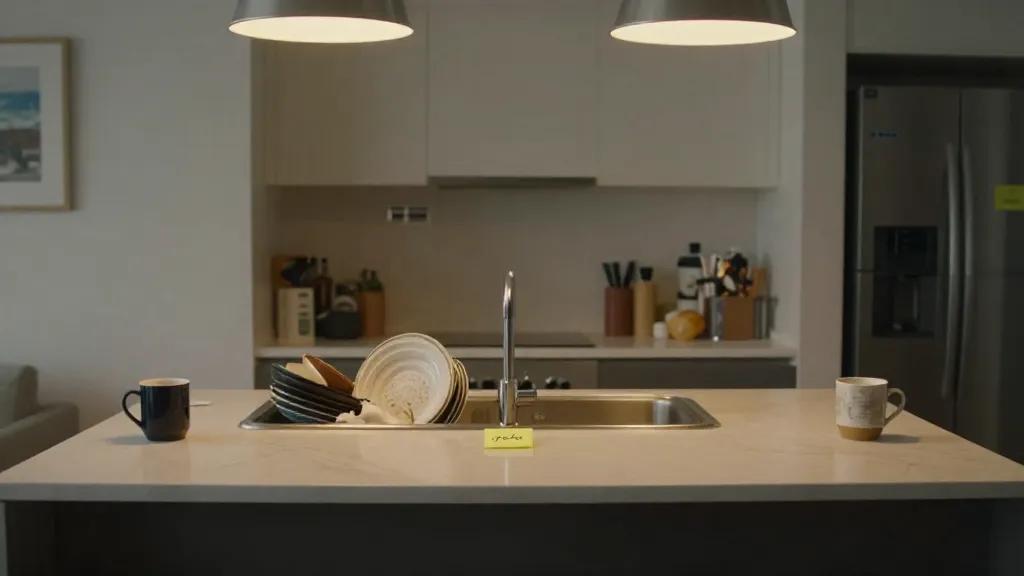
It starts with a single pan left in the sink. Then it's a week of dishes. Then someone leaves a passive-aggressive note on the counter — or worse, sends a paragraph-long text to the group chat at 11 p.m. on a Wednesday. Within days, two people who once split pizza and watched movies together can barely look each other in the eye.
Roommate cleaning fights are one of the most common — and most destructive — sources of tension in shared living situations. A 2023 survey by Apartment List found that household chores are the number one cause of roommate conflict, outranking noise, guests, and even late rent. And yet, most of us handle these disputes in ways that actively make them worse.
The problem usually isn't that your roommate is a terrible person. It's that both of you are falling into predictable traps. Here are five mistakes that escalate roommate cleaning fights — and what to do instead.
Mistake #1: Keeping a Mental Scoreboard Instead of Setting Expectations
You emptied the dishwasher three times this week. Your roommate hasn't touched it once. You know this because you've been counting — silently, resentfully, with the precision of an accountant during tax season.
This is the mental scoreboard, and almost everyone keeps one. The problem isn't that you're tracking contributions. It's that you're tracking contributions inside your own head, where your roommate has zero access to the data and zero chance to dispute it.
Why this makes cleaning fights worse
Mental scorekeeping creates a growing sense of injustice that has no release valve. By the time you finally say something, you're not bringing up one instance — you're unleashing weeks of accumulated frustration. Your roommate hears an attack. You feel unheard. The fight escalates.
Worse, your mental ledger is biased. Research in social psychology calls this the "egocentric bias in responsibility allocation" — people consistently overestimate their own contributions to shared tasks. Your roommate probably thinks they're doing more than you realize, too.
What to do instead
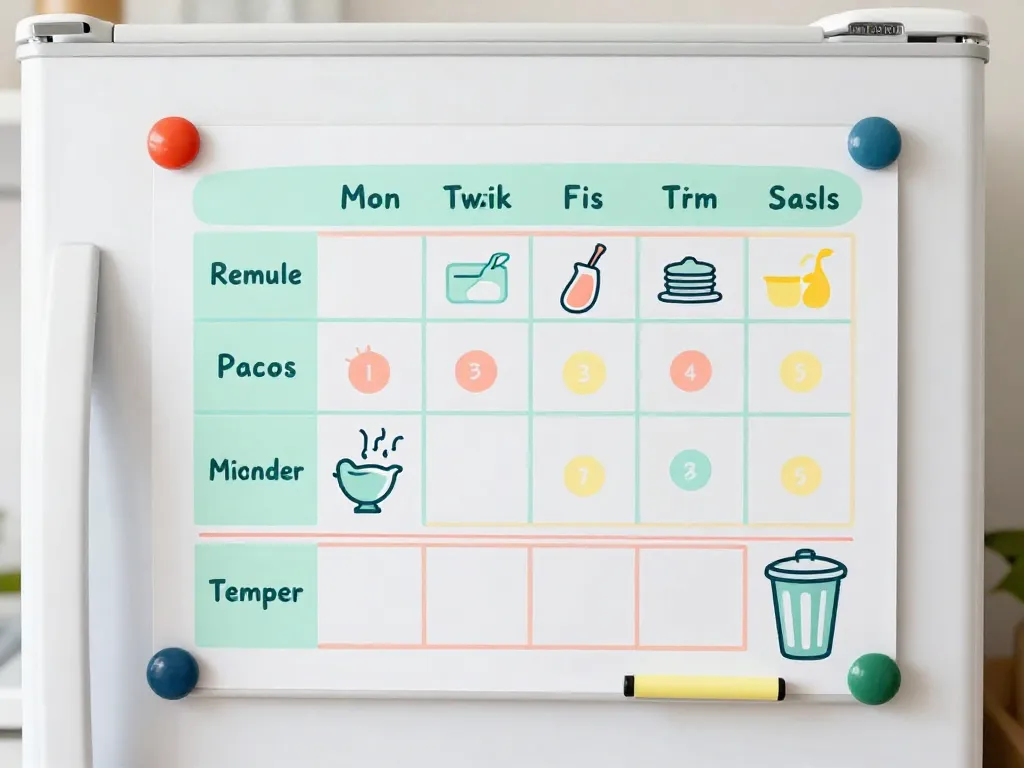
Replace the mental scoreboard with a visible, agreed-upon system. This can be:
- A whiteboard on the fridge with rotating weekly chores
- A shared Google Sheet or checklist app
- A simple written agreement about who handles what
The key is making expectations external and explicit. When responsibilities are written down, disagreements shift from "you never do anything" to "hey, it looks like the bathroom didn't get done this week" — a much easier conversation to have.
Tools like Servanda can help roommates create written agreements that prevent future conflicts, giving you a neutral record to point to when memories differ.
Mistake #2: Using Passive Aggression Instead of a Direct Conversation
You know the greatest hits: the sticky note that says "Your mother doesn't live here." The dishes pointedly moved from the sink to your roommate's desk. The group chat message that starts with "Not to call anyone out, but…" and then proceeds to call someone out.
Passive aggression is the default conflict style for people who hate conflict — which is most people. It feels safer than a direct conversation because it allows you to express frustration while maintaining plausible deniability. But it's one of the fastest ways to turn a minor roommate cleaning fight into a full-blown cold war.

Why this makes cleaning fights worse
Passive-aggressive communication sends a message without giving your roommate a fair chance to respond. It puts them on the defensive without opening a dialogue. Most people respond to passive aggression with either counter-aggression or withdrawal — neither of which gets the kitchen cleaned.
It also poisons the emotional atmosphere of your home. Living with someone who communicates through sighs, slammed cabinets, and pointed silences is exhausting. Over time, even small messes become loaded with unspoken tension.
What to do instead
Have a short, direct, low-drama conversation. The formula is simpler than you think:
- Name the specific issue. "The dishes from last night are still in the sink."
- State the impact on you. "I couldn't cook dinner because there was no counter space."
- Make a clear request. "Can you wash them by tonight, or should we figure out a different system?"
That's it. No character judgments. No sweeping generalizations. No dramatic group chat messages. Just a clear, respectful ask.
If the thought of having this conversation makes your stomach flip, try framing it as problem-solving rather than confrontation: "Hey, I think our cleaning setup isn't really working. Can we talk about it for ten minutes this weekend?"
Mistake #3: Arguing About Cleanliness Standards Without Acknowledging They're Subjective
Here's a fight that never ends well: one roommate says the apartment is dirty, the other says it's fine. Both are genuinely confused by the other's perspective. Both feel like they're being reasonable.
This is because "clean" is not a universal standard. It's a deeply personal one shaped by how you grew up, your sensory sensitivities, your work schedule, your stress levels, and a dozen other factors. One person's "a little messy" is another person's "unlivable chaos."
Why this makes cleaning fights worse
When you argue about whether the apartment is "actually dirty," you're having a debate that can't be won. There's no objective referee. Each person walks away feeling invalidated and misunderstood. The fight isn't really about the dishes anymore — it's about whose reality gets to be the correct one.
This often devolves into character attacks: "You're a slob" or "You're a control freak." Once you start labeling each other instead of addressing the mess, the conflict becomes personal and much harder to repair.
What to do instead
Stop trying to agree on whether the apartment is dirty and start agreeing on specific, observable outcomes. Instead of debating cleanliness philosophy, define what "done" looks like for each task:
- Kitchen: Dishes washed and put away, counters wiped, trash taken out when full
- Bathroom: Toilet cleaned weekly, shower wiped down, towels off the floor
- Common areas: No food left out, surfaces cleared of personal items by Sunday evening
When you define "clean" in concrete, behavioral terms, you remove the subjective argument entirely. Either the counters are wiped or they aren't. No debate required.
Your roommate forgot to tell you a friend was coming over. You're annoyed. And somewhere in the middle of that conversation, you hear yourself saying, "And by the way, you haven't cleaned the bathroom in three weeks."
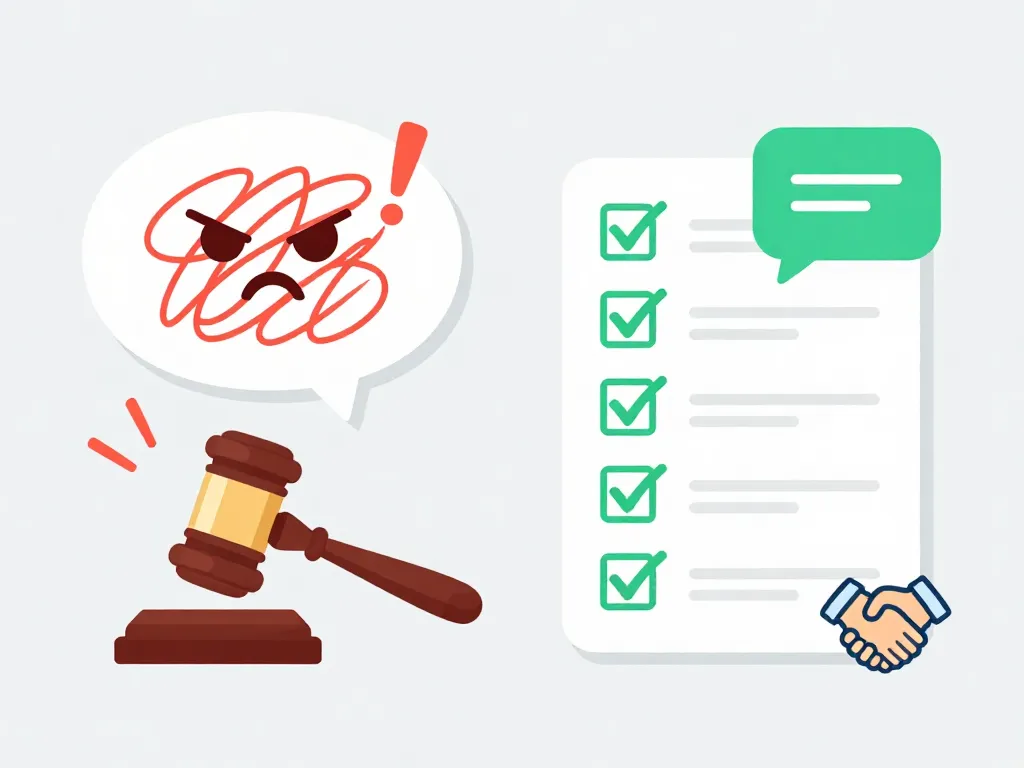
This is called "kitchen-sinking" — throwing every grievance into a single argument until the conversation collapses under its own weight. It's common in roommate cleaning fights because chore resentment tends to simmer in the background, ready to boil over the moment any conflict arises.
Why this makes cleaning fights worse
When you pile issues on top of each other, none of them get resolved. Your roommate can't address the guest situation AND the bathroom AND the thing from two months ago in a single conversation. They feel ambushed, you feel like nothing ever changes, and the actual problems get buried under emotional overwhelm.
It also signals to your roommate that you've been stockpiling complaints — which breaks trust. They start wondering what else you've been silently angry about, and the relationship becomes guarded.
What to do instead
Follow the one-issue rule: each conversation addresses one specific problem. If you're talking about the guest situation, stay on the guest situation. Write down the cleaning concern and bring it up separately, in a calm moment, when you can give it the focused attention it deserves.
If you notice yourself kitchen-sinking, it's a sign that smaller issues have gone unaddressed for too long. The fix isn't to bring everything up at once — it's to bring things up sooner, before they accumulate.
A helpful practice is a regular, low-stakes check-in — even just ten minutes every two weeks — where both roommates can raise small concerns before they become big ones. Think of it as routine maintenance for your living situation.
Mistake #5: Treating Every Cleaning Dispute as a Moral Issue
This might be the most damaging mistake on the list. It's the moment a dirty kitchen stops being a logistics problem and becomes evidence of your roommate's character. "They don't clean up because they don't respect me." "They leave messes because they're lazy and entitled." "If they cared about me at all, they'd notice."
Why this makes cleaning fights worse
Once you've decided that a dirty dish is a moral failing, there's no proportionate response. You're not solving a chore distribution problem anymore — you're prosecuting a case against your roommate's worth as a person. The stakes skyrocket. Defensiveness kicks in. Apologies feel inadequate because the offense has been upgraded from "forgot to clean" to "doesn't respect you."
This framing also makes it nearly impossible for your roommate to make amends. If cleaning the kitchen is just a task, they can do it and move on. If cleaning the kitchen has become a test of their love and respect for you, no amount of scrubbing will feel like enough.
What to do instead
Practice separating the behavior from the person. Your roommate leaving dishes out doesn't necessarily mean they disrespect you. It might mean they're overwhelmed at work. It might mean they have a different threshold for mess. It might mean they genuinely didn't notice.
Before you assign a motive, try assigning a more generous interpretation:
- Instead of: "They leave messes because they don't care about me."
-
Try: "They left a mess. I'll ask them to clean it up."
-
Instead of: "If they respected our home, they'd do their share."
- Try: "Our chore system isn't working. Let's adjust it."
This isn't about letting bad behavior slide. It's about giving yourself — and your roommate — enough emotional space to actually solve the problem. When you strip away the moral framing, the solutions become straightforward.
Putting It All Together: A Quick Reference
| Mistake |
Fix |
| Keeping a mental scoreboard |
Make expectations external and written |
| Using passive aggression |
Have a short, direct, specific conversation |
| Arguing about cleanliness standards |
Define "clean" in concrete, observable terms |
| Kitchen-sinking during arguments |
One issue per conversation; check in regularly |
| Treating mess as a moral failing |
Separate the behavior from the person |
Moving Forward Without the Drama
Roommate cleaning fights don't have to be a recurring nightmare. Most of the time, the underlying issue isn't a fundamental incompatibility — it's a communication gap that's been filled with assumptions, resentment, and guesswork.
The fixes above share a common thread: they replace vague expectations with clear ones, emotional escalation with specific requests, and character judgments with problem-solving. None of them require your roommate to be perfect. They just require both of you to be willing to talk about the boring, practical logistics of sharing a space.
Bring up the small stuff early, keep it specific, and resist the urge to make it personal. A ten-minute conversation about dishes today can save you months of silent resentment — and might just save a friendship in the process.
Frequently Asked Questions
How do you talk to your roommate about cleaning without starting a fight?
Keep the conversation short, specific, and focused on one issue at a time. Use a simple formula: describe the specific mess, explain how it impacts you, and make a clear request — for example, "The dishes from last night are still in the sink, I couldn't cook dinner, can you wash them by tonight?" Framing it as collaborative problem-solving rather than a personal attack makes your roommate far more likely to respond constructively.
What's the best way to split chores with a roommate?
Create a written chore system that clearly assigns specific tasks with defined standards for what "done" looks like. This can be as simple as a whiteboard on the fridge with rotating weekly responsibilities or a shared Google Sheet. Tools like Servanda can help you formalize a roommate agreement so there's a neutral reference point when disagreements come up.
Why do roommates always fight about cleaning?
Cleaning is the top source of roommate conflict because people have genuinely different standards of cleanliness shaped by their upbringing, stress levels, and personal habits. The real problem isn't usually the mess itself — it's unspoken expectations, mental scorekeeping, and the tendency to interpret a dirty kitchen as a sign of disrespect rather than a simple logistical breakdown.
How do you stop being passive-aggressive with your roommate?
Recognize that passive aggression — sticky notes, pointed sighs, moving someone's dishes to their bed — feels safer than direct conversation but actually escalates conflict by denying your roommate a chance to respond fairly. Instead, commit to raising concerns early and in person using specific, non-judgmental language. If direct conversations feel intimidating, try scheduling a brief recurring check-in so there's always a low-pressure time to bring things up.
How often should roommates check in about household issues?
A brief check-in every one to two weeks — even just ten minutes — is enough to catch small irritations before they snowball into major resentment. Use this time to review how the chore system is working, raise any concerns, and make adjustments. Regular maintenance conversations normalize talking about household logistics so it never feels like a confrontation.