Rebuilding Roommate Friendship After a Blowout Fight
The apartment is quiet, but it's the wrong kind of quiet. The dishes from last night are still in the sink — the very dishes that sparked a screaming match at 11 p.m. Your roommate's door is shut. You're sitting on the couch replaying every word, wincing at some of the things you said, fuming about some of the things they said. The friendship you had before you signed the lease together feels like it's hanging by a thread.
A blowout doesn't have to be the end of the relationship. In many cases, it's actually the messy beginning of a more honest, more resilient one. But getting there takes more than just pretending it didn't happen.

Why Roommate Fights Cut So Deep
Before diving into repair strategies, it helps to understand why a fight with a roommate can feel so much worse than a disagreement with a coworker or even a friend you don't live with.
You Can't Walk Away
After an argument with most people, you go home. After an argument with your roommate, you are home. There's no escape valve. You share a kitchen, a bathroom, a hallway. The person you're upset with is on the other side of a wall, and that proximity amplifies every emotion — guilt, anger, embarrassment, sadness.
The Stakes Are Tangled
Roommate conflicts are rarely just about the dishes, the thermostat, or the noise. They're layered with financial obligations, mutual friends, lease agreements, and the daily vulnerability of sharing a living space. When a fight erupts, it threatens not just a friendship but your sense of stability and safety at home.
Small Resentments Compound
Most blowout fights don't come from nowhere. They're the eruption of weeks or months of minor irritations that were never addressed. That's why the fight feels disproportionate to the trigger — because it's not really about this one thing. It's about the accumulation of every unspoken frustration.
Understanding this context reminds you that the explosion, while painful, is probably a signal that something in the living arrangement needs to change — not that the friendship is beyond repair.
Step 1: Give Each Other Real Space (Not the Silent Treatment)
There's a critical difference between taking space and giving someone the silent treatment. Taking space is intentional and communicated: "I need some time to cool down before we talk about this." The silent treatment is punitive and ambiguous: slamming doors, avoiding eye contact, leaving the room whenever they walk in.
After a blowout fight, both roommates usually need a cooldown period. That might be a few hours, or it might be a day or two. During this time:
- Don't pretend the other person doesn't exist. A simple nod or "hey" when you cross paths keeps the door open without forcing a conversation you're not ready for.
- Avoid venting to mutual friends. This creates sides, and sides make reconciliation harder. If you need to process, call someone outside your shared social circle.
- Set a loose timeline in your own mind. "I'm going to take tonight to think, and I'll bring it up tomorrow evening" is more productive than open-ended avoidance.
The goal of this phase is to let your nervous system settle so you can think clearly about what you actually need to say.

Step 2: Initiate the Conversation (Even When It's Awkward)
Someone has to go first. It might feel unfair — Why should I be the one to reach out when they're the one who… — but reconciliation isn't about fairness. It's about whether you value the relationship enough to tolerate some discomfort.
How to Open
A simple, low-pressure opener works best:
- "Can we talk about last night? I don't want things to stay weird between us."
- "I've been thinking about what happened, and I'd like to hear your side when you're ready."
- "I know we both said some things. Can we sit down this weekend and figure it out?"
These are invitations, not demands. They acknowledge the conflict without assigning blame, and they give the other person agency over the timing.
What If They're Not Ready?
Respect it, but don't let it become permanent avoidance. If they say "not now," respond with something like: "Okay, just let me know when. I do want to work this out." If a week passes with no movement, it's reasonable to bring it up again. Living in unresolved tension isn't sustainable.
Step 3: Have the Hard Conversation (Without Replaying the Fight)
This is the part most people dread. The risk of the reconciliation conversation is that it turns into Round 2. Here's how to prevent that.
Ground Rules for the Talk
- Pick a neutral, private setting. The living room is fine. A coffee shop works too if you both want to get out of the apartment. Avoid having this conversation in someone's bedroom — that's their retreat space.
- Take turns speaking without interruption. This isn't a debate. Each person gets to share their experience of what happened and what they need going forward.
- Use "I" statements authentically. Not as a communication trick, but because you genuinely don't know their intentions — you only know your experience. "I felt blindsided when you brought up the rent thing in front of our friends" is a fact about your experience. "You always humiliate me" is an accusation that will trigger defensiveness.
- Acknowledge your own part. Even if you believe you were 80% right, own your 20%. Did you let resentment build for weeks before snapping? Did you say something cruel in the heat of the moment? Naming your contribution gives the other person room to name theirs.
A Realistic Example
Take Jordan and Alex. They'd been friends since college, moved into a two-bedroom apartment after graduation. The fight: Alex had been bringing their partner over five or six nights a week without discussing it. Jordan finally snapped one Sunday morning when the partner was, once again, in the kitchen making breakfast.
The blowup was ugly. Jordan accused Alex of being inconsiderate and essentially moving a third person into the apartment. Alex fired back that Jordan was controlling and jealous. Both said things they didn't fully mean.
When they finally sat down three days later, the conversation went differently. Jordan admitted they should have brought up the guest situation weeks earlier instead of letting it fester. Alex acknowledged they hadn't thought about how frequent overnight guests affected Jordan's comfort in their own home. Neither person was entirely wrong. Both had contributed to the explosion by avoiding the smaller, harder conversation that needed to happen long before.
Step 4: Address the Underlying Issue, Not Just the Blowup
The fight was the symptom. What's the disease? This is where rebuilding a roommate friendship after a fight becomes transformative — or where it falls apart because people only address the surface.
Ask yourselves:
- Was there a boundary that was never set? Maybe you assumed certain things were obvious (guest policies, quiet hours, shared food) that actually need to be explicit.
- Is there a lifestyle incompatibility you've been ignoring? One person is a night owl; the other wakes up at 6 a.m. One person thrives in a clean space; the other doesn't notice mess. These aren't moral failings — they're differences that require negotiation.
- Has the power dynamic shifted? Sometimes one roommate pays more rent, or one person's name is on the lease, and that creates an unspoken hierarchy that breeds resentment.
Be honest about what's really going on. The blowout fight gave you information. Use it.
Step 5: Create Clear, Written Agreements
This is where most roommates drop the ball. The emotional conversation happens, apologies are exchanged, maybe there's even a hug — and then everyone goes back to exactly the way things were. Two months later, the same fight happens again.
The missing piece? Structure.
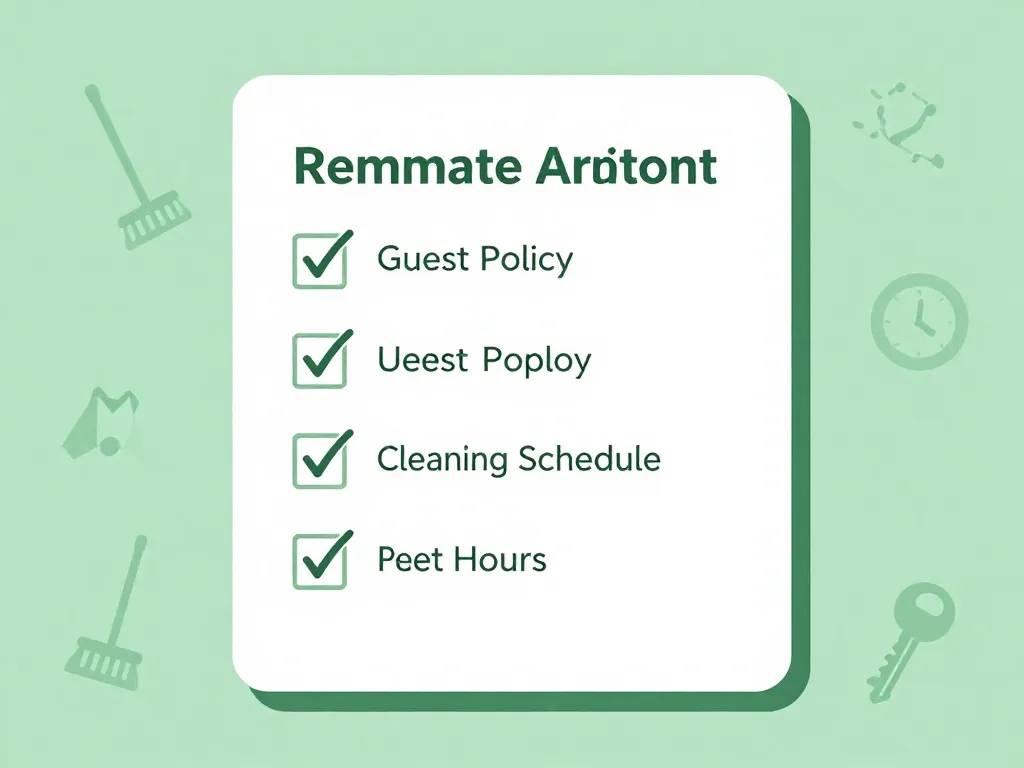
After you've talked through the conflict, formalize the agreements you've reached. This doesn't have to feel like a legal contract. It can be a shared Google Doc, a note on the fridge, or an agreement built through a tool like Servanda that helps roommates create clear, written expectations around the specific issues that cause friction.
What to include in a roommate agreement:
- Guest policies: How many nights per week? Do overnight guests need advance notice?
- Cleaning responsibilities: Who does what, and by when? Be specific — "keep common areas clean" is meaningless. "Dishes washed within 24 hours" is actionable.
- Quiet hours and shared space schedules: Especially important if you have different work schedules or sleep patterns.
- Financial splits: Not just rent, but utilities, shared groceries, and household supplies.
- Conflict resolution process: How will you handle the next disagreement? Maybe you agree to bring things up within 48 hours instead of letting them simmer. Maybe you agree to weekly 15-minute check-ins.
Writing things down isn't a sign that trust is broken. It's a sign that you're both serious about protecting the friendship from the friction of daily cohabitation.
Step 6: Rebuild Trust Through Small, Consistent Actions
After the conversation and the agreements, the real work begins — and it's not dramatic. It's small. It's daily.
Trust after a roommate fight is rebuilt through:
- Following through on what you said you'd do. If you agreed to text before bringing guests over, text every time. No exceptions.
- Bringing up small issues before they become big ones. "Hey, the bathroom drain is getting clogged again — can we figure out a schedule for cleaning it?" This kind of minor, low-stakes conversation is trust-building, because it proves you can navigate friction without an explosion.
- Being normal. Watch a show together. Cook dinner at the same time and chat about your day. The friendship needs positive deposits, not just conflict management.
- Giving grace. There will be slip-ups. The question isn't whether your roommate will forget to take out the trash once — they will. The question is whether you'll address it calmly and whether they'll respond non-defensively. That's the new pattern you're building.
When Rebuilding Isn't Working
Not every roommate friendship can or should be saved after a blowout fight. Sometimes the fight reveals an incompatibility that no agreement can fix.
Signs that the situation may be beyond repair:
- One person refuses to engage. If your roommate stonewalls every attempt at conversation for weeks, you can't reconcile alone.
- The same fight keeps repeating. If you've had the conversation, made the agreement, and the same pattern recurs, the willingness to change is the problem.
- You feel unsafe. If the fight involved threats, intimidation, or property damage, your priority shifts from friendship repair to personal safety. Contact a trusted friend, family member, or local resources.
- The resentment has calcified. Sometimes you just can't look at someone the same way after what was said. A friendship can sometimes survive a separation that it couldn't survive under the same roof.
If rebuilding isn't working, the most respectful thing you can do — for both of you — is have an honest conversation about one person moving out when the lease allows.
Conclusion
Rebuilding a roommate friendship after a blowout fight is uncomfortable, slow, and deeply worthwhile when both people are willing to do the work. It requires honest self-reflection, a willingness to hear things you'd rather not, and the discipline to formalize agreements that protect the relationship from the wear of daily life.
The fight happened. You can't un-say what was said. But you can choose what comes next: a slow drift into resentment, or a deliberate effort to understand each other better than you did before. The best roommate relationships aren't the ones where conflict never happens — they're the ones where conflict is handled with enough care that both people still feel at home.
Start with a text that says "Can we talk this weekend?"
Frequently Asked Questions
How do you talk to your roommate after a big fight?
Start with a simple, non-confrontational invitation like "Can we sit down and talk about what happened? I don't want things to stay weird between us." Give them the option to choose when, take turns speaking without interrupting, and use "I" statements to describe your experience rather than assigning blame.
How long should you wait to talk to your roommate after a fight?
A cooldown period of a few hours to a couple of days is usually healthy, as long as you've communicated that you need time rather than just going silent. If more than a week passes without any movement toward a conversation, it's appropriate to gently bring it up again.
What if my roommate won't talk to me after our fight?
Respect their need for space initially, but make it clear you're open to a conversation by saying something like "Just let me know when you're ready — I do want to work this out." If they continue to stonewall for weeks despite your efforts, you may need to accept that you can't reconcile alone and consider whether the living arrangement is still workable.
How do you stop the same roommate fight from happening over and over?
The key is addressing the root cause — not just the trigger — and then creating specific, written agreements around the issue, such as guest policies, cleaning schedules, or quiet hours. Pair that with a regular check-in habit (even 15 minutes a week) so small frustrations get aired before they build into another blowup.
Can a roommate friendship survive a really bad fight?
In many cases, yes — a blowout fight can lead to a stronger, more honest relationship if both people are willing to have the hard conversation and commit to real changes. However, if the same conflict keeps repeating, one person refuses to engage, or you feel unsafe, it may be a sign that the friendship needs physical distance to survive.