5 Roommate Conflicts That Feel Huge (But Are Fixable)
It's 11:47 PM on a Tuesday. You have an exam at 8 AM. Your roommate's friend is in the living room laughing at full volume, and the kitchen sink is still piled with dishes from a meal you didn't eat. Your chest tightens. You think: I can't live like this anymore.
The five roommate conflicts below are the ones that come up constantly — in dorm rooms, shared apartments, and house shares everywhere. They feel massive in the moment. They are also, without exception, fixable. Not with vague advice about "just talking it out," but with specific, concrete steps you can take today.

1. The Dish Standoff: "It's Not My Turn"
Why It Feels So Huge
Dirty dishes are never just about dirty dishes. When your roommate leaves a crusty pan in the sink for the third day in a row, what your brain actually registers is: They don't respect our shared space. They don't respect me. The dishes become a symbol of something much bigger — a perceived imbalance of effort, a feeling of being taken for granted.
One college student described it this way: "I started counting how many times I did the dishes versus her. I had a mental spreadsheet. It consumed way more energy than actually washing a plate."
How to Fix It
Step 1: Separate the logistics from the emotion. Before you bring it up, ask yourself: What specific outcome do I want? Not "I want them to care more" (you can't control that), but "I want dishes washed within 12 hours of use."
Step 2: Propose a concrete system. Vague agreements ("let's both try to keep the kitchen clean") fail almost immediately because "clean" means something different to everyone. Instead, try one of these:
- The 24-hour rule: Every dish must be washed within 24 hours of use. If it's not, the other person can put it in a designated bin on the counter.
- Cook-and-clean pairing: Whoever cooks, cleans. If you cook together, one washes, one dries.
- Assigned days: Monday/Wednesday/Friday vs. Tuesday/Thursday/Saturday, with Sunday as a shared reset day.
Step 3: Write it down. This sounds overly formal, and that's exactly the point. Having a written note on the fridge — even handwritten — transforms a vague social expectation into a clear agreement. It takes the argument from "you should know better" to "here's what we agreed on."
2. The Noise War: "Can You Keep It Down?"
Why It Feels So Huge
Noise conflicts escalate fast because they're physical. You can close your eyes, but you can't close your ears. When someone's music or late-night phone call invades your space, it triggers a fight-or-flight response — your body literally treats it as a threat. That's why noise disputes feel so urgent and personal, even when your roommate has no idea they're bothering you.
How to Fix It

Define "quiet hours" with actual clock times. "Late at night" is subjective. "After 10:30 PM on weeknights and midnight on weekends" is not. Agree on specific windows and write them down.
Address the medium, not just the volume. Sometimes the issue isn't loudness — it's the type of sound. A roommate's alarm going off four times every morning at 6 AM might technically be quiet, but it's still disruptive. Be specific about what's bothering you:
- "Your speakerphone calls after 10 PM keep me awake" is actionable.
- "You're too loud" is not.
Invest in low-cost buffers. This isn't about one person bearing the burden — it's about both people making small adjustments:
- The louder roommate uses headphones after quiet hours.
- The lighter sleeper tries earplugs or a white noise machine.
- Shared walls get a bookshelf or tapestry to dampen sound.
Create a real-time signal. Some roommates use a simple system: a sticky note on the door that says "Studying — quiet please" or "Call in progress." It sounds basic, but it works because it communicates a need without requiring a confrontation every single time.
3. The Uninvited Guest Problem: "Your Friend Is Always Here"
Why It Feels So Huge
Your roommate's significant other has slept over five nights this week. Their friend group treats your apartment like a clubhouse. You signed up to live with one person, and now it feels like you're living with three.
Guest conflicts strike at something fundamental: your sense of home. When someone else's social life takes over your living space, you lose the ability to decompress in the one place that's supposed to be yours.
How to Fix It
Set a guest policy before resentment builds. The best time to have this conversation is before a specific incident — but the second-best time is now. Cover these three questions:
- How many nights per week can a guest stay over? A common starting point is 2-3 nights. Beyond that, they're a de facto roommate and should be contributing to rent and utilities.
- Does the other roommate need a heads-up? Most people are fine with guests — they just want to know in advance so they're not surprised in their own kitchen at 7 AM.
- Are there shared-space boundaries? For example: guests are welcome in the living room, but the guest shouldn't be in the apartment when the roommate who invited them isn't home.
Use "I" framing without being passive. Instead of "Your boyfriend is here way too much," try: "I need the apartment to feel like a space where I can recharge. Can we agree on a guest limit that works for both of us?" This makes it easier for your roommate to hear you without getting defensive.
4. The Money Tension: "You Owe Me"
Why It Feels So Huge
Money conflicts between roommates feel huge because they combine two things people hate discussing: finances and fairness. When you Venmo-request your roommate for their half of the electricity bill and they leave you on read for five days, it's not the $47 that bothers you — it's the sinking feeling that you're being taken advantage of.
How to Fix It
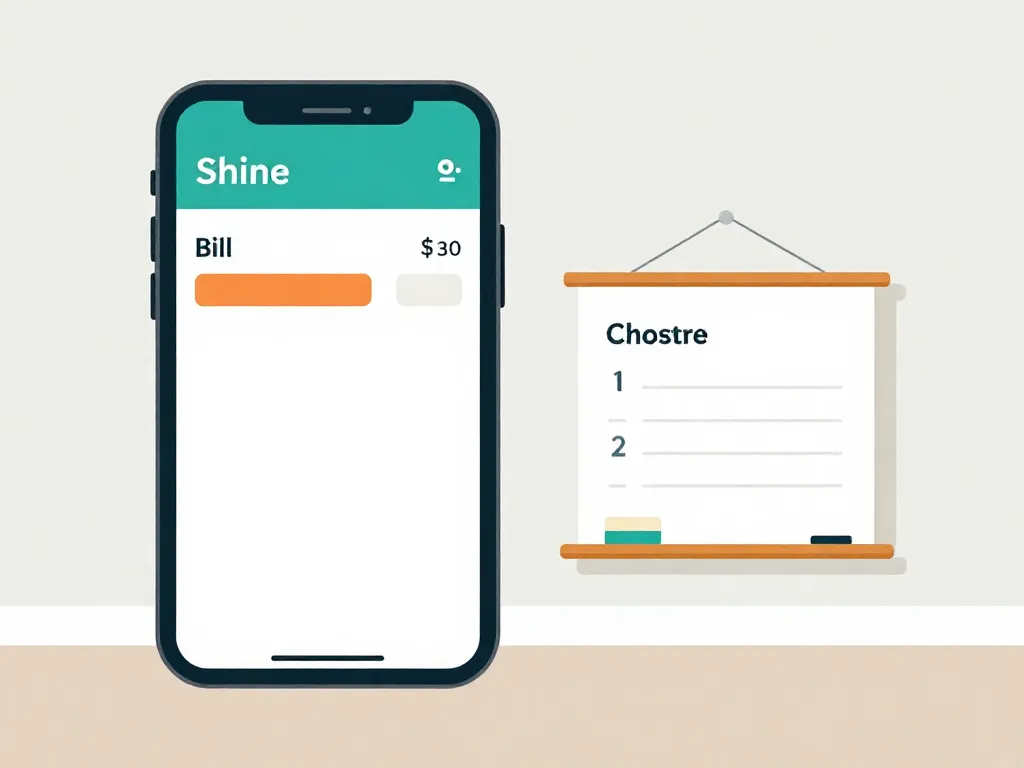
Automate whatever you can. The fewer money conversations you have to initiate, the less friction there is. Use a shared expenses app (Splitwise, Venmo recurring payments, or even a shared spreadsheet) so that bills are tracked transparently, not from memory.
Define who pays what before move-in — or redefine it now. A simple shared document covering the following prevents 90% of money arguments:
- Rent split (equal, or adjusted by room size)
- Utilities: who pays which bill, how others reimburse
- Shared household supplies (toilet paper, dish soap, trash bags): split evenly or take turns buying?
- Food: fully separate, or do you share staples like milk and eggs?
Handle late payments with structure, not confrontation. If your roommate is consistently late, propose a system rather than chasing them: "Can we set a rule that all shared expenses get settled within 48 hours of the bill being posted in our group chat?" This frames it as a household policy, not a personal accusation. Tools like Servanda can help you formalize these kinds of financial agreements into a clear, written document that both roommates reference — so the agreement does the reminding, not you.
5. The Cleanliness Gap: "We Have Different Standards"
Why It Feels So Huge
This is the roommate conflict most likely to simmer for months before erupting. Unlike a single noisy night, cleanliness is a slow accumulation: the hair in the shower drain, the sticky counter, the overflowing recycling. Each instance is small enough to feel petty to mention — but over time, they build into genuine resentment.
Cleanliness isn't objective. Your "reasonably tidy" might be someone else's "a disaster." Neither of you is wrong. You just have different baselines.
How to Fix It
Get specific about minimum standards. Instead of "keep the bathroom clean," define what that means in observable terms:
- Wipe down the counter after use
- Clean hair from the drain after every shower
- Take out the trash when it's full, not when it's overflowing
- Vacuum shared spaces once a week
Create a lightweight chore rotation. It doesn't need to be elaborate. A whiteboard on the fridge with two columns — your name and theirs — and a list of weekly tasks that alternates is enough. The key is visibility: when responsibilities are written down and rotated, the "I always do everything" feeling dissolves because there's an actual record.
Accept the 80% rule. Your roommate will probably never clean to your exact standard, and you won't clean to theirs. Aiming for 80% overlap — where the space is functional and hygienic, if not magazine-perfect — is a more sustainable goal than demanding perfection.
All five of these conflicts share a common fix underneath the specifics: the ability to raise an issue before it becomes a crisis. Here's a framework that works across all of them:
-
Wait 24-48 hours after the incident. Bringing something up in the moment means your emotions are driving. Waiting too long means resentment has calcified.
-
Lead with the impact, not the accusation. "When the kitchen is messy in the morning, it makes it hard for me to cook breakfast" lands differently than "You never clean up after yourself."
-
Propose a solution, not just a complaint. Coming with a specific suggestion ("What if we try a 24-hour dish rule?") shows you're invested in fixing the problem, not just venting.
-
Put the agreement in writing. A text thread, a shared Google Doc, a note on the fridge. It doesn't matter where — what matters is that it exists outside of anyone's memory, so no one can unintentionally revise the agreement later.
Frequently Asked Questions
How do I talk to my roommate about a problem without making it awkward?
Choose a neutral moment — not right after the thing that annoyed you, and not in passing as one of you is rushing out the door. Sit down, keep it brief, and focus on the specific issue and a proposed solution.
What if my roommate gets defensive when I bring up a conflict?
Defensiveness usually means they feel accused. Try reframing the conversation as a shared problem rather than something they did wrong: "The kitchen situation isn't working for either of us — can we figure out a system?" If they're still unwilling to engage, suggest putting your thoughts in a message so they have time to process before responding.
Is it normal to have conflicts with your roommate?
Conflict between roommates is one of the most universal experiences of shared living. Having disagreements doesn't mean you chose the wrong roommate or that the situation is doomed. It means two separate people with separate habits are sharing a space, and some negotiation is required.
Should roommates have a written agreement even if they're friends?
Especially if they're friends. Friendships add an unspoken pressure to avoid "making things weird," which leads to swallowed frustrations and eventual blowups. A simple written agreement about chores, guests, noise, and money protects the friendship by giving both people a reference point that isn't personal.
When is a roommate conflict too big to fix on your own?
If you've attempted a direct conversation more than twice, if the conflict involves lease violations or safety concerns, or if you feel genuinely anxious or unsafe in your own home, it's time to involve a third party — a resident advisor, a landlord, a mediator, or in extreme cases, legal advice.
Every one of these conflicts — the dishes, the noise, the guests, the money, the mess — has derailed roommate relationships before. And every one of them has been resolved by roommates who decided that a 15-minute honest conversation was better than three months of passive-aggressive tension.
The pattern is almost always the same: the conflict feels enormous, you dread the conversation, you finally have it, and afterward you wonder why you waited so long. The issue was never as big as the silence around it.
You don't need to be a perfect roommate. Neither does the person you live with. You just need a few clear agreements, the willingness to speak up early, and the understanding that friction in shared spaces is normal — not a sign that something is broken.