Roommates

Roommate Conflicts That Feel World-Ending (But Aren't)

By Luca · 10 min read · Jul 1, 2026
Roommate Conflicts That Feel World-Ending (But Aren't)

Roommate Conflicts That Feel World-Ending (But Aren't)

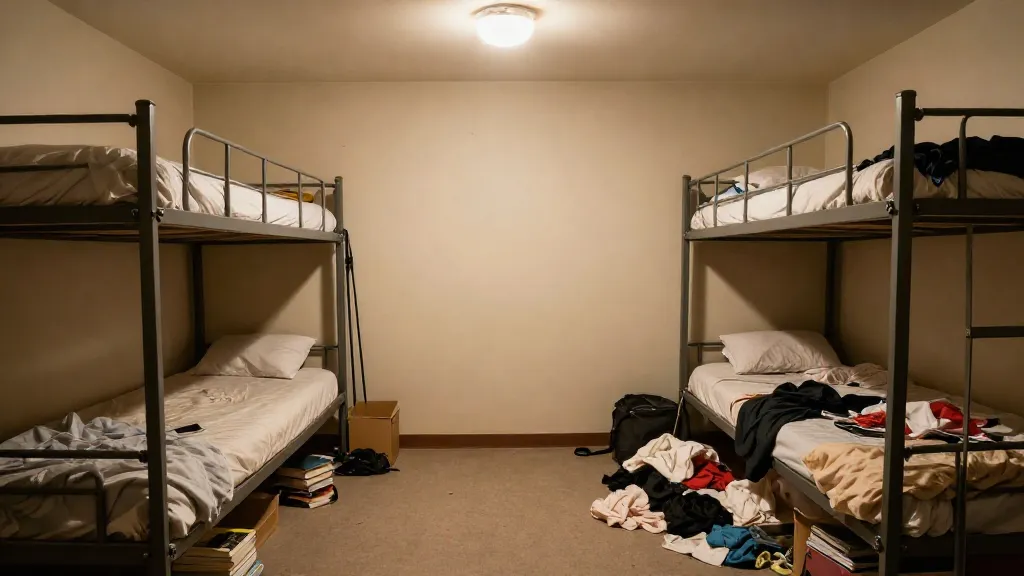
It's 1:47 a.m. You have a midterm at 8. Your roommate is FaceTiming their partner — again — laughing at full volume like they're performing for a live studio audience. You're lying in the dark, jaw clenched, mentally composing an email to housing asking for an emergency room transfer. You're also drafting a text to your mom that starts with "I literally cannot do this anymore."

Sound familiar? If so, welcome. You're experiencing one of the most universal human dramas: the roommate conflict that feels, in the moment, absolutely world-ending. The dirty dishes that represent a fundamental lack of respect. The thermostat war that reveals irreconcilable differences. The borrowed hoodie that becomes a treaty violation.

Here's the thing: nearly every person who has ever shared a living space has stood in this exact emotional place. And nearly every one of them survived it. Many even look back and laugh. This article is about borrowing that hindsight now, while you're in the thick of it — so you can stop catastrophizing and start problem-solving.

Key Takeaways

  • Most roommate conflicts are extremely common and almost always resolvable — even the ones that feel deeply personal right now.
  • Your brain is wired to catastrophize close-quarters friction. Recognizing this pattern is the first step to breaking it.
  • Specific, low-stakes conversations solve more problems than silent resentment. A single awkward 3-minute talk can replace months of misery.
  • Written agreements aren't petty — they're protective. Getting expectations on paper removes ambiguity and prevents the "I didn't know" excuse.
  • The conflict you're in right now is building a skill you'll use for the rest of your life. Navigating shared space is a rehearsal for every future relationship, workplace, and partnership.

Illustration of a frustrated roommate lying awake in bed while their roommate video-calls late at night, depicting the common sleep schedule conflict

Why Roommate Conflicts Feel So Much Bigger Than They Are

When you share a bedroom or a small apartment with someone, there's no buffer zone. You can't retreat to a separate wing of the house. You can't avoid the person for a few days to cool off. You eat, sleep, study, and decompress in overlapping space — which means every minor annoyance gets amplified.

The Psychology of Close-Quarters Friction

Research on interpersonal conflict in shared environments — from college dorms to space stations — shows a consistent pattern: proximity intensifies emotional reactions. A behavior that would barely register if a coworker did it (say, chewing loudly) becomes infuriating when it happens three feet from your pillow every night.

Add in a few common factors that most first-time roommates share:

  • Sleep deprivation — which reduces emotional regulation by up to 60%
  • Academic or financial stress — which lowers your tolerance for everything
  • A lack of prior experience negotiating shared space with a non-family member
  • Identity formation — especially in college, where you're figuring out who you are and what you value

Put it all together and you get a perfect recipe for what psychologists call catastrophizing: the cognitive distortion where you interpret a manageable problem as an unrecoverable disaster.

The dirty dishes aren't just dirty dishes. They're proof that your roommate doesn't respect you. Their late-night noise isn't just inconsiderate. It means you're fundamentally incompatible as humans. The fact that they didn't ask before having friends over isn't a communication gap. It's a betrayal.

Except — and this is the part that's hard to see when you're in it — it's almost never that deep.


The 5 Roommate Conflicts Everyone Thinks Only Happen to Them

Let's walk through the greatest hits of roommate friction. These come up in housing surveys, Reddit threads, and conflict resolution research with stunning regularity. If you're dealing with one of these, you are not uniquely cursed. You're just living with another human.

1. The Noise and Sleep Schedule War

The story: "Priya" was a pre-med student who went to bed by 10 p.m. Her roommate, "Jordan," was a music production major who came alive at 11 p.m. and regularly had headphones half-on while mixing tracks, keyboard clicking, and occasionally humming along. Priya spent the first six weeks silently fuming, convinced Jordan was deliberately sabotaging her grades.

What actually happened: They finally had a tense but short conversation during which Jordan said, "Wait, I had no idea the keyboard was that loud. Why didn't you say something?" They agreed on a "quiet hours" window, Jordan switched to a silent keyboard, and Priya invested in a white noise machine. Problem solved in under ten minutes of actual talking.

The lesson: The behavior that's ruining your life might be something your roommate is completely unaware of. People have wildly different baselines for noise, and many assume that if something bothered you, you'd say so.

Illustration of two roommates having a calm conversation at a kitchen table with a written agreement visible, showing constructive conflict resolution

2. The Cleaning Standards Standoff

The story: "Marcus" grew up in a home where the kitchen was cleaned immediately after every meal. "Dev" grew up in a home where dishes could sit in the sink until someone got around to them. Within two weeks of living together, Marcus was convinced Dev was a slob who had no regard for shared space. Dev was convinced Marcus was controlling and uptight.

What actually happened: Neither was wrong. They simply had different domestic norms that neither had ever had to articulate before. Once they made a visible cleaning schedule — literally a whiteboard on the fridge — the tension dropped dramatically. Not to zero. But to a livable level.

The lesson: "Clean" is not a universal standard. What seems obvious to you may genuinely not occur to someone raised in a different household. Specificity beats vague expectations every time. "Clean the kitchen" means nothing. "Wash your dishes within 4 hours of using them" means something.

3. The Guest (or Partner) Overstaying Their Welcome

The story: "Aisha" came back to her dorm room one afternoon to find her roommate's boyfriend sitting on Aisha's bed, eating chips, watching her TV. This was the third time that week he'd been there when her roommate wasn't. Aisha didn't say anything. She just started spending more time at the library, growing resentful, and telling friends she needed to "get out of this situation."

What actually happened: Aisha eventually sent a text — because face-to-face felt too hard — that said, "Hey, I'm not comfortable with guests being in the room when you're not there. Can we figure something out?" Her roommate was embarrassed and apologetic. They set a simple guest policy. The boyfriend stopped showing up solo.

The lesson: Guest boundaries are one of the most common sources of roommate conflict, and one of the most fixable. Most people don't realize they've overstepped until someone tells them. A text counts. An email counts. You don't need to deliver a speech.

4. The Thermostat / Window / Fan Battle

The story: "Kai" runs hot. "Sam" runs cold. Kai would open the window in November. Sam would close it and turn on a space heater. Neither talked about it. They just kept undoing each other's temperature adjustments in a passive-aggressive loop that lasted an entire semester.

What actually happened: An RA finally intervened during a routine floor check and said, "You two know you can just talk about this, right?" They worked out a rotation: window open until midnight, then closed. Sam got a heated blanket. Kai got a fan. They both admitted later that the silent war had been more exhausting than the temperature itself.

The lesson: When both people avoid a conversation because it feels "too small to bring up," the resentment it creates becomes much bigger than the original problem. Small things discussed early stay small.

5. The Borrowed (or Missing) Stuff

The story: "Elena" noticed her shampoo was running out faster than it should. Then her favorite mug disappeared for two days. Then she found her sweater in her roommate's laundry pile. She oscillated between "Am I being crazy?" and "This person is stealing from me."

What actually happened: Her roommate, "Taylor," genuinely thought they had an unspoken "what's mine is yours" arrangement because that's how it had worked with her sisters growing up. One direct conversation — "Hey, I'd rather we ask before borrowing each other's stuff" — reset the entire dynamic.

The lesson: Assumptions about shared property vary enormously. Some people see communal living as communal everything. Others have firm boundaries around their belongings. Neither is wrong, but both need to be stated out loud.


Infographic showing five common roommate conflicts — noise, cleaning, guests, temperature, and borrowed items — with icons indicating each is solvable

How to Downgrade a "World-Ending" Conflict to a Fixable Problem

Okay, so you've recognized your conflict in the list above (or something close to it). Now what? Here's a practical framework — not a lecture about communication, but actual steps.

Step 1: Name the Specific Behavior, Not the Character Flaw

There's a massive difference between "You're so inconsiderate" and "When you leave dishes in the sink overnight, it attracts bugs and stresses me out." The first invites defensiveness. The second gives your roommate something concrete to change.

Try this format: "When [specific behavior], it affects me because [specific consequence]. Can we figure out [specific solution]?"

Step 2: Pick the Right Moment (Not 1 a.m.)

Don't ambush your roommate when one or both of you are tired, stressed, or walking out the door. A quick "Hey, can we talk about something small tonight?" gives them a heads-up without making it sound like a disciplinary hearing.

Step 3: Propose a Trial Run, Not a Permanent Law

People are more open to trying something for two weeks than committing to a rule forever. "Can we try quiet hours from 11 to 7 for the next two weeks and see how it goes?" feels collaborative. "From now on, no noise after 11" feels authoritarian.

Step 4: Write It Down

This is the step most roommates skip, and it's the one that prevents 80% of recurring fights. A written agreement — even a casual one on a shared Google Doc or a whiteboard — removes the "I forgot" and "I didn't agree to that" problem entirely. Tools like Servanda can help roommates create clear, written agreements that prevent the same conflicts from cycling back week after week.

Step 5: Revisit and Adjust

No agreement is perfect on the first try. Build in a check-in — even a casual "Is this working for you?" after a couple of weeks. This normalizes adjustment and prevents the sense that bringing up a problem again means the whole arrangement failed.


The Hindsight Test: What People Wish They'd Known

We asked people to reflect on their worst roommate conflicts from college and early adulthood. Here's what they consistently said:

  • "I wish I'd said something in week two instead of week twelve." Early discomfort is almost always easier to address than months of accumulated resentment.
  • "I thought it was personal. It wasn't." Most annoying roommate behaviors are habits, not targeted attacks.
  • "The conflict actually taught me how to live with other people." Multiple people described their worst roommate experience as the thing that made them better partners, coworkers, and friends later.
  • "I catastrophized everything because I had no frame of reference." First-time roommates have no baseline for what's normal friction versus a genuinely toxic situation. Almost everything falls in the first category.
  • "We laugh about it now." The dish war, the thermostat saga, the Great Hoodie Incident of 2019 — these become funny stories, not scars.

When It's Actually Serious (And Not Just Uncomfortable)

This article is about the conflicts that feel world-ending but aren't. But it's important to name the ones that are genuinely serious and warrant outside help:

  • Threats, intimidation, or physical aggression — contact your RA, housing office, or campus safety immediately.
  • Substance abuse that endangers you — you have a right to a safe living environment.
  • Harassment, discrimination, or boundary violations of a sexual or identity-based nature — report to your institution's Title IX office or equivalent.
  • Persistent, deliberate cruelty — not carelessness, but intentional behavior designed to harm you.

If you're in one of these situations, the advice in this article doesn't apply. Get help from someone with authority to intervene.

For everything else — the dishes, the noise, the thermostat, the guests, the missing shampoo — you're going to be okay. Genuinely.


Frequently Asked Questions

How do you deal with a roommate conflict without making it worse?

Focus on the specific behavior that's bothering you, not your roommate's character. Choose a calm moment, propose a concrete solution, and frame it as a trial run rather than a demand. Most conflicts escalate not because of the issue itself, but because someone feels attacked or blindsided.

Is it normal to hate your roommate sometimes?

Completely. Temporary frustration with a roommate is one of the most universal experiences in shared living. Feeling annoyed, irritated, or even angry doesn't mean your living situation is broken — it means you're two different people sharing a small space. What matters is whether you can address the friction before it becomes permanent resentment.

Should I talk to my RA about a roommate problem?

If you've tried addressing the issue directly and nothing has changed, yes. RAs are trained specifically for this. They can mediate a conversation, help you establish a roommate agreement, or facilitate a room change if necessary. Going to an RA isn't dramatic — it's literally what they're there for.

How do I bring up a problem with my roommate without sounding confrontational?

Start with something low-pressure: "Hey, can I run something by you?" or "I want to figure something out with you." Use "I" statements to describe how the situation affects you rather than "you" statements that assign blame. Most roommates respond well when they feel consulted rather than accused.

What if my roommate refuses to compromise?

If genuine, good-faith conversation fails, escalate to your RA or housing office — that's not being dramatic, that's using the systems designed to help. Document the specific issues and what you've already tried. In rare cases where compromise is truly impossible, a room reassignment may be the healthiest option for both of you.


Moving Forward: Your Future Self Will Thank You

The roommate conflict that's consuming your mental energy right now is almost certainly more survivable than it feels. That doesn't mean your frustration isn't valid — it absolutely is. But it does mean that the skills you build by addressing it directly, specifically, and without catastrophizing will serve you in every shared space you'll ever occupy: future apartments, relationships, workplaces, and beyond.

Name the behavior. Pick a calm moment. Propose something specific. Write it down. Revisit it. And remind yourself that ten years from now, the Great Thermostat War will probably be the funniest story you tell at dinner parties.

You're not in an impossible situation. You're in a very human one. And you can handle it.

Get on the same page with your roommate

Servanda helps roommates create clear, fair agreements about chores, bills, guests, and everything else — so you can skip the awkward conversations.

Try It Free — For Roommates