Roommate Plays Music at 2AM: What to Actually Say
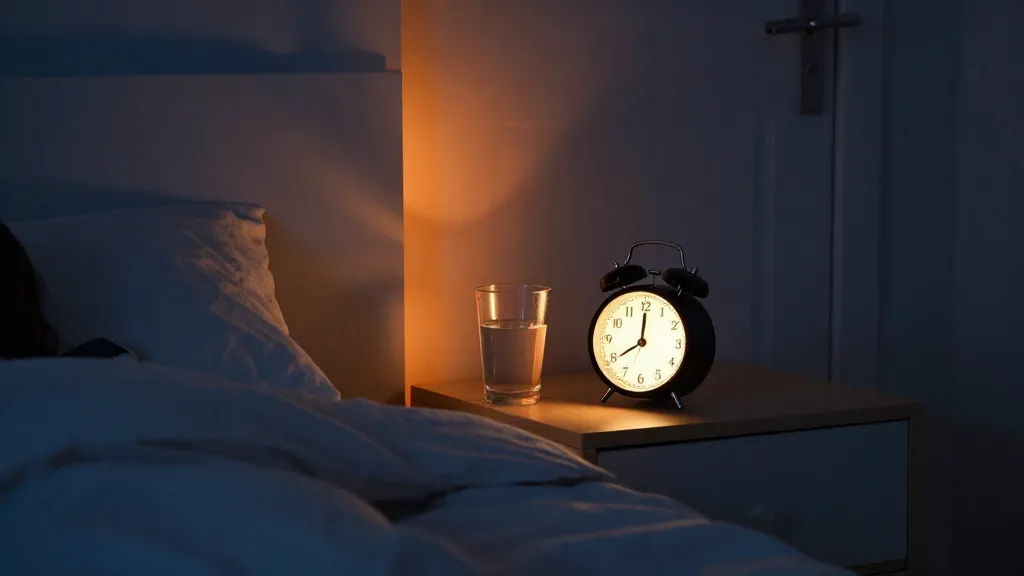
It's 2:14 AM. You have a presentation at 9. The bass coming through your wall isn't just audible—it's vibrating your water glass on the nightstand. You're lying there cycling through options: bang on the wall, send a passive-aggressive text, suffocate yourself with your pillow, or simply never speak to your roommate again.
When your roommate plays music at 2AM, the frustration isn't just about volume. It's about feeling disrespected in a space you pay to live in. It's about the anxiety of confrontation and the fear that saying something will make your home feel hostile. And if it's happened more than once, there's probably a layer of resentment building that makes every thump of the subwoofer feel personal.

Why the 2AM Moment Feels So Intense
Before we get to scripts and strategies, it helps to understand why late-night noise from a roommate hits differently than, say, a noisy neighbor across the hall.
It's Personal Because It's Shared Space
When a stranger is loud, you can write them off. When it's your roommate—someone who shares your kitchen, your bathroom, your Wi-Fi—the noise feels like a statement. Your brain starts interpreting: Do they not care about me? Do they not respect my schedule? Are they doing this on purpose?
Most of the time, the answer to all three is no. Your roommate is probably not thinking about you at all, which is its own kind of problem, but a very different one than intentional disrespect.
Sleep Deprivation Warps Your Judgment
Research from the University of California, Berkeley shows that sleep deprivation amplifies activity in the amygdala—the brain's emotional alarm system—by roughly 60%. That means at 2AM, you are neurologically primed to overreact. The anger you feel is real, but it's also inflated. This is why the timing of your response matters enormously.
The Power Dynamic Feels Uneven
You're the one being kept awake, which means you're the one who has to initiate the uncomfortable conversation. That feels unfair, and it is—a little. But waiting for your roommate to magically notice and change their behavior is a strategy that has a 0% success rate.
What NOT to Do in the Moment
Let's get the bad options out of the way first, because at 2AM your brain will pitch all of them as reasonable.
- Don't bang on the wall. It feels satisfying for two seconds and communicates nothing useful. It starts an adversarial dynamic without any words being exchanged.
- Don't send a rage text. "CAN YOU TURN THAT OFF" at 2:17 AM lives on your roommate's phone forever. Even if you're justified, the all-caps screenshot becomes their evidence that you're the difficult one.
- Don't stew silently for weeks. Every night you say nothing, the resentment compounds. By the time you finally speak up, you'll be addressing 14 incidents at once, which feels like an ambush to the other person.
- Don't involve other roommates before talking to them directly. Coalition-building before a direct conversation turns a noise issue into a social betrayal.
What to Do Right Now (The 2AM Response)
If the music is playing right now and you need it to stop, here's a low-conflict approach:
Step 1: A Simple, Neutral Knock
Go to their door. Knock normally—not aggressively. When they open it, use a version of this:
"Hey, I'm sorry to bother you—I have to be up early and the music is keeping me awake. Could you use headphones or turn it down for tonight?"
That's it. No lecture. No history. No "you always do this." Just the situation, the impact, and a specific request.
Why This Works
- "I'm sorry to bother you" isn't apologizing for having needs. It's a social lubricant that lowers their defensiveness instantly.
- "I have to be up early" gives a concrete reason that's hard to argue with.
- "Could you use headphones or turn it down" offers a choice, which feels less like a command.
- "For tonight" signals that you're not asking them to change their entire lifestyle—just adjust this one instance.
Most of the time, this ends the immediate problem. Your roommate will likely say "oh, my bad" and turn it down. If they respond rudely or refuse, that's important information—but still not something to resolve at 2AM.

The Real Conversation: What to Say the Next Day
The knock-on-the-door solves tonight. But if this is a pattern—or if you want to prevent it from becoming one—you need a daytime conversation. This is where most people get stuck, so here's a detailed framework.
Choose Your Moment Carefully
Don't ambush them when they walk in the door or when either of you is rushing somewhere. Look for a low-pressure window: a weekend morning when you're both in the kitchen, or a calm evening when the TV is off. You can even set it up with a text:
"Hey, are you around this evening? I wanted to chat about something quick—nothing major."
The "nothing major" keeps them from spiraling into anxiety. The advance notice shows respect.
Use This Conversation Structure
Here's a framework that's more effective than the generic "use I-statements" advice you've heard a hundred times:
1. Name the pattern without exaggerating.
"I've noticed the music has been going pretty late a few nights this month—like past midnight."
Notice: "a few nights this month" is specific without being accusatory. Avoid "you always" or "every single night" because your roommate will immediately start debating the frequency instead of addressing the issue.
2. Explain the impact concretely.
"I've got early shifts on weekdays, and when I can't fall asleep until the music stops, I'm wrecked the next day. Last Tuesday I nearly fell asleep driving."
Real, specific consequences are harder to dismiss than vague complaints about "respect." You're not saying they're a bad person—you're showing them what the noise actually costs.
3. Ask for their perspective.
"I realize I might not know the full picture—is something going on with your schedule, or is this just when you wind down?"
This step is the one most people skip, and it's the most important. Maybe your roommate works until midnight and 1AM is genuinely their evening. Maybe they're going through something and music is how they cope. You don't have to agree with their reasons, but understanding them completely changes the negotiation.
4. Propose something concrete.
"What if we set a quiet hours window—like, headphones after 11 on weeknights and after midnight on weekends? Would that work for you?"
Notice: you're proposing, not dictating. You're offering different rules for weeknights and weekends, which shows flexibility. And you're ending with a genuine question.
5. Write it down.
This feels awkward, but it's the difference between an agreement and a vague understanding that erodes within two weeks. Even a quick text summary after the conversation works:
"Just so we're on the same page—headphones after 11 on weeknights, after midnight on weekends. Thanks for being cool about it."
Tools like Servanda can help roommates formalize agreements like this into a clear written document, which is especially useful if you have multiple housemates or want something to refer back to when memories differ.
Real Scenarios and What to Say in Each
Every roommate situation has nuances. Here are some common variations and how to adapt your approach.
Scenario 1: They Apologized but Keep Doing It
This is the most frustrating pattern. They seem genuinely sorry each time, but nothing changes.
What to say:
"I know you don't mean to—I'm not questioning that. But it's happened three times since we talked about it, and I need it to actually stop. What would help you remember? Do you want me to text you at 11 as a heads-up, or should we set a phone alarm?"
This avoids re-litigating intent and focuses on mechanics. You're treating them as someone who wants to do better but needs a system.
Scenario 2: They Say You're Being Oversensitive
This is dismissive, and it stings. But escalating won't help.
What to say:
"I hear that you see it differently. But I'm not asking you to agree that it's loud—I'm asking you to wear headphones after 11. Can you do that?"
You're sidestepping the debate about whether you're "too sensitive" and redirecting to the specific, actionable request. You don't need them to validate your experience. You need them to wear headphones.
Scenario 3: They Turn It Into a Bigger Fight
Sometimes a noise complaint becomes a referendum on the entire living arrangement. They bring up dishes, guests, the thermostat.
What to say:
"I'm happy to talk about all of that—seriously. But right now I want to focus on the music at night. Can we solve this one first and then talk about the other stuff?"
This is called "agenda control," and it prevents the conversation from becoming an overwhelming grievance dump that resolves nothing.
Scenario 4: You're Worried About Retaliation or Awkwardness
This is especially common in situations where you didn't know your roommate well before moving in.
The truth: some temporary awkwardness is likely. A day or two of slightly stilted interactions is normal after any conflict conversation. It doesn't mean you've destroyed the relationship. In most cases, roommates report that the dynamic actually improves after a clear boundary is established, because the unspoken tension was worse than the conversation.
If you genuinely fear retaliation—not just discomfort, but punitive behavior—that's a sign of a deeper problem that might require involving your landlord or a neutral third party.
Building a Noise Agreement That Actually Lasts
If you want to prevent midnight music from becoming a recurring issue, a simple noise agreement should cover these five things:
- Quiet hours: Specific times when speakers go off and headphones go on. Different thresholds for weeknights vs. weekends are more sustainable.
- Guest and party rules: When guests can be over and how much advance notice is expected.
- Headphone expectations: What counts as "quiet" activity. Gaming with a headset at 1AM? Usually fine. Gaming with a surround sound system? Not fine.
- How to flag a problem in the moment: Agree on a low-drama method. A simple text that says "hey, volume" gives them a chance to adjust without a confrontation.
- What happens if the agreement isn't working: Build in a review. "Let's check in about this in two weeks and see if it needs adjusting" prevents the agreement from feeling permanent and rigid.
When the Conversation Isn't Enough
Sometimes you do everything right and it doesn't work. Your roommate might have a fundamentally incompatible schedule, a substance issue that affects their judgment at night, or a personality that simply doesn't register other people's needs.
Here's how to know when to escalate:
- You've had two or more direct conversations and the behavior hasn't changed.
- They've become hostile or dismissive when you bring it up.
- The noise is affecting your health, work, or academic performance in measurable ways.
Escalation options, in order:
- A written request (email or text) restating your agreement and noting that it's been broken. This creates a record.
- Involving your landlord or RA, especially if your lease has quiet hours provisions.
- Mediation through a campus, community, or AI-assisted mediation service that can help both of you communicate through a structured process.
- Exploring a housing change if the situation is genuinely unresolvable. There's no moral failure in deciding that you and your roommate aren't compatible.