Opposite Schedules? How Roommates Can Coexist
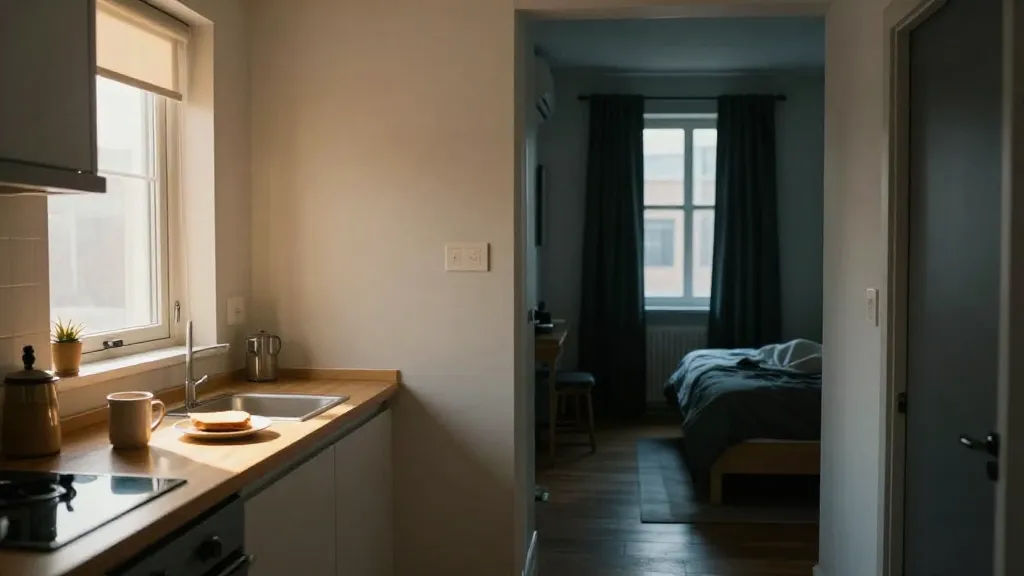
It's 6:45 a.m. and your alarm screams through the apartment. You stumble toward the bathroom, flip on the kitchen light, start the coffee grinder — and then you hear it: the groan from behind the other bedroom door. Your roommate got home from their restaurant shift three hours ago. They're deep in the kind of sleep you were in at midnight, when their alarm woke you up.
Roommates on opposite schedules face a unique friction. It's not that anyone is being inconsiderate on purpose. It's that two perfectly normal daily routines, layered on top of each other in a shared space, can create constant low-grade conflict. The morning person feels like they're tiptoeing through their own home. The night-shift worker feels like sleep is a luxury no one respects.
This is one of the most solvable roommate problems out there. It doesn't require a personality overhaul or a new apartment. It requires intention, a few specific agreements, and the willingness to treat your shared space like the shift-based operation it already is.

Why Opposite Schedules Create More Tension Than You'd Expect
On paper, roommates with opposite schedules should be ideal. You each get the apartment to yourself for hours at a time. Less competition for the bathroom. More alone time.
In practice, the overlap windows — those brief periods when you're both home and conscious — become pressure points. These are the moments when:
- Sound conflicts peak. One person is winding down while the other is ramping up. A blender at 7 a.m. or a TV show at 1 a.m. can feel like a personal attack when you're exhausted.
- Shared spaces get congested. Both people need the kitchen, the bathroom, and the living room at the exact moments those spaces feel most contested.
- Resentment builds silently. Neither person wants to be "that roommate" who complains, so small annoyances accumulate until someone snaps over a cabinet being closed too loudly.
The underlying issue is that each person's rest period overlaps with the other person's active period. Without explicit agreements, both people end up feeling like their needs are secondary.
Step 1: Map Out Your Actual Schedules (Not Your Ideal Ones)
Before solving anything, you need a shared understanding of what your week actually looks like. Not a vague "I usually work nights" — a specific, written-down picture.
Sit down together (or exchange a shared document) and answer these questions:
- What time do you typically leave for work? Include variations by day of the week.
- What time do you get home?
- What's your wind-down window? The time between getting home and actually falling asleep.
- What are your sleep hours? When do you need the apartment to be quiet?
- What are your days off? These are often the trickiest days because routines shift.
Here's what this looked like for two roommates we'll call Dani and Marcus:
|
Dani (Day Shift) |
Marcus (Night Shift) |
| Work hours |
8 a.m. – 5 p.m. |
10 p.m. – 6 a.m. |
| Sleep hours |
11 p.m. – 6:30 a.m. |
7 a.m. – 3 p.m. |
| Wind-down |
9:30 – 11 p.m. |
6 – 7 a.m. |
| Days off |
Sat–Sun |
Tues–Wed |
Once they mapped this out, the problem areas became immediately obvious. Dani's entire morning routine — alarm, shower, breakfast — happened during Marcus's wind-down and first hour of sleep. And Marcus coming home at 6:15 a.m., making food, and watching something on his phone happened right as Dani was in her lightest sleep stage.
Seeing it laid out took the emotion out of it. Neither of them was being rude. Their lives just physically overlapped in the worst possible way.
Step 2: Define "Quiet Hours" That Actually Work for Both of You
Most roommate advice says "set quiet hours." You need to define what quiet actually means, because it's different for everyone.
Identify Two Types of Quiet
- Sleep-level quiet: No talking on the phone in common areas, no music without headphones, no cooking that involves loud appliances (blenders, food processors), close doors softly, keep hallway lights off. Essentially: behave as if someone is sleeping, because they are.
- Low-activity quiet: Normal movement is fine, but avoid loud conversations, keep media at low volume or use headphones, and skip vacuuming or other high-noise chores.
Assign Quiet Windows Based on Your Schedule Map
Using Dani and Marcus's example:
- Sleep-level quiet for Marcus: 7 a.m. – 12 p.m. (his first five hours of sleep, when Dani is at work anyway)
- Sleep-level quiet for Dani: 11 p.m. – 6:30 a.m. (when Marcus is at work for most of it)
- The hard window: 6 – 7 a.m., when Marcus is winding down and Dani is waking up. This required a specific agreement: Dani would prep her coffee the night before and use a quiet drip machine on a timer. She'd shower with the bathroom door closed and skip the hair dryer on weekdays. Marcus would use headphones during his wind-down and eat in his room if he got home before Dani left.
The specificity matters. "Be quiet in the morning" is vague and breeds resentment. "Use headphones before 7 a.m. and skip the blender on weekdays" is something both people can actually follow.
Step 3: Redesign the Apartment for Schedule Separation
You can reduce 80% of noise conflicts with a few inexpensive physical changes. Think of it as designing the apartment for two shifts.
Quick Wins
- Headphones as the default. Both people, during the other's sleep window, use headphones for everything — calls, music, shows, gaming. This habit change resolves the most common complaint.
- Soft-close everything. Felt pads on cabinet doors, a doorstop for the bathroom door so it doesn't slam, and a conscious habit of turning handles before closing doors.
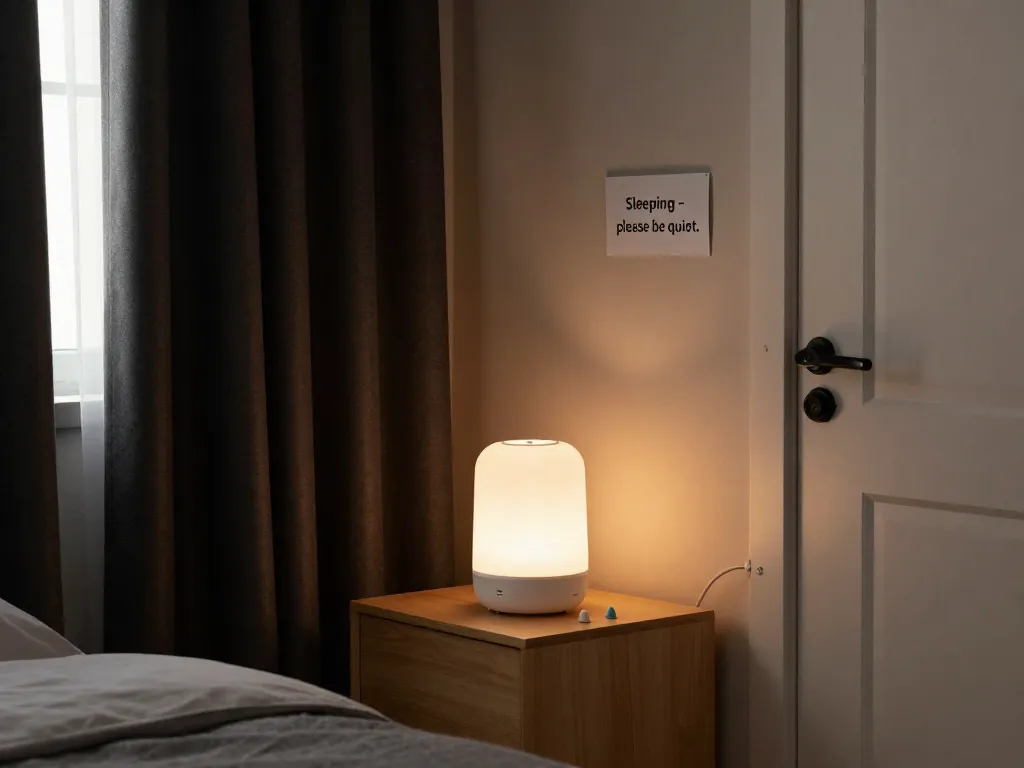
- Separate lighting zones. A small lamp in the kitchen (instead of the overhead fluorescent), nightlights in the hallway, and blackout curtains for each bedroom.
- White noise machines. A $20 white noise machine or a free app can mask the ambient sounds of someone living their life in the next room.
- A "ready station" near the front door. Keys, wallet, bag, shoes — all in one spot so neither person is rummaging through the apartment at odd hours.
If You Share a Wall
Bedrooms that share a wall with the kitchen or living room are the worst setup for opposite schedules. If rearranging furniture is an option, push beds to the wall farthest from common areas. A cheap bookshelf against a shared wall can add sound dampening.
Step 4: Handle the Social and Emotional Overlap
Schedule conflicts aren't just logistical — they're relational. When you rarely see your roommate, it's easy to start feeling like strangers who share a utility bill. And strangers are much less patient with each other.
Stay Connected on Purpose
- Use a shared note or message thread for household stuff. Not a group chat that gets buried — a pinned note on the fridge or a shared app where you leave quick updates. "Plumber coming Thursday between 2-4" or "Grabbed more dish soap" keeps you functioning as a team.
- Have a recurring check-in. A standing 15-minute coffee or beer once a week (or every two weeks) during a window you're both awake. Use it to surface small annoyances before they build.
- Coordinate on guests. This is the single most common flashpoint for roommates on different schedules. If your roommate is sleeping at 2 p.m. and you have friends over on your day off, that's a problem. Agree on a heads-up system: a text at least a few hours before, with an honest window for the other person to say "not today."
The Guest and Partner Question
Overnight guests add another body and another schedule to the mix. This deserves its own explicit agreement:
- How many nights per week can a partner stay over?
- Are there specific nights that are off-limits (e.g., the night before an early shift)?
- What are the expectations for guest behavior during quiet hours?
Consider formalizing agreements like these with a tool like Servanda — having things written down in a shared, structured format makes it easier to revisit terms without it feeling like a confrontation.
Step 5: Build In Flexibility (Because Schedules Change)
Schedules shift. Someone picks up extra shifts. Daylight saving time hits and suddenly the light at 6 a.m. is different. A work-from-home day gets added. A new semester starts.
Build a review mechanism into your agreement:
- Revisit your schedule map once a month (or whenever someone's work schedule changes). It takes five minutes and prevents a week of building frustration.
- Have a low-stakes way to flag problems in real time. A simple text like "Hey, the 6 a.m. alarm has been waking me up — can we brainstorm?" is infinitely better than three weeks of silent irritation followed by an explosive conversation.
- Assume good faith. Your roommate isn't trying to ruin your sleep. They're trying to live their life in a shared space, just like you are. When something goes wrong, start from "they probably didn't realize" rather than "they don't care."
What to Do When It's Not Working
Sometimes you do everything right and it still doesn't work. The apartment is too small, the walls are too thin, or the schedule gap is just too extreme. Here's how to know when to escalate:
- You're consistently getting less than 6 hours of sleep despite trying all the above strategies.
- You've had the same conversation more than three times with no change.
- One person is unwilling to make any accommodations — no headphones, no quiet hours, no schedule map.
At that point, you have a few options:
- Bring in a neutral third party. A mutual friend, an RA (if you're in student housing), or an online mediation tool can help you get past a stalemate.
- Renegotiate the lease arrangement. Maybe one person takes on a slightly larger share of rent in exchange for the quieter bedroom, or you agree to a lease-break timeline that works for both of you.
- Acknowledge it's not a fit. Not every roommate pairing works long-term, and there's no shame in recognizing that. A respectful, planned transition is better than months of mutual misery.
Conclusion
Living with a roommate on an opposite schedule is challenging — but it's not a dealbreaker. The roommates who make it work aren't the ones who never get annoyed. They're the ones who map their schedules honestly, define quiet in specific and actionable terms, make small physical changes to the apartment, and build in regular check-ins to catch problems early.
The biggest shift isn't logistical — it's mental. When you stop thinking of your roommate's schedule as an inconvenience and start thinking of your apartment as a space that serves two shifts, everything gets easier. You're not adversaries fighting over the same hours. You're coworkers on different shifts, sharing a workspace that happens to have beds.
Start with the schedule map this week. Everything else follows from there.
Frequently Asked Questions
How do you live with a roommate who works night shifts?
Map out your exact schedules so you can identify the specific windows where your routines clash. From there, agree on defined quiet hours with concrete rules — like using headphones, prepping meals in advance, and avoiding loud appliances — and invest in low-cost fixes like white noise machines and blackout curtains to protect each other's sleep.
How do you set quiet hours with a roommate without being awkward about it?
Frame it as a practical scheduling exercise rather than a complaint by starting with a shared schedule map that makes the conflict zones visible to both of you. Once you can both see where the overlaps are, proposing specific quiet-hour rules feels collaborative — and writing agreements down in a shared document or tool like Servanda keeps things clear without repeated awkward conversations.
What if my roommate won't respect quiet hours or wear headphones?
If you've had the same conversation more than two or three times with no change, bring in a neutral third party like a mutual friend, an RA, or an online mediation tool. If accommodations still aren't happening, assess whether the living situation is workable long-term and start planning a respectful transition.
How can roommates with opposite schedules handle having guests over?
Agree on a heads-up system where either roommate sends a text at least a few hours before having guests, giving the other person an honest chance to say "not today" if they need uninterrupted sleep. Set explicit rules for overnight partners — including how many nights per week, which nights are off-limits, and what behavior is expected during quiet hours.
Do white noise machines actually help with roommate noise?
Yes — a white noise machine or free phone app can mask ambient sounds like footsteps, doors closing, and low conversation from the next room. Paired with earplugs and blackout curtains, it's one of the most cost-effective changes you can make to protect your sleep.