
5 Scripts for High-Conflict Co-Parent Conversations
Key Takeaways
- You don't need to be eloquent—you need a script. Having word-for-word phrases prepared before a tense exchange prevents freezing, rambling, or saying something you'll regret.
- The BIFF method (Brief, Informative, Friendly, Firm) is your backbone. Every script in this article follows this evidence-based framework for de-escalating conflict.
- Boundaries are communicated through what you don't engage with. The most powerful move in a high-conflict co-parent conversation is choosing which statements to respond to and which to let pass.
- Document, don't debate. Shifting conversations from verbal sparring to written, factual exchanges protects you and your children.
- Practice out loud before you need it. Reading a script silently is not the same as hearing your own voice say the words under pressure.
Introduction
It's 6:47 p.m. on a Friday. Your phone buzzes. Your co-parent's name lights up the screen, and your stomach drops before you even read the message. It says: "You're poisoning the kids against me. We need to talk. Now."
Your thumbs hover over the keyboard. A dozen responses flash through your mind—defensive, angry, pleading—but nothing feels right. So you either fire off something you'll regret, or you freeze and say nothing at all.
If this sounds familiar, you're not alone. Millions of co-parents face high-conflict co-parent conversations every week and feel utterly unprepared for them. The problem isn't that you lack intelligence or good intentions. The problem is that nobody handed you the words.
This article does exactly that. Below you'll find five real-world scenarios with word-for-word scripts you can copy, adapt, and use tonight. No vague advice. No platitudes. Just the actual sentences.
Why Scripts Work Better Than "Tips" in High-Conflict Co-Parenting
When your nervous system is activated—heart racing, jaw tight, thoughts spinning—your brain's prefrontal cortex (the part responsible for measured, thoughtful responses) goes partially offline. This is why even smart, articulate people say things they don't mean during heated co-parenting exchanges.
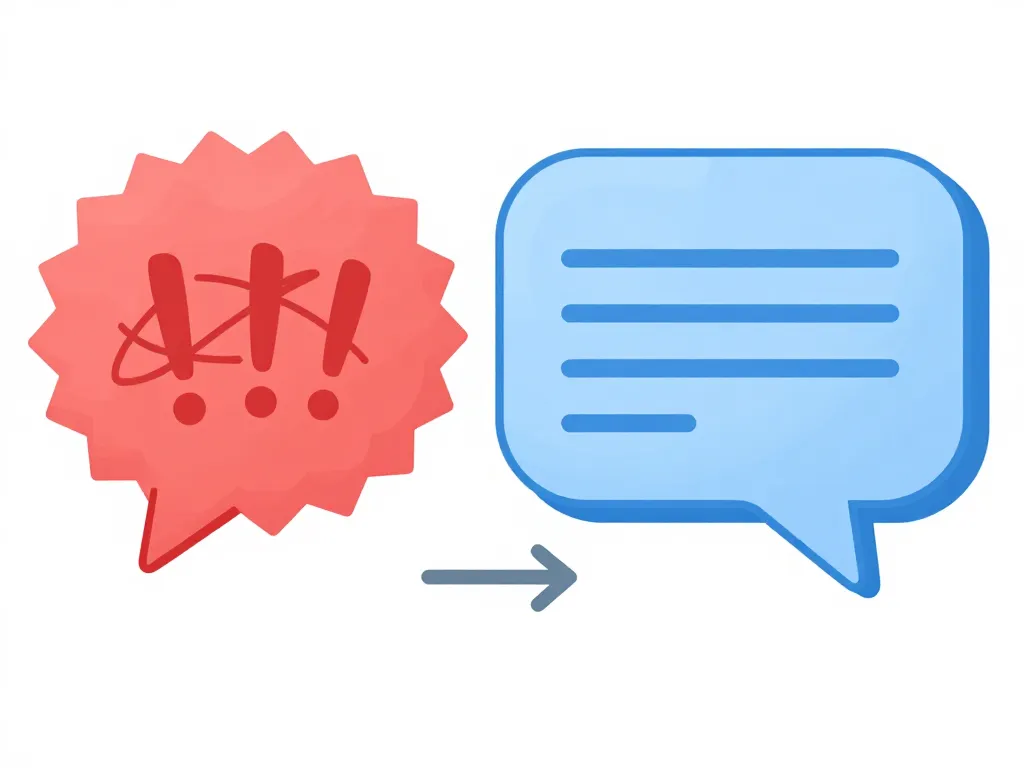
A prepared script bypasses this problem. It gives your brain a track to run on when the emotional freight train arrives. Research on high-conflict communication consistently shows that structured responses reduce escalation by removing the improvisation that leads to reactive outbursts.
Every script below uses the BIFF Response® method developed by Bill Eddy, a leading expert in high-conflict personalities:
- Brief — Keep it short. Every extra sentence is another hook for conflict.
- Informative — Stick to facts, logistics, and relevant information.
- Friendly — A single warm line ("Thanks for letting me know") costs nothing and disarms defensiveness.
- Firm — End the topic. Don't leave the door open for negotiation on settled matters.
Let's put this into practice.
Script 1: When Your Co-Parent Attacks Your Character
The Scenario
Your co-parent sends a text or says in person: "You're a terrible parent. The kids are miserable at your house, and everyone can see it."
Your gut wants to defend yourself, list every failure of theirs, or demand proof. Don't.
The Script
"I hear that you have concerns about the kids' wellbeing. I take that seriously. If there's a specific issue—something about their routine, health, or school—I'm happy to discuss it. Otherwise, I'll focus on making sure they're cared for during my parenting time."
That's it. Full stop. No counterattack, no justification, no engagement with the emotional bait.
Why It Works
- It acknowledges without agreeing. Saying "I hear that you have concerns" is not the same as saying "You're right." It signals that you're listening without surrendering your position.
- It redirects to specifics. Vague character attacks thrive on emotion. Asking for a specific issue forces the conversation into factual territory, where it becomes much harder to escalate.
- It closes the loop. The final sentence signals that you're done discussing this thread unless new, concrete information appears.
What NOT to Say
- ❌ "That's rich, coming from someone who forgot their soccer cleats three weekends in a row."
- ❌ "I'm a great parent and you know it."
- ❌ "Stop trying to manipulate me."
Each of these opens a new front in the argument. Your goal is fewer fronts, not more.
Script 2: When They Try to Change the Custody Schedule Last-Minute
The Scenario
It's Wednesday. Your co-parent texts: "I need the kids this Saturday instead of Sunday. My parents are in town and they want to see them. Don't be difficult about this."

The Script
"Thanks for letting me know your parents are visiting—I'm sure the kids would enjoy seeing them. Saturday doesn't work for me this week since I've already made plans during my parenting time. If you'd like to propose a swap for a different weekend, I'm open to looking at the calendar. Let me know by Thursday so we can both plan."
Why It Works
- The friendly opener ("I'm sure the kids would enjoy seeing them") neutralizes the accusation of being "difficult" before it gains traction.
- "Saturday doesn't work for me" is a complete sentence. You don't owe an explanation of your plans. Offering one invites judgment ("That's not important enough to keep the kids from their grandparents").
- Offering a swap shows flexibility without caving. Courts and mediators look favorably on parents who offer alternatives rather than flat refusals.
- A deadline ("by Thursday") prevents the conversation from lingering and becoming a pressure campaign.
What NOT to Say
- ❌ "No. It's my weekend and that's final." (Technically correct, but unnecessarily rigid and likely to escalate.)
- ❌ "You always do this. You think the world revolves around you." (Introducing patterns and character judgments derails the logistics.)
- ❌ "Fine. Whatever." (Resentful compliance leads to built-up anger and a blowup later.)
Script 3: When They Badmouth You to the Kids
The Scenario
Your 9-year-old comes home and says: "Mom/Dad says you don't really care about us and that you chose your new life over us."
This is one of the most painful situations a co-parent can face. The instinct to correct the record is overwhelming.
The Script (To Your Child)
"That sounds like it was confusing to hear. I want you to know that I love you, and that will never change. You don't have to worry about grown-up stuff between me and your mom/dad—that's for us to figure out. What matters right now is that you're here, and I'm glad you are. Want to help me start dinner?"
The Script (To Your Co-Parent, After the Kids Are in Bed)
"[Child's name] mentioned something today that seemed to upset them. I'm not looking to rehash what was said—I just want to flag that it's landing on them, and I think we both want to keep them out of the middle. I'm committed to speaking positively about you in front of them, and I'd appreciate the same. Thanks."
Why It Works
- With your child: You don't trash the other parent back, you don't interrogate for details, and you don't put the child in the position of messenger or judge. You validate their feelings, reassure them, and redirect to something grounding and normal.
- With your co-parent: You avoid quoting your child (which makes the child a witness and increases the loyalty conflict). You state the impact on the child, affirm your own commitment, and make a single, clear request.
What NOT to Say
- ❌ To your child: "That's not true. Let me tell you what really happened." (This puts the child in the middle of competing narratives.)
- ❌ To your co-parent: "You need to stop filling their heads with lies or I'll take this to my lawyer." (Threats escalate. Observations de-escalate.)
Script 4: When They Won't Stop Texting About Non-Urgent Issues
The Scenario
Your phone has buzzed 14 times in the last two hours. The messages range from questions about next month's school supplies to commentary on your Instagram post to passive-aggressive remarks about your parenting choices. You feel overwhelmed and cornered.
The Script (Setting a Communication Boundary)
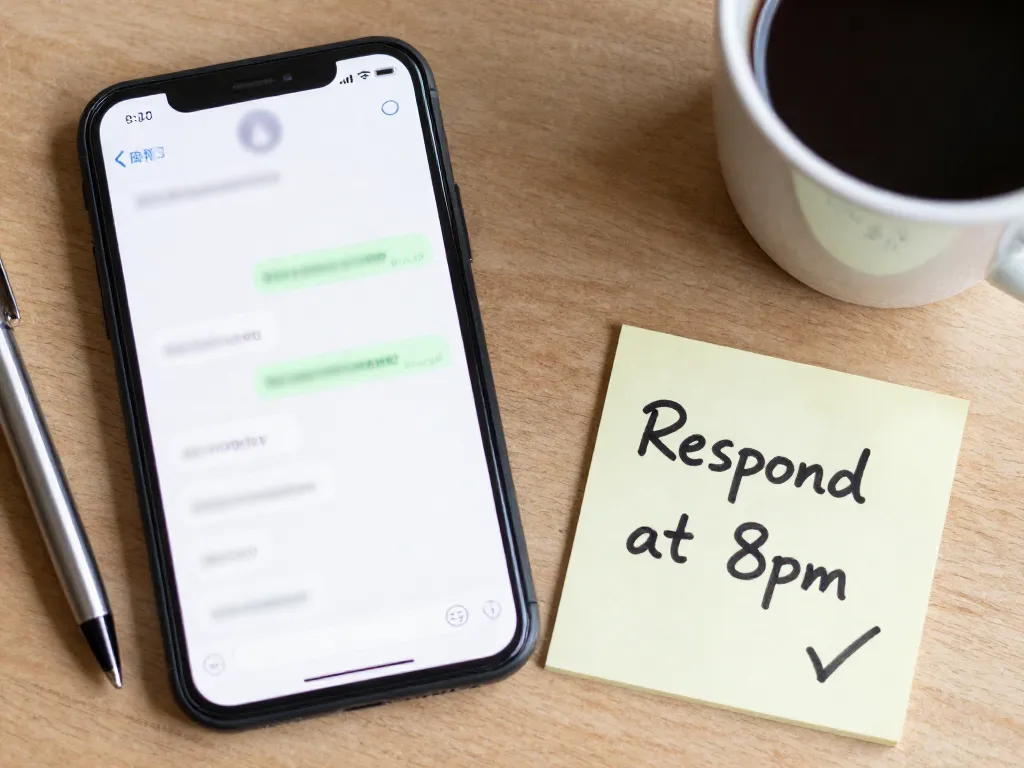
"I want to make sure I give your messages proper attention, so I'm going to respond to co-parenting questions once per day, in the evening, unless there's an emergency involving the kids' health or safety. If something is urgent, please call. I'll respond to everything else tonight by 8 p.m."
Then Follow Through
At 8 p.m., respond only to messages that are about the children's logistics, health, or education. Ignore commentary about your personal life, passive-aggressive jabs, and attempts to relitigate old arguments. You don't need to announce that you're ignoring them—just don't respond to those messages.
For the ones you do address, keep responses factual:
"School supplies — I'll pick up the items on the teacher's list before next Friday."
"Dentist appointment — Tuesday at 3 works. I'll handle pickup."
Why It Works
- You've named the boundary. Boundaries aren't requests for the other person to change—they're statements about what you will do.
- You've preserved a window for genuine emergencies. This shows courts and mediators that you're not stonewalling.
- Batching responses protects your mental health and prevents the all-day drip of cortisol that comes from constant engagement.
Tools like Servanda can help formalize these communication agreements in writing, creating a shared reference point so that boundaries don't need to be re-explained every week.
Script 5: When You Need to Say "No" Without Starting a War
The Scenario
Your co-parent wants to enroll your child in an expensive extracurricular activity that conflicts with your parenting time and requires your financial contribution. They present it as already decided: "I signed Jordan up for travel soccer. Practices are Saturdays. Your half of the fees is $1,200."
The Script
"I appreciate you thinking about activities for Jordan—it's great that you want to keep them active. Before I can commit, I need to understand the full schedule and cost. Can you send me the details in writing—practice/game times, total fees, travel requirements, and how it overlaps with both of our parenting schedules? I'd like a week to review before we decide together. Per our agreement, expenses like this need to be discussed before either of us commits."
Why It Works
- "I appreciate you thinking about activities" is disarming without being dishonest. You do want your child to thrive.
- Asking for written details slows the momentum. Unilateral decisions rely on speed and pressure. Requesting documentation introduces process.
- "Decide together" is key language. It subtly reasserts that co-parenting is a joint endeavor, not one parent dictating to the other.
- Referencing your existing agreement (custody order, parenting plan) is firm without being aggressive. It invokes structure, not emotion.
If They Push Back
They might respond: "You're going to let your ego ruin this for Jordan."
Your follow-up:
"This isn't about ego. I want to make a good decision for Jordan, and I need the details to do that. Please send them over when you get a chance."
Then stop. Repeat the request for information. Do not engage with characterizations of your motives.
How to Practice These Scripts Before You Need Them
Reading scripts on a screen is step one. But the real benefit comes from rehearsal. Here's how:
- Read the script out loud three times. Your mouth needs to learn the shapes of these words before you're under pressure.
- Practice with a trusted friend or therapist. Have them play the role of your co-parent and throw curveballs. Notice where you want to go off-script, and explore why.
- Customize the language. These scripts are templates. Adjust the wording so it sounds like you—but keep the structure intact. The BIFF framework matters more than any individual word.
- Save your go-to phrases in your phone's notes app. When a difficult text comes in, open your notes before you open the message thread. Copy, paste, adjust, send.
- Debrief after each conversation. Ask yourself: Did I stay brief? Did I stick to information? Was I friendly without being fake? Did I end the topic firmly? Score yourself and adjust.
A Quick-Reference Cheat Sheet
| Situation | Opening Phrase | Closing Phrase |
|---|---|---|
| Character attack | "I hear that you have concerns..." | "I'll focus on [child]'s care during my time." |
| Schedule change request | "Thanks for letting me know..." | "Let me know by [day] so we can plan." |
| Badmouthing | "[Child] mentioned something that upset them..." | "I'd appreciate the same. Thanks." |
| Text flooding | "I want to give your messages proper attention..." | "I'll respond tonight by [time]." |
| Unilateral decision | "I appreciate you thinking about..." | "Please send the details so we can decide together." |
Print this. Screenshot it. Tape it to your fridge. The best script is the one you can access in the moment.
Frequently Asked Questions
What if my co-parent doesn't respond well to these scripts?
These scripts are designed to manage your side of the conversation, not to guarantee a specific response from your co-parent. In high-conflict situations, the other person may continue to escalate regardless of what you say. That's okay. Your goal is to stay clear, factual, and child-focused—which protects both your wellbeing and your standing if the situation ever reaches a mediator or court.
Should I use these scripts in person or only over text?
Both, though text and email give you the advantage of time—you can refer to the script, edit your response, and avoid saying something reactive. If you need to use them in person (like at a school pickup), practice the key phrases aloud beforehand so they feel natural. It's also wise to keep high-conflict conversations in writing whenever possible so there's a record.
How do I stop myself from reacting emotionally before I use the script?
Give yourself a physical pause. A practical rule: never respond to a provocative message within 30 minutes. Set a timer if you have to. During that window, take a walk, do a breathing exercise, or call a friend. The script will still work after 30 minutes. Your reactive first draft almost never will.
Can I use these scripts if we're currently in mediation or have a court order?
Absolutely. These scripts align with what most mediators and family courts encourage: brief, child-focused, non-inflammatory communication. If your court order specifies a communication method (such as a co-parenting app), use these scripts within that platform. They won't conflict with any reasonable court order and may actually strengthen your position.
What if my co-parent accuses me of being robotic or cold for using scripted language?
Let them. A response that is brief, factual, and respectful is not "cold"—it's appropriate for a co-parenting relationship that has a history of conflict. You don't need to explain your communication approach. If pressed, a simple "I'm working on communicating more clearly for the kids' sake" is sufficient.
Conclusion
High-conflict co-parent conversations don't have to leave you feeling powerless. The five scripts above cover the most common flashpoints—character attacks, schedule disputes, badmouthing, text flooding, and unilateral decisions—and give you exact words to use when your brain goes blank.
The pattern across every script is the same: acknowledge without absorbing, redirect to facts, close the topic. This isn't about winning the conversation. It's about protecting your energy and, most importantly, shielding your children from adult conflict.
Start with one script. The next time a difficult message lands on your phone, resist the urge to improvise. Open your notes, find your words, and respond with intention instead of reaction. Over time, this deliberate approach becomes second nature—and the conversations that once ruined your entire evening start taking up less and less space in your life.