AC vs Heat War: Thermostat Battles With Roommates
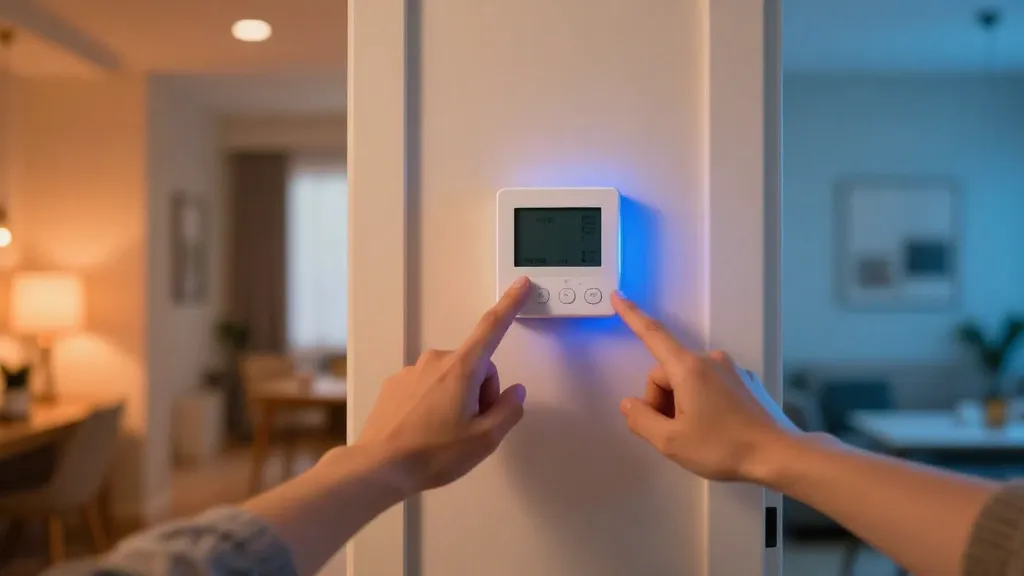
It's 2 a.m. and you wake up drenched in sweat. Again. You stumble to the hallway and find the thermostat cranked to 76°F—even though you specifically set it to 68°F before bed. You turn it back down. By morning, it's mysteriously back up. No one claims responsibility. Passive-aggressive sticky notes start appearing on the thermostat.
Thermostat battles with roommates are one of the most common sources of tension in shared living situations. Temperature is deeply personal: it affects your sleep, your focus, your mood, and your monthly utility bill. When two or more people with different thermal preferences share a single HVAC system, that little plastic box on the wall becomes a battleground.
Why the Thermostat Fight Feels So Personal
Biology Is Not on Your Side
People genuinely experience temperature differently. Research from the Journal of Applied Physiology shows that metabolic rate, body composition, age, and even hormonal cycles all influence thermal comfort. Someone with a higher resting metabolic rate will feel warmer in the same room as someone with a lower one. Neither person is exaggerating—they're both telling the truth about how they feel.
Money Makes It Worse
According to the U.S. Energy Information Administration, heating and cooling account for roughly 50% of a typical home's energy bill. When one roommate wants the AC blasting at 65°F all summer while another would rather open windows, the disagreement stops being about comfort and starts being about fairness. Who's paying for that electricity? Is a 50/50 split fair when one person is driving 80% of the usage?
Control and Respect Are the Hidden Issues
Most thermostat fights aren't really about temperature. They're about feeling unheard. When someone changes the setting without asking, it signals: my comfort matters more than yours. That underlying message is what causes resentment to build.
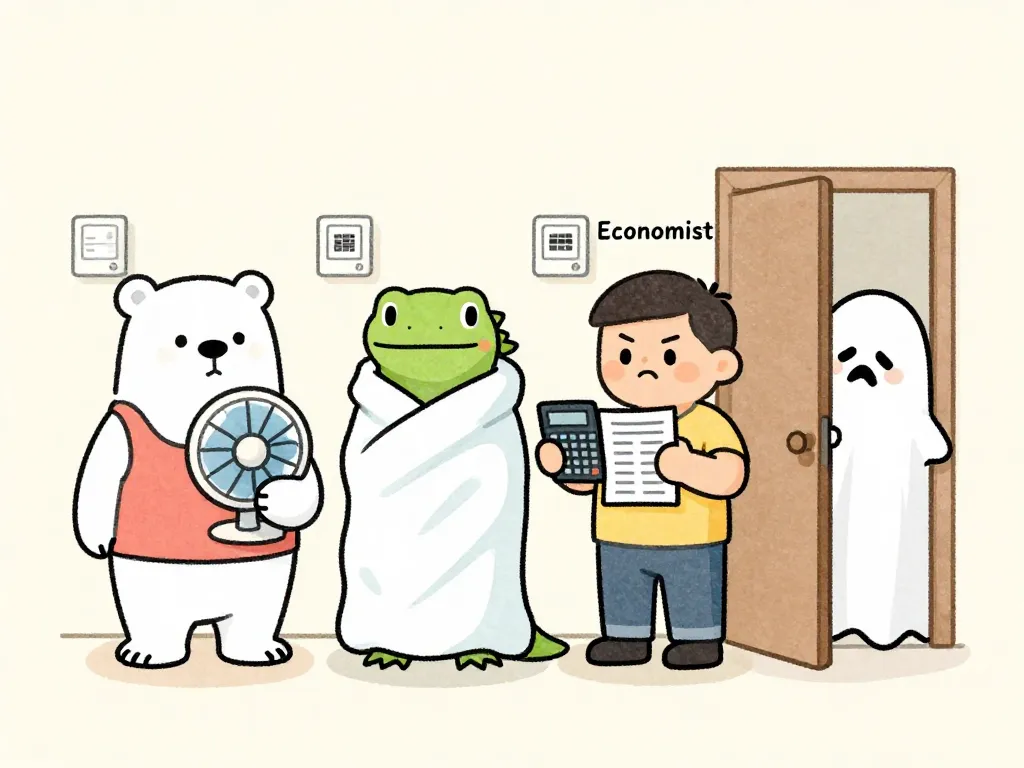
The Four Roommate Thermostat Personalities
- The Polar Bear: Prefers it cold. Sleeps with a fan on. Considers anything above 70°F oppressive. Will open windows in January.
- The Lizard: Always cold. Owns three heated blankets. Considers 74°F "comfortable" and 68°F a war crime.
- The Economist: Doesn't care much about temperature but cares intensely about the utility bill. Will argue for whatever setting is cheapest.
- The Ghost: Never touches the thermostat but silently resents whoever does. Complains to mutual friends instead of addressing it.
Most thermostat wars are a Polar Bear vs. Lizard conflict, but the Economist and the Ghost can complicate things in unexpected ways.
Practical Strategies That Actually Work
1. Establish a Thermostat Range, Not a Single Number
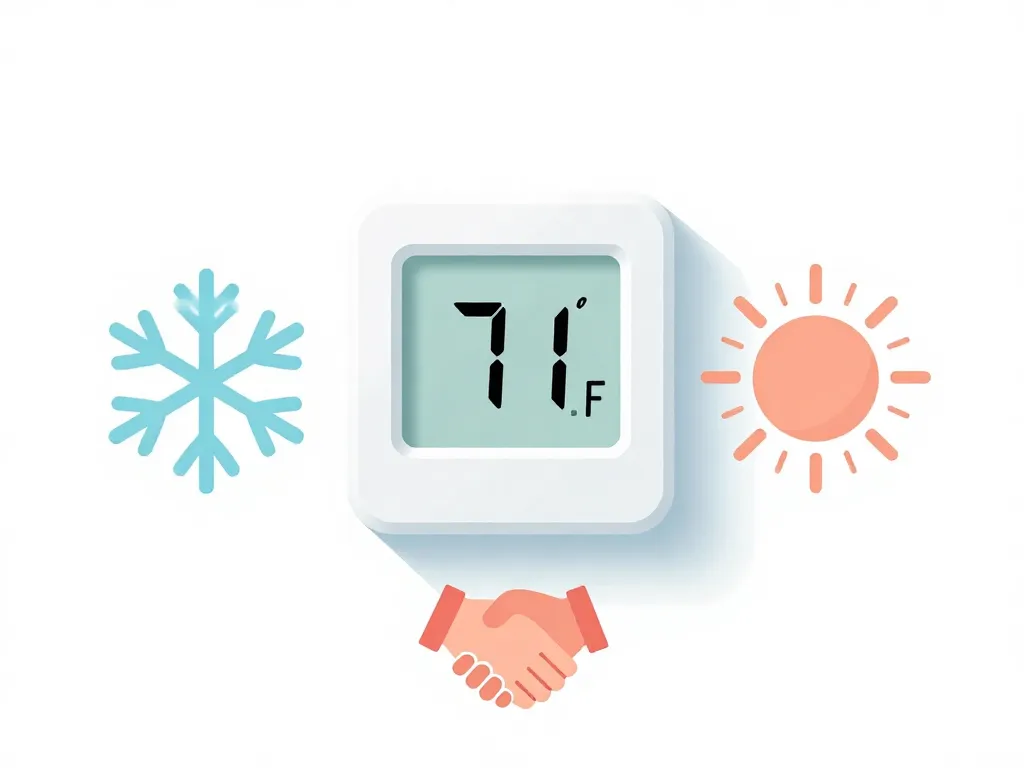
Instead of fighting over the "correct" temperature, agree on a range—say, 69°F to 73°F. Either roommate can adjust within that window without asking. Going outside it requires a conversation.
This gives both parties autonomy within a boundary. No one feels controlled, and no one gets blindsided by an extreme setting.
How to set the range:
- Each person writes down their ideal temperature for daytime, nighttime, and when no one's home.
- Find the overlap. There's almost always at least a 2-3 degree zone where both people can survive.
- If there's no overlap, split the difference. A 3-degree compromise from each side is reasonable.
2. Use the "Layer Up, Strip Down" Rule
It's easier to add warmth than to remove heat. A person who's cold can put on a sweater, use a heated blanket, or drink hot tea. A person who's hot has limited options—you can only take off so many layers before it becomes a different kind of roommate problem.
When negotiations stall, the tiebreaker should lean slightly cooler, with the understanding that the warmth-preferring roommate invests in personal heating solutions.
Budget-friendly warming options:
- Heated mattress pad (~$35): warms only one bed, uses minimal electricity
- Space heater with auto-shutoff (~$30): warms a single room
- Draft stopper for bedroom door (~$10): keeps hallway cold air out
- Thick wool socks and a fleece robe: surprisingly effective, zero energy cost
3. Create a Seasonal Schedule
The thermostat war has two major flare-ups per year: when it transitions from heat to AC in spring, and from AC to heat in fall. These transitions are chaotic because there's no established norm yet.
Prevent this by agreeing in advance:
- AC activation date: "We don't turn on AC before May 1 unless it's above 82°F outside for three consecutive days."
- Heat activation date: "We don't turn on heat before October 15 unless the indoor temperature drops below 62°F."
- Shoulder season rules: "Between seasons, we use fans and windows only."
4. Split Utility Costs Proportionally, Not Equally
If one roommate wants the apartment at 66°F in summer (which means running the AC hard) and the other would be fine at 73°F (which means barely running it), a 50/50 utility split isn't fair.
| Method |
How It Works |
| Baseline |
Agree on a "neutral" temperature setting. Any deviation gets charged to the person requesting it. Estimate the cost difference using your utility provider's usage data. |
| Fixed surcharge |
The person who wants the more energy-intensive setting pays an extra flat amount per month (e.g., $20-40) toward utilities during peak seasons. |
| Individual units |
Each person buys their own space heater or portable AC for their bedroom. Shared spaces stay at the agreed range. |
5. Get a Smart Thermostat (And Set Permissions)
A smart thermostat like the Nest, Ecobee, or Honeywell Home can resolve thermostat disagreements:
- Scheduling: Program different temperatures for day, night, and away times so no one has to manually adjust.
- Usage tracking: See exactly when the temperature was changed and by how much. This ends the "I didn't touch it" mystery.
- Remote sensors: Place sensors in each bedroom so the system balances comfort across rooms, not just the hallway where the thermostat lives.
- Lock features: Some models let you set a temperature range that can't be overridden without a PIN.
The cost ($100-250) can be split between roommates and typically pays for itself within a few months through energy savings.
6. Write It Down
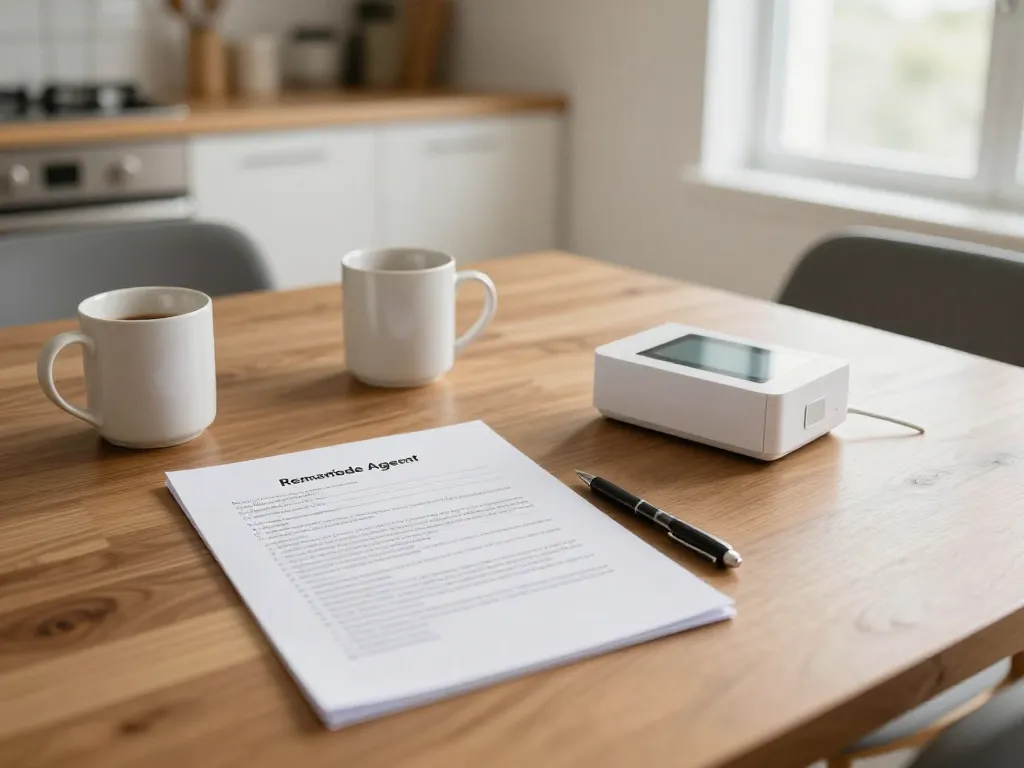
Verbal agreements dissolve the moment someone forgets or claims they never agreed to anything. A written roommate thermostat agreement doesn't have to be legalistic—it just has to be clear.
Your agreement should cover:
- Agreed temperature range (daytime and nighttime)
- Who pays what toward utilities
- Rules for changing the thermostat outside the agreed range
- Seasonal transition dates
- How disputes get resolved (e.g., "If we can't agree, we default to 71°F for 48 hours and revisit")
Tools like Servanda can help roommates create structured written agreements that cover these specifics, making it easier to reference what was decided when memories get fuzzy.
Real Scenarios and How They Were Resolved
Scenario 1: The Overnight Freeze-Out
Situation: Two roommates sharing a one-bedroom apartment. Roommate A sleeps hot and sets the AC to 64°F at night. Roommate B wakes up shivering with a sore throat.
Resolution: They agreed to set the shared thermostat to 70°F at night. Roommate A bought a personal fan and cooling mattress topper for their bed. Roommate B kept an extra blanket on hand. Both reported sleeping better because the temperature was consistent and predictable.
Scenario 2: The Utility Bill Shock
Situation: Three roommates splitting utilities equally. One roommate works from home and runs the heat at 76°F all day while the others are at work. The winter electric bill jumped from $120 to $310.
Resolution: The work-from-home roommate agreed to use a space heater in their office instead of heating the entire apartment. They also took on 50% of the utility bill during winter months, with the other two splitting the remaining 50%. The next month's bill dropped to $160.
Scenario 3: The Passive-Aggressive Thermostat War
Situation: Two roommates who never discussed temperature preferences. For months, one would set the thermostat to 68°F, the other would bump it to 75°F, and it would go back and forth daily without either person saying a word.
Resolution: One roommate finally put the topic on the table during a planned roommate check-in (not in the heat of the moment). They discovered the real issue: the apartment had a drafty window in one bedroom that made it significantly colder than the rest of the unit. They sealed the window with weatherstripping ($8) and agreed on 71°F.
When the Thermostat Fight Is Really About Something Else
Sometimes the thermostat is a proxy war. If you've tried every practical solution and the conflict keeps escalating, ask yourself:
- Is this about temperature, or about feeling like my preferences don't matter in this household?
- Am I frustrated about the thermostat, or about a pattern of my roommate disregarding shared agreements?
- Is the real problem that we never established how we make decisions together?
If the answer to any of these is yes, the thermostat isn't the problem—it's a symptom. Address the underlying dynamic, and the temperature issue often resolves itself.
A Quick-Reference Thermostat Agreement Template
| Category |
Agreement |
| Daytime range |
°F to °F |
| Nighttime range |
°F to °F |
| Away/empty setting |
___°F |
| AC start date |
___ (or condition: e.g., "3 days above 80°F") |
| Heat start date |
___ (or condition: e.g., "indoor temp below 62°F") |
| Utility split |
Equal / Proportional / Other: ___ |
| Who adjusts the thermostat |
Anyone within range / Designated person / Smart schedule only |
| Dispute resolution |
Default to ___°F for 48 hours, then revisit |
Print it. Stick it on the fridge. Refer to it when tensions rise.
Conclusion
Thermostat battles with roommates persist not because people are unreasonable, but because temperature is personal, invisible, and easy to change without accountability. The fix isn't about one person winning—it's about building a system that works for everyone.
Set a range instead of a single number. Account for biological differences without dismissing them. Split costs in a way that reflects actual usage. Write your agreement down so it survives the next heatwave or cold snap.
These habits extend far beyond the thermostat. A household that can negotiate temperature can negotiate almost anything.
Frequently Asked Questions
What is a fair thermostat temperature for roommates?
Most roommate households find that a range between 69°F and 73°F works as a reasonable compromise for shared spaces. Rather than picking one "correct" number, agree on a window where either person can adjust freely, and require a conversation before going outside that range.
How do you split utility bills when one roommate uses more AC or heat?
A 50/50 split isn't always fair if one person's preference drives most of the energy cost. Consider a baseline method where you agree on a neutral temperature and charge deviations to the person requesting them, or have the roommate who wants the more energy-intensive setting pay a fixed monthly surcharge during peak seasons.
How do I bring up the thermostat issue without starting a fight?
Raise the topic during a planned, low-stakes roommate check-in rather than in the moment when you're already frustrated. Frame it as a shared problem to solve together—propose a temperature range and seasonal schedule—rather than accusing your roommate of being inconsiderate.
Is it better to set the thermostat lower and use space heaters?
Keeping the shared thermostat at a moderate or slightly cooler setting and letting the cold-preferring roommate use a space heater or heated blanket in their own room is more energy-efficient and avoids heating the entire apartment to one person's preference. A space heater with auto-shutoff costs around $30 and warms only the room that needs it.
Do smart thermostats actually help with roommate temperature disagreements?
Smart thermostats like the Nest or Ecobee help significantly because they offer scheduled programming, usage tracking that shows exactly who changed the temperature and when, and lock features that prevent adjustments outside an agreed range. The $100–$250 investment is typically split between roommates and pays for itself within months through energy savings.