WFH vs Office Roommate: Solving Space Conflicts
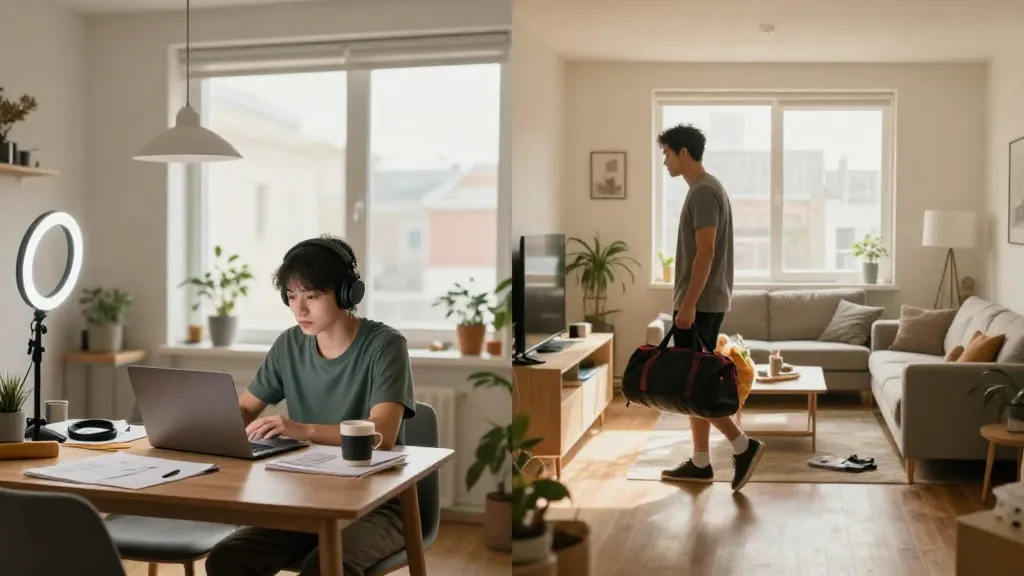
It's 2:00 PM on a Tuesday. Maya is on her third video call of the day, laptop balanced on the kitchen table, noise-canceling headphones clamped over her ears. Her roommate Jordan walks in from the gym — it's his day off — drops a bag of groceries on the counter, and starts making a smoothie. The blender roars. Maya frantically hits mute, but not before her manager asks, "What's going on over there?"
This scene plays out in thousands of shared apartments every day. WFH roommate space conflicts have become one of the most common — and most emotionally charged — friction points in modern living arrangements. When one person's home is also their office, and the other person's home is, well, just home, the resulting tension can feel impossible to untangle. Who has the "right" to the shared spaces? When does reasonable living become inconsiderate disruption? And how do you negotiate boundaries around something as fundamental as existing in your own apartment?
Why the WFH-Office Split Creates Unique Tension
Most roommate conflicts stem from different expectations about shared space. But the WFH-versus-office dynamic adds a layer that typical disagreements about dishes or noise don't capture: one person needs the apartment to function as a workplace during hours when the other person reasonably expects to use it as a home.
The "Always There" Problem
When you work from home, you're physically present in the apartment for 8-10+ hours more per day than your office-going roommate. That means more time using shared spaces, more wear on common areas, and — critically — a feeling of territorial ownership that can develop without either person noticing.
The office roommate comes home expecting to decompress. The WFH roommate has been "at work" all day in the same space and also needs to decompress. Both feel entitled to the living room.
The Noise Asymmetry
The WFH roommate needs relative quiet during work hours — especially during calls. But the office roommate's schedule might include days off, sick days, or different shift patterns. Normal living activities — cooking, watching TV, having a phone conversation, playing music — suddenly become sources of conflict.
If both roommates worked in offices, neither would think twice about the other making lunch at noon. But when one person is on a client call in the next room, that same lunch becomes a problem.
Shared Space Occupation Creep
It often starts small. A laptop on the dining table. Then a monitor. Then a ring light, a stack of files, a second keyboard. Before long, the WFH roommate has colonized what was once a shared space, and the office roommate feels like a guest in their own home.
This isn't malicious — it's the natural result of spending 40 hours a week working in a space that wasn't designed for it. But the impact on the other roommate is real.
The Emotional Undercurrents You Need to Name
Before jumping to logistics, it's worth acknowledging what's happening beneath the surface of these conflicts. WFH roommate space conflicts almost always involve unspoken feelings that, if left unaddressed, make any practical agreement fragile.
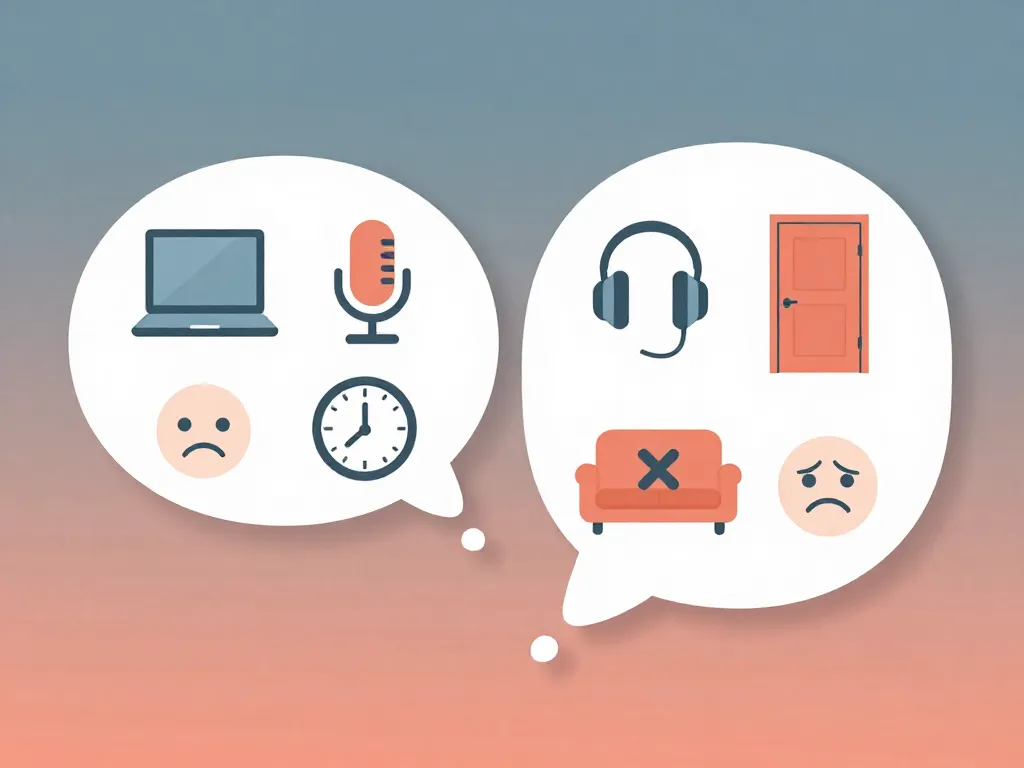
The WFH roommate often feels:
- Guilty for taking up space, but resentful when asked to shrink their setup
- Anxious about their professional image (background noise on calls, visible clutter)
- Like their work isn't respected because it happens at home
- Trapped — they can't leave their "office" at the end of the day
The office roommate often feels:
- Like they're walking on eggshells in their own home
- Resentful about paying equal rent for less functional access to shared spaces
- Dismissed when they raise concerns ("I'm working, can we talk later?")
- Like the apartment's atmosphere is controlled by someone else's schedule
Both sets of feelings are rational and worth saying out loud before you start negotiating who gets the dining table from 9 to 5.
A Framework for Negotiating Shared Space
Step 1: Audit the Space Together
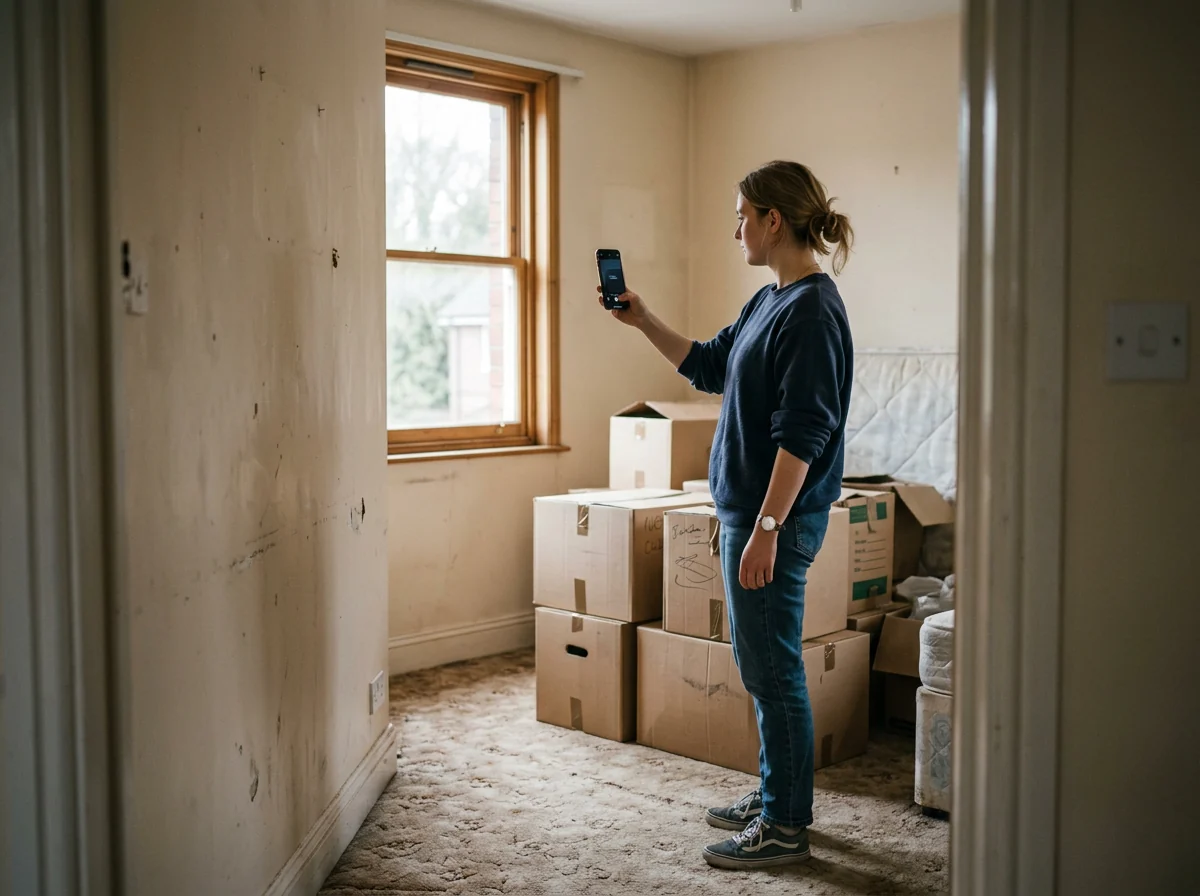
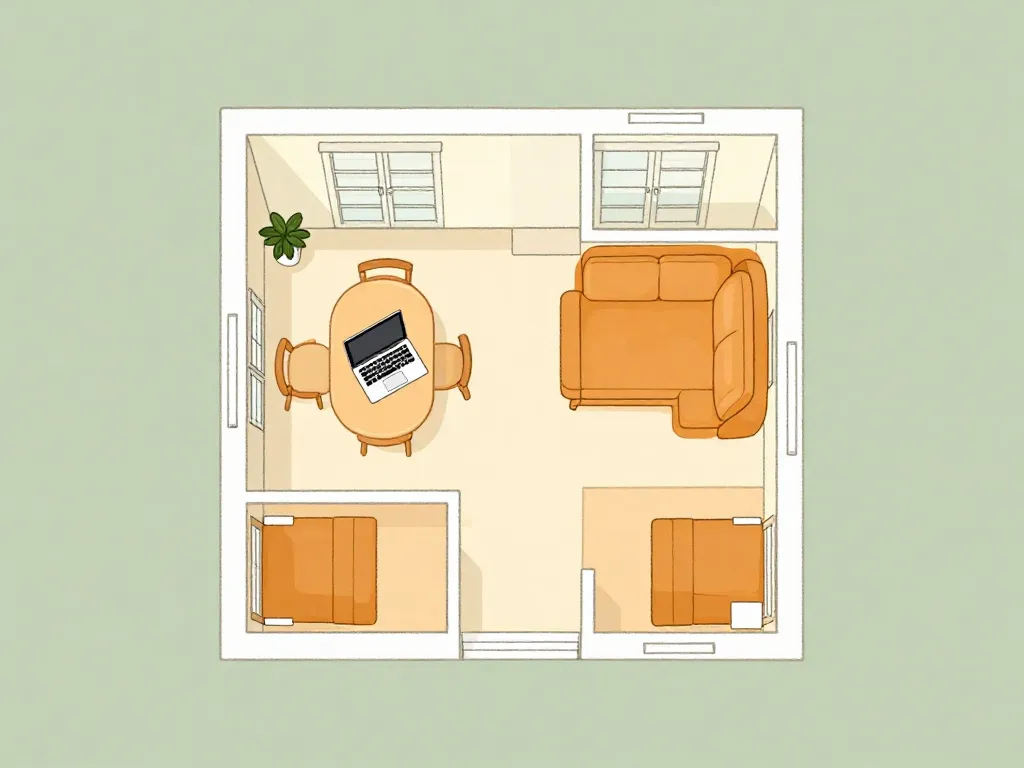
Walk through your apartment together — literally. Room by room, identify:
- Dedicated private spaces (each person's bedroom)
- True shared spaces (living room, kitchen, bathroom)
- Contested zones (the dining table, a desk in the living room, a quiet corner)
For each contested zone, answer honestly:
- Who uses it most?
- During what hours?
- For what purpose?
- What would happen if that use changed?
This exercise often reveals assumptions neither person realized they were making. Maybe the WFH roommate didn't realize they'd taken over the entire dining area. Maybe the office roommate didn't realize the WFH person has no other viable workspace.
Step 2: Establish Time-Based Zones
Rather than assigning spaces permanently to one person, consider time-based agreements. This approach acknowledges that the same space can serve different functions at different times.
| Time Block |
Living Room |
Kitchen/Dining |
Shared Bathroom |
| 7:00–8:30 AM |
Shared (morning routines) |
Shared |
Normal use |
| 8:30 AM–12:00 PM |
WFH workspace (quiet expected) |
Shared (reasonable noise) |
Normal use |
| 12:00–1:00 PM |
Shared (lunch break) |
Shared |
Normal use |
| 1:00–5:30 PM |
WFH workspace (quiet expected) |
Shared (reasonable noise) |
Normal use |
| 5:30 PM onward |
Fully shared |
Fully shared |
Normal use |
| Weekends |
Fully shared |
Fully shared |
Normal use |
Step 3: Define What "Quiet" Actually Means
One of the biggest sources of conflict is the word "quiet," which means wildly different things to different people. Get specific:
During designated work hours, "quiet" means:
- No blender, vacuum, or loud appliances
- TV/music at headphone-only volume (or below a specific level)
- Phone calls taken in a bedroom with the door closed
- Guests notified in advance
"Quiet" does NOT mean:
- Total silence
- No cooking
- No walking around or using the bathroom
- No existing in shared spaces
Writing this down matters.
Step 4: Address the Money Question
This is the part nobody wants to bring up, but it festers if you don't: should the WFH roommate pay more rent?
There's no single right answer, but here are the factors worth discussing:
- Square footage used: If the WFH roommate has converted a shared area into a personal office, an adjustment might be fair.
- Utility costs: Working from home increases electricity, heating/cooling, and internet usage. Splitting utilities 50/50 may not reflect actual consumption.
- Reduced access: If the office roommate can't use the living room during work hours, they're getting less value from their rent.
Some roommates adjust rent by a small percentage (5-10%). Others split utilities differently. Others decide equal rent is fine but the WFH roommate handles a larger share of household tasks.
Step 5: Build in Review Points
Any agreement you make today will need adjusting. Build in a monthly or quarterly check-in — not when something goes wrong, but as a standing practice.
Keep it simple: "Hey, it's the first of the month. Is our arrangement still working? Anything we should tweak?"
This prevents small frustrations from compounding into explosive arguments three months down the road.
Practical Upgrades That Reduce Friction
Sometimes the best solution isn't behavioral — it's physical. A few relatively inexpensive changes can dramatically reduce WFH roommate space conflicts:
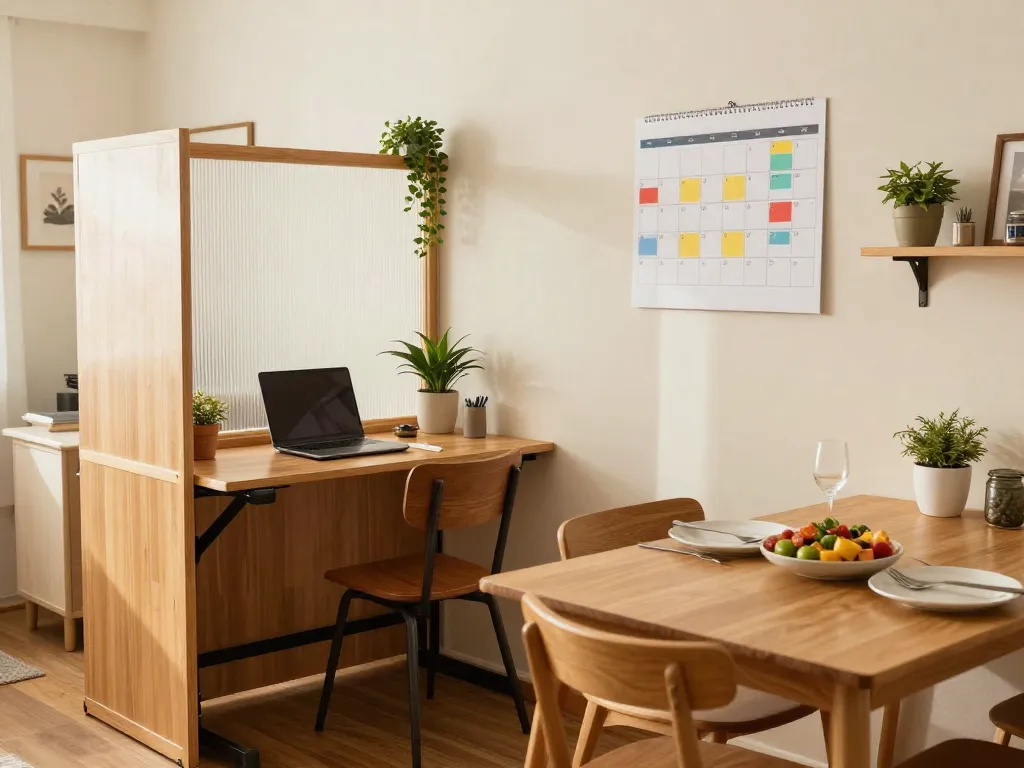
- A room divider or curtain: Creates a visual and psychological boundary for the workspace, even in a studio or open-plan layout. Options range from $30-80.
- A white noise machine: Placed near the WFH workspace, it masks ambient apartment sounds without requiring the other roommate to be silent.
- A folding desk: Allows the WFH roommate to set up and break down their workspace daily, preventing permanent occupation of shared surfaces.
- Headphones for both people: The WFH roommate uses them for calls; the office roommate uses them for entertainment during work hours.
- A shared calendar (digital or physical): Mark video call times, days off, times when guests are coming. Visibility eliminates the guessing game.
What to Do When the Agreement Breaks Down
If you're the one who's frustrated:
1. Name the specific behavior, not the person. ("The blender during my 10 AM call" vs. "You're so inconsiderate.")
2. Reference your agreement. ("We agreed on no loud appliances during work hours — can we revisit that?")
3. Propose a solution, not just a complaint.
If you're the one being confronted:
1. Resist the urge to defend immediately. Listen first.
2. Acknowledge the impact, even if you didn't intend it.
3. Negotiate rather than concede or dismiss.
If you find that conversations keep circling without resolution, consider formalizing your agreements with a tool like Servanda, which helps roommates create structured, written agreements that both parties can reference — removing the "I thought we agreed..." problem from the equation.
If it's genuinely not working:
Some living situations aren't compatible with one person working from home full-time. If your apartment is too small, the layout doesn't allow separation, or your schedules are fundamentally incompatible, it's worth discussing whether a different arrangement (a coworking space membership, a different apartment, or a different roommate pairing) might be the honest answer.
Real Scenarios, Real Solutions
Scenario 1: The Dining Table Takeover
Alex (WFH) had gradually turned the shared dining table into a permanent workstation — dual monitors, desk lamp, filing tray. Sam (office) stopped eating meals at the table entirely. After an honest conversation, they bought a compact folding desk for Alex's bedroom corner. The dining table returned to shared use. Cost: $120.
Scenario 2: The Day-Off Dilemma
Preeti (WFH) worked Monday through Friday. Her roommate Chris had a rotating schedule with midweek days off. Chris felt like she couldn't relax at home on her days off because Preeti needed quiet. Solution: Preeti identified her "hard quiet" times (calls and deep-focus blocks) and shared a weekly calendar. Outside those windows, Chris could use shared spaces normally. Preeti also invested in noise-canceling headphones for her non-call work.
Scenario 3: The Rent Resentment
Two roommates splitting a two-bedroom equally, but one worked from home in the living room 50 hours a week. The office roommate finally raised the issue after months of resentment. They agreed on a 55/45 rent split and a 60/40 utility split. The conversation was uncomfortable; the outcome was worth it.
Conclusion
WFH roommate space conflicts aren't a sign that your living situation is doomed. They're a sign that your original arrangement was built for a world where both people left the apartment during the day — and that world has changed. The fix isn't about one person being more "considerate" or the other being less "sensitive." It's about redesigning your shared living agreement to reflect how you actually use the space now.
Start with the audit. Get specific about noise. Talk about money if it's relevant. Write things down. Build in regular check-ins so small irritations don't become permanent resentments.
Your apartment can be both a home and a workplace. It just takes more intentional design than most people realize — and a willingness from both roommates to treat the arrangement as something worth maintaining.
Frequently Asked Questions
Should my roommate pay more rent if they work from home?
There's no universal rule, but it's a conversation worth having if the WFH roommate converts shared space into a personal office or drives up utility costs. Many roommates settle on a small rent adjustment (such as a 55/45 split) or divide utilities based on actual usage rather than a flat 50/50.
How do I ask my roommate to be quiet during work calls without sounding controlling?
Focus on specific, time-bound requests rather than blanket rules — for example, share a weekly calendar highlighting your video call blocks and ask for quiet only during those windows. Offering a trade-off, like wearing noise-canceling headphones during your non-call work, also helps.
What are cheap ways to separate a workspace in a shared apartment?
A folding desk ($60–$120) lets the WFH roommate set up and break down their workspace daily so shared surfaces stay shared. A room divider or curtain ($30–$80) creates a visual boundary in an open-plan layout. A white noise machine masks everyday apartment sounds without requiring total silence from your roommate.
How do you set boundaries with a roommate who works from home all the time?
Acknowledge the tension openly — both of you have legitimate needs — and co-create a time-based schedule that designates quiet work hours and fully shared hours. Put the specifics in writing so neither person has to rely on memory during a disagreement. If conversations keep going in circles, a structured agreement tool like Servanda can help you document and reference what you both committed to.
Is it normal to feel like a guest in my own apartment because my roommate works from home?
Yes — this is one of the most common complaints from office-going roommates, and it usually stems from gradual "space creep" where work equipment slowly takes over shared areas. The feeling is valid and worth raising directly, because your roommate may not realize it's happening. An honest space audit and a clear agreement about which areas reset to shared use after work hours can restore your sense of belonging in your own home.