
Why 35% of Cofounders Break Up in 2 Years
You launched six months ago. The product is gaining traction. Customers are writing in. And yet, the person sitting across from you at the kitchen table — the one you started this whole thing with — feels like a stranger. The conversations that used to spark energy now spark tension. You disagree on the roadmap, on hiring, on how much runway you actually have left. Neither of you says it out loud, but you're both wondering the same thing: Is this partnership going to survive?
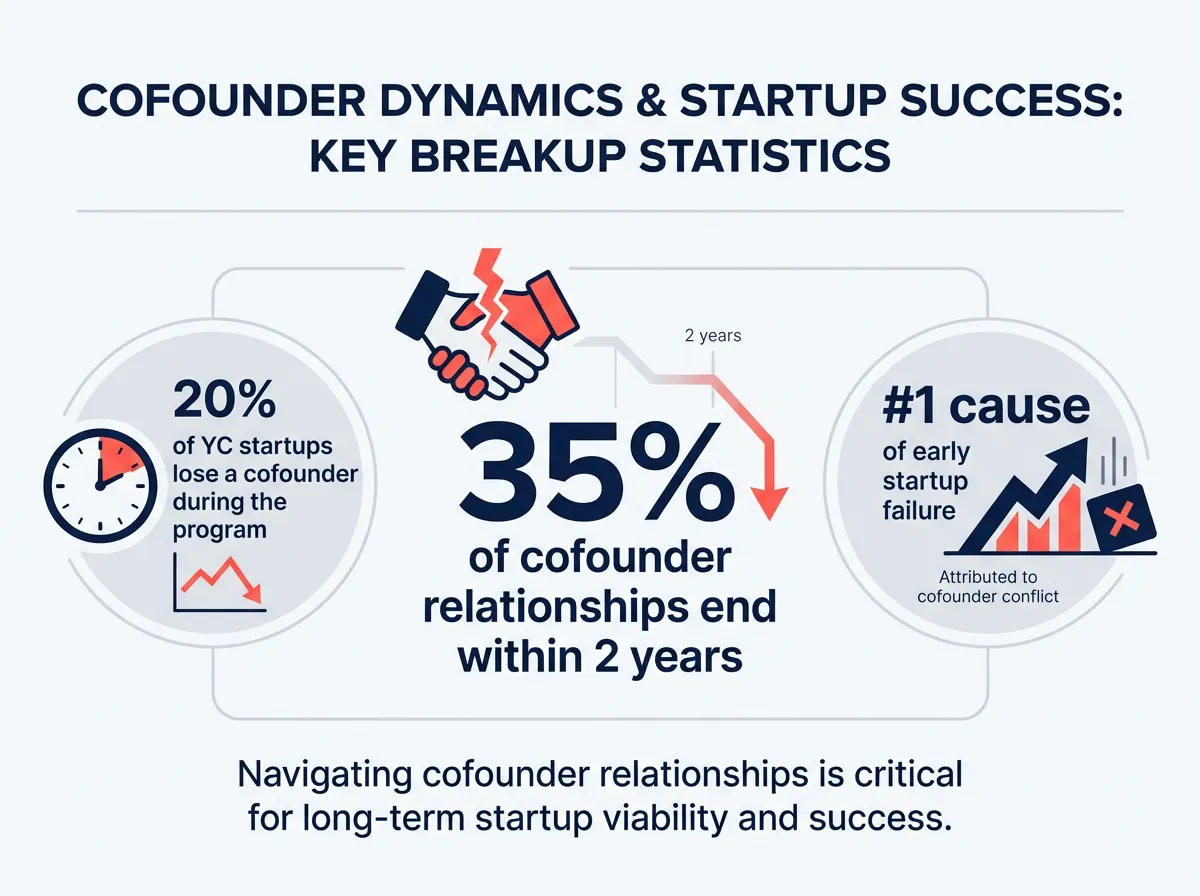
If that scenario feels familiar, you're not alone. Research from Noam Wasserman at Harvard Business School found that roughly 65% of high-potential startups fail due to conflict among cofounders. Other data points paint an equally stark picture: approximately 35% of cofounder relationships dissolve within the first two years, and Y Combinator has noted that around 20% of the startups in its own batches experience a cofounder breakup during the program itself.
This article isn't here to scare you. It's here to help you understand why this happens so often — and what you can do about it before you become another data point.
Key Takeaways
- Cofounder breakups are staggeringly common: 35% of partnerships fail within two years, and 20% of YC startups lose a cofounder during the program.
- The top causes aren't dramatic betrayals — they're slow-building misalignments around vision, roles, equity, and working styles that never get addressed directly.
- Most breakups are preventable if cofounders have explicit, written conversations about expectations before conflict escalates.
- Unequal commitment is the silent killer: differences in risk tolerance, time investment, and financial sacrifice create resentment faster than any product disagreement.
- Formalizing your agreements early — on equity, decision-making, and exit terms — is the single highest-leverage thing you can do to protect the partnership.
The Real Numbers Behind Cofounder Breakups
Let's start with the data, because the data is what makes this conversation feel less personal and more structural.
Noam Wasserman's decade-long study of over 10,000 founders, published in The Founder's Dilemmas, found that cofounder conflict is the leading cause of early startup death — ahead of product-market fit failures, funding shortfalls, and competitive pressure. A separate analysis by Founder Institute put the cofounder breakup rate at approximately 35% within 24 months of founding.
Y Combinator's own experience reinforces this. Michael Seibel, former CEO of YC, has spoken publicly about how roughly 20% of startups in any given batch experience a cofounder departure — sometimes before Demo Day even arrives. And these are teams that made it through one of the most selective programs in the world.
The takeaway isn't that cofounder relationships are doomed. It's that they are under enormous structural pressure from day one, and most founders dramatically underestimate that pressure.
The 5 Root Causes of Cofounder Breakups
When you read cofounder post-mortems — on Hacker News threads, in Indie Hackers retrospectives, or in quiet DMs between founders — the same themes appear over and over. These aren't edge cases. They're patterns.
1. Misaligned Vision (That Seemed Aligned at First)
Two founders agree: "We're going to build a better project management tool." Six months later, one wants to go upmarket and sell to enterprises. The other wants to stay lean and serve freelancers. Both believe the other person changed direction.
The truth is, they never aligned on direction in the first place. They aligned on a sentence. Early-stage excitement papers over enormous gaps in strategic vision. When the product hits real market feedback and hard choices emerge, those gaps become canyons.
What this looks like in practice: One cofounder starts taking calls with enterprise prospects without telling the other. The other keeps shipping features for small teams. Neither confronts the drift until it's become an identity crisis for the company.
2. Undefined Roles and Creeping Resentment
In the earliest days, everyone does everything. That feels collaborative and scrappy. But "everyone does everything" is not a long-term operating model — it's a recipe for duplicated effort, stepped-on toes, and simmering frustration.
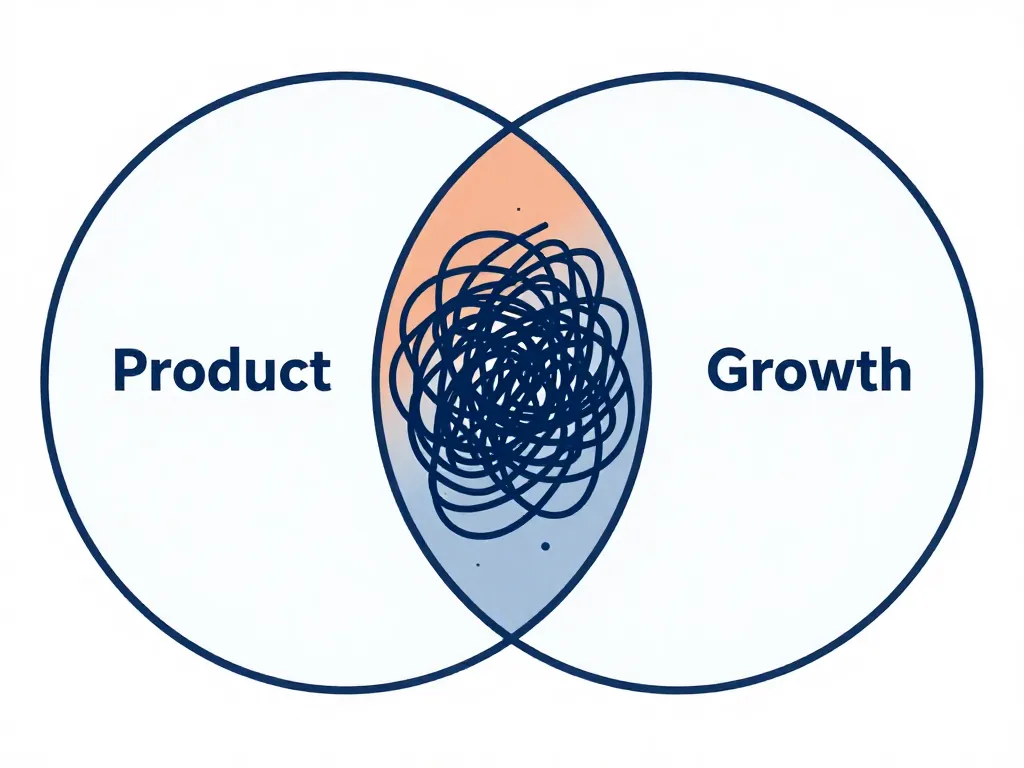
The most common version of this: one cofounder gravitates toward external work (fundraising, sales, partnerships) while the other builds the product. Over time, the builder feels like they're doing all the "real" work. The external-facing cofounder feels like they're carrying the company's survival on their back. Both are right. Neither feels appreciated.
Without clearly defined domains of ownership — not just titles, but actual decision-making authority — every disagreement becomes a territorial dispute.
3. The Equity Time Bomb
Equity splits are the single most avoided conversation in early-stage startups. Many cofounders default to a 50/50 split because it feels "fair" and avoids an uncomfortable negotiation. But 50/50 splits create a structural problem: there's no tiebreaker. Every major disagreement becomes a deadlock.
Worse, equal splits can mask unequal contributions. If one cofounder is working 60 hours a week and the other is still at their day job, the equal split starts to feel like a lie. Resentment compounds silently until it detonates — usually during a fundraise or acquisition conversation, when the stakes are suddenly real.
Wasserman's research found that teams who have the equity conversation early and honestly — even if it's uncomfortable — are significantly more likely to survive as a partnership. Teams who avoid it are building on a fault line.
4. Unequal Commitment and Risk Tolerance
This is the silent killer. It rarely shows up in post-mortems because it's hard to articulate without sounding accusatory, but it's present in the majority of cofounder breakups.
One founder quits their job. The other keeps theirs "just for a few more months." One founder puts $30,000 of savings into the company. The other contributes sweat equity. One founder is willing to skip a salary for a year. The other needs to draw $5,000 a month.
None of these choices are wrong individually. But when they're not discussed openly, they create a massive imbalance in perceived commitment. The founder who took more risk starts to feel like the other person has one foot out the door. The founder who kept their job feels judged for being financially responsible.
A real pattern from post-mortems: "I realized my cofounder and I had fundamentally different answers to the question: What are you willing to lose for this? We never asked each other that question directly. We just assumed."
5. Conflict Avoidance Disguised as Harmony
This is perhaps the most counterintuitive cause. The cofounder relationships that seem the healthiest — no arguments, no tension, always agreeable — are often the most fragile.
When cofounders avoid conflict to preserve the relationship, they're not actually preserving it. They're letting unspoken disagreements accumulate. Every swallowed objection, every "sure, whatever you think," every redirected frustration adds weight to a structure that was never designed to bear it.
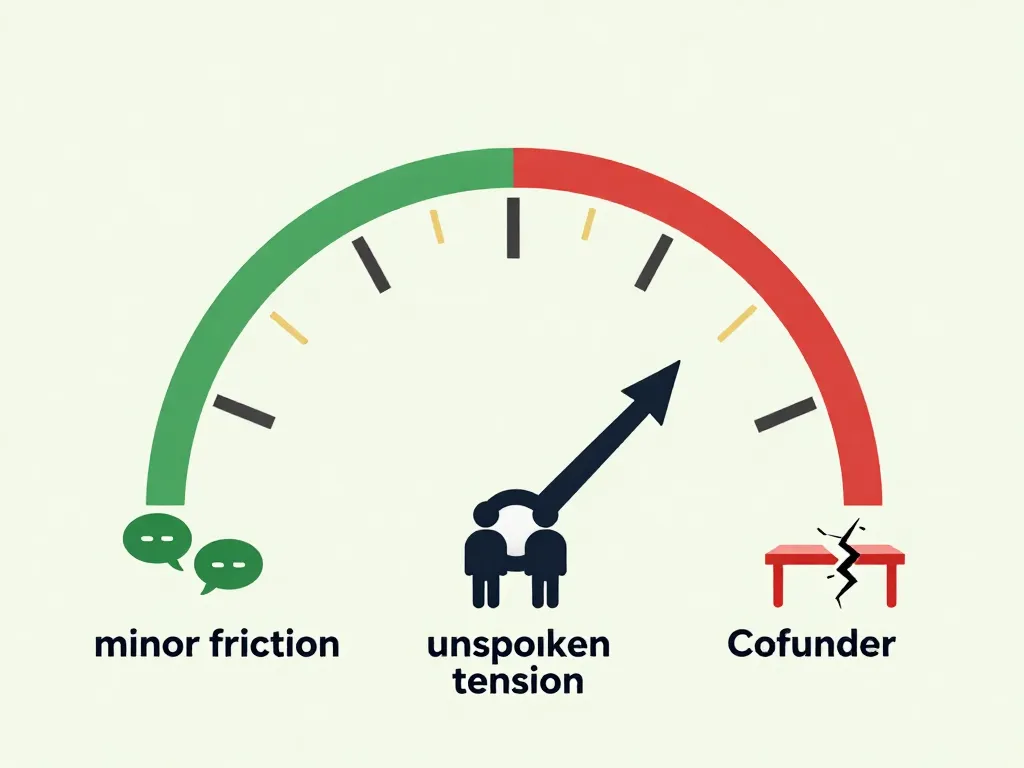
Eventually, something small triggers a disproportionate response. A disagreement about a landing page becomes a referendum on the entire partnership. The blowup isn't really about the landing page. It's about eighteen months of unexpressed disagreement.
The healthiest cofounder relationships aren't conflict-free. They're conflict-competent. They have mechanisms — regular check-ins, structured decision-making frameworks, written agreements — for processing disagreement before it becomes resentment.
What Surviving Cofounder Pairs Do Differently
The good news: cofounder breakups are not inevitable. The partnerships that last tend to share a few specific practices.
They Write Things Down Early
Not because they don't trust each other, but because they know that memory is unreliable and assumptions are dangerous. They put their agreements about equity, roles, decision-making authority, salary expectations, and exit terms into writing — ideally before they write a single line of code.
This doesn't require a lawyer (though legal review is valuable later). It requires a shared document and a willingness to have the uncomfortable conversations. Tools like Servanda help cofounders create these written agreements in a structured way, making it easier to surface misalignments before they become full-blown conflicts.
They Define Decision-Making Authority
Successful cofounder pairs don't make every decision together. They agree on domains: "You own product decisions. I own go-to-market decisions. We both weigh in on hiring and fundraising, with a clear tiebreaker process."
This isn't about hierarchy. It's about speed and accountability. When one person has clear ownership over a domain, disagreements in that domain are input, not vetoes.
They Schedule Honest Conversations
Not "how's the product going" conversations — real ones. Once a month (at minimum), they sit down and ask:
- What's working in our partnership right now?
- What's frustrating you that you haven't said?
- Are we still aligned on where this company is going in 12 months?
- Is the current workload distribution sustainable for both of us?
This feels awkward at first. It becomes indispensable within a few months.
They Agree on Failure Modes in Advance
The best time to negotiate a divorce is before the marriage is in trouble. Surviving cofounder teams discuss, early:
- What happens if one of us wants to leave?
- How do we handle a vesting cliff disagreement?
- What if we fundamentally disagree on a pivot?
- Who gets what if we shut down?
Having answers to these questions doesn't mean you expect the worst. It means you've built a safety net that lets you take bigger risks together.
A Note on Normalizing This Conversation
One of the reasons cofounder breakups are so painful is that nobody talks about them until they happen. The startup ecosystem celebrates founding teams like they're marriages — "we met at a hackathon and just clicked" — and then treats breakups as shameful failures.
They're not. They're an extraordinarily common outcome of putting two ambitious, opinionated people under extreme financial and emotional pressure with unclear rules and high stakes. The shame doesn't belong to the founders who break up. It belongs to the ecosystem that pretends it doesn't happen.
If you're in a cofounder relationship that's struggling, you're not failing. You're experiencing the most predictable challenge in startup building. The question isn't whether you'll face tension — it's whether you've built the structures to process it.
Frequently Asked Questions
How common is it for cofounders to break up?
Very common. Research suggests that approximately 35% of cofounder relationships dissolve within the first two years. Y Combinator reports that around 20% of its startups experience a cofounder departure during the program. Cofounder conflict is the number one cause of early-stage startup failure, ahead of product or market issues.
What is the #1 reason cofounders split?
There's rarely a single reason, but misaligned vision and undefined roles are the most frequently cited factors in post-mortems. These issues tend to compound over time — what starts as a minor disagreement about product direction or workload distribution becomes an irreconcilable difference when left unaddressed for months.
Can a startup survive a cofounder breakup?
Yes, many do — but it's difficult and expensive. A cofounder departure typically triggers equity disputes, team morale issues, and investor concern. Startups that survive usually have clear legal agreements (like vesting schedules with cliffs) and a remaining founder with strong enough conviction and capability to carry the company forward.
Should cofounders split equity 50/50?
Not by default. A 50/50 split avoids a hard conversation, but it creates a structural deadlock where neither founder can break ties on major decisions. The equity conversation should reflect each person's contributions, risk tolerance, and role going forward. It's one of the most important early conversations you can have — and one of the most commonly avoided.
When should cofounders create a formal agreement?
As early as possible — ideally before any meaningful work or money has been invested. The best time to negotiate terms is when both parties are excited and goodwill is high. Waiting until conflict arises means negotiating under stress, which almost always produces worse outcomes for everyone.
Moving Forward
The 35% cofounder breakup rate isn't destiny — it's a reflection of how rarely founders prepare for the relational challenges of building a company together. The technical problems get all the attention. The human problems get ignored until they're emergencies.
If you're in a cofounder relationship today, the single most valuable thing you can do this week is sit down together and have the conversations you've been avoiding. Write down your agreements about equity, roles, decision-making, and what happens if things don't work out. Not because you think they won't — but because building that foundation of clarity is what gives your partnership the best chance of being in the 65% that survives.
The startups that endure aren't the ones that never face conflict. They're the ones that built the structures to handle it before it arrived.