5 Roommate Conflicts You'll Face (And How to Fix Them)
It's 1:47 a.m. on a Tuesday. You have an 8 a.m. meeting. And your roommate's friends are in the living room, laughing at full volume over a card game that apparently cannot wait until the weekend. You're lying in bed, staring at the ceiling, cycling between rage and dread — rage at the noise, dread at the conversation you know you need to have tomorrow morning.
If this sounds familiar, you're not alone. A 2023 survey by Apartment List found that nearly 70% of renters who've had roommates reported at least one significant conflict during their living arrangement. The five disputes that come up again and again — noise, cleanliness, shared expenses, guests, and personal boundaries — are so predictable they might as well be printed on the lease.
The good news? Predictable problems have proven solutions. Below, you'll find each of the five most common roommate conflicts paired with specific, RA-tested resolution scripts you can actually use — not vague advice, but real sentences you can say out loud tonight.
Key Takeaways
- Most roommate conflicts fall into five categories: noise, cleanliness, shared expenses, guests, and personal boundaries — and each one requires a different resolution approach.
- Timing matters more than wording: Bringing up an issue within 48 hours, during a calm moment, prevents resentment from compounding.
- Written agreements aren't overkill — they're the single most effective way to prevent the same fight from repeating.
- "I" statements aren't just therapy jargon: Framing concerns around your experience rather than your roommate's behavior changes the trajectory of the conversation.
- Escalation has a playbook: When direct conversation stalls, there are concrete next steps before things get truly hostile.
Conflict #1: Noise and Quiet Hours
Why It's So Common
Noise is the number-one roommate complaint across nearly every survey conducted on the topic. The reason is simple: people have wildly different thresholds for what counts as "loud," and those thresholds shift depending on time of day, stress level, and sleep quality. What feels like a normal-volume podcast to one person sounds like an assault to the person on the other side of a thin wall.
What It Actually Sounds Like
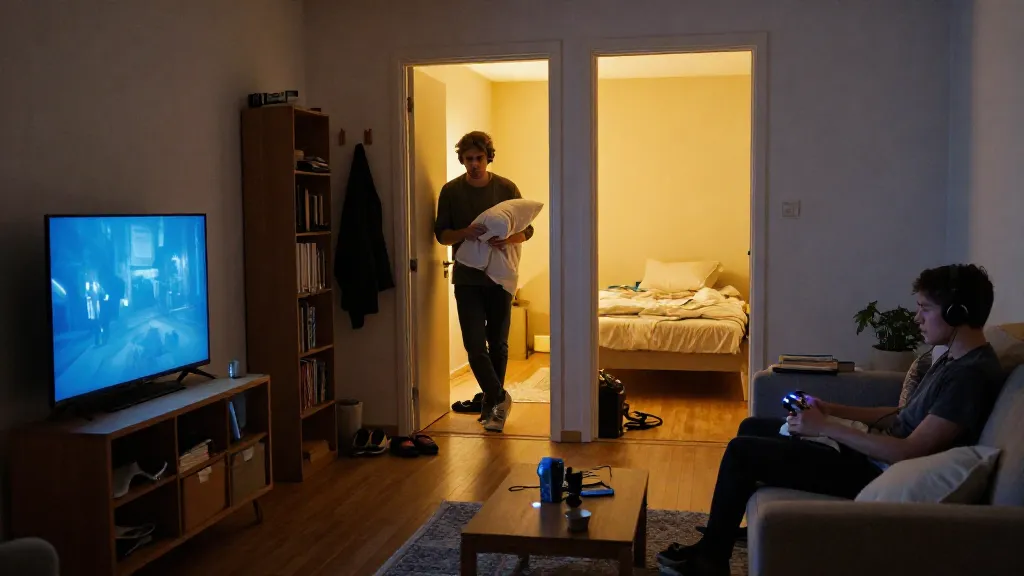
- "They play video games with friends on voice chat until 2 a.m. on weeknights."
- "They blast music the second they wake up at 6 a.m."
- "They FaceTime their partner on speakerphone in the common area every single night."
The Resolution Script
Step 1: Name the specific behavior, not the character.
"Hey, I wanted to bring something up while we're both in a good headspace. The last few nights, the voice chat sessions have been going past midnight, and I've been struggling to sleep. I'm not asking you to stop gaming — I just want to figure out a cutoff time that works for both of us."
Step 2: Propose a concrete solution, not an ultimatum.
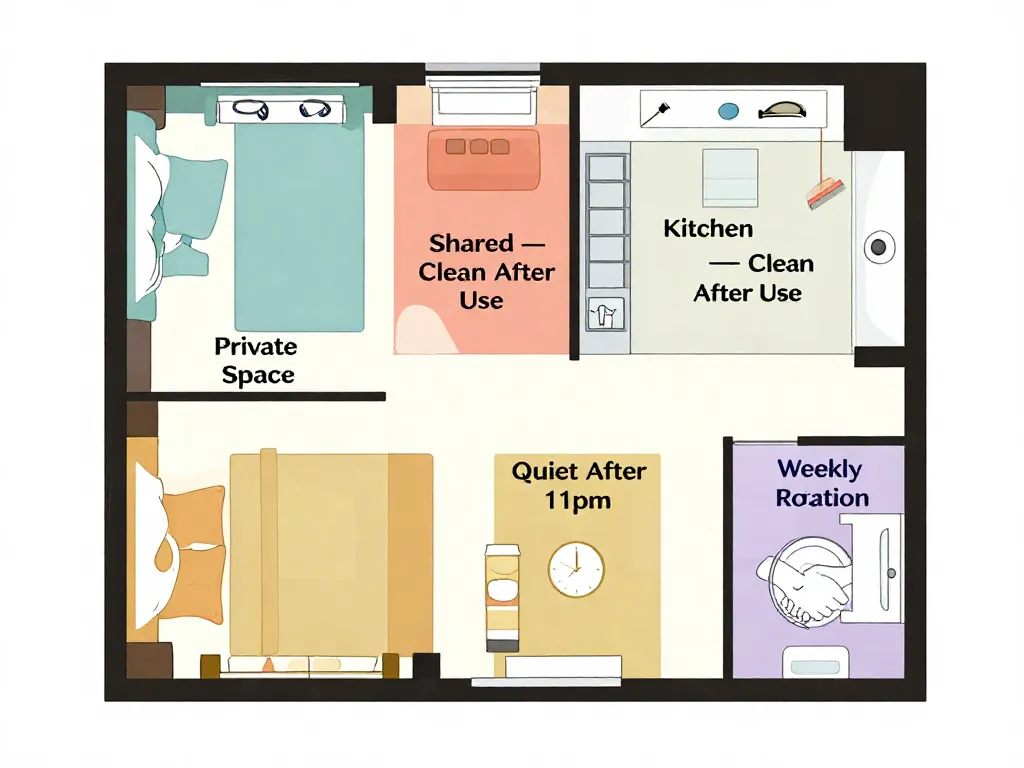
"What if we set quiet hours from 11 p.m. to 7 a.m. on weeknights? On weekends, we could push that to midnight. Headphones after that point — for both of us."
Step 3: Write it down.
This is the step people skip, and it's the one that matters most. A shared Google Doc, a note on the fridge, or a clause in a roommate agreement — the medium doesn't matter. What matters is that the agreement exists outside of anyone's memory.
Pro Tip
If your roommate is defensive, reframe the ask around the shared environment: "I want us both to be able to relax at home" lands better than "You're being too loud."
Conflict #2: Cleanliness and Chores
Why It's So Common
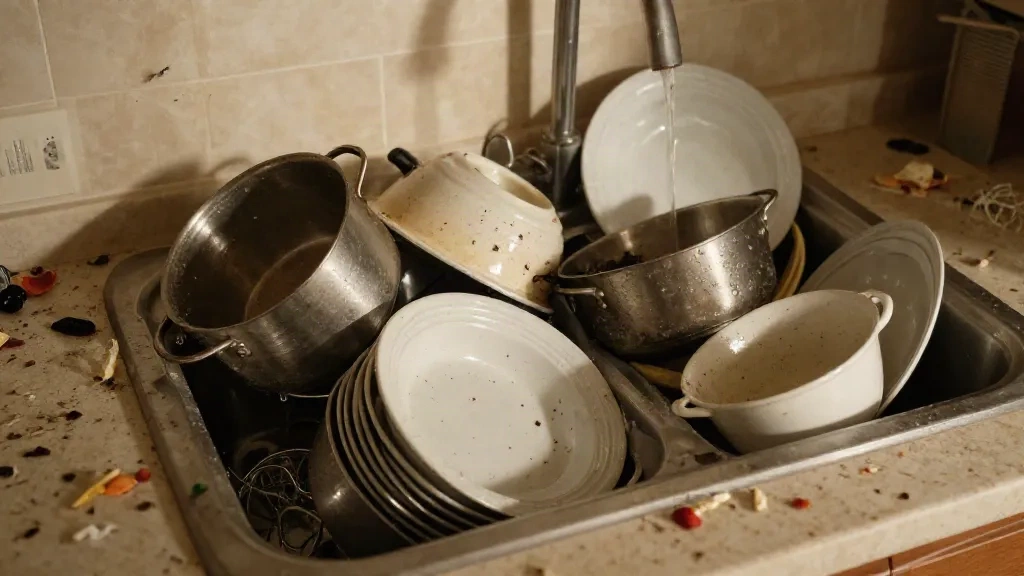
Everyone grew up in a different household with different standards. One person's "clean enough" is another person's "biohazard." And unlike noise — which happens in bursts — dirty dishes and grimy bathrooms are persistent, visible, and cumulative. The frustration compounds daily.
What It Actually Sounds Like
- "There are dishes from three days ago still in the sink."
- "I'm the only one who ever takes out the trash."
- "The bathroom smells and they don't seem to notice or care."

The Resolution Script
Step 1: Start with a shared standard, not a personal grievance.
"I think we have different ideas of what 'clean' means, and that's fine — but it's causing friction. Can we spend ten minutes defining what we both expect for the kitchen, bathroom, and shared spaces?"
Step 2: Build a chore rotation that accounts for preferences.
Not everyone hates the same chores. Ask what each person would rather do. If one of you doesn't mind vacuuming but despises scrubbing the toilet, trade. A simple weekly rotation on a shared calendar eliminates the "I always do everything" narrative.
"I actually don't mind wiping down the kitchen if you're okay handling the bathroom each week. We can alternate trash duty. Sound fair?"
Step 3: Set a review date.
Agree to revisit the arrangement in two weeks. If it's not working, you adjust — no blame, no drama.
Pro Tip
Avoid the phrase "it's your turn." It immediately puts someone on the defensive. Instead, try: "Hey, the kitchen's getting a little out of hand — can we do a quick reset tonight?"
Conflict #3: Shared Expenses and Money
Why It's So Common
Money is uncomfortable to talk about in any relationship. Among roommates, the awkwardness gets amplified by income differences, different spending habits, and the ambiguity of shared items. Who pays for dish soap? What happens when one person blasts the A/C all summer?
What It Actually Sounds Like
- "They never Venmo me back for the groceries I buy for the house."
- "Our electric bill tripled and they refuse to change their habits."
- "They eat my food and say they'll replace it but never do."
The Resolution Script
Step 1: Separate shared costs from personal costs — clearly and early.
"I think we should define what counts as a shared expense. Rent, utilities, toilet paper, dish soap, trash bags — those feel shared. Groceries, personal toiletries, subscriptions — those are individual. Does that feel right to you?"
Step 2: Choose a system and automate it.
Apps like Splitwise exist for exactly this purpose. Set up a shared expense group, log purchases in real time, and settle up on the first of every month. Removing the need for awkward "you owe me" texts eliminates 90% of the tension.
"Can we start logging shared purchases in Splitwise so neither of us has to keep a mental tally? We can settle up monthly."
Step 3: Address the food problem directly.
If food theft (or "borrowing") is the issue, be specific:
"I've noticed some of my groceries getting used. I'm not trying to be petty — I just budget for food pretty tightly. Can we keep our stuff on separate shelves and agree not to use each other's stuff without asking?"
Pro Tip
Never let a shared expense go unaddressed for more than a week. The longer you wait, the more the resentment calcifies — and the harder it becomes to bring up without sounding like you've been keeping score.
Conflict #4: Guests and Overnight Visitors
Why It's So Common
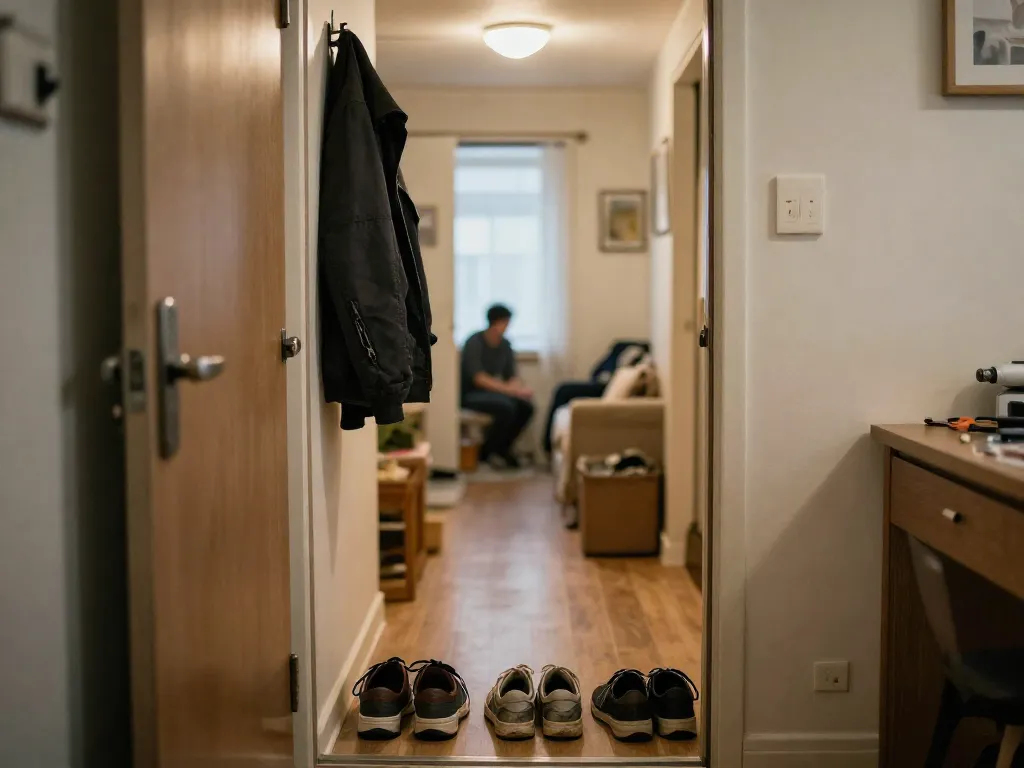
Your apartment is your home. It's also your roommate's home. When a third person enters that space — whether it's a friend crashing on the couch or a partner who's functionally moved in — the entire dynamic shifts. Suddenly someone who didn't sign the lease is using the shower, eating in the kitchen, and altering your sense of privacy.
What It Actually Sounds Like
- "Their partner has been here every single night for three weeks."
- "They invite friends over without telling me and I come home to a full apartment."
- "Their guest used my towel and nobody said anything."
The Resolution Script
Step 1: Validate the relationship, then address the impact.
"I really like [partner's name], and I'm glad things are going well. I just want to talk about how often they're staying over, because it's starting to affect my comfort at home."
Step 2: Set a guest policy with specific numbers.
Vague rules like "not too often" don't work. Specificity does.
"What if we cap overnight guests at two or three nights per week? And for anything longer, we check in with each other first. That way neither of us feels blindsided."
Step 3: Address shared resource costs honestly.
If a guest is effectively living there — using water, electricity, Wi-Fi, toilet paper — it's fair to discuss a cost adjustment.
"If [partner's name] is going to be here four-plus nights a week, can we talk about splitting utilities three ways? I don't want it to be awkward, but it's adding up."
Pro Tip
A heads-up text is free and takes ten seconds. Proposing a simple norm — "Let's text each other before having people over" — prevents the worst of these conflicts before they start.
Conflict #5: Personal Boundaries and Respect
Why It's So Common
This is the catch-all category, and it's often the hardest to articulate. It includes things like borrowing belongings without asking, invading personal space, making passive-aggressive comments, or simply not respecting that your roommate's room is their private space. Because these conflicts feel "small," people often let them pile up until the resentment explodes over something seemingly trivial.
What It Actually Sounds Like
- "They went into my room and borrowed my charger without asking."
- "They comment on what I eat, when I come home, who I'm with."
- "They read my mail that was sitting on the counter."
The Resolution Script
Step 1: Name the boundary simply and without over-explaining.
"I need to ask that you not go into my room when I'm not home. It's nothing personal — I just need that to be my private space."
You don't need to justify why you want privacy. The boundary is the reason.
Step 2: If the issue is commentary or passive-aggression, name the pattern gently.
"I've noticed some comments about my schedule lately, and I'm sure you don't mean anything by it, but it's making me feel a bit monitored. I'd appreciate it if we could both give each other space to live without checking in on every choice."
Step 3: Reinforce the boundary once, calmly, if it's crossed again.
"Hey, I mentioned last week that I'd rather you not borrow my things without asking. It happened again yesterday. I need that to stop."
Notice: no yelling, no passive aggression, no lengthy justification. Calm repetition is more powerful than a single dramatic confrontation.
Pro Tip
Consider formalizing your agreements early — even before conflicts arise — with a tool like Servanda, which helps roommates build clear, written agreements covering everything from personal space to shared responsibilities. Having it in writing makes enforcement feel less personal.
What to Do When Talking Doesn't Work
Sometimes you follow the script, stay calm, and your roommate still doesn't change. Here's the escalation path that resident advisors and mediators typically recommend:
- Document the issue. Keep a brief, factual log of incidents — dates, times, what happened. This isn't about building a legal case; it's about having specifics when memory gets fuzzy.
- Request a mediated conversation. If you're in student housing, contact your RA. If you're renting, ask a mutual friend or use an AI mediation platform to facilitate a structured discussion.
- Involve the landlord or property manager. If the conflict involves lease violations — unauthorized occupants, property damage, health hazards — your landlord has a responsibility and a right to intervene.
- Explore exit options. Sometimes the best resolution is recognizing that the living situation isn't working. Review your lease terms for subletting, early termination, or room swaps.
Escalation isn't failure. It's what responsible adults do when a problem exceeds what two people can solve alone.
FAQ
How do I bring up a roommate conflict without making it awkward?
Pick a neutral time — not during or immediately after the offending behavior. Start with something like, "I want to bring something up so it doesn't turn into a bigger deal later." Framing the conversation as prevention rather than accusation lowers the temperature significantly.
Should roommates have a written agreement even if they're friends?
Especially if they're friends. Friendship creates an assumption that everything will "work itself out," which is exactly how small annoyances become relationship-ending resentments. A simple written agreement covering chores, guests, quiet hours, and expenses protects both the apartment and the friendship.
What if my roommate refuses to talk about the problem?
Put your request in writing — a calm, respectful text or email that outlines the issue and proposes a solution. This gives them time to process without feeling cornered. If they still refuse to engage, it's time to escalate to a mediator, RA, or landlord.
How do I deal with a roommate who's passive-aggressive instead of direct?
Name the behavior without matching its energy. Something like, "I sense there might be something bothering you — I'd rather talk about it directly so we can figure it out." This forces the underlying issue into the open without escalating the passive aggression.
Is it ever okay to involve the landlord in a roommate dispute?
Yes — particularly when the conflict involves lease violations, safety concerns, or situations where direct communication and mediation have both failed. Landlords aren't therapists, but they are responsible for ensuring the property is livable for all tenants.
Conclusion
The five roommate conflicts outlined here — noise, cleanliness, shared expenses, guests, and personal boundaries — aren't signs that your living situation is doomed. They're the predictable friction points of sharing space with another human being. What separates roommates who thrive from roommates who end up on Reddit horror threads isn't the absence of conflict; it's the willingness to address it early, specifically, and in writing.
You now have a script for each of the big five. You know when to escalate and how. The only step left is the hardest one: starting the conversation. Pick the conflict that's been weighing on you most, adapt the language to your own voice, and say it tonight — or at least before the weekend.
Your future self, well-rested and not seething over a sink full of dishes, will thank you.