Stop Blaming Your Roommate: Why Conflicts Are Never One-Sided
You're lying in bed at 11:47 PM on a Tuesday. Your roommate is in the living room, TV volume cranked, laughing on a video call. You have a 7 AM meeting. Your jaw tightens. They always do this. They never think about anyone else. This is entirely their fault.
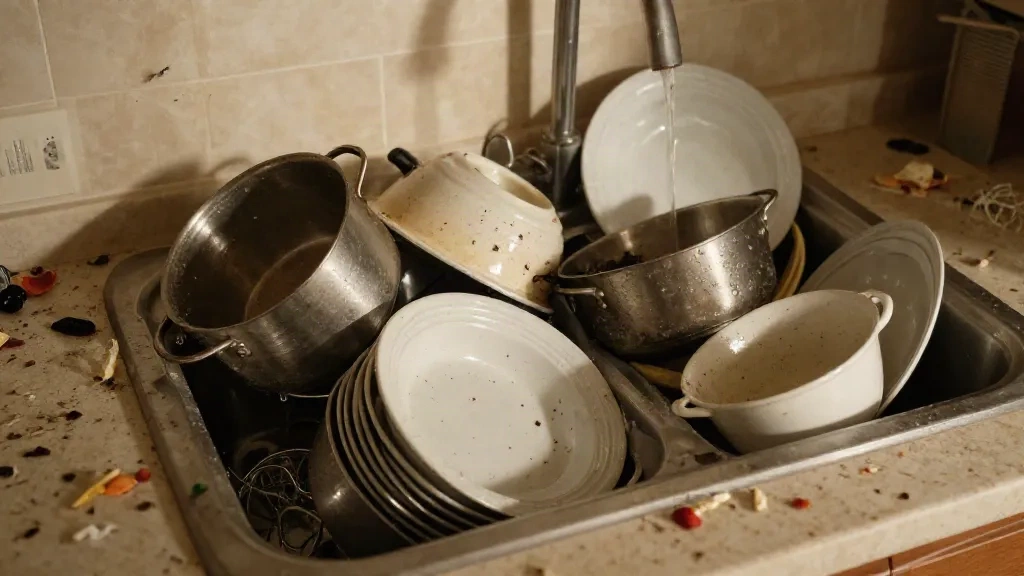
Except—do you remember last Saturday? When you left dishes in the sink for three days and shrugged it off because you were "busy"? Or the time you played music at 8 AM on a Sunday because you were already up?
Here's the uncomfortable truth that conflict psychology keeps confirming: roommate conflicts are never one-sided. Not the dishes fight. Not the noise argument. Not even the thermostat war. Research from the University of British Columbia has shown that holding onto wrong beliefs about conflict—especially the belief that one person is entirely to blame—is one of the biggest barriers to resolution. That belief feels protective, but it's actually the thing keeping you stuck.
This article is going to challenge some assumptions. It might be uncomfortable. But if you're tired of the same fights recycling every few weeks, read on.
Key Takeaways
- The "single villain" narrative is a cognitive distortion. Your brain naturally assigns full blame to the other person to protect your self-image, but this thinking pattern actively prevents resolution.
- Your contributions to conflict are often invisible to you. Passive behaviors like avoidance, silent resentment, and unspoken expectations are just as much a part of the problem as loud complaints.
- Conflict isn't caused by bad people—it's caused by mismatched expectations. Most roommate disputes stem from assumptions that were never discussed, not from anyone being a terrible person.
- Taking partial ownership doesn't mean accepting all blame. Acknowledging your 20% of the problem is what unlocks the other person's willingness to own their 80%.
- Written agreements created before emotions escalate prevent the majority of recurring conflicts. Vague verbal understandings fail; specific, documented expectations work.
The Myth of the "Bad Roommate"
Scroll through any roommate advice forum and you'll find a pattern: one person tells their story, and the other roommate is painted as an inconsiderate monster. The comments pile on with validation. "Move out!" "They're toxic!" "You deserve better!"
But here's what you almost never see: the other roommate's version. And if you did see it, you'd likely find a completely different story—one where they're the reasonable one and you're the problem.
This isn't because everyone is lying. It's because of a well-documented cognitive bias called the fundamental attribution error. When someone else does something that bothers us, we attribute it to their character ("they're lazy," "they're selfish"). When we do something that bothers someone else, we attribute it to our circumstances ("I was stressed," "I forgot," "it wasn't a big deal").
So when your roommate leaves dishes in the sink, they're a slob. When you leave dishes in the sink, you had a long day.
This bias isn't a personal failing—it's a feature of human cognition. But in a shared living space, it creates a toxic feedback loop where both people feel like the victim and neither person feels responsible for repair.
The Story You're Telling Yourself Is Incomplete
Psychologists who study interpersonal conflict consistently find that each party in a dispute can only see roughly half the picture. You have full access to your own intentions, frustrations, and context. You have almost zero access to your roommate's.
Consider this real scenario (names changed):
Priya's version: "My roommate Alex never cleans the bathroom. I've asked three times. They clearly don't respect our shared space, and I'm tired of being the only adult in this apartment."
Alex's version: "Priya has impossibly high cleaning standards and gets passive-aggressive about things that aren't even dirty. I clean the bathroom every two weeks, which is normal. But nothing is ever good enough, and they never actually tell me directly—they just sigh loudly and make comments to friends on the phone."
Who's right? Both of them. And neither of them. The conflict isn't about a dirty bathroom—it's about two different definitions of "clean," two different communication styles, and zero explicit agreements about shared responsibilities.
Why You Can't See Your Own Role in Roommate Conflicts
Let's get specific about the invisible ways you might be contributing to the conflict you're blaming entirely on your roommate.
1. The Sin of Unspoken Expectations
This is the single biggest driver of roommate conflict, and almost nobody recognizes it in themselves.
You grew up in a household where shoes came off at the door. Your roommate grew up in a household where shoes stayed on. Neither of you discussed this. You spend three months silently fuming about dirty floors before exploding. Your roommate is blindsided.
The expectation was real. But it was never communicated. And an expectation that was never communicated is an agreement that was never made.
Common unspoken expectations that fuel resentment:
- How often shared spaces should be cleaned (and what "clean" means)
- Whether it's okay to have guests over on weeknights
- Noise levels after a certain hour
- How quickly dishes should be washed after use
- Whether shared groceries are truly shared or just "I bought it so it's mine"
- How the thermostat should be set
Every one of these feels obvious to whoever holds the expectation. None of them are universal.
2. Passive Contribution Is Still Contribution
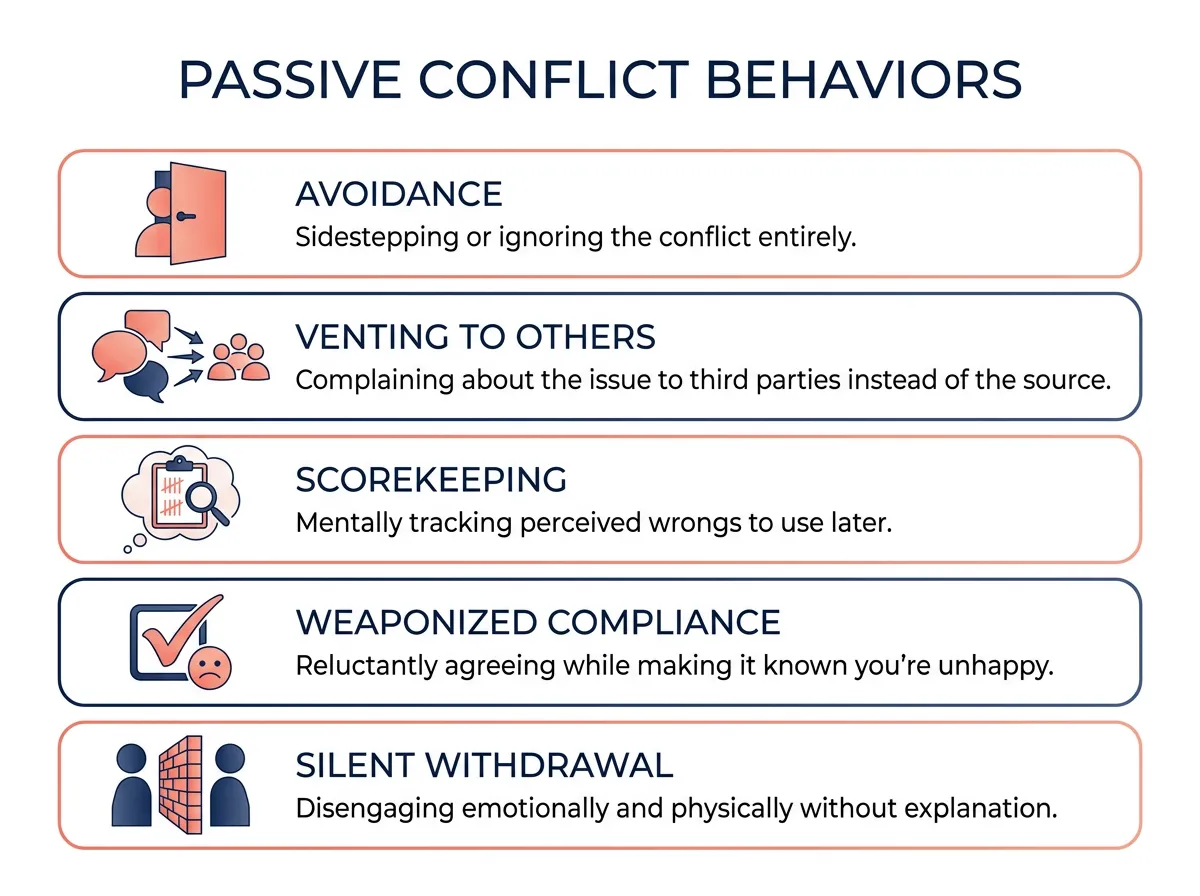
You don't have to be the loud one to be part of the problem. Passive behaviors that escalate conflict include:
- Avoidance: Refusing to address something directly, then letting resentment build until you explode or shut down completely
- Venting to everyone except your roommate: Your coworkers, your partner, your group chat all know about the problem. Your roommate doesn't.
- Scorekeeping: Mentally tracking every transgression while ignoring your own, building a prosecution case instead of seeking a solution
- Weaponized compliance: Doing exactly what was asked in the most begrudging, minimal way possible to prove a point
- Silent withdrawal: Reducing all interaction to cold, transactional exchanges, creating an atmosphere of tension without ever naming the issue
If you're doing any of these, you're not a neutral party. You're an active participant in the conflict cycle.
3. Your Reaction Is Part of the Problem
Even when your roommate does something genuinely inconsiderate, your response to it is a separate variable in the equation.
Imagine your roommate eats your leftovers. That's inconsiderate—no debate. But there's a wide spectrum of responses:
- Mentioning it calmly and asking them to replace it
- Sending a passive-aggressive text
- Eating their food in retaliation
- Bringing it up three weeks later during an unrelated argument
- Posting about it on social media
The original offense is theirs. Everything after that is a shared creation.
The 20/80 Principle: Own Your Piece
Here's a practical framework that therapists and mediators use: even if you believe you're only 20% responsible for a conflict, own that 20% fully and first.
Why? Because something remarkable happens when one person in a conflict takes genuine ownership of their contribution—the other person's defensiveness drops. Not always. Not immediately. But consistently enough that it's one of the most reliable de-escalation techniques in conflict resolution.
Compare these two approaches:
Approach A (100% blame): "You need to stop leaving your stuff everywhere. The apartment is a mess because of you."
Approach B (owning your 20%): "I know I haven't been great about bringing up issues before they bother me—I tend to let things build. But the clutter in the shared spaces is really getting to me. Can we figure out a system together?"
Approach B isn't weak. It isn't "letting them off the hook." It's strategic vulnerability that opens the door to an actual conversation instead of another round of mutual blame.

How to Actually Fix Things (Not Just Vent About Them)
Understanding that conflicts aren't one-sided is the insight. But insight alone doesn't clean the kitchen. Here's what to do with this new perspective.
Step 1: Audit Your Own Behavior First
Before your next conversation with your roommate, sit down and honestly answer these questions:
- What expectations do I have that I've never explicitly stated?
- What have I done (or not done) that may have contributed to this tension?
- When did I last address a concern before I was angry about it?
- Am I engaging in any passive conflict behaviors (avoidance, scorekeeping, venting to others)?
- Would I be willing to hear my roommate's version of this story without interrupting?
Write your answers down. The act of writing forces more honesty than just thinking about it.
Step 2: Have the Conversation—But Change the Script
Most roommate confrontations follow a predictable script: accusation, defense, counter-accusation, shutdown. Break the pattern by restructuring the conversation:
- Start with your contribution: "I realize I haven't been upfront about what's been bothering me, and that's on me."
- State the impact, not the character judgment: "When dishes sit in the sink for a few days, I feel stressed when I come home" vs. "You're a slob."
- Ask for their perspective genuinely: "What's your experience been? I want to hear your side."
- Propose solutions, not punishments: Focus on what changes look like going forward, not on cataloging past offenses.
Step 3: Turn Solutions into Written Agreements
Verbal agreements after emotional conversations have an incredibly short half-life. Two weeks later, both people remember a different version of what was agreed upon.
This is where most roommate conflict resolution falls apart—not because people are unwilling, but because nothing is documented.
Write it down. Specifically. Not "we'll both clean more" but "we'll alternate bathroom cleaning every Sunday, and the kitchen gets wiped down by whoever cooks that night." AI-powered platforms like Servanda can help roommates create these written agreements with clear terms, making it easier to reference what was actually decided when memories inevitably diverge.
Specificity is the antidote to future conflict. If an agreement could be interpreted two different ways, it will be.
Step 4: Build in Check-Ins
This sounds formal, and it should be—at least slightly. Set a recurring time (monthly is usually enough) to briefly discuss how the living situation is going. This prevents the slow accumulation of resentment that leads to blowups.
A five-minute check-in where both people can name one thing that's working and one thing that could improve is worth more than ten hours of arguments.
The check-in framework:
- What's going well? (Start positive—it's not just politeness, it reminds both people that the situation isn't all bad)
- What could be better? (Specific and actionable, not vague complaints)
- Any upcoming changes? (New work schedule, guests visiting, exams—context that helps both people adjust)
The Hardest Part: Accepting That You're Not the Exception
Right now, some readers are thinking: "This doesn't apply to me. My roommate really is the entire problem."
Maybe. There are genuine situations involving harassment, boundary violations, or unsafe behavior where the fault truly is lopsided and the right answer is to involve housing authorities or leave.
But for the vast majority of roommate conflicts—the noise, the dishes, the guests, the mess, the passive aggression—you are part of the system. Not because you're a bad person. Because you're a person, living in close proximity with another person, each carrying different habits, histories, and definitions of what's reasonable.
The moment you accept that roommate conflicts are never one-sided is the moment you gain actual power to change them. As long as the problem is 100% someone else's fault, you're 100% dependent on them to fix it. The math on that is terrible.
Own your piece. Name it out loud. Watch what happens next.
FAQ
What if my roommate really won't take any responsibility?
It's frustrating, but you can only control your own behavior. Start by modeling accountability—own your part clearly and specifically. Sometimes it takes several interactions before the other person feels safe enough to lower their defenses. If they still refuse after genuine, sustained effort on your part, it may be time to involve a neutral third party like a mutual friend, RA, or mediator.
How do I bring up a roommate problem without starting a fight?
Timing and framing matter enormously. Don't start the conversation when you're already angry, when they just walked through the door, or over text. Choose a neutral moment, lead with something you've done that contributed to the tension, and describe the impact of the behavior rather than labeling their character. "I feel stressed when..." lands very differently than "You always..."
Is it normal to have conflicts with a roommate?
Absolutely. Conflict in shared living situations is nearly universal—it doesn't mean you're incompatible or that someone is a bad roommate. What determines the outcome isn't whether conflict happens but how it's handled. Roommates who establish clear expectations early and address issues before resentment builds tend to resolve things faster and maintain stronger relationships.
Should roommates have a written agreement even if we're friends?
Especially if you're friends. Friendships often make people less likely to raise issues directly because they don't want to damage the relationship—which ironically damages the relationship more over time. A written agreement about chores, guests, noise, and shared expenses isn't a sign of distrust. It's a sign of respect for both the friendship and the living arrangement.
When should I involve someone else in a roommate conflict?
If you've made genuine attempts to address the issue directly—owning your part, having the conversation, proposing solutions—and nothing has changed after two or three honest tries, it's reasonable to bring in a third party. This could be an RA, a mutual friend both people trust, or a mediation service. Don't wait until you're at the point of wanting to move out; earlier intervention leads to better outcomes.
Conclusion
The belief that your roommate is entirely at fault is the most natural feeling in the world—and one of the least useful. Conflict psychology consistently shows that shared living disputes are co-created, shaped by unspoken expectations, invisible contributions, and the stories we tell ourselves about who's the villain.
This doesn't mean every conflict is a perfect 50/50 split. It means that your piece—however small—is the only piece you have the power to change. And changing your piece changes the entire dynamic.
Start with the audit. Own your 20%. Have the conversation differently. Write down what you agree to. Check in before things fester.
Your roommate situation isn't doomed. But it does require something harder than blame: honesty about the role you play in the patterns you want to break.