Is It Really Your Roommate's Fault? Conflict Myths
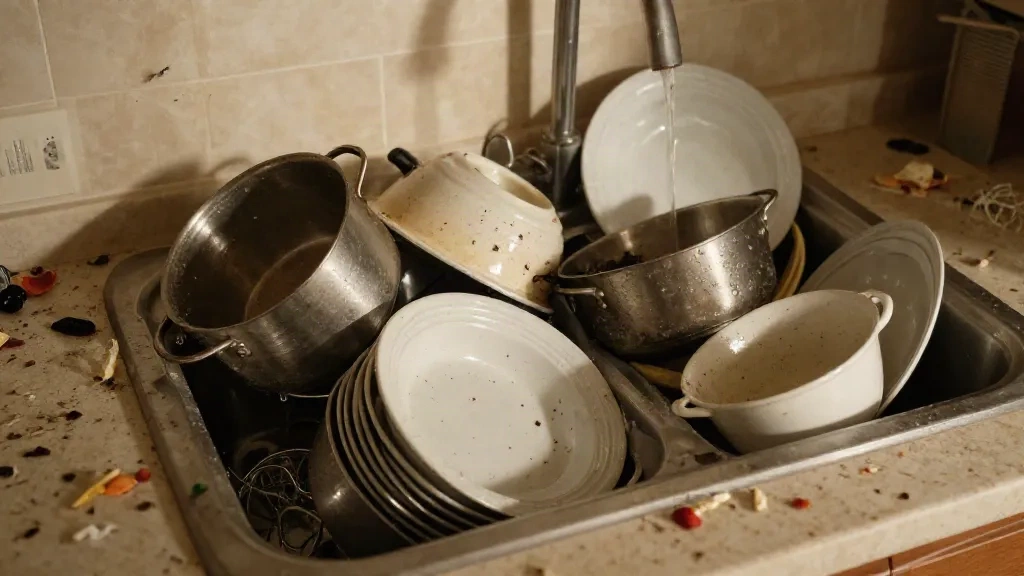
You come home after an exhausting day. There are dishes in the sink — again. A coat tossed over the chair you both agreed would stay clear. The bathroom light left on for the third time this week. And in your head, the narrative writes itself: They just don't care. They're inconsiderate. They have zero respect for shared space.
But here's the uncomfortable question worth sitting with: What if the story you're telling yourself about your roommate is only partially true — or not true at all?
Roommate conflict myths are the invisible scripts that escalate minor annoyances into full-blown resentment. They're the assumptions we treat as facts, the mental shortcuts that make us the hero and our roommate the villain. And almost everyone falls for them. Understanding these myths won't just improve your living situation — it might fundamentally change how you navigate disagreements everywhere else in your life.
Key Takeaways
- You're probably committing the "fundamental attribution error" — blaming your roommate's character for things that are often situational. Recognizing this bias is the single most important step toward resolving tension.
- Your roommate is doing the exact same thing to you. Both sides typically believe they're the reasonable one, which creates a deadlock that only self-awareness can break.
- Unspoken expectations cause more roommate conflicts than genuine bad behavior. Most disputes stem from different upbringings and habits, not malice.
- Written agreements aren't overkill — they're a safety net. Putting shared expectations on paper eliminates the ambiguity that fuels resentment.
- The urge to "keep score" is natural but destructive. Tracking who did what creates a prosecutor mindset that poisons the relationship.
The #1 Roommate Conflict Myth: "They're Just That Kind of Person"
Psychologists have a name for the mental trap most roommates fall into: the fundamental attribution error. It means that when someone else does something annoying, we attribute it to their personality. But when we do the same thing, we attribute it to our circumstances.
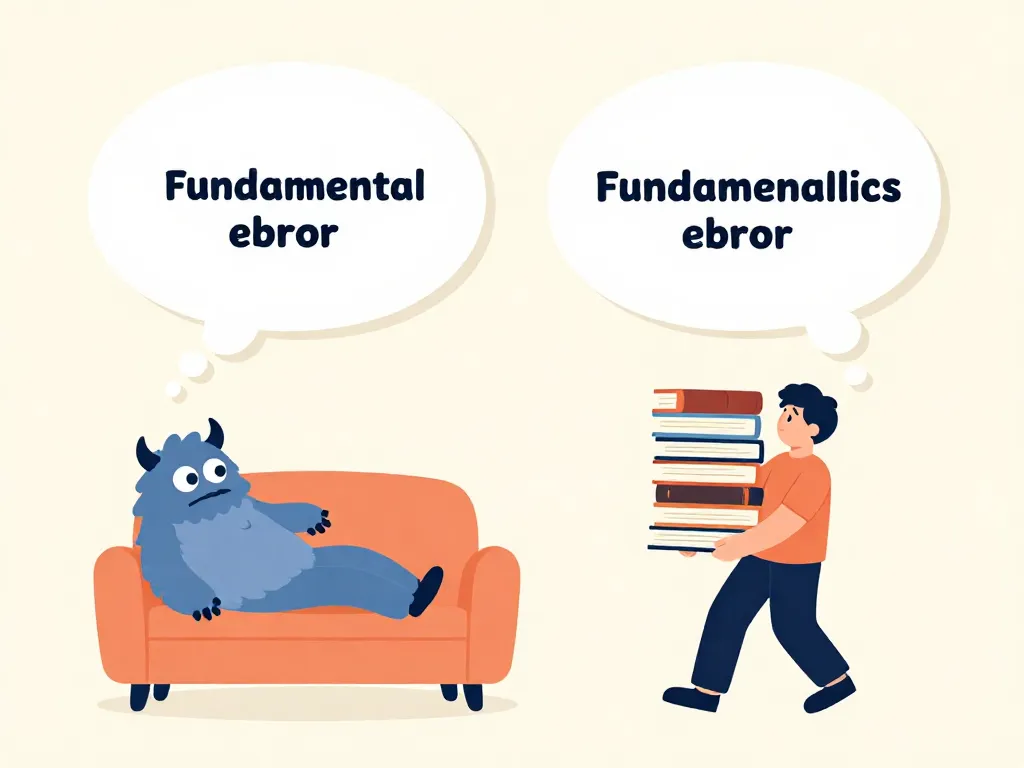
Here's what this looks like in practice:
- Your roommate leaves dishes in the sink → They're lazy and inconsiderate.
-
You leave dishes in the sink → I had an incredibly stressful day and I'll get to them tomorrow.
-
Your roommate is loud at midnight → They have no respect for boundaries.
- You're loud at midnight → I was on the phone with my mom who's going through something serious.
The asymmetry is striking, and it's not something only difficult people do. It's a default setting in the human brain. We have full access to the context behind our own behavior — our stress, our bad day, the thing we forgot — but we almost never extend that same generous interpretation to others.
This doesn't mean your roommate's behavior is acceptable. It means the explanation you've attached to it — that they're fundamentally selfish or careless — is probably wrong.
Why This Matters More Than You Think
Once you label someone as "inconsiderate," every future action gets filtered through that label. They forget to buy paper towels? Inconsiderate. They don't text back about the utility bill? Inconsiderate. They close their bedroom door during a party? Rude and inconsiderate.
Psychologists call this confirmation bias — we seek out evidence that supports our existing belief and dismiss anything that contradicts it. Your roommate could do nine thoughtful things in a week, but the one annoying thing will feel like proof of who they "really are."
The roommate conflict myth here is that character is the main driver of friction. In reality, situations, habits, and unclear expectations are almost always the actual culprits.
The Myth of the "Reasonable" Roommate (It's You, Right?)
Here's a thought experiment: if you asked your roommate to describe your shared conflicts, what would they say? Most people assume their roommate would at least acknowledge the core issues. But in studies on interpersonal conflict, something fascinating shows up consistently — both parties tend to believe they're being more reasonable, more accommodating, and more fair than the other person.
This is called the self-serving bias, and it's not about being dishonest. It's about the simple fact that you experience your own effort directly. You feel the energy it takes to clean the kitchen. You remember the times you bit your tongue. But you don't see your roommate doing the same — so it's easy to conclude they aren't.
The Scorekeeper Trap
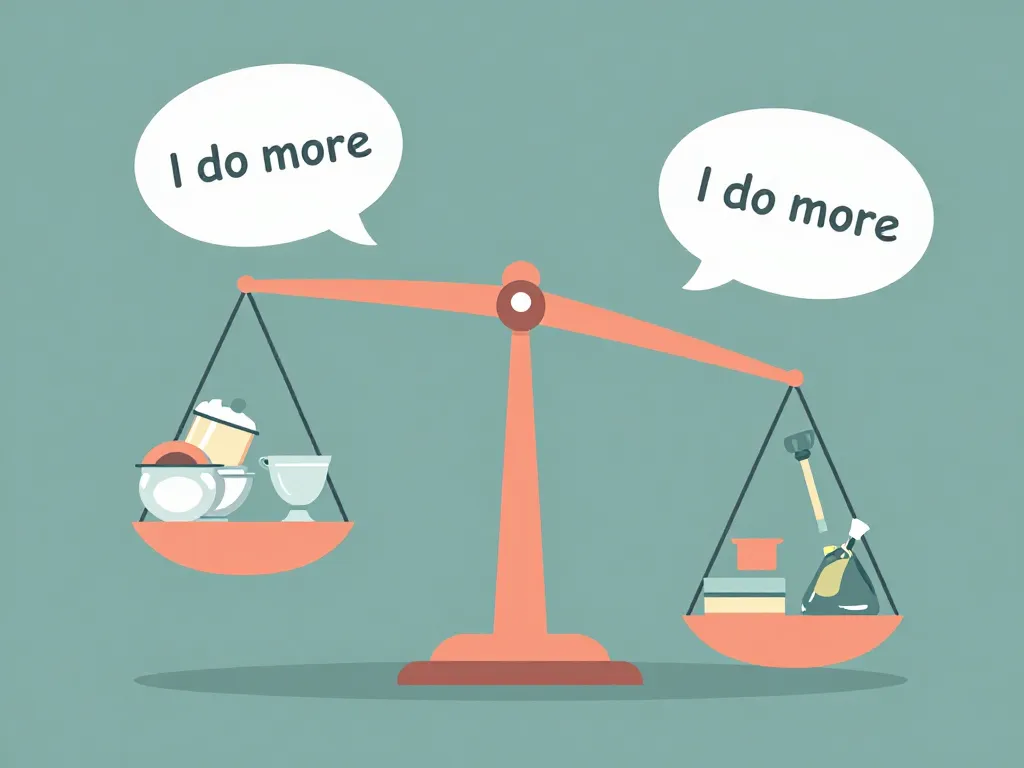
One of the most toxic patterns in roommate relationships is mental scorekeeping: maintaining a running tally of who's done more chores, paid more for groceries, or made more sacrifices.
The problem isn't that fairness doesn't matter — it does. The problem is that humans are terrible accountants when it comes to interpersonal contributions. Research from psychologist Michael Ross found that when partners (romantic or otherwise) each estimate their contribution to shared tasks, the numbers consistently add up to well over 100%. Both people genuinely believe they're doing more than half.
So when you're convinced that you clean the apartment 70% of the time and your roommate only does 30%, your roommate likely holds the inverse belief — with equal conviction.
What to do instead:
- Externalize the score. Rather than relying on memory, use a shared chore chart or rotation schedule. When expectations are visible, there's nothing to argue about.
- Focus on systems, not fairness. "Is this system working?" is a more productive question than "Am I doing more than my fair share?"
- Assume your roommate is also keeping score — and also feels shortchanged. This assumption alone can create the empathy needed to have a productive conversation.
"We Shouldn't Need a Written Agreement — We're Adults"
This is perhaps the most damaging roommate conflict myth of all. The idea that putting agreements in writing is excessive, untrusting, or "too formal" leads to more blow-up arguments than almost any other factor.
Think about it: even close business partners sign contracts. Professional athletes have detailed agreements. Not because everyone is untrustworthy, but because memory is unreliable, and different people interpret the same conversation differently.
A conversation where you both agreed to "keep common areas clean" might mean daily tidying to you and a weekly deep clean to your roommate. Neither interpretation is wrong. But without specifics written down, each person walks away with a different agreement — and eventually feels betrayed when the other doesn't uphold it.
What a Good Roommate Agreement Actually Covers
A practical written agreement doesn't have to be a legal document. It just needs to address the flashpoints that cause recurring tension:
- Noise expectations: Quiet hours, notice for parties or gatherings, headphone policies
- Cleaning standards: What "clean" means for shared spaces, rotation schedules, timelines for dishes
- Guest policies: Overnight guests, frequency, heads-up expectations
- Shared expenses: How bills are split, grocery sharing (or not), who pays for what household items
- Temperature and shared resources: Thermostat preferences, shared food boundaries, parking
- Conflict protocol: How you'll raise issues with each other (e.g., "We'll bring up concerns within 48 hours rather than letting them build")
Tools like Servanda help roommates create written agreements that prevent future conflicts by providing structure to conversations that often feel awkward to initiate on your own.
The point isn't to be legalistic. The point is that clarity is kindness. When both people know exactly what's expected, there's far less room for resentment to grow.
The "They Should Just Know" Myth
One of the most common roommate conflict myths is the belief that basic consideration should be obvious — that certain things go without saying.

But consider how differently people are raised. In some households: - Shoes come off at the door. In others, no one thinks twice about wearing shoes inside. - Dishes get washed immediately after eating. In others, they soak in the sink and get done before bed. - Music plays openly in shared spaces. In others, anything audible to another person requires headphones. - Leftovers are communal. In others, eating someone else's food is a serious violation.
None of these norms are universal, and none of them are objectively "right." They're just different. But when you've grown up with one set of invisible rules, someone violating them doesn't feel like a cultural difference — it feels like disrespect.
How to Bridge the Gap
- Name your norms explicitly. Instead of waiting to be upset, share your preferences proactively: "I'm someone who's really bothered by dishes sitting out — can we agree on a system?"
- Ask about theirs. "What were things like in your household growing up?" isn't a weird question — it's the kind of conversation that prevents months of passive aggression.
- Treat differences as logistics problems, not moral failures. Your roommate leaving shoes by the door isn't a sign of disrespect. It's a habit formed over decades that has nothing to do with you.
"If They Cared, They'd Change"
This myth assumes that behavioral change is simply a matter of willpower, and that if your roommate keeps doing something after you've mentioned it, they must not care about your feelings.
The reality is more nuanced. Habits are deeply ingrained neurological patterns. Someone who's left cabinet doors open their entire life won't suddenly stop because of one conversation. This isn't a sign of indifference — it's how habits work.
A more productive framework:
- Expect gradual improvement, not instant perfection. If your roommate goes from leaving cabinets open daily to doing it twice a week, that's real effort, even if it doesn't feel that way.
- Build in reminders without resentment. A sticky note on the cabinet or a quick, kind reminder isn't nagging — it's supporting a change you both agreed to.
- Separate the behavior from the intent. "You left the door unlocked" is a fact. "You don't care about my safety" is an interpretation — and almost certainly a wrong one.
The Myth That Conflict Means Incompatibility
Many roommates interpret the presence of conflict as proof that the living arrangement was a mistake. But conflict isn't a sign that something is broken — it's an inevitable feature of any shared living space.
Even the most compatible roommates will clash over something. The difference between roommates who thrive and roommates who end up on opposite sides of a passive-aggressive note war isn't the absence of friction — it's how they handle friction when it shows up.
What healthy roommate conflict actually looks like:
- Raising issues when they're small, not after weeks of simmering
- Describing the impact of behavior rather than attacking character ("When music plays late, I can't sleep" vs. "You're so inconsiderate")
- Being willing to compromise rather than "win"
- Revisiting agreements that aren't working and adjusting them together
- Recognizing that some annoyances are livable, and choosing which battles actually matter
A Quick Self-Check: Are You Falling for These Myths?
Before your next roommate conversation, ask yourself:
- Am I attributing this to who they are, or what's happening in their life? (Fundamental attribution error)
- Would I give myself a pass for the same behavior? (Self-serving bias)
- Did we ever explicitly agree on this, or am I assuming they "should know"? (Unspoken expectations)
- Am I keeping a mental tally of grievances? (Scorekeeping trap)
- Am I interpreting their lack of change as lack of caring? (Habit myth)
If you answered yes to any of these, you're not a bad roommate — you're a human being. But awareness is the first step toward breaking patterns that keep you stuck in the blame cycle.
Frequently Asked Questions
How do I bring up a roommate conflict without starting a fight?
Start with the specific behavior and its impact on you, not with a judgment about their character. "Hey, when dishes sit in the sink overnight, it attracts bugs and stresses me out — can we figure out a system?" is far more likely to get a collaborative response than "You never clean up after yourself." Timing matters too — choose a calm, neutral moment, not the heat of the annoyance.
Is it normal to have conflict with roommates even if you're friends?
Absolutely. In fact, friends-turned-roommates often experience more surprise conflict because they assumed compatibility in friendship would translate seamlessly to shared living. Living together exposes habits and preferences that never come up in a friendship, and that's completely normal. It doesn't mean the friendship is doomed — it means the living arrangement needs its own set of explicit agreements.
What should I do if my roommate refuses to talk about problems?
Some people genuinely struggle with direct confrontation. If face-to-face conversations shut down, try suggesting a written format — a shared document, a text exchange, or even a brief "roommate check-in" framed as routine rather than reactive. If avoidance persists, involving a neutral third party, such as a mutual friend, RA, or a mediation tool, can lower the emotional stakes enough for productive dialogue to happen.
When is it time to consider finding a new roommate?
Persistent conflict isn't automatically a reason to move out. But if you've clearly communicated your needs, tried written agreements, and made genuine attempts at compromise — and nothing has changed after several months — it may be a compatibility issue that no amount of goodwill can fix. The line is usually when the living situation is consistently affecting your mental health, sleep, or ability to feel safe at home.
Can roommate agreements actually prevent conflicts?
They can't prevent all conflicts, but they dramatically reduce the most common source: mismatched expectations. When both roommates have agreed to the same specific standards — not vague principles like "be respectful" but concrete actions like "take trash out by Sunday evening" — there's far less room for the misunderstandings that spiral into resentment.
Moving Forward: From Blame to Problem-Solving
The myths that fuel roommate conflict — the attribution errors, the scorekeeping, the unspoken expectations — aren't character flaws. They're cognitive shortcuts every human brain relies on. The difference between a roommate situation that deteriorates and one that improves isn't perfection from either side. It's the willingness to question the story you're telling yourself about the other person.
The next time you feel that familiar surge of frustration, pause before the narrative kicks in. Ask yourself what you might be missing. Consider that your roommate might be just as frustrated, for reasons that make sense from their perspective. And then do the thing that actually resolves conflict: talk about the problem as a shared challenge, not a courtroom case where one of you needs to be found guilty.
Your roommate probably isn't the villain. And neither are you. The real enemy is the set of invisible assumptions neither of you has examined yet — until now.