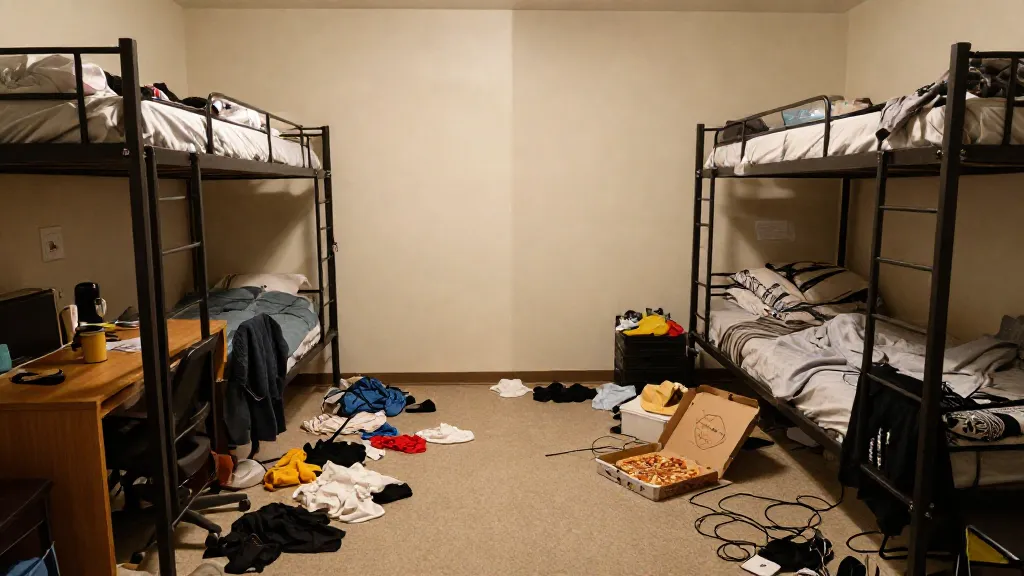
5 Roommate Conflicts and How to Solve Them Fast
It's 11:47 p.m. on a Tuesday. You have a final at 8 a.m. Your roommate's friends are in the living room, music thumping, someone laughing so loud it rattles your bedroom door. You're lying there staring at the ceiling, running through your options: bang on the wall, send a passive-aggressive text, or just silently seethe until you eventually move out. None of those options actually fix the problem.
If that scenario sounds familiar, you're not alone. A 2023 survey by the American College Health Association found that conflicts with roommates rank among the top stressors for college students, and the pattern doesn't stop after graduation. Whether you're sharing a dorm, an apartment, or a rented house, the same friction points show up again and again.
The good news: most roommate conflicts are predictable, which means they're solvable. This article breaks down the five most common disputes and gives you a concrete playbook — drawn from real Resident Advisor–tested strategies — to handle each one before it spirals.
Key Takeaways
- Most roommate conflicts fall into five categories: cleanliness, noise, guests, shared expenses, and personal boundaries. Knowing the category helps you pick the right fix.
- Address issues within 48 hours: The longer you wait, the more resentment builds and the harder the conversation becomes.
- Use specific, behavior-based language: Instead of "you're messy," try "the dishes from Tuesday are still in the sink." It keeps the conversation productive.
- Write it down: Verbal agreements are forgotten within days. A simple shared document outlining expectations prevents 80% of repeat conflicts.
- Separate the person from the problem: Your roommate isn't your enemy — the unresolved issue is.
Conflict #1: The Cleaning Cold War
Why It Happens
Every person grows up with a different definition of "clean." For one roommate, clean means dishes washed within an hour of eating. For another, it means handling them before they attract fruit flies. Neither definition is objectively wrong, but the gap between them creates daily friction.
This is the single most common roommate conflict, and it escalates fast because it's visible. You can't ignore a sink full of dishes or a bathroom floor that hasn't been mopped in three weeks.
How to Solve It Fast
- Name the specific issue, not the character trait. Say "the stovetop has grease on it from last night" instead of "you never clean." The first invites action; the second invites defensiveness.
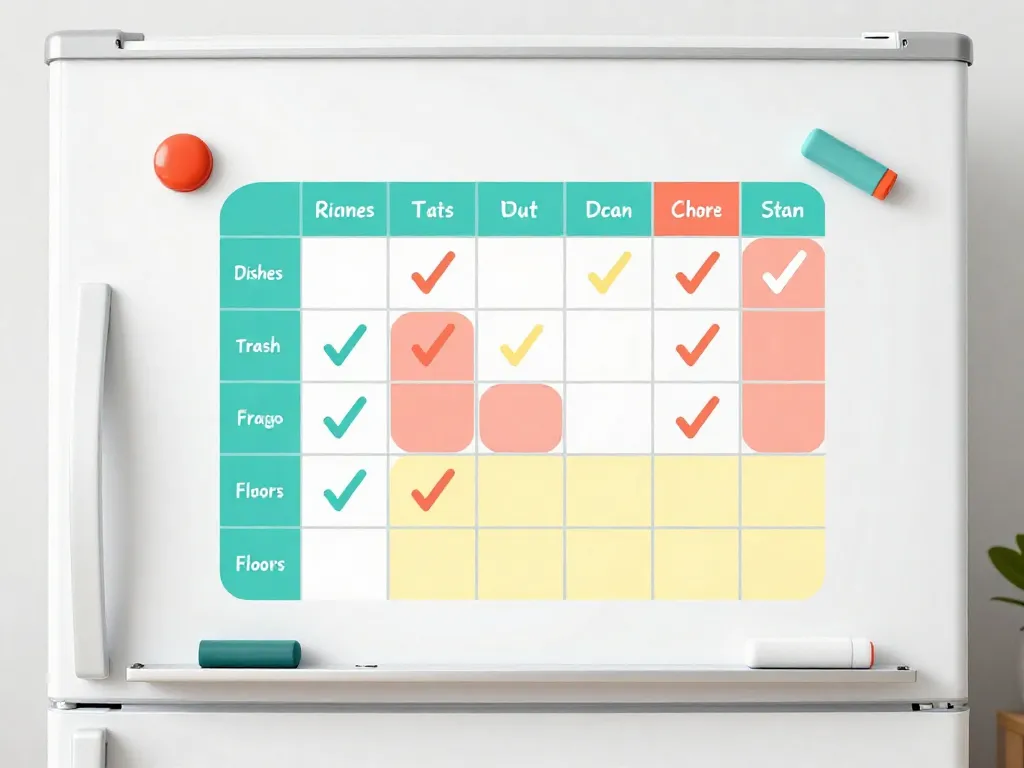
- Build a rotating chore schedule together. Emphasis on together. A schedule imposed by one person feels like a parent's rule. One co-created feels like a team agreement. Use a shared Google Doc, a whiteboard on the fridge, or an app like Sweepy.
- Define "done." This is the step people skip. What does "clean the bathroom" actually mean? Scrub the toilet, wipe the mirror, mop the floor? Write it out. It sounds excessive until you realize most cleaning arguments are really about mismatched expectations.
- Set a review date. Agree to revisit the schedule in two weeks. If something isn't working, adjust it without blame.
Real example: Two roommates in a Chicago apartment nearly broke their lease over kitchen cleanliness. One cooked elaborate meals nightly; the other ate mostly takeout and resented scrubbing pans she didn't use. Their fix: the cook agreed to wash all pots and pans the same night, while they split shared-space tasks like counters and floors evenly. The friction disappeared within a week.
Conflict #2: Noise and Sleep Schedules
Why It Happens
One roommate is a night owl who comes alive at 10 p.m. The other wakes up at 5:30 a.m. for work or an early class. Add in phone calls, video games, music, or alarm clocks, and you have a recipe for sleep deprivation — and sleep-deprived people are not diplomatic people.
How to Solve It Fast
- Establish quiet hours. This isn't about silencing anyone. It's about agreeing on a window — say, 11 p.m. to 7 a.m. — where noise stays at headphone level. The specific times matter less than the fact that you both agreed to them.
- Invest in practical barriers. A $20 pair of earplugs, a white noise machine, or even a heavy curtain dividing a shared room can reduce conflict more effectively than any conversation. Sometimes the cheapest solution is the best one.
- Use a heads-up system. If you know you'll be up late studying or taking a call, a simple text — "Hey, I'll be on a work call until midnight, using headphones but wanted you to know" — shows respect and eliminates surprise.
- Negotiate, don't mandate. If your roommate games until 2 a.m. every night, asking them to stop entirely won't work. Asking them to use a headset and keep their voice down after 11 is a compromise most people will accept.

Conflict #3: Guests and Overnight Visitors
Why It Happens
Your roommate's partner starts staying over three, four, five nights a week. Suddenly you have an unofficial third roommate who uses your Wi-Fi, eats shelf space in the fridge, and occupies the bathroom during your morning routine. Or maybe it's not a partner — it's a rotating cast of friends who show up unannounced on weeknights.
Guest conflicts are tricky because they feel personal. Telling someone their partner can't come over feels like an attack on their relationship. But your home is your home, and you have a right to feel comfortable in it.
How to Solve It Fast
- Set a guest policy early. Ideally, do this when you first move in, but it's never too late. Cover: How many nights per week can a guest stay overnight? Do guests need a heads-up text? Are there any off-limits times (exam weeks, early mornings)?
- Use numbers, not feelings. "Your boyfriend is here too much" is subjective and will start a fight. "Can we agree on a max of three overnight stays per week?" gives a clear, measurable boundary.
- Address the practical impact. Frame the conversation around logistics: "When there's a third person showering in the morning, I'm late for work. Can overnight guests use the bathroom after 7:30?" This keeps the discussion grounded in problem-solving.
- Revisit if circumstances change. A partner visiting on weekends is different from someone essentially moving in. If the situation shifts, the agreement should shift too.
Real example: A pair of roommates in Austin agreed that overnight guests were fine up to three nights a week, with a text heads-up by 6 p.m. When one roommate's partner started staying five nights a week, the other pointed back to their written agreement. The conversation was awkward but short — and the written record made it about the agreement, not the relationship.
Conflict #4: Splitting Shared Expenses
Why It Happens
Money is uncomfortable to talk about, so people avoid it. Then one roommate buys all the paper towels for three months while the other never chips in. Or the utility bill spikes because someone cranks the AC to 65 degrees all summer. Small financial imbalances add up — and the resentment compounds faster than the actual dollar amounts.
How to Solve It Fast
- Separate shared from personal expenses immediately. Rent and utilities are shared. Your organic almond milk is not. Draw that line clearly from day one.
- Use a bill-splitting app. Splitwise, Venmo's group feature, or even a shared spreadsheet removes the awkwardness of asking for money. The app does the asking for you.
- Handle unequal usage honestly. If one person has a larger bedroom, they should pay proportionally more rent. If one person works from home and runs the AC all day, the utility split might not be 50/50. These conversations are uncomfortable but far less uncomfortable than silent resentment over six months.
- Set a payment deadline. "Rent and utilities are due to the group fund by the 3rd of each month." No ambiguity, no chasing people down.

What About Shared Groceries?
This deserves its own note because it's where most money disputes actually start. Three approaches that work:
- Fully separate: Everyone buys and labels their own food. Clean and simple.
- Shared staples fund: Each person contributes $30/month to a joint fund for basics — milk, eggs, cooking oil, trash bags. Everything else is personal.
- Rotating grocery duty: One person shops each week with a shared list, and you split the receipt. Works best with roommates who eat similarly.
Pick one approach, try it for a month, and adjust.
Conflict #5: Personal Boundaries and Borrowed Stuff
Why It Happens
Your roommate borrows your charger, your jacket, your cast-iron pan — always with a casual "you don't mind, right?" that isn't really a question. Or maybe it's subtler: they read over your shoulder, comment on your eating habits, or walk into your room without knocking. Boundary violations feel small individually but erode trust over time.
How to Solve It Fast
- State your boundaries plainly. "I'd rather you ask before borrowing my clothes" is not rude. It's a clear, reasonable request. You don't owe a lengthy explanation for your boundaries.
- Use the "always, sometimes, never" framework. Sit down together and sort items into three categories: - Always okay to use: shared kitchen tools, communal snacks, the living room TV. - Ask first: car, laptop, nice cookware, clothes. - Off-limits: specific personal items, anything in your bedroom without permission.
- Respond in real time. If your roommate borrows something without asking, address it that day. "Hey, I noticed you used my speaker — no big deal this time, but can you text me first going forward?" Waiting three weeks and then exploding about it helps no one.
- Respect the reciprocal. If you set boundaries, honor theirs with equal seriousness. Nothing undermines a boundary conversation faster than hypocrisy.
Real example: Two roommates in a shared Brooklyn apartment had completely different privacy expectations. One grew up in a large family and was used to open doors and shared everything. The other needed personal space to decompress. They agreed on a simple rule: closed door means knock and wait. Open door means you're welcome to pop in. It took one conversation and solved months of tension.
The 48-Hour Rule: Why Timing Matters
Across all five conflicts, one principle holds: address the issue within 48 hours of it bothering you. Not in the heat of the moment — give yourself a few hours to cool down — but before the resentment hardens into something bigger.
Here's a simple framework for the actual conversation:
- "I noticed..." (state the specific behavior)
- "It affects me because..." (explain the impact)
- "Can we try..." (propose a solution)
For example: "I noticed the trash didn't go out on Tuesday, which was your turn. It affects me because the kitchen starts to smell, and I end up taking it out. Can we try setting a phone reminder for trash night?"
This structure works because it's specific, non-accusatory, and solution-oriented. It gives your roommate a way to fix the problem without feeling attacked.
Put It in Writing
Verbal agreements evaporate. You'll remember the conversation differently, and three weeks later you're arguing about what was actually agreed upon.
A roommate agreement doesn't need to be a legal document. It can be a shared Google Doc, a note on your fridge, or even a text thread you both bookmark. The point is that it exists in writing and both people contributed to it.
Your agreement should cover:
- Quiet hours
- Cleaning responsibilities and schedule
- Guest policy (overnight limits, heads-up expectations)
- Expense splitting method
- Personal boundaries (borrowing, shared spaces, privacy)
Tools like Servanda can help you create structured written agreements that cover these exact categories, making it easier to get everything documented before small annoyances become big blow-ups.
Review the agreement once a month. Lives change, schedules shift, and what worked in September might not work in January. A five-minute check-in keeps the agreement alive and relevant.
FAQs
How do I bring up a roommate conflict without starting a fight?
Start with the specific behavior, not a character judgment. "The dishes from last night are still in the sink" lands very differently than "you're so messy." Choose a calm moment — not right when you're annoyed — and propose a solution alongside the problem. Most people respond well when they feel like you're working with them, not against them.
What should a roommate agreement include?
At minimum, cover five areas: cleaning responsibilities, quiet hours, guest policies, how you'll split expenses, and personal boundaries around belongings and shared spaces. Keep it simple and specific. A one-page document that you both wrote together is more effective than a detailed contract one person drafted alone.
What do I do if my roommate ignores our agreement?
First, bring it up directly and reference the written agreement. If the pattern continues, involve a neutral third party — an RA, a mutual friend, or even a landlord if the issue affects the lease. Document repeated violations with dates and specifics. This protects you if the situation escalates to the point of needing to break the lease or involve housing authorities.
Is it normal to have roommate conflicts?
Absolutely. Conflict between roommates is one of the most common experiences in shared living, whether in college dorms or adult apartments. Having conflicts doesn't mean you're incompatible — it usually means you haven't aligned expectations yet. Most roommate disputes are resolved quickly once both people actually sit down and talk specifics.
How do I deal with a passive-aggressive roommate?
Passive aggression usually signals that someone is upset but doesn't feel safe bringing it up directly. The best counter is to model direct communication yourself. Say something like, "I feel like something might be bothering you — I'd rather talk about it openly so we can figure it out." If they refuse to engage, document issues on your end and keep your own behavior consistent and respectful.
Conclusion
Roommate conflicts aren't a sign that your living situation is doomed. They're a sign that two (or more) people with different habits, schedules, and standards are sharing a space — which is exactly what's happening. The five conflicts covered here — cleaning, noise, guests, expenses, and boundaries — account for the vast majority of roommate disputes, and every one of them has a practical solution.
The pattern is the same each time: name the specific issue, have the conversation early, propose a concrete fix, and write it down. It's not about being perfect roommates. It's about having a system for handling friction before it turns into a full-blown fallout.
Start with the one issue that's bothering you most right now. Use the 48-hour rule. Have the conversation today. You'll be surprised how much better it feels to just get it on the table.