5 Roommate Conflicts You Can Solve With One Talk
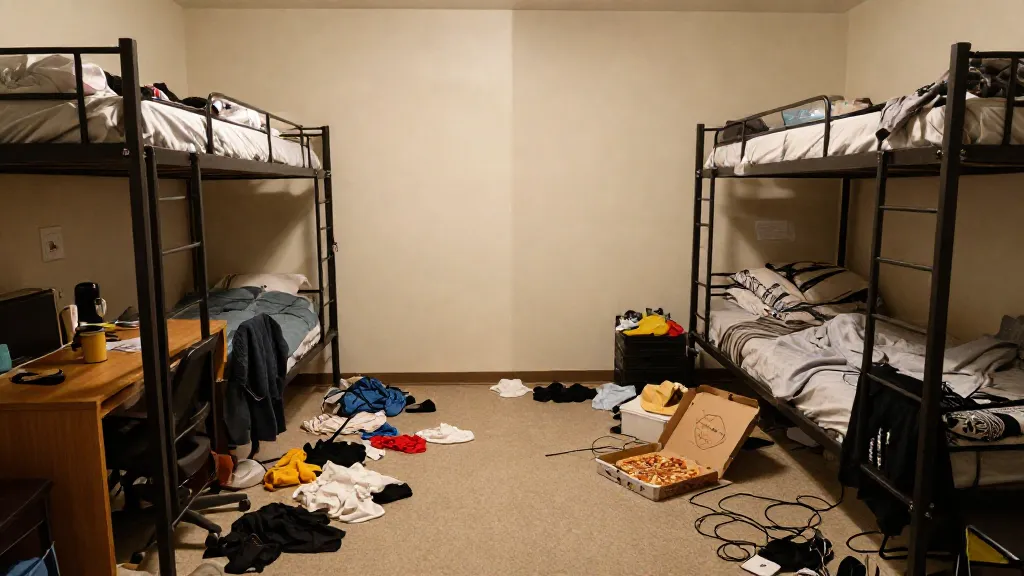
It's 11:47 p.m. on a Tuesday. You have a presentation at 8 a.m., and your roommate's friends are in the living room laughing at a volume that suggests they've never heard of headphones. You're lying in bed, staring at the ceiling, composing a furious text message you'll never send. You've been annoyed about this for weeks, but you haven't said a word.
Sound familiar? Most roommate conflicts don't blow up because of the issue itself. They blow up because nobody addresses it until resentment has been simmering for months. The dirty dishes aren't the real problem — it's the 47 days of silence about the dirty dishes.
Here's the good news: the five most common roommate conflicts are remarkably solvable. Each one can be addressed in a single, straightforward conversation — no drama, no ultimatums, no passive-aggressive sticky notes on the fridge. Below, you'll find the exact words to start each conversation, realistic examples of how they play out, and clear agreements you can walk away with.
Key Takeaways
- Most roommate conflicts escalate not because of the issue, but because of avoidance. One direct conversation can prevent months of tension.
- You don't need to be a communication expert. Simple, specific language ("I've noticed..." instead of "You always...") dramatically changes outcomes.
- Every conversation should end with a concrete agreement. Vague promises lead to repeat conflicts.
- Timing matters as much as wording. Bring things up when you're both calm and unhurried — never in the heat of the moment.
- Written agreements aren't overkill — they're insurance. Putting things in writing eliminates the "I don't remember agreeing to that" problem entirely.

Conflict #1: The Cleaning Standoff
Why It Festers
Cleaning is the number-one source of roommate tension, and it almost always comes down to different standards. One person considers a few dishes in the sink normal; the other sees it as a health code violation. Neither is wrong — they just have different thresholds. But without a conversation, each person assumes their standard is the obvious, reasonable one, and interprets the other person's behavior as laziness or disrespect.
The Script
Pick a relaxed moment — maybe a weekend morning when you're both making coffee. Start with something like:
"Hey, can we talk for a few minutes about how we handle cleaning? I want to figure out a system that works for both of us so neither of us feels like we're doing more than our share."
Notice what this doesn't say: It doesn't say "you never clean." It doesn't say "I'm tired of being your maid." It frames the conversation as a shared problem with a shared solution.
What a Good Agreement Looks Like
- Be specific about tasks. "We'll both keep the kitchen clean" means nothing. "Whoever cooks does their dishes before bed" means something.
- Assign ownership. Rotating schedules work better than vague "we'll both pitch in" promises. Try alternating weeks for bathroom cleaning, vacuuming, and taking out trash.
- Agree on a standard. What does "clean" mean? Counters wiped down? Floor swept? Defining this prevents the "I did clean" argument.
Real Example
Jordan and Alex moved in together after college. By month two, Jordan was furious that Alex left pans soaking "overnight" (which often turned into two days). Alex genuinely didn't think it was a big deal. When Jordan finally brought it up using a calm, specific approach — "Can we agree that pans get washed within 24 hours?" — Alex immediately said yes. The fight Jordan had been rehearsing in the shower for six weeks was resolved in under three minutes.
Conflict #2: Noise and Quiet Hours
Why It Festers
Noise conflicts are tricky because they feel personal. Asking someone to be quieter can feel like asking them to shrink — to take up less space in their own home. That's why people avoid the conversation and instead invest in earplugs and resentment.
The Script
"I want to talk about noise, and I want to be upfront that this isn't about you doing anything wrong. Our schedules are just different, and I think we'd both be happier if we set some expectations around quiet hours."
The key phrase here is "our schedules are just different." It removes blame entirely and reframes the issue as logistical, not moral.

What a Good Agreement Looks Like
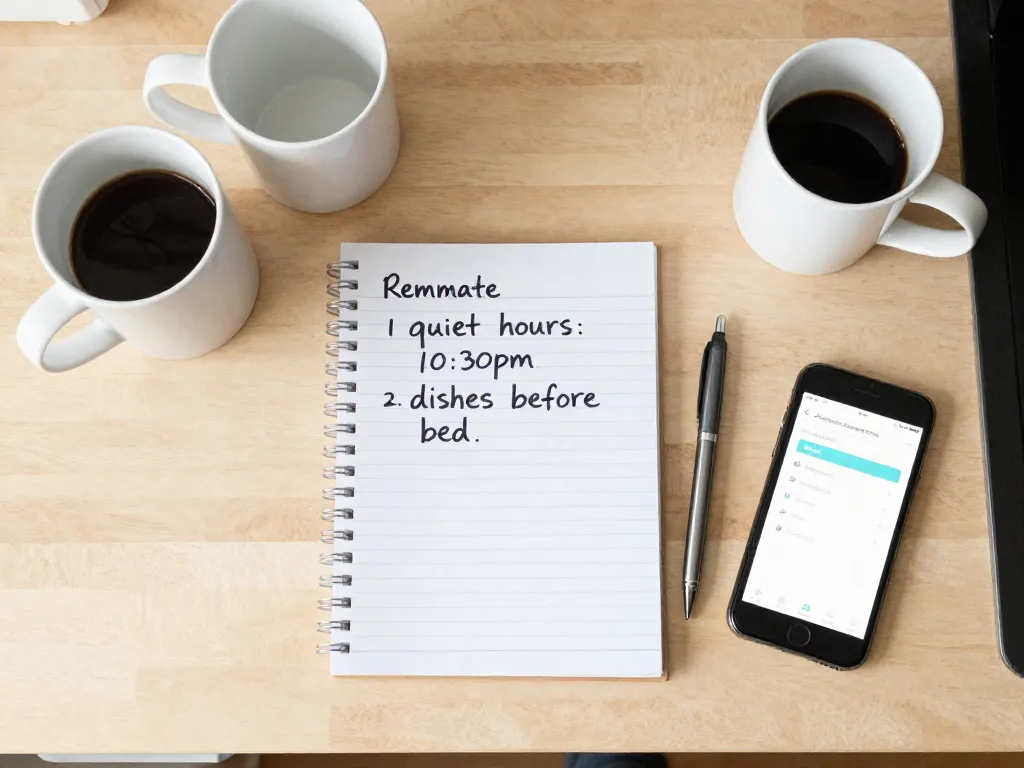
- Set specific quiet hours. For example: "After 10 p.m. on weeknights, we keep noise in common areas to a low volume. Weekends, it's midnight."
- Define what quiet means. Headphones for music and gaming after quiet hours? TV at a specific volume? Be concrete.
- Create an "exception" protocol. If one person wants to have people over past quiet hours, how much advance notice should they give? Can the other person veto if they have an early morning?
Real Example
Mia worked from home and had early client calls. Her roommate Priya was a night owl who watched TV in the living room — which shared a thin wall with Mia's bedroom — until 1 a.m. most nights. Mia assumed Priya would figure out she was being disruptive. Priya had no idea Mia could even hear the TV. One five-minute conversation led to a simple agreement: Priya switched to headphones after 10:30 p.m. and Mia stopped silently seething. Both later said they wished they'd talked about it on day one.
Conflict #3: Guests and Significant Others
Why It Festers
This is perhaps the most emotionally charged roommate conflict because it intersects with people's romantic relationships and social lives. Telling your roommate their partner is over too much can feel like an attack on the relationship itself. So people say nothing — until they feel like a third wheel in their own apartment.
The Script
"I like [partner's name], and I want you to feel comfortable having them over. I also want to make sure we're on the same page about how often guests stay over, just so we both feel like the apartment is our space. Can we set some loose guidelines?"
Leading with something positive about the guest disarms defensiveness immediately.
What a Good Agreement Looks Like
- Set a maximum for overnight stays. A common starting point: significant others can stay over 2–3 nights per week.
- Address shared spaces. If a guest is over, are common areas still shared? (Yes, they should be.)
- Discuss contributions. If someone's partner is over frequently, should they chip in for utilities or shared supplies? This is a fair question, not a rude one.
- Agree on notice for parties or larger gatherings. Even a simple "Hey, having a few people over Saturday" text goes a long way.
Real Example
Daniel's roommate Sam started dating someone new, and within a month the partner was essentially living there rent-free — using the shower every morning, eating shared groceries, and taking up the couch most evenings. Daniel spent weeks venting to friends instead of talking to Sam. When he finally opened the conversation, he focused on logistics rather than emotions: "Can we cap overnight guests at three nights a week? And maybe chip in for groceries when they're eating here regularly?" Sam was embarrassed he hadn't thought of it himself and agreed immediately.
Conflict #4: Shared Expenses and Groceries
Why It Festers
Money makes people uncomfortable. Asking a roommate to pay you back for toilet paper feels petty. Watching them eat the groceries you bought feels infuriating. And the longer you go without a system, the harder it is to bring up, because now you're not just asking for $12 — you're asking for the cumulative principle of the thing.
The Script
"Can we set up a system for shared expenses? I don't want either of us to have to keep a mental tab or feel weird about asking for money. I think a simple structure would take the awkwardness out of it entirely."
This frames the system as something that protects both of you — not as an accusation that someone isn't paying their share.
What a Good Agreement Looks Like
- Separate personal groceries from shared supplies. Shared items (dish soap, paper towels, trash bags) get split evenly. Personal food stays personal, or agree to a shared grocery fund.
- Use a shared expense app. Splitwise, Venmo, or a simple shared spreadsheet can track who bought what. Settle up monthly.
- Handle uneven costs upfront. If one person takes longer showers or works from home (higher electricity), acknowledge it. A small monthly adjustment prevents long-term resentment.
- Agree on a threshold. Under $10? Don't bother tracking. Over $10? Log it. This prevents the relationship from becoming transactional.
Real Example
Two friends, Casey and Morgan, moved in together and assumed they'd just "share everything." By month three, Casey had bought toilet paper, dish soap, sponges, and cleaning supplies every single time. Morgan had bought none, not out of freeloading, but because they genuinely never noticed when things ran out. Casey proposed a shared supplies fund — $30 each per month into a joint Venmo pool — and the problem evaporated. Tools like Servanda can help formalize these kinds of agreements in writing, so everyone stays on the same page and there's no room for misremembering.
Conflict #5: Personal Space and Boundaries
Why It Festers
Boundary conflicts are the hardest to articulate because they often don't have a clear "rule" being broken. Your roommate borrowing your clothes without asking. Using your desk. Eating in your room when you're not home. These feel like small things, and people worry they'll seem controlling or uptight for bringing them up. So they don't — until the resentment becomes its own roommate.
The Script
"I want to talk about something that might sound small, but it actually matters to me. I'm someone who needs [specific boundary — e.g., my room to be my private space / to be asked before borrowing things]. It's not about trust; it's just how I'm wired. Can we agree on some ground rules around personal stuff?"
Owning the boundary as a personal need — "it's how I'm wired" — takes the judgment out of it. You're not saying they did something wrong. You're saying you need something specific.
What a Good Agreement Looks Like
- Name the specific boundaries. "Don't go in my room when I'm not home" is clear. "Respect my space" is not.
- Make borrowing opt-in, not opt-out. Default to "always ask first" rather than "take whatever unless told otherwise."
- Respect alone time. If one person needs a few hours of solitude after work, say that explicitly. It's not antisocial — it's self-care.
- Revisit as needed. Boundaries can shift as you get more comfortable. Build in permission to revisit the conversation.
Real Example
Taylor's roommate kept borrowing Taylor's kitchen gadgets — a nice blender, a cast iron skillet — and returning them dirty or not at all. Taylor felt ridiculous getting upset about a blender, but it was part of a larger pattern of feeling like their things weren't respected. When Taylor finally said, "I know it seems small, but can you ask before using my kitchen stuff and wash it after?" the roommate immediately apologized and said they'd had no idea it was bothering anyone. The conversation took ninety seconds.
How to Set Up the Conversation (For Any of These)
Regardless of which conflict you're facing, these principles apply:
- Pick the right moment. Not when you're angry. Not when they're stressed. Not as they're walking out the door. A calm Saturday afternoon beats an ambush on a Monday morning every time.
- Use "I" statements, not "you" accusations. "I feel frustrated when dishes pile up" lands differently than "You never do the dishes."
- Be specific about what you want. Don't just describe the problem — propose a solution. People respond much better to "Can we try X?" than to "This needs to change."
- Write it down. After you agree, send a quick text or email summarizing what you decided. This isn't legalistic — it's practical. Memory is unreliable, and a written record prevents the "I thought we agreed..." spiral.
- Follow up without nagging. Check in after a week or two. "Hey, how's the new system working for you?" signals that you care about the relationship, not just about winning.
FAQ
What if my roommate gets defensive when I try to talk?
Defensiveness usually comes from feeling attacked. If your roommate gets defensive, pause, acknowledge their feelings ("I can see this feels like I'm criticizing you — that's not my intention"), and reframe the conversation around finding a solution together rather than assigning blame. Starting with "I" statements instead of "you" statements dramatically reduces defensiveness.
How do I bring up a roommate conflict without making it awkward?
Awkwardness comes from the buildup, not the conversation itself. The longer you wait, the more charged it feels. If you bring things up early and casually — "Hey, can we figure out a quick system for X?" — it feels like problem-solving, not confrontation. Tone matters more than perfect wording.
Should roommates have a written agreement?
Absolutely. A written roommate agreement doesn't mean you don't trust each other — it means you're both clear on expectations. Cover cleaning, guests, quiet hours, shared expenses, and personal boundaries. Think of it as a user manual for living together. You can always update it as your living situation evolves.
What do I do if we talked and nothing changed?
First, give it a genuine try — change takes a week or two to stick. If the behavior continues, have a second, shorter conversation: "Hey, we talked about [issue] a couple weeks ago, and I've noticed it's still happening. Can we revisit our agreement?" If nothing changes after two or three clear conversations, it may be time to involve a mediator or reconsider the living arrangement.
When is a roommate conflict too serious to solve with a conversation?
If a conflict involves safety concerns, lease violations, substance abuse, harassment, or any situation where you feel physically or emotionally unsafe, a casual conversation isn't the right tool. In those cases, involve your landlord, RA, or a professional mediator. Not every problem is a one-talk problem — but most everyday friction absolutely is.
Moving Forward
The five most common roommate conflicts — cleaning, noise, guests, shared expenses, and personal space — share one thing in common: they almost always feel bigger in your head than they are in reality. The conversation you've been dreading for weeks usually takes fewer than ten minutes and ends with both people feeling relieved.
The pattern is simple: name the issue without blame, propose something specific, agree on it together, and write it down. That's it. No therapy-speak required, no confrontation training needed.
Your roommate probably isn't trying to make your life harder. They're just operating on different assumptions. One honest conversation replaces those assumptions with shared expectations — and shared expectations are the foundation of every good living situation. The best time to have that talk was the day you moved in. The second-best time is today.