5 Common Roommate Fights and How to Fix Them Fast
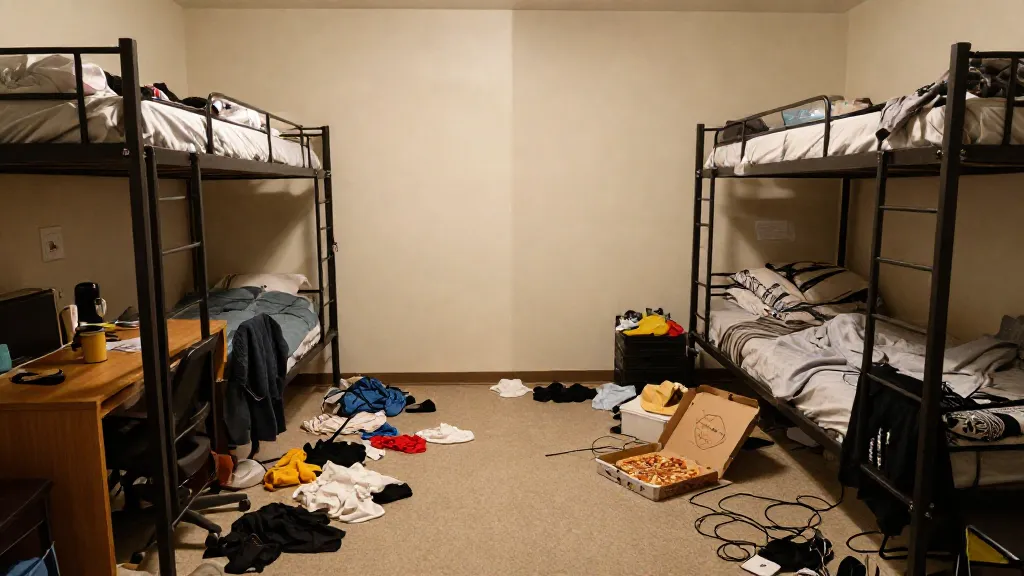
It's 11:47 p.m. on a Tuesday. You have a presentation at 8 a.m. Your roommate has three friends over, and someone just turned up the Bluetooth speaker. You're lying in bed staring at the ceiling, caught between saying something and swallowing your frustration for the fourth time this month. Sound familiar?
Roommate fights are so universal they've become a punchline — but when you're the one losing sleep, finding someone else's dishes fossilizing in the sink, or discovering a stranger on your couch at 6 a.m., it doesn't feel funny. The real problem isn't that conflicts happen. It's that most people have zero framework for resolving them without torching the relationship.
This article breaks down the five most common roommate fights, explains why they escalate, and gives you a specific, RA-tested strategy for fixing each one — fast.
Key Takeaways
- Most roommate fights stem from unspoken expectations, not bad intentions. Getting explicit about norms prevents the majority of blowups.
- Noise, cleanliness, guests, shared expenses, and personal boundaries are the five fight categories that account for nearly every roommate conflict.
- Each fight type has a specific resolution pattern — a one-size-fits-all "just talk it out" approach rarely works.
- Written agreements aren't overkill; they're insurance. The 20 minutes you spend creating one can save months of resentment.
- Timing matters as much as what you say. Raising an issue in the wrong moment turns a fixable problem into a personal attack.
Why Roommate Fights Escalate (and Why Yours Keep Coming Back)
Before we get to the five fights, it helps to understand the pattern underneath all of them.
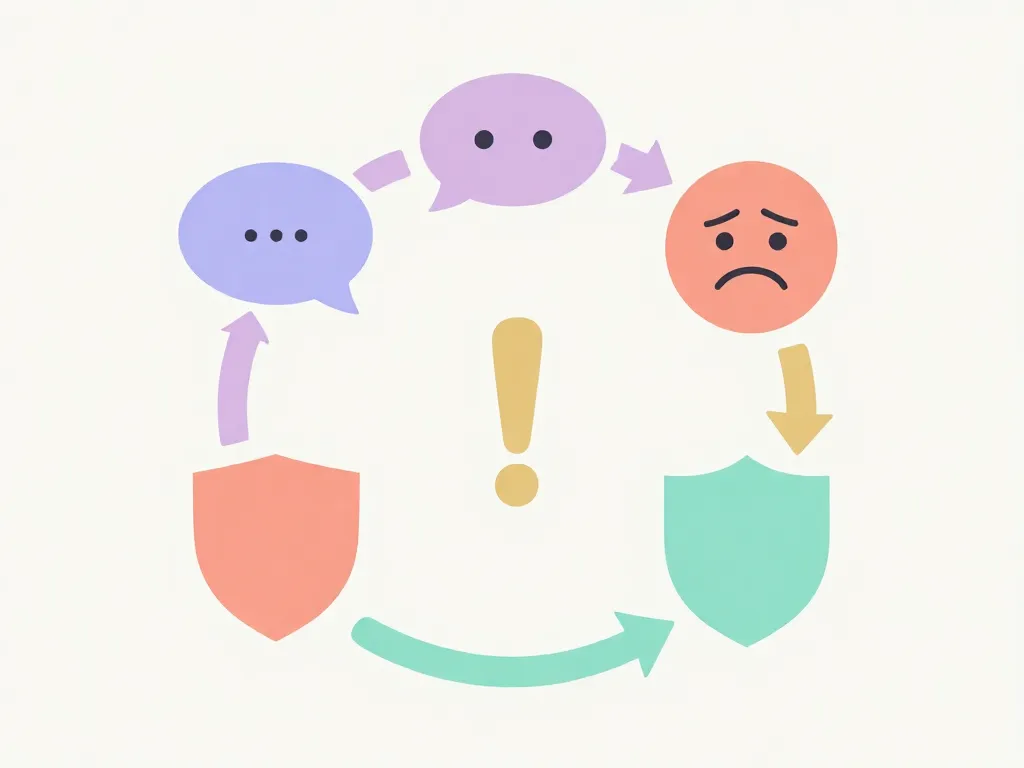
Most roommate conflicts follow a predictable cycle:
- An unspoken expectation gets violated. You assumed dishes get washed the same day. Your roommate assumes the weekend is fine.
- The annoyed person says nothing — because it feels petty, because they don't want drama, because they assume the other person "should just know."
- The behavior repeats. Resentment compounds.
- Eventually, the annoyed person snaps — often about something small — and the other person feels blindsided and defensive.
- The conversation becomes about tone and overreaction instead of the actual issue.
The fix isn't vague "better communication." The fix is getting specific about the issue, raising it early, and anchoring agreements in something concrete so you're not relitigating the same fight every three weeks.
Here are the five fights — and how to break the cycle for each.
Fight #1: Noise and Quiet Hours
What It Actually Sounds Like
"Can you seriously not hear yourself? It's 1 a.m."
"I was just watching a show. Why are you being so dramatic?"
Noise conflicts are the number-one roommate fight reported in university housing surveys, and they're vicious because they feel so personal. The noisy roommate thinks they're just living their life. The bothered roommate feels disrespected in their own home.
Why It Escalates
People have wildly different baselines for what counts as "loud" and "late." These baselines are shaped by how they grew up, whether they're light sleepers, and what their schedule looks like. Without an explicit agreement, each person assumes their baseline is the obvious, reasonable default.
How to Fix It Fast
Step 1: Propose specific quiet hours, not a general vibe. "Can we agree that after 10:30 p.m. on weeknights, we keep noise to headphone-level?" is infinitely more useful than "Can you keep it down at night?"
Step 2: Offer a reciprocal concession. "I'll text you before I set an early alarm so you can grab earplugs" shows you're not just imposing rules — you're negotiating.
Step 3: Write it down. Even a two-sentence note in a shared Google Doc removes the "I don't remember agreeing to that" problem entirely.
RA Insight: When I mediated noise complaints in residence halls, the conflicts that stuck were the ones where residents refused to name specific times. "Be respectful" means something different to everyone. "Headphones after 10:30" means one thing.
Fight #2: Cleaning and Shared Spaces
What It Actually Sounds Like
"I'm not your maid. Clean up after yourself."
"I was going to do it. You didn't have to be passive-aggressive about it."
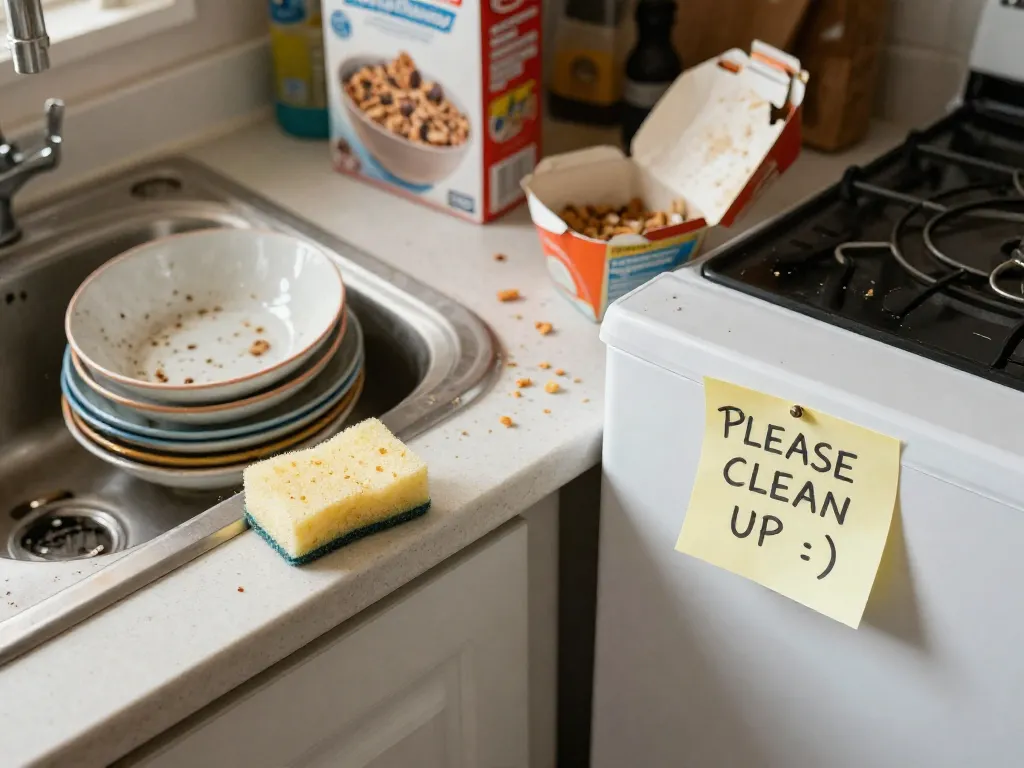
Cleanliness conflicts are the slowest-burning and most corrosive. They rarely explode overnight — they simmer for weeks until someone reaches a breaking point and either rage-cleans or sends a text they regret.
Why It Escalates
Different cleanliness standards aren't a moral failing — they're a compatibility gap. One person grew up in a house where dishes sat in the sink until after dinner. Another grew up in a house where the counter was wiped after every use. Neither standard is wrong, but the gap creates daily friction.
The deeper problem: cleaning feels like labor, and unequal labor feels like disrespect.
How to Fix It Fast
Step 1: Separate "common area" standards from "personal space" standards. You can't control how messy their bedroom is. You can negotiate shared kitchen and bathroom norms.
Step 2: Create a simple chore rotation — and make it visible. A shared checklist on the fridge or a free app like Sweepy removes ambiguity. When it's written, it's accountable.
Step 3: Define "clean enough." This sounds ridiculous, but it matters. Does "clean the kitchen" mean wipe the counters? Sweep the floor? Scrub the stovetop? Spell it out once so you never have to argue about it again.
Sample rotation:
| Week | Kitchen | Bathroom | Trash/Recycling |
|---|---|---|---|
| 1 | Roommate A | Roommate B | Roommate A |
| 2 | Roommate B | Roommate A | Roommate B |
Fight #3: Guests and Overnight Visitors
What It Actually Sounds Like
"Your boyfriend has been here five nights this week. He doesn't even live here."
"It's my apartment too. I can have whoever I want over."
Guest conflicts are emotionally charged because they sit at the intersection of personal freedom, privacy, and the feeling of safety in your own home. They're also one of the hardest fights to raise because it can feel like you're criticizing your roommate's relationship.
Why It Escalates
The person hosting guests usually doesn't notice the impact — they're having a good time. The person who didn't invite the guest feels like they've lost control of their own living space. When the guest is a romantic partner, the stakes feel even higher because the complaint can be interpreted as disapproval of the relationship itself.
How to Fix It Fast
Step 1: Separate the person from the policy. Frame it as a household logistics issue, not a judgment on their partner. "I want to talk about overnight guest expectations in general" lands better than "Your boyfriend is here too much."
Step 2: Agree on a guest policy with actual numbers. Something like: "Overnight guests are cool up to two nights per week, and we give each other a heads-up by text beforehand." The numbers matter. Without them, you'll end up arguing about what "too much" means.
Step 3: Address shared costs if guests are frequent. If someone's partner is using utilities, eating shared groceries, or taking up bathroom time four days a week, it's fair to renegotiate how costs are split. This isn't petty — it's practical.
Real example (anonymized): Two roommates I advised were three weeks into a silent standoff over one roommate's partner staying over. The resentful roommate had never once raised the issue directly. When we finally sat down, the hosting roommate was genuinely surprised — they had no idea it was a problem. A 15-minute conversation and a two-sentence written agreement (max three overnights per week, always with a text) resolved a month of tension.
Fight #4: Shared Expenses and Money

What It Actually Sounds Like
"You still owe me for last month's utilities. And the groceries from two weeks ago."
"I thought we were just keeping it casual and it would even out."
Money fights between roommates don't usually start big. They start with a $12 dish soap charge that nobody tracks, then compound into a vague sense that one person is subsidizing the other.
Why It Escalates
Money is awkward to talk about, so people avoid it. They mentally track what they think they've paid, and their mental ledger always tilts in their own favor. By the time someone finally brings it up, there's a backlog of perceived unfairness on both sides — and no receipts to settle it.
How to Fix It Fast
Step 1: Split fixed costs with a shared tool from day one. Splitwise, Venmo's group feature, or even a shared spreadsheet. The tool matters less than the habit of logging expenses in real time.
Step 2: Agree upfront on what's shared and what's personal. Is toilet paper shared but shampoo personal? Is the streaming subscription split? Is the person with the bigger room paying more rent? Decide once, document it, and revisit only if circumstances change.
Step 3: Set a monthly "settle up" date. Even if you use an app, pick one day a month (the 1st, rent day, whatever) where you both zero out the balance. This prevents small debts from festering into big resentment.
Tools like Servanda can help roommates formalize these financial agreements alongside other household expectations — so when disagreements come up, you're referencing a shared document instead of competing memories.
Fight #5: Personal Boundaries and Borrowed Stuff
What It Actually Sounds Like
"Did you use my charger? And why is my hoodie on your chair?"
"It was just sitting there. I didn't think it was a big deal."
Boundary conflicts often seem trivial from the outside — it's a charger, it's a splash of milk, it's 20 minutes on someone else's Netflix profile. But they tap into something fundamental: the feeling that your stuff and your space are yours.
Why It Escalates
People have vastly different norms around sharing. Some grew up in households where everything was communal. Others consider their belongings deeply personal. When these norms collide without discussion, the person who borrows freely feels accused of stealing, and the person whose stuff disappears feels chronically disrespected.
How to Fix It Fast
Step 1: Establish a default rule. The simplest one: "Always ask before borrowing. If the other person isn't home, assume no." This isn't unfriendly — it's clear.
Step 2: Create a "shared" category. Designate items that are genuinely communal — kitchen basics, cleaning supplies, the Wi-Fi password — so that everything else is understood to be personal by default.
Step 3: If something has already happened, name the specific behavior without character attacks. "Hey, I noticed my jacket was moved — I'd prefer you ask before borrowing my clothes" is direct without being aggressive. "You always take my stuff" is a grenade.
How to Raise Any Roommate Issue Without Making It Worse
Regardless of which fight you're dealing with, the way you raise it determines whether it gets resolved or escalates. Here's a framework that works across all five:
- Choose a neutral time. Not when you're angry, not when they just walked in the door, not over text at midnight. "Hey, can we chat for 10 minutes sometime today?" sets the right tone.
- Lead with the impact, not the accusation. "I've been having a hard time sleeping when there's noise after 11" works. "You're so inconsiderate" doesn't.
- Propose a solution, not just a complaint. Coming to the conversation with a specific suggestion shows you want to fix it — not just vent.
- End with something written. It can be a text summary, a shared note, or a formal agreement. Written beats remembered every single time.
FAQ
How do I talk to my roommate about a problem without starting a fight?
Pick a calm, private moment — not right after the annoying thing happened. Start with how the situation affects you rather than what they did wrong. Propose a specific solution rather than just airing the grievance. Most people are more receptive when they feel like you're solving a problem together rather than putting them on trial.
Should roommates have a written roommate agreement?
Absolutely, and it doesn't need to be formal or legalistic. Even a shared Google Doc that covers quiet hours, cleaning expectations, guest policies, and expense splitting gives you something concrete to point to when disagreements arise. The act of creating it together also surfaces mismatched expectations before they become fights.
What if my roommate won't compromise or talk about the problem?
If direct conversation hasn't worked, try putting your concerns in writing — a calm, specific message — so they can process it on their own time. If they still won't engage, consider bringing in a neutral third party like an RA, a mutual friend, or a mediation resource. You deserve to feel comfortable in your own home, and refusing to discuss shared living norms isn't sustainable.
How often do roommates actually fight?
More than most people admit. Surveys consistently show that the majority of people who have lived with a roommate have experienced significant conflict — with cleanliness, noise, and guests topping the list. The frequency isn't the problem. The absence of a resolution process is.
Can roommate conflicts lead to breaking a lease?
They can, and it's more common than you'd think. Unresolved roommate disputes are one of the top reasons people seek early lease termination. Addressing conflicts early with written agreements can save you the financial and emotional cost of breaking a lease or finding emergency housing.
Moving Forward
Roommate fights aren't a sign that your living situation is doomed. They're a sign that two people with different habits, schedules, and comfort levels are sharing a small space — which is inherently hard.
The difference between roommates who survive the year and roommates who end up posting passive-aggressive notes (or worse, moving out mid-lease) usually comes down to one thing: whether they addressed issues early with specificity, or let them pile up until the relationship buckled.
You don't need to be best friends with your roommate. You need to be clear about quiet hours, fair about chores, honest about money, and willing to put agreements in writing. That's not a high bar — and it makes everything else easier.
Start with whichever fight on this list hits closest to home. Raise it this week. Propose something specific. Write it down. You'll be surprised how much tension dissolves when expectations finally live outside your head.