How to Talk to Your Roommate About Conflict
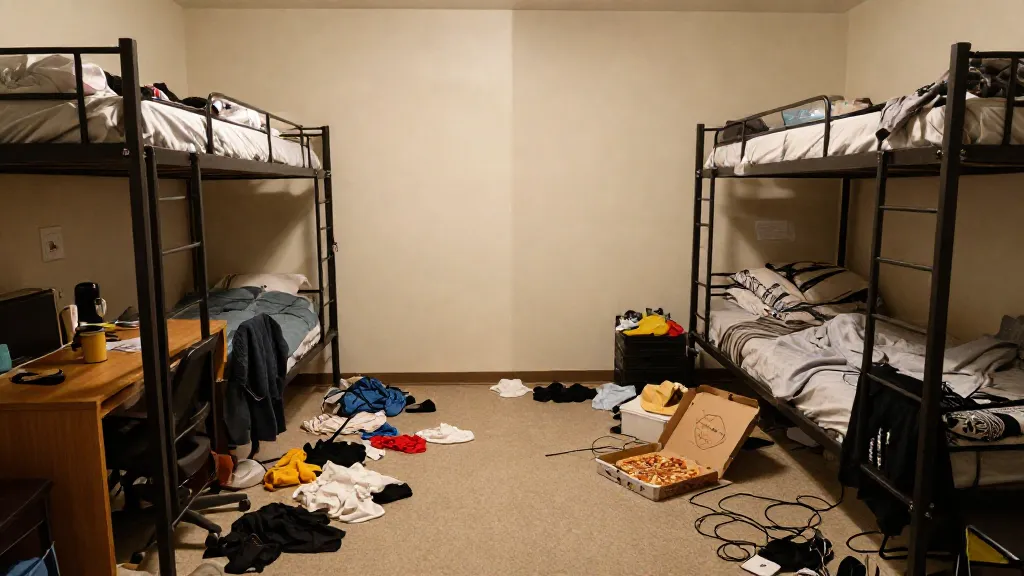
It's 11:47 p.m. on a Tuesday. Your roommate's music is thumping through the wall — again. You have a presentation at 8 a.m. You're lying in bed composing a furious text message, deleting it, rewriting it, deleting it again. You know you need to say something. But when? And how do you bring it up without starting a war in your own home?
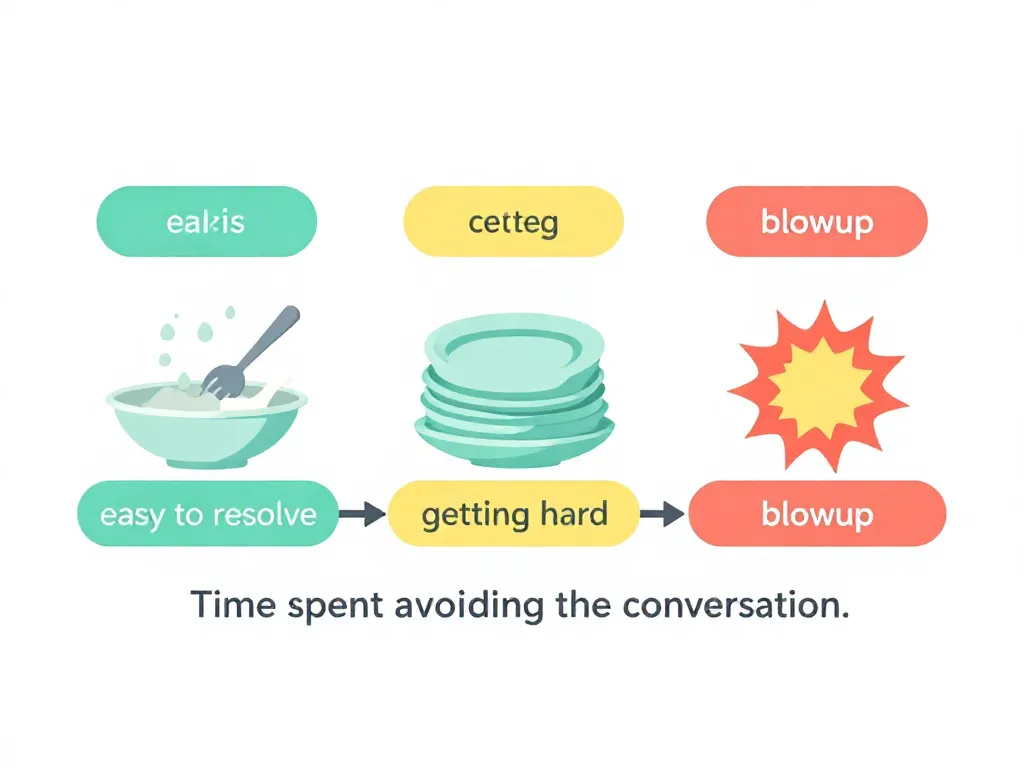
If this sounds familiar, you're not alone. Most roommate conflicts don't start because people are unreasonable — they start because nobody knows how to talk to their roommate about conflict without things getting awkward or heated. The conversation itself feels like the risk. So you avoid it. You let resentment build. And by the time you finally snap, the issue has ballooned from "could you turn the music down" into "I can't stand living with you."
This guide gives you the exact tactical framework — when to start the conversation, what words to use, and how to set a tone that actually leads to resolution.
Key Takeaways
- Timing is everything: Never start a conflict conversation when you're angry, rushed, or when your roommate is stressed. Pick a neutral, low-stakes moment.
- Use "I" statements to disarm defensiveness: Frame concerns around your experience ("I feel...") rather than accusations ("You always...").
- Open with intention, not complaint: Start by naming what you want — a better living situation for both of you — before naming the problem.
- Have a proposed solution ready: Coming with a suggestion shows good faith and moves the conversation forward faster.
- Put agreements in writing: Verbal agreements fade. Written ones create accountability and prevent the same conflict from cycling back.
Why Roommates Avoid Conflict Conversations (And Why That Backfires)
Let's be honest about what's really happening when you avoid bringing up an issue. It's not laziness. It's a calculated fear: If I say something, it might make things worse. At least right now, the problem is manageable.
This logic makes perfect sense in the short term. But avoidance has a compounding cost:
- Small irritations harden into deep resentments. That unwashed pan in the sink becomes, in your mind, proof that your roommate doesn't respect you.
- You start interpreting everything through a negative lens. Once you're resentful, even neutral behavior feels like a slight.
- When you finally do speak up, the emotional charge is disproportionate. Your roommate hears you explode about dishes and thinks you're unhinged — they have no idea you've been stewing for three months.
Research from university residential life programs consistently shows that roommate relationships deteriorate not because of the conflict itself, but because of delayed conflict. Resident Advisors (RAs) across the country report that the most common thing they hear during mediation is: "I wish I'd said something sooner."
So the question isn't whether to have the conversation. It's how to have it well.
Step 1: Pick the Right Moment to Talk to Your Roommate About Conflict
Timing can make or break a difficult conversation. The exact same words, delivered at different times, will produce completely different outcomes.
When NOT to Bring It Up
- In the heat of the moment. Your roommate just did the thing that bothers you. Your heart rate is up. This is the worst possible time to have a productive conversation, even though it feels like the most urgent.
- When either of you is walking out the door. Rushed conversations create misunderstandings. If someone has somewhere to be, they'll agree to anything just to leave — and none of it will stick.
- Late at night. Fatigue lowers emotional regulation. People say things at midnight they'd never say at noon.
- Right after a bad day. If your roommate just bombed an exam or had a fight with their partner, your complaint about the thermostat is going to land like a grenade.
When TO Bring It Up
The ideal window is what RAs call a "neutral moment" — a time when neither of you is emotionally activated, you're both relatively relaxed, and there's no time pressure.
Good options include:
- A weekend morning when you're both hanging out in the kitchen
- After a shared positive experience (you just watched a show together, cooked a meal, etc.)
- A planned check-in — more on this below
The Power of the Scheduled Check-In
One of the most effective RA-tested strategies is the regular roommate check-in — a brief, recurring conversation (every two weeks or once a month) where you both discuss how the living situation is going.
This might sound overly formal, but it does something critical: it normalizes talking about the living arrangement. When you have a standing time to raise concerns, individual issues stop feeling like confrontations. They become agenda items.
You can frame it simply:
"Hey, I read that a lot of roommate problems happen because people don't talk until things blow up. Want to do a quick check-in every couple of weeks — just 15 minutes — to make sure we're both good?"
Most people will say yes. And once that structure exists, bringing up the music at 11 p.m. or the dishes in the sink becomes dramatically easier.

Step 2: Frame the Conversation With "I" Statements
You've picked your moment. Now: what do you actually say?
The single most important technique — validated across decades of conflict resolution research — is the "I" statement. It sounds simple, but the difference it makes is enormous.
What an "I" Statement Looks Like
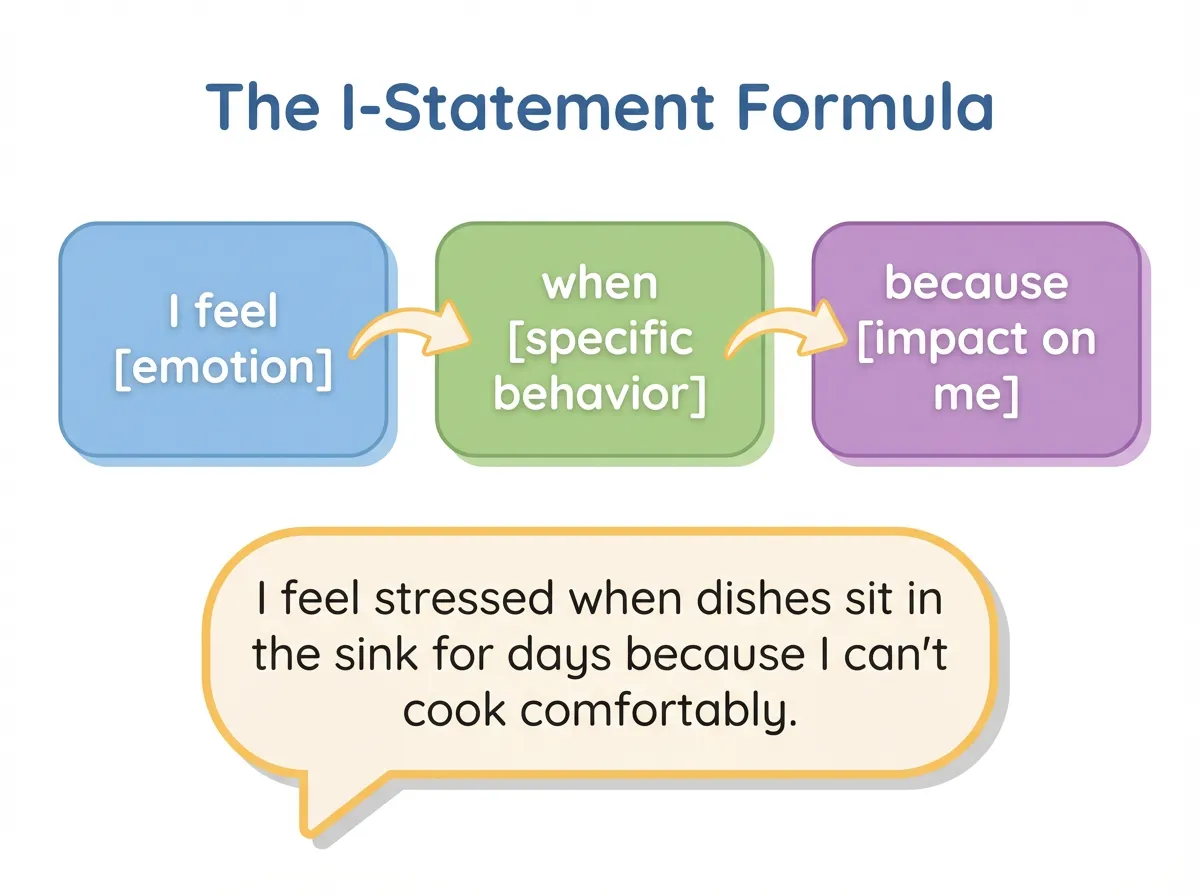
The formula is:
"I feel [emotion] when [specific behavior] because [impact on you]."
Let's compare:
| Accusation ("You" Statement) | "I" Statement |
|---|---|
| "You're so loud at night. You have zero consideration." | "I've been having trouble sleeping when music plays late on weeknights because I have early classes." |
| "You never clean up after yourself." | "I feel stressed when the kitchen has dishes piling up because I don't have space to cook." |
| "You keep eating my food. That's so rude." | "I noticed some of my groceries have been used, and I'm trying to stick to a budget, so it's been tough." |
Notice what the "I" statement does:
- It removes character judgment. You're not calling your roommate inconsiderate or rude. You're describing a behavior and its effect.
- It gives your roommate room to respond without defending their identity. When someone hears "you're inconsiderate," they shut down. When they hear "I've been having trouble sleeping," they can engage.
- It keeps the focus on solving a problem rather than assigning blame.
A Common Mistake With "I" Statements
Beware of the disguised accusation:
"I feel like you don't care about me."
That's technically an "I feel" sentence, but it's still a judgment about your roommate's character. A better version:
"I feel unimportant when I bring something up and it doesn't change, because it makes me wonder if my needs matter in this space."
The difference is subtle but significant. Practice reframing your frustrations before the conversation — even writing them down can help.
Step 3: Set the Tone in the First 30 Seconds
Research on difficult conversations consistently shows that the first 30 seconds predict the outcome. If the opening feels like an attack, the rest of the conversation will be defensive. If it feels collaborative, both people stay open.
Here's a three-part opening structure that works:
1. Name the Relationship, Not the Problem
Start by affirming that you value the roommate relationship.
"Hey, I want to make sure we have a good setup here because I actually like living with you."
This isn't manipulation — it's context. It tells your roommate this conversation is about improving things, not tearing them down.
2. Ask Permission
This one surprises people, but it's incredibly effective:
"Can we talk about something that's been on my mind? It's not a big deal, but I want to bring it up before it becomes one."
Asking permission gives your roommate a sense of control. It also signals respect — you're not ambushing them.
3. State the Issue Using Your "I" Statement
Now deliver your prepared "I" statement. Keep it brief. One issue at a time. Resist the urge to stack every grievance into one conversation.
Full example:
"Hey, I really appreciate how well we've been getting along, and I want to keep it that way. Can I bring up something small? I've been struggling to sleep on weeknights when music plays past 11 — I've got 8 a.m. classes and it's been catching up with me. Could we figure out a system that works for both of us?"
That's it. No accusations. No passive aggression. No laundry list. Just a clear, respectful request.
Step 4: Listen Like You Mean It
After you've said your piece, the most important thing you can do is stop talking and genuinely listen.
Your roommate might:
- Apologize immediately — great, but still discuss a plan so it doesn't recur.
- Get defensive — stay calm. Don't match their energy. Say something like: "I'm not trying to blame you — I just want to find a solution that works for both of us."
- Raise a counter-issue — this is actually a good sign. It means they also have unspoken concerns. Hear them out. You can address both issues in the same conversation.
- Shut down — if they say "I don't want to talk about this right now," respect that. Say: "Okay, I get that. Can we come back to it tomorrow or this weekend?"
Active listening means:
- Making eye contact (not staring at your phone)
- Paraphrasing what they said: "So what I'm hearing is..."
- Not interrupting, even when you disagree
- Asking follow-up questions: "What would work better for you?"
Step 5: Agree on Specifics and Write Them Down
Vague agreements fail. "I'll try to be quieter" doesn't mean anything measurable. What does "quieter" mean? By when? In what context?
Once you've both aired your perspectives, negotiate specific, concrete agreements:
- "Music with speakers off by 10:30 p.m. on weeknights. Weekends, midnight."
- "Dishes washed within 24 hours of use."
- "Guests don't stay over more than two nights per week without a heads-up."
Then — and this is the step most roommates skip — write it down. It doesn't need to be a formal contract. A shared note on your phones, a Google Doc, or even a whiteboard on the fridge works. Tools like Servanda can help roommates create written agreements that prevent future conflicts, especially when you want something more structured than a sticky note.
The act of writing creates clarity and accountability. When an issue comes up again, you're not arguing about what was agreed — you're referencing a shared document.
What to Do When the Conversation Goes Sideways
Sometimes, despite your best preparation, things escalate. Here's what to do:
Take a Break
If voices are rising or someone is shutting down, pause.
"I think we're both getting frustrated. Can we take a break and come back to this in an hour?"
This isn't avoidance — it's emotional regulation. The key difference is naming a specific time to return to the conversation.
Bring in a Neutral Third Party
If you've tried multiple times and the conversation keeps breaking down, consider involving:
- Your RA (if you're in a dorm or university housing)
- A mutual friend who both roommates trust
- A community mediation center — many cities offer free or low-cost mediation services
There's no shame in needing a mediator. It doesn't mean you've failed — it means the issue is complex enough to benefit from structure.
Know Your Non-Negotiables
Not everything is a compromise. If a roommate's behavior involves safety concerns, harassment, lease violations, or anything that threatens your wellbeing, you don't need to negotiate — you need to escalate to your landlord, housing office, or relevant authority.
Realistic Scenarios: How This Looks in Practice
Scenario 1: The Noise Issue Mia waited three weeks before talking to her roommate Jordan about late-night video calls. By the time she brought it up, she was so frustrated that she opened with, "You literally have no respect for anyone else in this apartment." Jordan shut down immediately. After a tense 24 hours, Mia tried again: "Hey — I'm sorry about how I said that yesterday. What I'm actually dealing with is that I can hear the calls through the wall after midnight, and it's been affecting my sleep. Can we brainstorm a fix?" Jordan suggested using earbuds and moving calls to the living room after 11. Problem solved — but it took a second attempt because the first approach triggered defensiveness.
Scenario 2: The Cleanliness Divide Alex and Sam had different cleanliness standards. Alex felt like they were always the one cleaning the bathroom. Instead of keeping score silently, Alex proposed a rotating cleaning schedule during a weekend check-in. They wrote it on a shared calendar. Three months later, it's still working — not because either person changed their standards, but because the expectations became explicit.
Frequently Asked Questions
How do I bring up a problem with my roommate without starting a fight?
Choose a calm, neutral moment — not when you're upset or your roommate is stressed. Open by affirming that you value the living situation, ask permission to discuss something, and use an "I" statement that focuses on your experience rather than their character. This approach dramatically reduces defensiveness.
What if my roommate gets angry when I try to talk about issues?
Stay calm and don't match their energy. Acknowledge their feelings — "I can see this is frustrating" — and suggest taking a short break with a specific time to return to the conversation. If repeated attempts fail, consider involving a neutral third party like an RA or mediator.
Should roommates have a written agreement?
Absolutely. Written agreements remove ambiguity and prevent the "I never agreed to that" problem. They don't need to be legalistic — even a shared note covering quiet hours, cleaning expectations, guest policies, and shared expenses can prevent most recurring conflicts.
How often should roommates check in about how things are going?
Every two to four weeks works well for most living situations. Keep it brief — 10 to 15 minutes — and treat it as routine maintenance rather than a crisis response. Regular check-ins make it far easier to raise small issues before they become big ones.
Is it too late to fix a roommate conflict if we've been avoiding it for months?
It's not too late, but acknowledge the delay directly. You might say: "I should have brought this up sooner, and I'm sorry I didn't. I want to figure this out so we can both be comfortable here." Owning the avoidance builds trust and resets the conversation.
Moving Forward
Talking to your roommate about conflict isn't about having a perfect script or never feeling nervous. It's about refusing to let avoidance do more damage than the conversation ever could.
The framework is straightforward: pick a neutral moment, open with respect, use "I" statements, listen genuinely, and agree on specifics you both write down. Will every conversation go smoothly? No. But every conversation you have — even an imperfect one — builds the muscle for the next one.
Your living space should feel like a place you can breathe in. That starts with one honest, well-timed conversation. You already know what you need to say. Now you know how to say it.