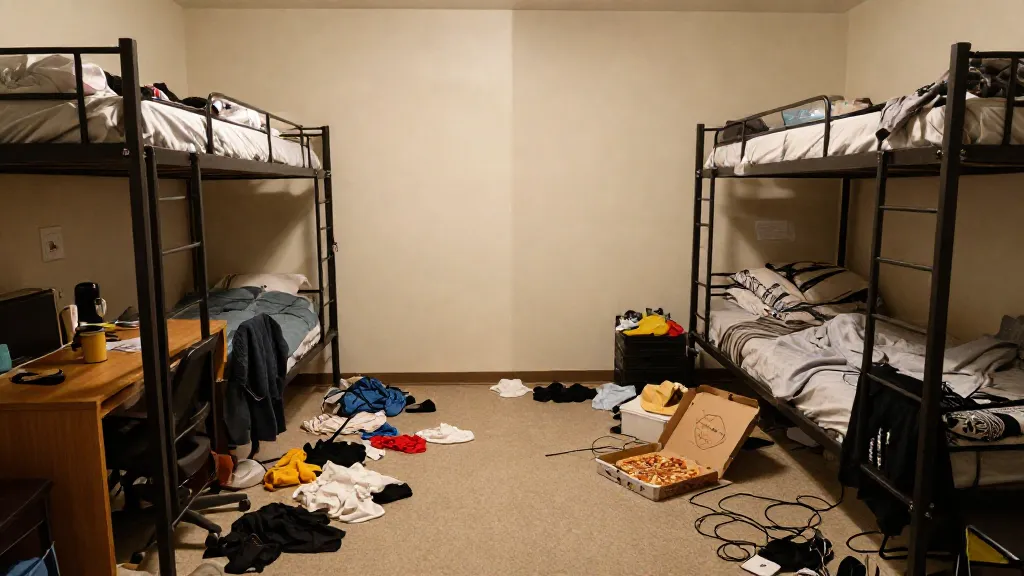
5 Roommate Fights You'll Face & How to Solve Them
It's 1:47 a.m. on a Tuesday. You have a presentation at 9, and your roommate's friends are in the living room laughing at a volume that suggests they've never heard of headphones. You're lying in bed, jaw clenched, composing a passive-aggressive text you'll probably regret. Sound familiar?
Nearly every person who's lived with a roommate has been in some version of this moment. A 2023 survey by Apartment List found that over 30% of renters reported having a serious conflict with a roommate in the past year — and those are just the ones who called it "serious." The everyday friction? That's practically universal.
The good news: the fights are predictable. Resident advisors, mediators, and conflict resolution professionals see the same five roommate fights cycle through again and again. And because they're predictable, they're solvable — not with vague advice about "just talking it out," but with specific scripts and agreements you can put into practice tonight.
Key Takeaways
- The same five conflicts — noise, cleanliness, guests, money, and personal boundaries — account for the vast majority of roommate fights. Knowing this ahead of time gives you a framework for prevention.
- Each fight has a specific resolution script you can adapt to your situation, drawn from RA-tested mediation techniques.
- Written agreements created before or during a conflict dramatically reduce repeat arguments. Even a simple shared document works.
- Timing and framing matter more than being "right." Bringing up an issue when you're calm and using "I" statements changes the entire dynamic.
- Unresolved small irritations compound into blowups. Address friction early and specifically, before resentment builds.

Fight #1: The Noise Battle
Why It Happens
Noise conflicts are the single most common roommate fight, and they're rarely about volume alone. They're about competing schedules and different definitions of reasonable. One person is a night owl who unwinds with gaming after midnight. The other wakes up at 6 a.m. for work. Neither is wrong — but without a shared understanding, both feel disrespected.
RA advisors at universities like UNC and Michigan State report that noise complaints account for more mediation sessions than any other issue. And it's not limited to college: working professionals sharing apartments face the same friction, especially with remote work blurring the lines between "home" and "office" hours.
The Resolution Script
Don't wait until 1 a.m. to address this. Pick a calm moment — maybe over coffee on a weekend — and use this framework:
- Name the pattern, not the person. "Hey, I've noticed our schedules are pretty different, and I want to figure out a noise setup that works for both of us."
- Share your specific need. "I need it quiet enough to fall asleep by 11 on weeknights. What does your evening usually look like?"
- Propose a two-way solution. "What if we agree on quiet hours from 11 p.m. to 7 a.m. on weeknights, and midnight to 8 a.m. on weekends? I'll use earplugs too — I'm not expecting total silence."
- Write it down. Even a quick text summary: "Just to confirm — we're going with quiet hours Sun–Thu 11–7, Fri–Sat 12–8. Headphones after quiet hours start. Cool?"
What RAs Actually Recommend
The key RA insight here: offer a concession with your request. When you say "I'll wear earplugs" or "I'll text you if I need to get up early," you're signaling that you see this as a shared problem, not an accusation. That shift alone prevents most defensive reactions.
Fight #2: The Cleaning Standoff
Why It Happens
You and your roommate almost certainly grew up in households with different cleanliness standards. What feels "reasonably tidy" to one person looks like chaos to another. The fight usually doesn't erupt over one dirty dish — it erupts after three weeks of quietly fuming about a pattern, which means by the time someone says something, they're already resentful.
The Resolution Script
This one needs structure, not just conversation. Here's the approach that actually sticks:
- Acknowledge the difference without ranking it. "I think we have different thresholds for when stuff needs to get cleaned, and that's fine — but I want to find a middle ground so neither of us feels frustrated."
- Get specific about shared spaces. Vague agreements like "let's keep things clean" fail every time. Instead: "Can we agree that dishes get washed or put in the dishwasher within 24 hours? And we each wipe down the kitchen counter after cooking?"
- Create a rotation for shared tasks. A simple alternating schedule for bathroom cleaning, taking out trash, and vacuuming common areas removes ambiguity. Post it on the fridge or in a shared note.
- Set a low-stakes check-in. "Let's try this for two weeks and then check in. If something's not working, we'll adjust."

A Real-World Example
Jamie and Alex (names changed) shared an apartment after college. Jamie kept their own room spotless but left dishes in the sink for days. Alex didn't care about the sink but was bothered by shoes and bags piled by the front door. Their initial argument went nowhere because each person was focused on the other's mess.
A friend suggested they each name their one non-negotiable — the single thing that bothered them most. Jamie said "shoes by the door." Alex said "dishes in the sink." They agreed to prioritize those two things above all else. It wasn't perfect, but the fights stopped because each person felt heard on the thing that actually mattered to them.
Fight #3: The Uninvited Guest (or the Guest Who Won't Leave)
Why It Happens
Guest conflicts sit at the intersection of personal freedom, privacy, and shared space. Your roommate's significant other staying over four nights a week effectively adds a third roommate who doesn't pay rent. Or maybe your roommate throws gatherings without warning, and you come home to a full apartment when you expected a quiet evening.
This fight is especially loaded because it can feel like you're asking permission to live your social life — or like your roommate is ignoring that you live there too.
The Resolution Script
- Lead with your experience, not their behavior. "When I came home last Thursday and there were six people here, I felt like I couldn't relax in my own space. I need some predictability about when we'll have people over."
- Distinguish between types of guests. A partner staying overnight is different from a party. Address them separately: - Overnight guests: "How about we agree on a max of two or three nights per week for overnight guests? And a heads-up text beforehand?" - Groups/gatherings: "Can we give each other at least 24 hours' notice before having more than two people over?"
- Discuss shared costs if it's ongoing. If a partner is essentially living there, it's fair to say: "If [name] is staying over more than three nights a week regularly, I think we should talk about how that affects utilities and shared supplies."
The Line Most People Are Afraid to Draw
You are allowed to say: "I need some nights where I know it'll just be us in the apartment." That's not controlling — it's a basic need for predictability in your own home. Frame it as a request, not an ultimatum, and most reasonable roommates will meet you halfway.
Fight #4: The Money Conflict

Why It Happens
Money fights between roommates usually aren't about someone being cheap or irresponsible. They're about unclear expectations. Who pays for toilet paper — is that a shared expense or personal? What happens when one person uses way more electricity? What if someone's late on their share of rent?
The awkwardness of talking about money means these issues often go unaddressed until someone feels taken advantage of.
The Resolution Script
- Have the money conversation before move-in — or right now if you didn't. "I want to make sure we're on the same page about shared expenses so neither of us has to feel weird about it later."
- Create a clear list of what's shared and what's not. Typical shared expenses include: - Rent and utilities - Toilet paper, paper towels, dish soap, trash bags - Shared cleaning supplies
Typically not shared: - Groceries (unless you agree otherwise) - Personal toiletries - Streaming subscriptions (unless you split them) 3. Choose a payment method and stick to it. Apps like Splitwise or Venmo make this frictionless. Set a recurring reminder for rent and utility splits. 4. Address late payments directly and without judgment. "Hey, I noticed the electric bill split from last month is still open. Everything okay? Just want to make sure we stay current."
The Preventive Move
Tools like Servanda can help roommates formalize financial agreements and expectations in writing — which takes the emotional charge out of money conversations and gives both people a reference point when questions come up.
Fight #5: The Boundary Violation
Why It Happens
This is the catch-all category, and it's often the most emotionally charged. Borrowing clothes without asking. Eating labeled food. Reading messages on a shared screen. Using someone's expensive kitchen gear and not cleaning it properly. Walking into someone's room without knocking.
Boundary violations feel personal because they are personal. They signal a lack of respect for someone's autonomy, even when the intent is harmless.
The Resolution Script
- Be direct and specific the first time. Don't hint. Don't leave a note. Say it plainly: "Hey, I noticed my leftovers from last night are gone. I need us to keep our food separate — if something's labeled with my name, it's not up for grabs."
- Assume good intent, but still set the boundary. "I know you probably didn't think it was a big deal, and I'm not mad — I just want to be clear about it going forward."
- Name the broader principle if it's a pattern. "I think we'd both feel more comfortable if we had a general rule: don't use each other's stuff without asking first. That way neither of us has to guess."
- Reinforce positively when it's respected. This sounds small, but a quick "Thanks for asking about the blender — of course you can use it" goes a long way toward making boundaries feel collaborative rather than restrictive.
When It's More Serious
Some boundary violations — reading private messages, entering your room when you're not home, or pressuring you about personal choices — go beyond normal roommate friction. If a conversation doesn't change the behavior, it's okay to involve a third party: an RA, a landlord, or a mediator. You don't have to solve everything on your own.
The Pattern Behind All 5 Fights
If you look across these five roommate fights, a common thread emerges: the problem is rarely the single incident. It's the absence of a shared expectation.
Dirty dishes aren't the issue — the issue is that nobody agreed on when dishes should be washed. A loud Tuesday night isn't the issue — the issue is that quiet hours were never defined.
This is why the most effective roommate relationships aren't the ones where people magically agree on everything. They're the ones where people build explicit agreements early and revisit them when circumstances change.
A roommate agreement doesn't have to be a formal contract. It can be a shared Google Doc, a list on the fridge, or a text thread you both reference. What matters is that it exists in writing, so neither person has to rely on memory or assumptions.
FAQ
How do I bring up a problem with my roommate without starting a fight?
Timing is everything. Choose a neutral moment — not right after the incident — and start with what you need rather than what they did wrong. "I need quiet after 11 on work nights" lands very differently than "You're always so loud." Leading with a specific need gives your roommate something concrete to respond to instead of getting defensive.
What if my roommate won't talk about the problem at all?
Some people shut down during face-to-face conflict. If that's your roommate, try putting your thoughts in a message or email. Write it when you're calm, keep it short, and end with a question: "Can we figure out a solution that works for both of us?" If they still refuse to engage, consider asking a neutral third party — a mutual friend, RA, or mediator — to facilitate.
Should roommates have a written agreement even if they're friends?
Especially if they're friends. Friendships create an assumption that you'll just "figure it out," which often means nobody says anything until they're already upset. A written agreement protects the friendship by removing guesswork. It doesn't have to feel formal — even a casual list of shared expectations (quiet hours, guest policy, cleaning rotation) can prevent the most common roommate fights.
How do I handle a roommate who agrees to things but never follows through?
First, check whether the agreement was specific enough. "Let's keep things clean" is too vague to follow through on. "Dishes washed within 24 hours" is measurable. If the agreement was clear and they're still not holding up their end, have a direct follow-up conversation: "We agreed on X, and it's not happening. What's getting in the way?" Sometimes there's a genuine obstacle; sometimes the agreement needs renegotiating.
When is it time to involve a third party in a roommate conflict?
If you've had two or more direct conversations about the same issue and nothing has changed, it's time. You're not escalating — you're recognizing that you've hit a wall. An RA, landlord, or mediator can reframe the situation in ways that feel less personal and help both people commit to a workable plan.
Moving Forward
The five roommate fights outlined here — noise, cleanliness, guests, money, and boundaries — aren't signs that your living situation is broken. They're signs that you're two different people sharing a space, which is inherently complicated.
What separates roommates who thrive from those who end up on housing swap forums is not compatibility. It's willingness to build and maintain agreements. The scripts in this article aren't magic words — they're starting points. Adapt them to your voice, your roommate's personality, and your specific situation.
Start with the fight that's bothering you most right now. Pick a calm moment this week. Use the script. Write down what you agree to. And revisit it in two weeks to see how it's going.
You don't need to be best friends with your roommate. You just need to be good co-managers of a shared space — and that's a skill anyone can build.