The Roommate Agreement: Why You Need One Now
It started with a single dirty pan left in the sink. Then it was the 2 a.m. video calls. Then the "temporary" boyfriend who practically moved in. By month three, Maya and her college roommate Priya weren't speaking at all—communicating only through passive-aggressive sticky notes on the fridge.
If this sounds familiar, you're not alone. A 2023 survey by Apartment List found that nearly 40% of renters who live with roommates report frequent conflicts over household responsibilities. The uncomfortable truth? Most of those fights could have been avoided with a single conversation held before the first box was unpacked.
That conversation—and the document it produces—is a roommate agreement. Not the comedic, legally dubious contract from The Big Bang Theory, but a practical, mutually written set of expectations that gives everyone a reference point when tensions rise. This article walks you through exactly why you need one, what to include, and how to create one without it feeling awkward.
Key Takeaways
- A roommate agreement is a conflict-prevention tool, not a legal contract. It sets shared expectations before misunderstandings have a chance to fester.
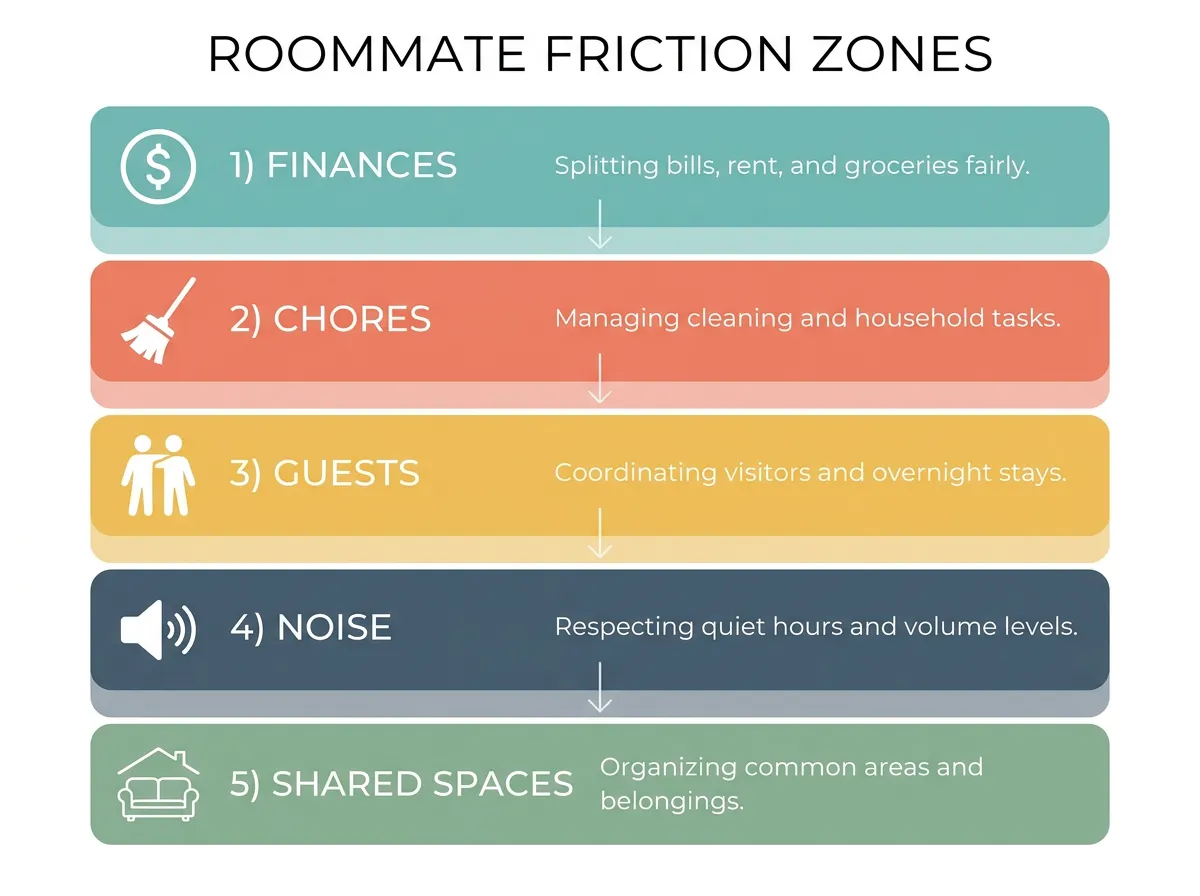
- Cover the five friction zones: chores, finances, guests, noise, and shared spaces. These account for the vast majority of roommate disputes.
- Write it together, not for each other. An agreement only works when every roommate has input and feels ownership over the final document.
- Build in a revision schedule. Life changes. Your agreement should too—revisit it every semester or every three months.
- Put it in writing. Verbal agreements are easy to misremember. A shared Google Doc or printed sheet on the fridge removes the "I never agreed to that" problem entirely.
What Exactly Is a Roommate Agreement?
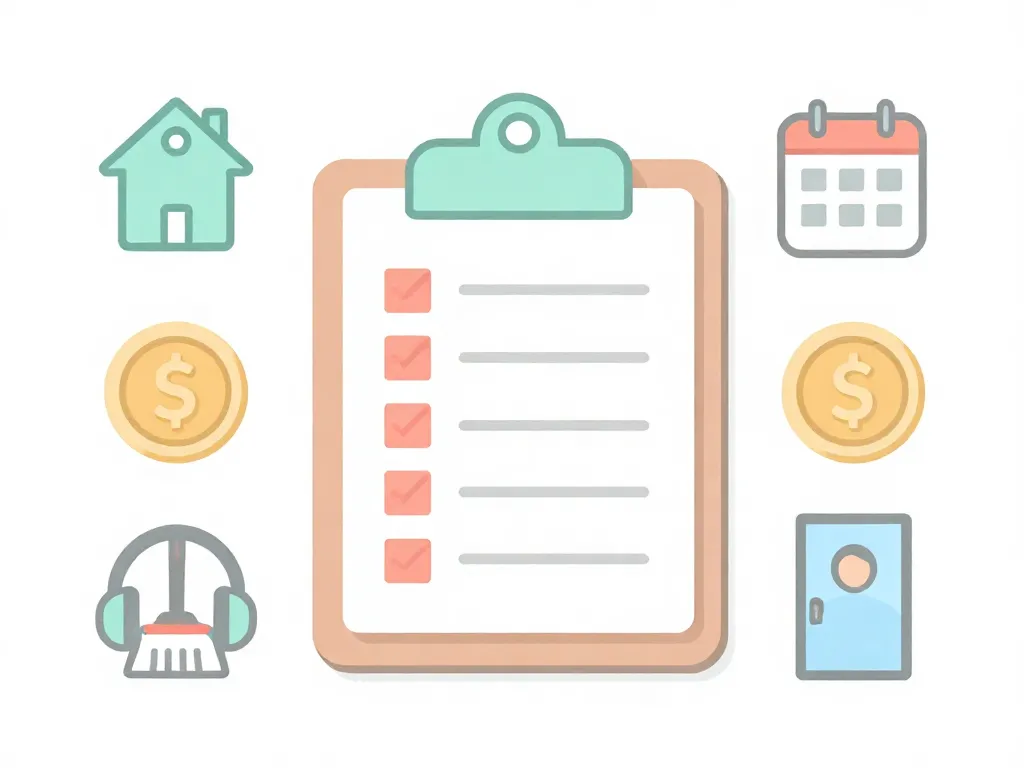
A roommate agreement is a written document—formal or informal—where everyone in a shared living space spells out expectations for daily life. It covers the practical stuff: who pays what, when quiet hours start, how chores get divided, and what happens when someone wants to have guests over.
Let's be clear about what it is not:
- It's not a lease. Your lease is a legally binding contract with your landlord. A roommate agreement is between you and the people you live with.
- It's not a punishment. It doesn't exist because someone is "difficult." It exists because human beings have different habits, and different habits cause friction in shared spaces.
- It's not permanent. It's a living document you can revise as circumstances change.
Think of it as the user manual for your household. Every appliance comes with one. Your living situation deserves the same.
Why Most Roommate Conflicts Start the Same Way
Here's a pattern that plays out in apartments, dorms, and shared houses everywhere:
- Two or more people move in together with goodwill and optimism.
- Nobody talks about expectations because it feels "too serious" or "awkward."
- Small annoyances accumulate—unwashed dishes, borrowed food, late-night noise.
- Resentment builds silently because there's no agreed-upon standard to reference.
- Eventually, someone snaps over something minor, and the real issue—months of unspoken frustration—explodes.
The core problem isn't bad behavior. It's the absence of a shared standard. Without a roommate agreement, everyone defaults to whatever felt normal in their previous living situation. One person grew up in a household where dishes could sit overnight. Another was raised to wash them immediately. Neither is wrong—but without a conversation, both assume their way is the obvious, correct way.
A roommate agreement eliminates the guesswork. It replaces assumptions with explicit, agreed-upon norms.
The 5 Friction Zones Your Roommate Agreement Must Cover
Research from university housing offices and mediation services consistently identifies the same five categories where roommate disputes cluster. Your agreement should address every one of them.
1. Finances and Shared Expenses
Money is the fastest way to erode trust. Cover these specifics:
- Rent split: Equal? Proportional to room size? Based on income?
- Utilities: Who sets up the accounts? How and when does everyone pay their share?
- Shared household supplies: Toilet paper, dish soap, trash bags—is there a communal fund, or does everyone buy their own?
- Food: Completely separate groceries? A shared staples shelf? A communal grocery budget?
- Payment deadlines: When is money due to the person paying the bill? What happens if someone is late?
Example: Carlos and Devon split rent equally but divide utilities by usage—Carlos works from home and uses more electricity, so he pays 60% of the electric bill. They keep a shared spreadsheet updated on the 1st and 15th of each month.
2. Chores and Cleaning Standards
"Clean" means vastly different things to different people. Get specific:
- Define what "clean" looks like for shared spaces (kitchen, bathroom, living room). Does "clean kitchen" mean wiped-down counters, or does it include sweeping the floor?
- Create a chore rotation or assignment list. Weekly? Biweekly? Who does what?
- Set expectations for personal messes. If you cook, when should the kitchen be cleaned up? Same night? Within 24 hours?
- Address trash duty. Who takes it out, and on what schedule?
Example: Three roommates in a shared house use a rotating chore chart pinned to the refrigerator. Each person handles one zone (kitchen, bathroom, common areas) for one week, then rotates. Deep cleaning happens the last Saturday of each month—together.
3. Guests and Overnight Visitors
This one is a minefield if left unaddressed. Questions to answer:
- How much notice is expected before having guests over?
- Is there a limit on how often a significant other can stay overnight? (Many roommates use a "three nights per week" guideline.)
- Are there quiet expectations when guests are present?
- Who is responsible if a guest damages something or uses communal supplies?
- Are there any boundaries about guests in shared spaces during certain hours?
Example: Jess and Alana agreed that overnight guests are fine up to three nights a week, but anything beyond that warrants a conversation about the guest contributing to utilities. Both send a quick text heads-up before bringing anyone home.
4. Noise and Quiet Hours
Sleep schedules and study habits vary wildly. Pin down the basics:
- Designated quiet hours. Common ranges are 10 p.m.–8 a.m. on weeknights and midnight–10 a.m. on weekends, but your household should decide what fits.
- Headphone expectations. Music, gaming, video calls—when do headphones become mandatory?
- Party or gathering rules. How often? How loud? How late? How much notice?
- Morning routines. If one person wakes at 5:30 a.m., what's the expectation around noise levels?
5. Shared Spaces and Personal Boundaries
This covers everything from the thermostat to the bathroom schedule:
- Common area use. Can one person monopolize the living room TV every night?
- Bathroom schedules. If you share one bathroom, who showers when during morning rush?
- Temperature preferences. Agree on a thermostat range rather than a single number (e.g., 68–72°F).
- Storage and personal items. Which shelves, cabinets, and fridge sections belong to whom?
- Pets. Are they allowed? Who's responsible for messes, noise, and damage?
How to Write a Roommate Agreement Without Making It Weird
The biggest barrier to creating a roommate agreement isn't logistics—it's the fear of coming across as controlling or distrustful. Here's how to introduce the idea naturally and write it collaboratively.
Frame It as a "Household Setup" Conversation
Don't hand someone a pre-written list of rules. Instead, try something like:
"Hey, I've heard horror stories about roommates who never got on the same page about stuff. Want to spend 30 minutes knocking out a quick agreement so we don't end up like that?"
Most people will be relieved you brought it up. The ones who aren't willing to have this conversation are, frankly, giving you useful information about what living with them will be like.
Use a Template as a Starting Point
Blank pages are intimidating. Start with a template that prompts you with questions rather than forcing you to think of every category from scratch. Many university housing offices provide free roommate agreement templates—search "[your school] roommate agreement template" or look for general versions from tenant advocacy organizations.
Tools like Servanda can also help roommates create written agreements with built-in structure, making it easier to cover common friction points without the conversation feeling adversarial.
Have the Conversation in a Low-Stakes Setting
Don't do this during move-in chaos or after a fight. Pick a calm moment—maybe over pizza during the first week—and treat it as a collaborative project, not a negotiation.
Write It Down in a Shared Location
A Google Doc works perfectly. So does a printed sheet on the fridge or a note in a shared app. The format doesn't matter. What matters is that it's accessible to everyone and not stored only in one person's phone.
Sign It—Even Informally
Having everyone add their name (or even just a checkmark emoji in a shared doc) creates a small but meaningful psychological commitment. It signals: I agreed to this, and I'll honor it.

What Happens When Someone Breaks the Agreement
An agreement is only as useful as your willingness to reference it. Here's a simple escalation path to include in your document:
- First conversation: "Hey, I noticed [specific thing]. Can we revisit what we agreed about that?" Direct, specific, no accusation.
- Pattern conversation: If it keeps happening, address the pattern: "This has come up a few times now. What's getting in the way? Do we need to adjust the agreement?"
- Mediation: If direct conversation isn't resolving things, bring in a neutral third party—an RA, a mutual friend, or a campus mediation service.
- Re-evaluation: Sometimes the agreement itself is the problem. Maybe the chore rotation isn't realistic, or the guest policy is too restrictive. Be willing to revise.
The agreement isn't a weapon to wave in someone's face. It's a reference point that makes difficult conversations easier because you're pointing to a shared document, not just your personal preferences.
When Should You Create (or Update) a Roommate Agreement?
The short answer: before you need one. But here are specific moments when creating or revising an agreement is especially important:
- Before move-in day. The ideal time. Expectations are fresh, and nobody has grievances yet.
- At the start of a new semester or season. Schedules change, and so should your agreements.
- When a new roommate joins the household. Every new person deserves input.
- After a significant conflict. Use the resolution as a chance to update the agreement so the same issue doesn't resurface.
- When life circumstances change. Someone starts working from home, gets a pet, starts a new relationship—anything that shifts the daily rhythm of the household.
Real Scenarios Where an Agreement Would Have Helped
The Thermostat War: Two roommates in a studio—one runs hot, one runs cold—spent an entire winter adjusting the thermostat behind each other's backs. An agreement specifying a range (say, 69–72°F) and a rule about not adjusting it without a text would have ended the standoff before it started.
The Disappearing Groceries: A group of four shared a house and never discussed food boundaries. One roommate regularly helped himself to others' labeled groceries, assuming "we all share." The others assumed labeled food was off-limits. A five-minute conversation during week one could have prevented three months of resentment.
The Overnight Guest Who Never Left: A roommate's partner started staying over five or six nights a week—using the shower, eating communal snacks, occupying the living room. No one had established a guest frequency limit, so the offending roommate genuinely didn't realize there was a problem until the others confronted them in frustration.
In every case, the issue wasn't malice. It was the absence of a shared understanding.
Frequently Asked Questions
Is a roommate agreement legally binding?
In most cases, no. A roommate agreement is an informal document between housemates, not a legal contract enforced by courts. However, some clauses—especially those related to rent payments—can carry weight if they're referenced alongside your lease. Think of it as a social contract, not a legal one.
What if my roommate refuses to make a roommate agreement?
That's worth paying attention to. If someone isn't willing to spend 20 minutes discussing basic expectations, it may signal a reluctance to compromise later. Try framing it as something that protects them too—not just you. If they still refuse, consider at minimum discussing the two or three issues most likely to cause friction (like finances and guests) in a casual conversation and summarizing what you discussed in a text message.
Can I create a roommate agreement after we've already been living together?
Absolutely. It's never too late. In fact, creating one after you've lived together for a few weeks can be more effective because you've already seen where friction points exist. Frame it positively: "Now that we know each other's routines, let's write down what's working and adjust what isn't."
How detailed should a roommate agreement be?
Detailed enough to cover the five major friction zones (finances, chores, guests, noise, and shared spaces) but not so granular that it feels like a legal document. A good roommate agreement is typically one to three pages. If you need more than that, you may be trying to legislate personality differences rather than practical logistics.
Do roommate agreements work for couples living with a third roommate?
Yes—and they're arguably more important in that dynamic. Couples naturally align with each other, which can make a third roommate feel outvoted or excluded. An agreement ensures the third person's preferences carry equal weight in household decisions.
Conclusion
A roommate agreement isn't about distrust. It's about respect—for your own needs and for the people you share a home with. The 30 minutes it takes to sit down, talk through expectations, and write them in a shared document will save you months of tension, dozens of awkward confrontations, and possibly an entire relationship.
You don't need to cover every hypothetical scenario. Start with the five friction zones: money, chores, guests, noise, and shared spaces. Write it together. Revisit it when life changes. And remember that the goal isn't perfection—it's a shared reference point that makes it easier to say "hey, let's check our agreement" instead of "why are you always like this?"
The best time to create a roommate agreement was move-in day. The second best time is today.