
5 Ways to Stop Reacting in Anger With Your Co-Parent
It's 7:42 PM on a Tuesday. Your phone buzzes. You read the message from your co-parent and your chest tightens. Maybe they changed pickup plans without asking. Maybe it's a passive-aggressive comment about your parenting. Maybe it's a single sentence that somehow manages to undo the calm you'd built up all day.
Your thumbs are already moving. The response forming in your head is sharp, defensive, and loaded. You know — even as you're typing — that sending it will make things worse. But the anger feels justified. It feels necessary.
This moment, right here, is where everything either escalates or changes.
If you're a co-parent who keeps finding yourself in this cycle — reacting in anger, regretting it later, and wondering why it keeps happening — you're not failing. You're human. But there are concrete, practical ways to stop reacting in anger with your co-parent that you can start using today, even when every nerve in your body is telling you to fire back.
Key Takeaways
- The pause is the most powerful tool you have. Even a 60-second delay between reading a message and responding can prevent an argument from spiraling.
- Your body sends warning signals before your brain catches up. Learning to recognize physical cues like a clenched jaw, shallow breathing, or a racing heart gives you an early exit ramp.
- Draft responses are your secret weapon. Write what you want to say, then edit it into what actually helps your kids.
- Boundaries aren't walls — they're guardrails. Limiting when, where, and how you communicate with your co-parent reduces the opportunities for anger to take over.
- This is a skill, not a personality trait. You can get better at this with practice, and every calm response you send rewires the dynamic between you.
Why Anger Takes Over (and Why It's Not a Character Flaw)
Before diving into the strategies, it helps to understand what's actually happening in your brain during these moments.
When you receive a provocative message from your co-parent, your amygdala — the brain's threat detection center — activates your fight-or-flight response. Stress hormones flood your system. Your prefrontal cortex, the part responsible for rational decision-making, temporarily goes offline. You're not thinking clearly because, neurologically, you can't.
This isn't weakness. It's biology. The co-parenting relationship often carries layers of unresolved hurt, betrayal, grief, or frustration that make even small triggers feel enormous. Your nervous system doesn't distinguish between a text about scheduling and a genuine threat to your well-being.
The good news: you can train your brain to respond differently. Here's how.
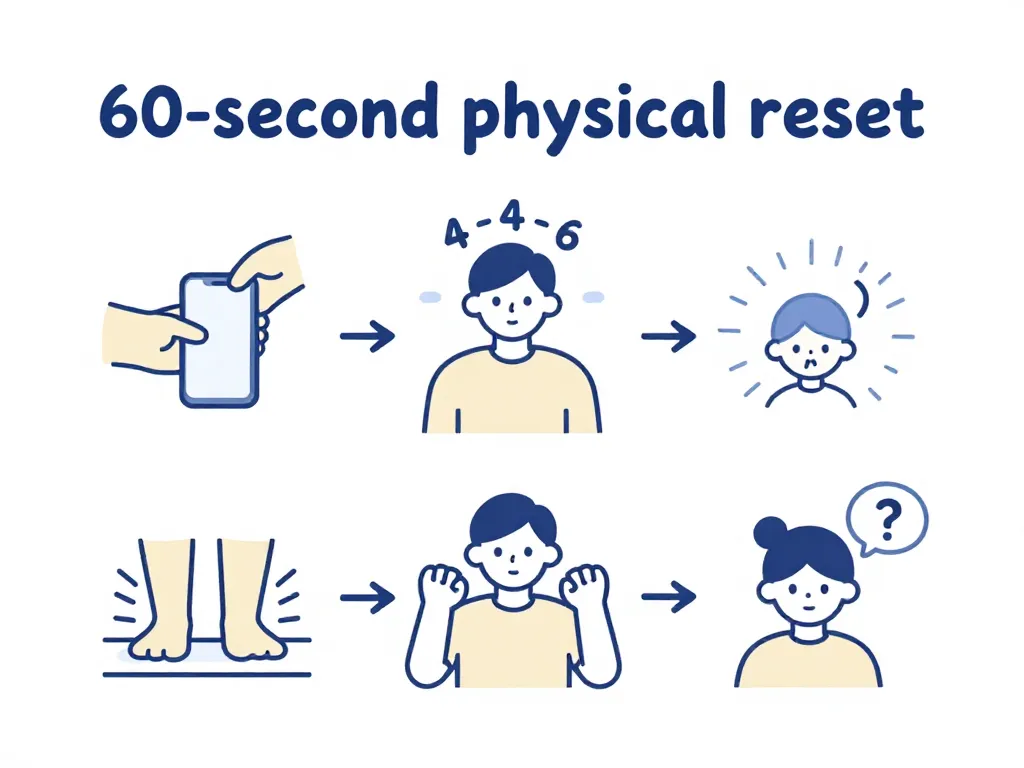
1. Use the 60-Second Physical Reset
What it is
A concrete, body-based technique that interrupts the anger response before you say or type something you'll regret.
How to do it in real-time
The next time you feel that surge of anger — whether reading a text, listening to a voicemail, or standing face-to-face at pickup — do the following:
- Put the phone down or break eye contact. Physically create distance between yourself and the trigger.
- Press your feet into the ground. Feel the floor beneath you. This activates your parasympathetic nervous system.
- Take three slow breaths. Inhale for four counts, hold for four, exhale for six. The extended exhale is what actually calms your heart rate.
- Squeeze and release your fists three times. This gives the adrenaline somewhere to go.
- Ask yourself one question: "What do my kids need from me right now?"
This entire sequence takes about 60 seconds. You're not suppressing the anger — you're giving your prefrontal cortex time to come back online.
What it looks like in practice
Maria receives a text from her co-parent, James, saying he's bringing the kids back two hours early "because something came up." Her first instinct is to fire off: "Something always comes up with you. The kids aren't an inconvenience." Instead, she puts the phone on the kitchen counter, does her breathing, and after 90 seconds, types: "I can make that work. Please give me more notice in the future so I can plan."
Same boundary. Zero escalation. The message still communicated what she needed — but without the emotional shrapnel.
2. Draft First, Send Second
What it is
A two-step communication method where you separate the emotional release from the actual message.
How to do it in real-time
This technique works best for text and email communication, which is where most co-parenting conflicts ignite.
- Open your notes app — not the messaging app. Write exactly what you want to say, uncensored. Get it all out.
- Walk away for at least 10 minutes. Do something physical: load the dishwasher, take the dog out, do ten pushups.
- Come back and read your draft as if a judge were reading it. Because in some cases, they literally might.
- Rewrite focusing on three things only: the facts, your specific request, and the timeline.
- Send the revised version.

The filter questions
Before sending any message to your co-parent, run it through these filters:
- Is this about the kids, or is this about winning?
- Would I be comfortable if my child read this in ten years?
- Does this move us toward a solution or just express my frustration?
If your message doesn't pass all three, it goes back to drafts.
Why this works
Writing the angry version isn't wasted effort — it's emotional regulation. Research on expressive writing shows that putting feelings into words reduces their intensity. You get the release without the consequences. The rewrite is where the real communication happens.
3. Create a "Response Menu" Before Conflicts Happen
What it is
A pre-written set of neutral, de-escalating responses you can pull from when you're too activated to think straight.
How to build one
Sit down during a calm moment — not after a fight — and write 5-8 template responses that cover common scenarios. Store them in your phone's notes. Here are examples:
When plans change without notice:
"I'd appreciate more lead time for schedule changes. Let's discuss how to handle this going forward."
When you're being blamed or criticized:
"I see this differently, but I don't think hashing it out over text will help. Can we use [agreed communication method] to sort this out?"
When you need time before responding:
"I got your message. I need some time to think about this. I'll respond by [specific time]."
When a boundary is being crossed:
"That's not something I'm willing to discuss through text. Let's keep our communication focused on the kids' schedule and needs."
When you genuinely don't know what to say:
"Noted. I'll follow up if I have questions."
Why this is more powerful than it sounds
In high-conflict moments, your brain isn't capable of crafting a measured response from scratch. Having pre-written options removes the cognitive load. You're not trying to be calm — you're just copying and pasting calm. Over time, these responses become your default, not your fallback.
4. Set Communication Boundaries That Reduce Trigger Opportunities
What it is
Structural changes to when, where, and how you interact with your co-parent that lower the baseline tension.
Boundaries that actually work
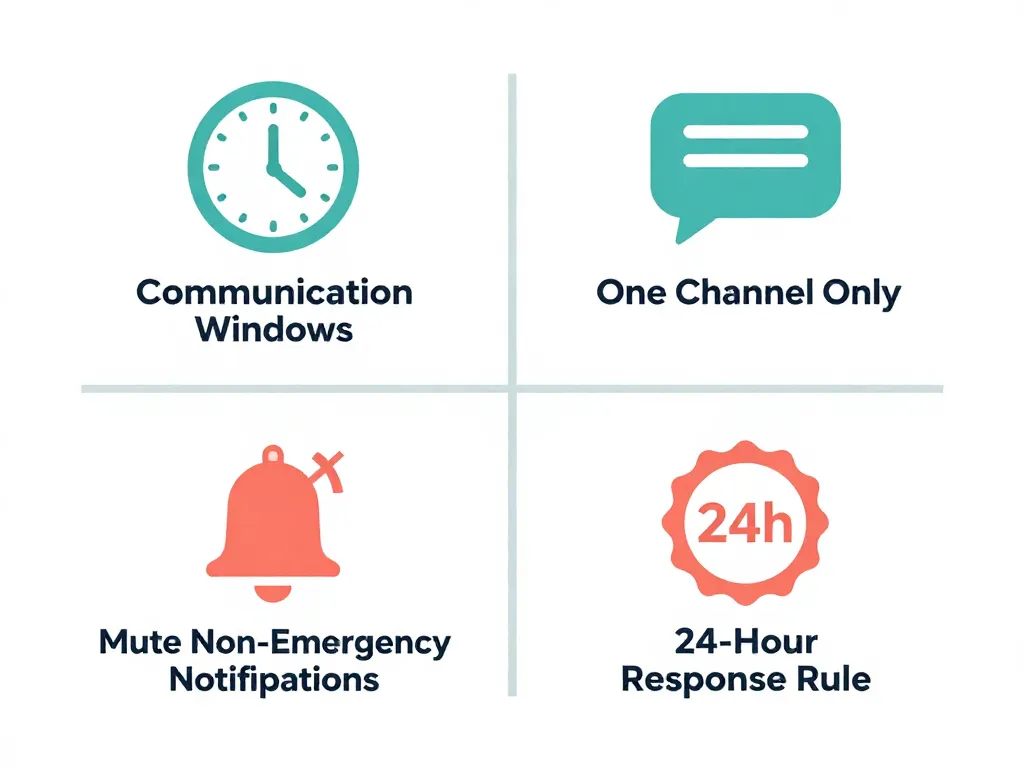
- Designate communication windows. Agree on specific times for non-emergency co-parenting discussions. Example: "I respond to co-parenting messages between 8–9 AM and 7–8 PM. Emergencies are the exception."
- Choose one communication channel and stick to it. Texts, emails, a co-parenting app, or an AI-powered mediation platform like Servanda — it doesn't matter which, as long as it's consistent and creates a record. Multiple channels create chaos.
- Remove notifications for non-emergency messages. Check on your schedule, not theirs. This alone eliminates the ambush feeling.
- Establish a 24-hour response rule for non-urgent matters. This builds in a natural cooling period and sets expectations for both sides.
- Keep exchanges about logistics only in writing. Save emotional or complex discussions for structured settings — a mediator, therapist, or scheduled call with ground rules.
How to introduce boundaries without starting a fight
Frame boundaries as being about efficiency, not punishment. Instead of: "I'm not going to respond to you whenever you feel like texting."
Try: "I want to make sure I'm giving your messages the attention they deserve instead of responding on the fly. I'm going to start checking and responding during [time window]. Emergencies, of course, I'll handle right away."
Same boundary. Completely different reception.
5. Practice the "Narrator Shift" in Real Time
What it is
A cognitive reframing technique where you shift from being inside the emotion to observing it.
How to do it
When anger flares, narrate what's happening to yourself in the third person:
- Instead of: "He's doing this on purpose to control me."
- Try: "I notice I'm feeling controlled right now. My shoulders are tense and I want to respond immediately. That's my threat response activating."
This technique, sometimes called "self-distancing," has been studied extensively by psychologist Ethan Kross and others. Research published in the Journal of Personality and Social Psychology found that people who used third-person self-talk experienced significantly less emotional reactivity during stressful situations.
Why it works for co-parenting specifically
Co-parenting conflicts are uniquely personal. They involve your children, your identity as a parent, and often your most painful relational wounds. The narrator shift creates a micro-gap between the trigger and your response — and in that gap, you get to choose.
You're not pretending the anger isn't real. You're just declining to let it drive.
How to build this habit
Start practicing during low-stakes moments:
- Stuck in traffic: "I notice I'm frustrated. My grip on the steering wheel is tight."
- Kids won't listen: "I'm feeling overwhelmed. My voice is getting louder."
- Minor annoyance from a coworker: "I notice I'm irritated. I want to snap back."
The more you practice in calm waters, the more accessible the skill becomes during storms.
What to Do When You Fail (Because You Will)
Let's be honest: you're going to slip. You'll send a message you wish you hadn't. You'll raise your voice at pickup. You'll take the bait.
Here's what matters: what you do next.
- Don't double down. The urge to justify your reaction is strong. Resist it.
- Acknowledge it briefly. A simple "That came out harsher than I intended. Here's what I was trying to say..." goes further than you think.
- Don't over-apologize. Excessive apologizing can shift the power dynamic and open you up to manipulation in high-conflict situations. One clear, brief acknowledgment is enough.
- Learn from it. What was the trigger? What time of day was it? Were you hungry, tired, or already stressed? Patterns reveal prevention opportunities.
Recovery is not failure. It's the skill that separates people who keep escalating from people who gradually build a calmer co-parenting dynamic.
Frequently Asked Questions
How do I stay calm when my co-parent is deliberately trying to provoke me?
Recognize that provocation only works if you engage with it on their terms. Use the 60-second physical reset and a pre-written response from your response menu. If the provocation is consistent and severe, document everything and consult with your family law attorney or mediator about next steps.
What if my co-parent gets angrier when I respond calmly?
This is common and temporary. When someone is used to getting an emotional reaction and suddenly doesn't, they may escalate before they adjust. Stay consistent. Over weeks, your calm responses change the pattern — or at minimum, they protect you and create a clear written record of your conduct.
Is it okay to just not respond to my co-parent's messages?
It depends. For hostile or off-topic messages, you're not obligated to respond to every provocation. For messages about your children's schedule, health, or needs, a timely response is generally expected — and often legally relevant. Use the 24-hour rule: respond within a day for non-emergencies, immediately for true emergencies, and not at all for bait.
How do I stop reacting in anger during in-person exchanges like pickup and drop-off?
Keep in-person interactions brief and logistical. Have a mental script: greet, exchange necessary information, say goodbye. If your co-parent tries to start a discussion or argument, use a boundary phrase like: "Let's handle that through text so we can both give it proper thought." Then physically walk away.
Can anger management techniques really work when co-parenting with a difficult ex?
Yes, but with an important caveat: these techniques manage your reactions, not your co-parent's behavior. You cannot control how they act. You can control whether you match their energy or redirect it. Over time, consistently calm responses either improve the dynamic or give you a strong documented record if legal intervention becomes necessary.
Moving Forward: One Response at a Time
Stopping the anger cycle with your co-parent doesn't require a personality overhaul or some moment of spiritual transformation. It requires small, repeated choices — a breath instead of a text, a template instead of a tirade, a boundary instead of a battle.
Every calm response you send teaches your nervous system that this person's messages are not emergencies. Every time you pause, you're building a new neural pathway. And every time you choose your children's stability over your own vindication, you're doing the hardest, most important work of co-parenting.
You won't be perfect. But you don't need to be. You just need to be better than you were last Tuesday at 7:42 PM. Start there.