
5 Active Listening Tips for High-Conflict Co-Parents
You're reading a text from your co-parent about this weekend's pickup time. Halfway through, your jaw tightens. You're already composing a rebuttal before you finish the message. By the time you respond, you're not answering what they actually said — you're answering what you assumed they meant. They fire back. You fire back harder. Thirty minutes later, a simple logistics question has become a full-blown argument, and neither of you remembers what started it.
This pattern — talking past each other, reacting instead of responding — is the single most common communication breakdown in high-conflict co-parenting. And it's not because either parent is a bad person. It's because active listening is genuinely hard when your nervous system treats every message from your co-parent as a potential threat.
The good news: active listening is a skill, not a personality trait. You can learn it, practice it, and get measurably better at it — even when the other person isn't trying at all.
Here are five concrete, underused active listening tips for high-conflict co-parents that you can start using today.
Key Takeaways
- Pause before responding: A 60-second delay between reading a message and replying can prevent most escalation spirals.
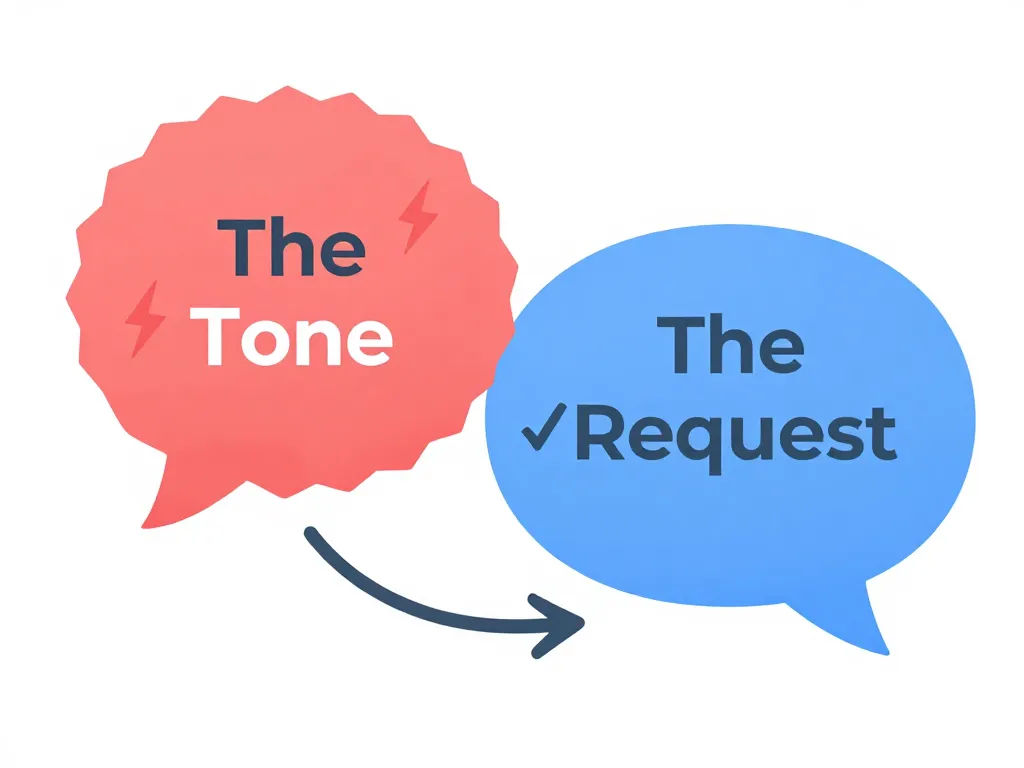
- Separate the request from the tone: Train yourself to identify what your co-parent is actually asking for, even when their delivery is poor.
- Use reflective statements: Repeating back what you heard (without agreeing) de-escalates tension faster than any counter-argument.
- Listen for the child's need underneath: Most co-parenting disagreements have a kid-centered concern buried inside them — find it.
- Set a listening boundary: You can be a good listener and protect yourself from verbal abuse. These are not opposites.

Why Active Listening Breaks Down Between Co-Parents
Before diving into tactics, it helps to understand why this is so hard in the first place.
When you co-parent with someone you've had significant conflict with — whether through divorce, separation, or a relationship that ended painfully — your brain builds a threat profile around that person. Psychologists call this negative sentiment override: a cognitive state where you interpret neutral or even positive messages from your co-parent through a negative filter.
Your co-parent texts: "Can we switch Saturday to Sunday this week?"
What they meant: a straightforward schedule request.
What your brain hears: "I'm going to control the schedule again, just like always."
This isn't weakness. It's neurobiology. Your amygdala is doing its job — scanning for threats based on past experience. But it makes genuine listening nearly impossible unless you consciously intervene.
That's what these five tips are designed to do: create a deliberate gap between stimulus and response so you can actually hear what's being said.
Tip 1: The 60-Second Rule — Pause Before You Respond
What It Is
When you receive a message from your co-parent that triggers a reaction — frustration, anger, defensiveness — set a timer for 60 seconds before you do anything. Don't type. Don't dictate a voice memo. Don't even mentally draft a reply. Just wait.
Why It Works
Research on emotional regulation shows that the peak intensity of a triggered emotional response lasts roughly 90 seconds. By waiting even 60 seconds, you give your prefrontal cortex — the part of your brain responsible for rational thought — time to come back online.
How to Practice It
- Read the message once.
- Put your phone down or switch to a different tab.
- Take three slow breaths (inhale for 4 counts, exhale for 6).
- Read the message a second time.
- Now respond — to what they actually said.
A Real Example
A father we'll call Marcus used to respond to his co-parent's schedule change requests within seconds, often with sarcasm. After practicing the 60-second rule for two weeks, he noticed something: about half the messages he'd been interpreting as hostile were actually neutral. His rapid-fire responses had been creating the hostility he thought he was detecting.
Quick check: If your first instinct is to type in ALL CAPS, that's your signal to pause — not to press send faster.
Tip 2: Separate the Request From the Tone
What It Is
High-conflict co-parents often deliver reasonable requests in unreasonable packaging. Your job as an active listener is to extract the actual request from the emotional wrapping.
The Mental Exercise
When you receive a message, ask yourself two questions:
- What are they asking for? (the logistics)
- How are they asking for it? (the tone)
Then respond only to the first one.
An Example in Action
Your co-parent writes: "You ALWAYS drop them off late. I need them at my house by 5 on Friday. This isn't negotiable."
The tone: accusatory, absolute, controlling.
The request: a 5:00 PM Friday drop-off.
Instead of responding to the accusation ("I do NOT always drop them off late, that was ONE time..."), try responding only to the request:
"I can do 5:00 PM Friday. I'll confirm the day before."
This doesn't mean you agree with the tone. It doesn't mean you're a pushover. It means you're choosing the battlefield — and you're choosing the one that actually matters for your kids.
When This Gets Tricky
Sometimes the tone is the problem — when it crosses into verbal abuse, name-calling, or threats. In that case, you don't have to respond at all. (More on this in Tip 5.)
Tip 3: Use Reflective Statements to De-Escalate
What It Is
Reflective listening means restating what your co-parent said in your own words — not to agree, but to show you actually heard them. It's one of the most powerful de-escalation techniques in conflict resolution, and it's dramatically underused in co-parenting conversations.
The Formula
Use this simple structure:
"It sounds like you're saying [their point]. Is that right?"
Or:
"So what I'm hearing is [their concern]. Did I get that right?"
Why It Works
Most people in high-conflict situations don't feel heard. When they don't feel heard, they get louder. They repeat themselves. They escalate. A reflective statement short-circuits that loop by giving them the one thing they're actually looking for: acknowledgment.
Importantly, reflecting is not agreeing. You can say "It sounds like you're concerned about consistency in the bedtime routine" without conceding that your bedtime routine is wrong.
A Conversation Example
Co-parent: "The kids said they had fast food three times last week at your house. That's unacceptable."
Defensive response (not this): "They're exaggerating. It was twice, and one was a pizza, which barely counts."
Reflective response (try this): "It sounds like you're worried about what the kids are eating during my parenting time. I hear that. Here's what meals actually looked like last week..."
Notice the difference. The defensive response invites a fact-checking war. The reflective response moves toward a conversation.
Tip 4: Listen for the Child's Need Underneath
What It Is
Almost every co-parenting disagreement — about schedules, discipline, screen time, diet, bedtimes, extracurriculars — has a child-centered concern buried underneath the adult conflict. Active listening in co-parenting means training yourself to dig past the surface argument and find that concern.
How to Find It
When your co-parent raises an issue, ask yourself:
- What is the worry about our child's wellbeing that might be driving this?
- If a neutral third party read this message, what would they say the sender cares about?
- If I remove my name and my co-parent's name from this disagreement, what's left?

Reframing Common Conflicts
| What They Say | The Surface Conflict | The Child's Need Underneath |
|---|---|---|
| "You let them stay up too late" | Control over bedtime | Child's sleep quality and school readiness |
| "You didn't tell me about the school event" | Information sharing | Child's need for both parents to be involved |
| "Your new partner shouldn't be at pickup" | Boundary dispute | Child's sense of stability during transitions |
| "They always come back in dirty clothes" | Household standards | Child's hygiene and self-esteem |
When you respond to the child's need instead of the surface accusation, something shifts. You're no longer opponents — you're two people who disagree about methods but share the same goal.
A Practical Script
"I think we both want [child's name] to feel [safe / supported / prepared / rested]. I'm open to talking about how we can make that happen. Here's what I'm thinking..."
This isn't magical. Your co-parent may still escalate. But over time, consistently responding at the child-need level trains the conversation toward problem-solving and away from blame.
Tip 5: Set a Listening Boundary
What It Is
Active listening does not mean unlimited listening. It does not mean absorbing insults. It does not mean staying in a conversation that has crossed into abuse. A listening boundary is a clear, pre-planned rule for when you stop engaging — not out of spite, but out of self-preservation.
What a Listening Boundary Sounds Like
Here are some examples of calm, clear boundary statements:
- "I want to resolve this, but I can't continue when the conversation includes name-calling. I'll respond tomorrow when we've both had time to cool down."
- "I've read your message and I need some time to think about it. I'll get back to you by [specific time]."
- "I'm going to stick to discussing the schedule. If there are other concerns, I'm open to addressing them separately."
The Key Principles
- State what you will do, not what they should do. ("I'll respond tomorrow" vs. "You need to calm down.")
- Give a specific timeframe. Open-ended silence reads as stonewalling. A deadline reads as maturity.
- Follow through. If you say you'll respond by Tuesday at noon, respond by Tuesday at noon.
Why This Is Still Active Listening
Paradoxically, setting a boundary improves your ability to listen. When you know you have an exit ramp, you can engage more openly because you're not trapped. You can listen with curiosity instead of hypervigilance.
For co-parents who find that written communication helps them maintain these boundaries, AI-powered platforms like Servanda can provide additional structure — helping you draft clear responses, document agreements, and keep conversations focused on what matters: your children.
Putting It All Together: A Framework for Your Next Conversation
You don't need to master all five tips at once. Here's a simple framework for your next interaction:
- Receive the message. Read it once. (Tip 1: Pause.)
- Read it again. This time, identify the actual request. (Tip 2: Separate request from tone.)
- Reflect. Before responding, restate what you heard. (Tip 3: Reflective statement.)
- Reframe. Find the child's need underneath. (Tip 4: Listen for the child.)
- Respond or redirect. If the conversation is productive, respond. If it's not, set a boundary. (Tip 5: Listening boundary.)
This entire sequence can happen in under five minutes. Over weeks and months, it becomes instinct.
What If Your Co-Parent Won't Listen Back?
This is the question everyone asks, and it deserves an honest answer: you cannot control whether your co-parent practices active listening. You can only control whether you do.
But here's what typically happens when one co-parent starts listening differently:
- Escalation decreases, because it takes two people to maintain a conflict spiral.
- Messages get shorter, because your co-parent no longer needs to repeat themselves to feel heard.
- Tone softens over time — not always, and not with everyone, but often enough that it's worth trying.
And even in cases where your co-parent never changes, your children benefit. They see a parent who models emotional regulation, who doesn't take the bait, who responds instead of reacts. That's not nothing. That's everything.
Frequently Asked Questions
How do I practice active listening when my co-parent is yelling at me?
You don't — at least not in the moment. If your co-parent is yelling, that's a signal to set a listening boundary (Tip 5). You might say, "I can see this is important to you, and I want to understand, but I can't listen well when we're both escalated. Can we revisit this in an hour?" Active listening requires a baseline level of safety. Protect that first.
Does active listening mean I have to agree with my co-parent?
Absolutely not. Active listening means understanding what the other person is saying — it's separate from whether you agree with it. You can reflect back your co-parent's concern perfectly and still disagree with their proposed solution. Understanding and agreement are two different things.
Can active listening really work in high-conflict co-parenting situations?
It can reduce conflict, but it's not a cure-all. Research on conflict resolution consistently shows that when one party shifts to reflective, non-defensive communication, overall hostility tends to decrease — even when the other party doesn't reciprocate. It works best as a long-term practice rather than a one-time technique.
What if my co-parent uses my active listening against me — like twisting my words?
This is a real concern in high-conflict dynamics. If your co-parent consistently distorts what you say, shift to written communication so there's a record. Keep your reflective statements simple and factual. And remember: you can acknowledge their perspective in conversation without providing ammunition. "I hear your concern about bedtime" is very different from "You're right, I've been messing up bedtime."
Is active listening the same as being passive?
Not even close. Passive communication means avoiding conflict at all costs, often by giving in. Active listening means engaging fully — hearing the other person, processing their message, and then responding thoughtfully. It's actually one of the most assertive things you can do because it requires discipline, emotional control, and clarity. Passivity is easy. Active listening is hard.
Moving Forward, One Conversation at a Time
High-conflict co-parenting doesn't resolve overnight. But most co-parents don't need a breakthrough — they need a better next conversation. Active listening gives you that.
Start with one tip. Maybe it's the 60-second pause. Maybe it's separating the request from the tone. Pick the one that feels most relevant to your situation and practice it for a week. Notice what changes — in the conversation, in your stress level, and in how your children experience the transition between homes.
You don't have to become a perfect communicator. You just have to become a slightly more intentional one. And that shift — small as it seems — can change the entire trajectory of your co-parenting relationship.