Coparenting Love Languages: Reduce Conflict Fast
It's Tuesday at 5:47 PM. You're standing in a parking lot, waiting for a custody handoff that was supposed to happen at 5:30. Your phone buzzes: "Running late. Had to stop for shoes because you never pack the right ones." Your jaw clenches. You packed those shoes. They were in the front pocket of the bag—the pocket your co-parent never checks. And just like that, a shoe becomes a grenade.
Most coparenting conflicts aren't actually about shoes, or schedules, or who forgot the permission slip. They're about something deeper: feeling unseen, unappreciated, or dismissed by the person you still have to coordinate a life with. This is where the concept of coparenting love languages becomes surprisingly powerful—not as a way to rekindle romance, but as a framework for understanding what your co-parent actually needs to feel respected, and what you need in return. When you decode those underlying needs, the shoe arguments evaporate.
What Are Coparenting Love Languages (And What They're Not)
Gary Chapman's original "Five Love Languages" framework was designed for romantic relationships. But the core insight—that people feel valued in different, specific ways—applies to any relationship where cooperation matters. Few relationships demand more cooperation than coparenting.
Coparenting love languages aren't about love. They're about respect, recognition, and reducing friction. Think of them as cooperation languages—the specific behaviors that make your co-parent feel like you're actually on the same team when it comes to your kids.
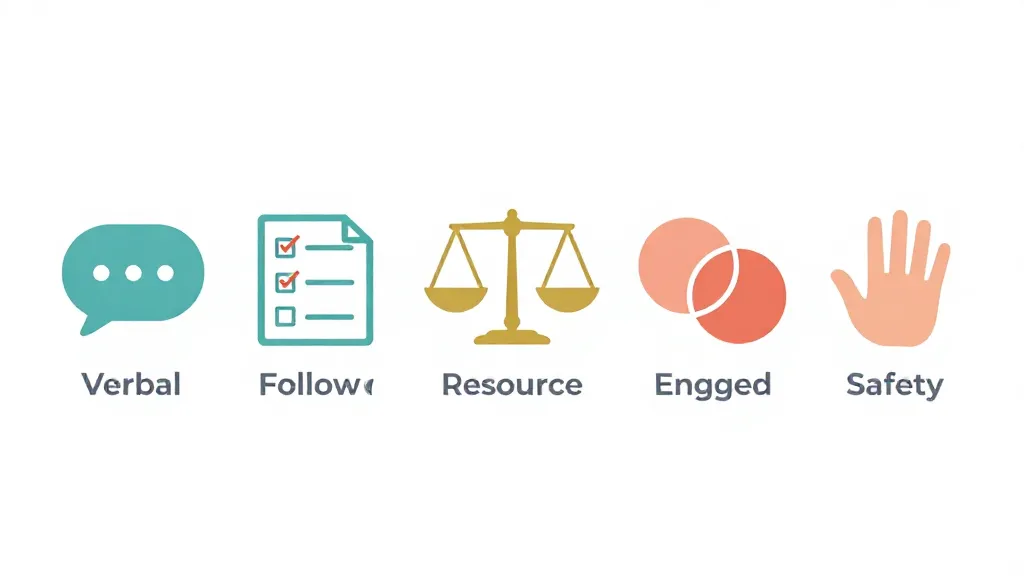
Here are the five languages, reframed for coparenting:
1. Words of Affirmation → Verbal Acknowledgment
In coparenting, this means: "Thanks for handling the doctor's appointment" or "The kids had a great time at your place this weekend."
A co-parent whose cooperation language is verbal acknowledgment needs to know their effort registers. When it doesn't, they feel invisible—and invisible people get defensive.
2. Acts of Service → Logistical Follow-Through
This co-parent doesn't care about thank-yous. They care about whether you actually did the thing you said you'd do. Did the homework come back in the folder? Was the medication packed? Did you confirm the carpool?
For this person, reliability is respect. A missed detail feels like a personal message that says: I don't take this seriously.
3. Receiving Gifts → Resource Equity
In coparenting, this language shows up as fairness around costs, supplies, and the tangible stuff kids need. A co-parent who speaks this language gets activated when they feel like they're always the one buying new cleats, replacing lost jackets, or covering unexpected expenses.
The underlying need: I need to know we're sharing this burden.
4. Quality Time → Engaged Coordination
This co-parent values being included in decisions and discussions—not just informed of outcomes. They want to be part of the parent-teacher conference, not just told what the teacher said. They want to discuss the summer camp options together, not receive a finalized itinerary.
The underlying need: I'm still a parent here. Include me.
5. Physical Touch → Emotional Safety and Presence
The emotional core translates directly. In coparenting, this shows up as the need for warmth and civility in interactions. No sarcasm. No clipped one-word texts. No weaponized silence.
This co-parent needs interactions that feel human, not transactional. Cold efficiency, even when "polite," feels hostile to them.
How to Identify Your Co-Parent's Cooperation Language
You probably can't sit your co-parent down and ask them to take a quiz. You can figure this out by paying attention to two things:
What They Complain About Most
Complaints are inverted needs. If your co-parent's recurring grievance is:
- "You never acknowledge what I do" → Verbal Acknowledgment
- "You always forget to pack X / do Y" → Logistical Follow-Through
- "I'm always the one paying for everything" → Resource Equity
- "You made that decision without me" → Engaged Coordination
- "You don't have to be so cold about everything" → Emotional Safety
The pattern is usually obvious once you start looking for it.
What They Do For You (That You Might Not Notice)
People tend to give in their own language. If your co-parent consistently:
- Sends you updates and positive notes about the kids → They likely value Verbal Acknowledgment
- Keeps meticulous track of schedules and supplies → They value Logistical Follow-Through
- Splits costs proactively or buys duplicates for both homes → They value Resource Equity
- Asks your opinion before making decisions → They value Engaged Coordination
- Makes small talk at handoffs or uses a warm tone → They value Emotional Safety
Now do the same exercise for yourself. What do you keep getting frustrated about? That's your cooperation language, asking to be spoken.
Putting Coparenting Love Languages Into Practice
Strategy 1: Lead With Their Language, Not Yours
When you need something from your co-parent, frame the request in their language, not yours.
Example: You need your co-parent to start packing the kids' medications consistently.
- If their language is Verbal Acknowledgment: "You've been great about the bedtime routine. Could we add the medication to that process since you're already nailing it?"
- If their language is Logistical Follow-Through: "Here's a checklist I put together for the travel bag. Medication is item three. Would this work on your end?"
- If their language is Engaged Coordination: "I was thinking about how we handle medications between houses. Can we figure out a system together?"
Same request. Different delivery. Dramatically different response.
Strategy 2: Build a "Language Ledger"
Keep a private note—on your phone, in a journal—where you track two things each week:
- One thing your co-parent did in their cooperation language (what they gave)
- One thing you did in their cooperation language (what you gave back)
This isn't scorekeeping. It's pattern training. Over a few weeks, you'll start noticing their efforts automatically rather than fixating on their failures. That shift in attention changes the entire dynamic.
Strategy 3: Translate Instead of React
When your co-parent says something that stings, pause and translate it through the lens of their cooperation language before responding.
What they said: "You never tell me anything about what's going on at school."
Your gut reaction: "I sent you the newsletter last week!"
Translated through Engaged Coordination: "I feel left out of our child's school life and I want to be more involved."
A better response: "You're right that I could loop you in more. Want me to forward the teacher's emails directly, or would you rather we have a quick check-in Sunday nights?"
The translation step takes three seconds. It can prevent a three-day text war.

When Your Languages Clash
Sometimes the mismatch is severe. You value logistical precision; they value emotional warmth. You send detailed scheduling spreadsheets; they read them as cold and controlling. They send casual, chatty updates; you read them as disorganized and boundary-crossing.
This is where many coparenting relationships spiral—not from bad intentions but from incompatible dialects.
Three approaches that help:
1. Name the gap (even if only to yourself). Just understanding that your co-parent isn't being difficult on purpose—they're operating in a different language—reduces your stress. Literally. You stay calmer because you have an explanation that isn't "they're doing this to spite me."
2. Create shared structures that honor both languages. If you need logistical clarity and they need engaged coordination, try a weekly 10-minute planning call with a shared agenda. You get the structure. They get the inclusion. Tools like Servanda can help formalize these agreements in writing, so both sides feel secure without needing to re-negotiate every week.
3. Accept the 70% rule. You will never speak your co-parent's language perfectly. Neither will they. Aim for 70% accuracy. That's enough to shift the climate from adversarial to functional.
What About High-Conflict Coparenting?
If your coparenting relationship involves manipulation, verbal abuse, or ongoing hostility, this framework still has value—but it works differently.
In high-conflict situations, the goal isn't to meet your co-parent's emotional needs. It's to understand their triggers so you can avoid inadvertently escalating situations.
For example:
- A high-conflict co-parent who values Engaged Coordination will escalate whenever they feel excluded. You can reduce conflict not by catering to them, but by proactively sending brief, factual updates that preempt their complaints.
- A high-conflict co-parent who values Verbal Acknowledgment may constantly fish for praise or validation. You don't need to supply it, but a neutral acknowledgment ("Got it, thanks for letting me know") costs you nothing and prevents escalation.
This isn't about rewarding bad behavior. It's about strategic de-escalation. You're not giving them what they want—you're removing the friction point they use to start fights.
The Language Your Kids Are Learning
Your children are watching how you and your co-parent communicate. They're absorbing every parking-lot tension, every clipped text read aloud by accident, every sigh when the other parent's name comes up.
When you learn to speak your co-parent's cooperation language—even imperfectly, even reluctantly—your kids witness something powerful. They see two people who disagree choosing respect over retaliation. That becomes their template for handling conflict in every relationship they'll ever have.
Start With One Thing This Week
- Identify your co-parent's top complaint. What do they bring up again and again?
- Map it to a cooperation language. Use the guide above.
- Do one small thing in that language this week. One acknowledgment. One proactive update. One shared decision. One reliable follow-through.
Notice what happens. Not to your co-parent's behavior—you can't control that. Notice what happens to yours. Notice if the shoe in the front pocket of the bag feels a little less like a grenade and a little more like what it actually is: just a shoe.
The best coparenting relationships aren't the ones where two people magically agree on everything. They're the ones where two people figure out how to make the other person feel heard—even when it's hard, even when it's Tuesday at 5:47 PM, even when the shoes were in the bag the whole time.
Frequently Asked Questions
How do love languages apply to coparenting if you're not in a romantic relationship?
The core insight of love languages—that people feel valued in different, specific ways—applies to any relationship built on cooperation, not just romance. In coparenting, the five languages are reframed as "cooperation languages" focused on respect and recognition: verbal acknowledgment, logistical follow-through, resource equity, engaged coordination, and emotional safety. You're not trying to rekindle love; you're trying to reduce friction and make your co-parent feel like you're on the same team.
What if my co-parent is too high-conflict to use cooperation languages?
In high-conflict situations, the goal shifts from meeting your co-parent's emotional needs to understanding their triggers so you can avoid accidentally escalating things. For example, if a high-conflict co-parent values engaged coordination, proactively sending brief factual updates can preempt their complaints without rewarding bad behavior. It's a strategic de-escalation tool, not an emotional concession.
Look at two patterns: what they complain about most and what they consistently do for you unprompted. If they always gripe about being left out of decisions, their language is engaged coordination; if they meticulously track schedules and supplies, they value logistical follow-through. Even minimal communication contains enough data to identify their primary cooperation language.
What if my coparenting cooperation language clashes with my co-parent's?
Language clashes are common—for instance, one parent values logistical precision while the other values emotional warmth—and they cause spirals even when both people have good intentions. The fix is to create shared structures that honor both languages, like a brief weekly planning call with a set agenda that provides structure for one parent and inclusion for the other. Aim for 70% accuracy in speaking each other's language rather than perfection.
Does using coparenting love languages actually reduce conflict long-term?
Yes, because most coparenting conflicts stem from unmet underlying needs—feeling unseen, excluded, or disrespected—rather than the surface-level issue like shoes or schedules. When you consistently address the real need behind the complaint, the pattern of recurring arguments loses its fuel. Over time, this shifts the coparenting climate from adversarial to functional, which also models healthy conflict resolution for your children.