Ex's New Partner Disciplining Your Kids?
You pick up your seven-year-old from your ex's house, and she's quieter than usual. After a few minutes in the car, she says it: "Mom's boyfriend yelled at me for leaving my shoes by the door. He said I'd lose TV for a week." Your stomach drops. Not because the rule itself is unreasonable — but because someone you barely know is making disciplinary decisions about your child.
If your ex's new partner is disciplining your kids, you're dealing with one of the most emotionally charged situations in coparenting. It strikes at something primal: the need to protect your child and maintain your role as their parent. But reacting from that raw place — firing off an angry text, confronting the new partner, or pulling your child into the middle — almost always makes things worse.

Why This Feels So Threatening
It Challenges Your Parental Identity
When someone new steps into a disciplinary role with your child, it can feel like your position as a parent is being eroded. You didn't choose this person. You didn't vet them for this role. And yet they're making decisions that shape your child's daily experience.
You Have No Control Over Their Approach
Every parent has a discipline philosophy — whether it's clearly articulated or instinctive. Maybe you don't raise your voice. Maybe you use natural consequences instead of punishments. When a relative stranger applies their own approach to your child, it can feel like a violation of values you hold deeply.
Your Child May Be Uncomfortable or Afraid
The most important factor isn't your feelings or your ex's — it's how your child is experiencing the situation. A child who feels safe and respected will adapt to reasonable household rules. A child who feels targeted, belittled, or confused by a new authority figure will not.
The first thing to do when you learn your ex's new partner is disciplining your kids is to get clear on what actually happened. Children are reliable reporters of their emotions but sometimes less reliable narrators of events.
Ask open-ended, non-leading questions:
- "Can you tell me more about what happened?"
- "What were you doing right before that?"
- "How did that make you feel?"
- "Does this happen a lot, or was this the first time?"
Avoid questions like "Was he mean to you?" or "Did Mommy let that happen?" These put your child in the position of building a case for one parent against the other.
What you're looking for:
- Was this a one-time correction or an ongoing pattern?
- Was the discipline proportionate and non-abusive?
- Does your child feel generally safe at the other household?
- Is the new partner enforcing household rules or creating their own?
Write down what your child tells you, including the date. Having notes helps you communicate clearly with your ex later.
Step 2: Distinguish Between Uncomfortable and Unsafe
This is the hardest but most important distinction you'll make.
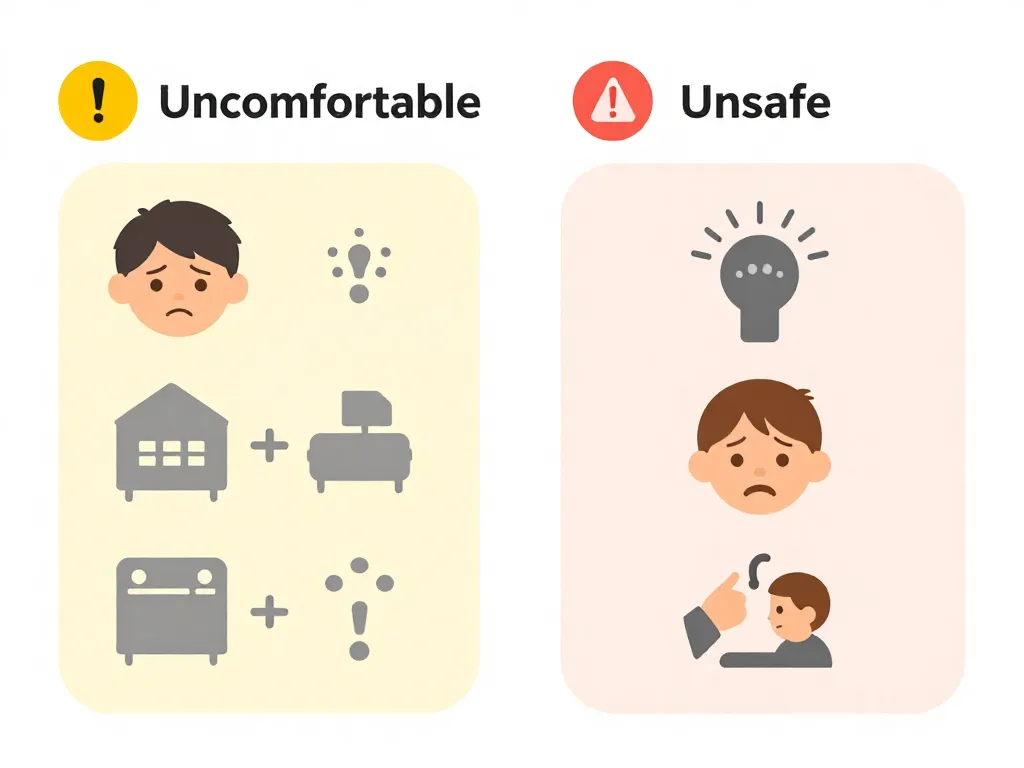
Uncomfortable but Not Harmful
- The new partner reminds your child to follow household rules (cleaning up, homework before screens)
- Your child doesn't like being told what to do by someone who isn't their parent
- The discipline style is different from yours but not harsh or demeaning
- Your child is adjusting to a new family dynamic and expressing normal friction
- Physical discipline of any kind (spanking, grabbing, pushing)
- Yelling, name-calling, or shaming
- Punishments that are disproportionate or controlling
- Your child expresses fear of the new partner
- The new partner is singling out your child while treating their own children differently
- Discipline that feels personal — targeting your child's character rather than behavior
If your child is being physically harmed, verbally abused, or expresses genuine fear, skip the communication steps below and contact your family law attorney or, if the child is in immediate danger, child protective services.
For everything else — and this is most situations — proceed to the next steps.
Step 3: Talk to Your Ex, Not the New Partner
Your instinct might be to confront the new partner directly. Resist it. Going around your ex undermines the coparenting relationship and almost always escalates the conflict.
Your ex is your coparent. They are the person responsible for what happens in their household. Address them.
How to Frame the Conversation
Don't open with an accusation. Open with your child's experience.
Instead of: "Your girlfriend has no right to punish my kid."
Try: "I wanted to talk about something that came up. [Child's name] mentioned that [Partner's name] told her she'd lose TV for a week for leaving her shoes out. She seemed upset. Can we talk about how discipline works in your house when [Partner's name] is involved?"
This approach works because it:
- Centers the child's experience, not your ego
- Doesn't attack the new partner or your ex
- Opens a dialogue instead of starting a fight
- Makes clear you're looking for collaboration, not control
Expect Defensiveness — and Plan For It
Your ex may feel protective of their new partner. They may feel judged as a parent. They may say, "You don't get to decide what happens in my house."
If the conversation gets heated, try:
- "I'm not trying to control your household. I want to make sure [child's name] feels safe and that we're on the same page about big stuff."
- "I know you'd want to know if something was bothering [child's name] at my place too."
- "Can we agree on what role partners play in discipline so it's consistent for the kids?"
If your ex shuts you down completely, put your position in writing. A brief, factual message sent through a coparenting app or email creates a record and gives your ex time to consider your perspective without the pressure of a real-time confrontation. Tools like Servanda can help coparents create written agreements around stepparent roles, keeping the focus on the child rather than the conflict.
Step 4: Define Boundaries That Actually Work
The goal isn't to ban the new partner from ever interacting with your child. That's unrealistic and not in your child's interest if this person is a consistent presence in their life. The goal is to establish appropriate boundaries.

| Boundary |
What It Allows |
What It Prevents |
| House Rules, Not New Rules |
The new partner enforces existing household rules (shoes in the closet, homework before screens). |
The partner creating new rules or consequences unilaterally. |
| No Punitive Discipline |
The new partner can redirect and remind (e.g., "Please don't leave your shoes there"). |
The partner administering significant consequences like grounding or loss of privileges. |
| Consistent Across Households |
Both coparents align on major discipline approaches. |
One household introducing methods the other parent finds objectionable. |
Putting These in Writing
Verbal agreements evaporate. If you and your ex reach an understanding about the new partner's role, write it down. Include:
- What the new partner is and isn't authorized to do regarding discipline
- How issues will be communicated between households
- A plan for revisiting the agreement as circumstances change
- What happens if the agreement is violated
This doesn't need to be a legal document (though your parenting plan may already address it). It just needs to be clear, mutual, and accessible.
Step 5: Support Your Child Through the Transition
While you're navigating the adult dynamics, your child is living through this in real time. Here's how to support them without pulling them into the conflict.
Validate Without Villainizing
- Say: "It sounds like that was frustrating. It's okay to feel that way."
- Don't say: "He has no right to talk to you like that. I'm going to put a stop to this."
The first response tells your child their feelings matter. The second puts them in the middle and signals that they've started a war between the adults.
Give Them Age-Appropriate Language
Older children especially benefit from knowing they can advocate for themselves respectfully:
- "You can always say, 'I'd like to talk to my mom/dad about that.'"
- "If someone makes you feel scared or unsafe, you tell me, your other parent, a teacher — any adult you trust."
Don't Interrogate After Every Visit
If you ask pointed questions every time your child comes home, they'll start to feel like a spy or a messenger. Check in naturally. Let them bring things up.
When the Situation Doesn't Improve
Sometimes you do everything right and the problem persists. Your ex dismisses your concerns. The new partner continues overstepping. Your child is still upset.
Here's your escalation path:
- Document everything. Dates, what your child reported, messages you sent, responses you received.
- Revisit your parenting plan. Many custody agreements address third-party discipline or can be modified to include it. Consult your attorney.
- Request mediation. A neutral third party can help you and your ex reach agreements you can't reach alone. This is often faster, cheaper, and less adversarial than going back to court.
- Seek a custody modification if necessary. If the new partner's behavior is genuinely harmful and your ex won't address it, the court can intervene. This is a last resort, not a first move.
A Note About the Bigger Picture
Blended families are complicated. Your ex's new partner didn't ask to navigate your coparenting dynamic any more than you asked to share your child's life with a stranger. In the best scenarios, stepparents become additional sources of love and stability for children. In the worst, they become sources of tension and harm.
The difference almost always comes down to whether the biological parents set clear expectations, communicated those expectations to all the adults involved, and kept the child's experience at the center of every decision.
You can't control who your ex brings into their life. But you can control how you respond, what boundaries you set, and how you show up for your child through the messiness of it all.
Frequently Asked Questions
Can my ex's new partner legally discipline my child?
In most jurisdictions, a stepparent or partner has no inherent legal authority to discipline your child, though household rules can generally be enforced by any adult present. If physical punishment or harmful discipline is involved, you may have grounds to seek a custody modification or involve child protective services. Review your parenting plan and consult a family law attorney to understand your specific rights.
How do I talk to my ex about their partner overstepping with my kids?
Lead with your child's experience rather than accusations — for example, share what your child reported feeling and ask how discipline is handled when the partner is involved. Expect some defensiveness and stay focused on collaboration rather than control. If the conversation stalls, put your concerns in writing through a coparenting app or email to create a clear record.
What should I do if my child is afraid of my ex's new partner?
If your child expresses genuine fear — not just discomfort with a new authority figure — take it seriously and document what they tell you with specific dates and details. Contact your family law attorney to discuss your options, which may include requesting mediation or a custody modification. If your child is in immediate danger, contact child protective services right away.
Should stepparents be allowed to discipline stepchildren at all?
Many family experts agree that stepparents can play a supportive role by reinforcing household rules the biological parent has established, such as reminding kids about chores or routines. However, significant disciplinary decisions — like grounding or removing privileges — should generally come from the biological parent. Clear agreements between coparents about the new partner's role help prevent confusion and conflict.
How do I stop my child from feeling caught in the middle of coparenting conflicts?
Validate your child's feelings without badmouthing the other household — say things like "that sounds frustrating" instead of "they had no right to do that." Avoid asking pointed questions after every visit, and instead let your child share on their own terms. Give older children language to advocate for themselves, such as "I'd like to talk to my mom or dad about that."