
How to Co-Parent With a High-Conflict Ex
You send a simple text about picking the kids up 15 minutes late, and within seconds your phone lights up with a wall of accusations. You're irresponsible. You never stick to the schedule. You're just like you were during the marriage. Your stomach drops, your jaw tightens, and now you're composing a paragraph-long defense — while your child sits in the back seat watching your face change.
If this sounds familiar, you're not imagining it. Some co-parenting relationships are genuinely high-conflict, and no amount of goodwill on your end will turn your ex into a collaborative partner. The standard advice — "just communicate better" — doesn't account for the reality that one person's idea of communication is another person's weapon.
This guide is for that reality. Below, you'll find concrete, boundary-driven strategies to co-parent with a high-conflict ex while protecting both your mental health and your children's stability.
Key Takeaways
- Not all co-parenting can be cooperative — and that's okay. Parallel parenting is a legitimate, healthy alternative when direct collaboration creates chaos.
- The BIFF method (Brief, Informative, Friendly, Firm) gives you a repeatable framework for every message you send, removing the guesswork.
- Documentation is protection, not paranoia. Keeping written records of agreements and exchanges shields you legally and reduces gaslighting.
- Your emotional reaction is the variable you can actually control. Disengagement isn't weakness — it's strategy.
- Children are more damaged by ongoing parental conflict than by any single custody arrangement. Reducing drama is the most loving thing you can do.

What Makes a Co-Parenting Situation "High-Conflict"?
Before diving into strategies, it helps to name what you're actually dealing with. High-conflict co-parenting isn't just disagreeing about bedtimes. It typically involves a pattern of:
- Frequent escalation: Routine logistics turn into personal attacks.
- Refusal to compromise: Every request is met with opposition, regardless of its reasonableness.
- Boundary violations: Showing up unannounced, contacting your new partner, interrogating the children.
- Revisionist history: Denying agreements, twisting your words, or rewriting events.
- Using the children as leverage: Withholding parenting time, badmouthing you to the kids, or making access conditional.
If you recognize three or more of these patterns, standard "cooperative co-parenting" models probably aren't serving you. You need a different framework.
Shift Your Mindset: From Co-Parenting to Parallel Parenting
Here's the permission you may need to hear: you do not have to be friends with your ex. You don't even have to like each other. You need to run two separate households that keep your children safe, loved, and out of the crossfire.
Parallel parenting is a structured approach where each parent operates independently within agreed-upon guidelines. Communication is minimal, business-like, and documented. You stop trying to align on every parenting decision and instead focus only on what requires mutual agreement — major medical decisions, school enrollment, travel involving the children.
This isn't giving up. It's acknowledging that every unnecessary interaction with a high-conflict ex is a potential detonation point, and your kids are standing in the blast radius.
What Parallel Parenting Looks Like in Practice
| Cooperative Co-Parenting | Parallel Parenting |
|---|---|
| Regular phone calls to discuss the kids | Written communication only (email or app) |
| Flexible, informal schedule changes | Strict adherence to the parenting plan |
| Joint attendance at school events | Attending events separately or alternating |
| Shared decision-making on daily routines | Each parent governs their own household |
| Casual drop-offs with conversation | Neutral, structured exchange locations |
The BIFF Method: Your Communication Survival Tool
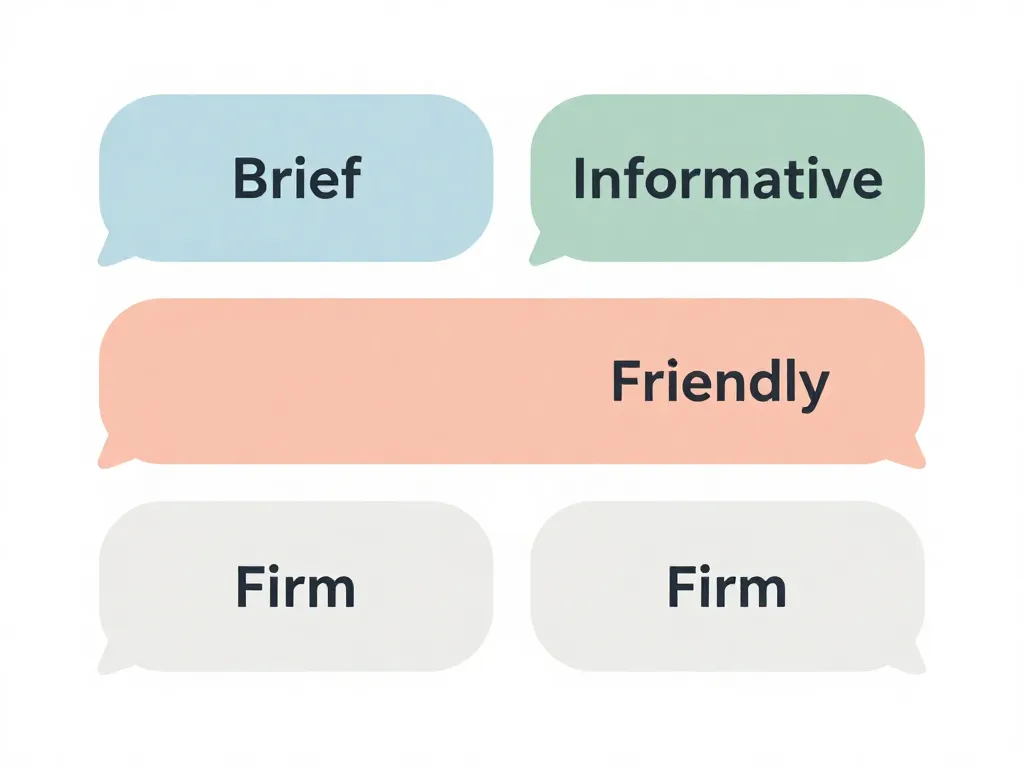
When you do need to communicate with a high-conflict ex, every message should pass through the BIFF filter, developed by high-conflict expert Bill Eddy:
- Brief: Keep it short. Two to five sentences maximum. Every extra word is ammunition.
- Informative: Stick to facts, logistics, and necessary details. No opinions, no emotions, no editorializing.
- Friendly: A neutral tone. Not warm, not cold. Think "professional email to a colleague you don't particularly enjoy."
- Firm: End the conversation. Don't leave openings for debate. Don't ask open-ended questions when a yes/no will do.
BIFF in Action
What you want to write:
"You always do this. I told you TWO WEEKS AGO that Saturday pickup is at 10am, not noon. You clearly don't care about disrupting the kids' schedule. This is exactly why we ended up in court."
What BIFF sounds like:
"Hi — just confirming that Saturday pickup is at 10:00 AM per our agreement. I'll have the kids ready at the front door. Thanks."
Notice there's no engagement with past behavior, no accusation, and no emotional charge. There's also nothing for your ex to argue with. You've stated a fact and closed the loop.
Handling the Bait
High-conflict individuals often send messages designed to provoke. They may:
- Accuse you of something outrageous to force a defensive response
- Bring up the past relationship to pull you into an emotional exchange
- Make threats (legal or otherwise) to intimidate you into compliance
- CC other people to create an audience and humiliate you
Your response to bait is almost always one of three things:
- A BIFF response addressing only the logistical content of the message
- No response at all (if no logistical question was actually asked)
- A redirect to your attorney (if threats are involved)
That's it. There is no fourth option that ends well.
Document Everything — Without Becoming Obsessive
In high-conflict co-parenting, your memory is not enough. Your ex may deny agreements, claim conversations never happened, or misrepresent events to attorneys, mediators, or the court.
Protect yourself with a simple documentation habit:
- Use written communication for all exchanges. Email or a co-parenting app creates automatic records. Avoid phone calls for anything substantive — if a call does happen, follow up with a written summary: "Per our call today, we agreed that..."
- Keep a factual log. Date, time, what happened, who was present. No editorializing — courts don't care about your feelings, they care about patterns.
- Save everything. Screenshots, emails, texts. Organize them chronologically in a dedicated folder.
- Confirm agreements in writing. Even if your ex agrees verbally, send a follow-up: "I want to make sure we're on the same page — you'll be dropping the kids off at 6 PM on Sunday. Can you confirm?" Tools like Servanda can help co-parents formalize these written agreements so that nothing is left ambiguous or deniable.
Documentation isn't about building a case against your ex (though it may serve that purpose). It's about protecting the truth when the truth is regularly contested.

Protect Your Children From the Conflict
Children in high-conflict custody situations face a specific kind of stress. Research consistently shows that it's not divorce itself that damages kids — it's ongoing, unresolved parental conflict. Here's how to shield them:
Never Use Your Child as a Messenger
Don't say: "Tell your dad that he needs to pay for the field trip." Do say: Nothing — handle it directly with your co-parent through written communication.
Children forced to relay messages between hostile parents internalize the tension. They begin to feel responsible for managing the conflict. This is an unfair burden no child should carry.
Don't Interrogate After Visits
It's natural to want to know what's happening at the other house. But questions like "Did Dad's girlfriend stay over?" or "What did Mom say about me?" put your child in an impossible position. Instead, ask open, non-leading questions: "Did you have a good time?" and leave it there.
Validate Without Recruiting
If your child expresses frustration about the other parent, acknowledge their feelings without adding fuel:
- ✅ "That sounds frustrating. I'm sorry you're dealing with that."
- ❌ "Yeah, your mom has always been like that."
Your child needs a safe landing pad, not a co-conspirator.
Consider a Child Therapist
A therapist who specializes in children of divorce gives your child a neutral space to process their feelings — something neither parent can fully provide in a high-conflict dynamic.
Manage Your Own Nervous System
Living in a state of constant anticipation — wondering what your ex will do next, bracing for the next hostile message — is exhausting. Over time, it can erode your health, your patience with your kids, and your ability to show up as the parent you want to be.
A few grounding practices that actually help:
- Delay your response. Unless it's genuinely urgent, wait at least one hour before replying to any provocative message. The first draft is almost never the right one.
- Create a "draft and delete" ritual. Write the angry response. Read it once. Delete it. Then write the BIFF version.
- Identify your triggers. What specific phrases or behaviors from your ex send you over the edge? Name them. When you can see the hook, you're less likely to bite.
- Build a support system that isn't your child. A therapist, a trusted friend, an online support group for high-conflict co-parents. You need a place to vent that isn't your living room.
- Remember what you're optimizing for. Not winning. Not being right. Your children's stability and your own peace.
When to Involve Professionals
Some high-conflict situations exceed what self-help strategies can manage. Consider involving professionals when:
- Your co-parent consistently violates court orders. Document the violations and contact your attorney.
- You suspect abuse or neglect at the other household. Contact your attorney and, if the child is in immediate danger, the appropriate authorities.
- Communication has completely broken down. A family mediator experienced with high-conflict dynamics can establish ground rules. (Note: traditional mediation may not be appropriate if there's a power imbalance or history of domestic violence.)
- Your child is showing signs of emotional distress. Withdrawal, behavioral changes, declining school performance, or anxiety around transitions are all signals that professional support is needed.
Seeking help is not an escalation. It's responsible parenting.
Frequently Asked Questions
How do I co-parent with someone who won't follow the parenting plan?
First, document every violation with dates, times, and specifics. Then communicate in writing — referencing the specific clause of your agreement — and give your co-parent a chance to self-correct. If the pattern continues, bring your documentation to your attorney to discuss enforcement options through the court.
Is it okay to limit communication with my co-parent?
Absolutely. You are not obligated to be available 24/7 or to respond to messages that aren't about the children. Setting communication boundaries — such as responding only during certain hours, only via email, and only regarding the kids — is both healthy and legally defensible.
What's the difference between co-parenting and parallel parenting?
Co-parenting involves active collaboration and shared decision-making between both parents. Parallel parenting minimizes direct contact, with each parent managing their own household independently. Parallel parenting is generally recommended when the co-parenting relationship is consistently hostile and attempts at collaboration cause more harm than good.
How do I stop my ex from badmouthing me to our kids?
You can't control what your ex says. What you can control is being a consistent, safe presence for your children. Avoid retaliating with your own negative comments. If the badmouthing is severe and persistent, document it and discuss it with your attorney or a guardian ad litem, as courts take parental alienation seriously.
Should I respond to every hostile message from my co-parent?
No. If a message contains a legitimate logistical question, respond to that question only, using the BIFF method. If the message is purely provocative with no actionable content, you are under no obligation to respond. Silence is a complete sentence.
Moving Forward, One Boundary at a Time
Co-parenting with a high-conflict ex is not the co-parenting journey anyone signs up for. There are no Pinterest-worthy blended family photos at the end of this road — and that's fine. What there can be is stability, structure, and a home where your children feel safe.
You won't get this perfect. There will be days when you take the bait, when you send the message you shouldn't have, when the frustration boils over. That doesn't mean the system is broken. It means you're human, operating under extraordinary pressure.
What matters is the pattern you're building over time: boundaries held, conflicts de-escalated, children shielded. Every BIFF response you send, every provocation you don't engage with, every agreement you put in writing — that's a brick in the wall between your ex's chaos and your children's peace.
Keep laying bricks.