
How to Set Boundaries With a Roommate You Like
You genuinely enjoy living with your roommate. You swap music recommendations, split grocery runs, and actually look forward to running into each other in the kitchen. But lately, something has been gnawing at you. Maybe they borrow your things without asking. Maybe their partner is practically a third roommate. Maybe the late-night noise is chipping away at your sleep — and your patience.
You want to say something, but there's a knot in your stomach. What if it gets awkward? What if they think I'm being dramatic? What if this ruins a good thing?
Here's the truth: learning how to set boundaries with a roommate you like isn't a threat to the friendship — it's what keeps the friendship alive. The resentment building in silence? That's the threat.
This guide gives you psychotherapist-approved language, real-world strategies, and a clear framework so you can protect both the relationship and your peace of mind.
Key Takeaways
- Boundaries aren't punishment — they're maintenance. Setting limits with a roommate you care about actually strengthens the relationship by preventing resentment.
- Use "preference" framing, not "complaint" framing. Starting with what you need (instead of what they did wrong) keeps the conversation collaborative.
- Timing matters more than wording. Choosing a calm, neutral moment dramatically increases the chance your roommate will hear you out.
- Write it down. Even casual, written agreements reduce future misunderstandings by up to 80%, according to mediation professionals.
- Revisit and adjust. Boundaries aren't one-and-done; schedule a low-key check-in to make sure things are working for both of you.

Why It's So Hard to Set Boundaries With a Roommate You Actually Like
With a roommate you dislike, boundaries feel justified — almost easy. But when you genuinely care about someone, the emotional calculus shifts. Suddenly, bringing up the dirty dishes feels like you're putting the friendship on trial.
Psychotherapist Nedra Glover Tawwab, author of Set Boundaries, Find Peace, explains that many people conflate boundaries with conflict. In reality, boundaries are information — they tell the other person how to have a successful relationship with you.
Here's what typically holds people back:
- Fear of being "too much." You worry that having needs makes you high-maintenance.
- Guilt about disrupting the vibe. Things are mostly great, so raising an issue feels like ingratitude.
- Assumption that good relationships shouldn't need rules. This is a myth. Every healthy relationship — romantic, platonic, or domestic — thrives on clear expectations.
- Past experiences with conflict going badly. If you've had roommates or family members who reacted poorly to feedback, your nervous system has learned to avoid it.
Recognizing why you're avoiding the conversation is the first step toward having it.
The Mindset Shift: Boundaries Are Friendship Insurance
Before you script a single sentence, reframe what you're doing. You're not delivering a complaint. You're investing in the longevity of a living situation you value.
Think of it this way: you wouldn't drive a car you love without changing the oil. Boundaries are maintenance, not criticism.
This mindset shift matters because it changes your energy going into the conversation. When you genuinely believe you're doing something for the relationship, your tone, body language, and word choice all soften naturally.
What Boundaries Are (and Aren't)
| Boundaries Are | Boundaries Aren't |
|---|---|
| Statements about your own needs | Demands to control someone else |
| Calm, proactive conversations | Angry ultimatums after you've hit a breaking point |
| Flexible and revisable | Rigid rules carved in stone |
| An act of respect — for both of you | A sign the relationship is failing |
Step-by-Step: How to Set Boundaries With a Roommate You Like
Step 1: Get Clear on What You Actually Need
Before you say anything, spend ten minutes writing down your specific needs. Vague frustration leads to vague conversations that solve nothing.
Ask yourself:
- What specific behavior is bothering me?
- What would "better" actually look like in concrete terms?
- Is this a deal-breaker, or a strong preference?
Example: Instead of thinking "They're so messy," get precise: "I need the kitchen counters wiped down after cooking because I meal-prep in the mornings and a cluttered counter throws off my whole routine."
Specificity is your friend. It gives your roommate something actionable rather than leaving them guessing.
Step 2: Choose Your Moment Deliberately
Timing can make or break a boundary conversation. Avoid:
- Right after the behavior happens (you're frustrated, they're defensive)
- When either of you is rushing out the door
- After drinking
- During an unrelated argument
The best time? A low-key moment when you're both home, relaxed, and not distracted. Saturday morning over coffee. A quiet evening on the couch. You might even give a gentle heads-up: "Hey, can we chat about some house stuff this weekend? Nothing serious — just want to make sure we're on the same page."
That heads-up is powerful. It signals respect and prevents them from feeling ambushed.

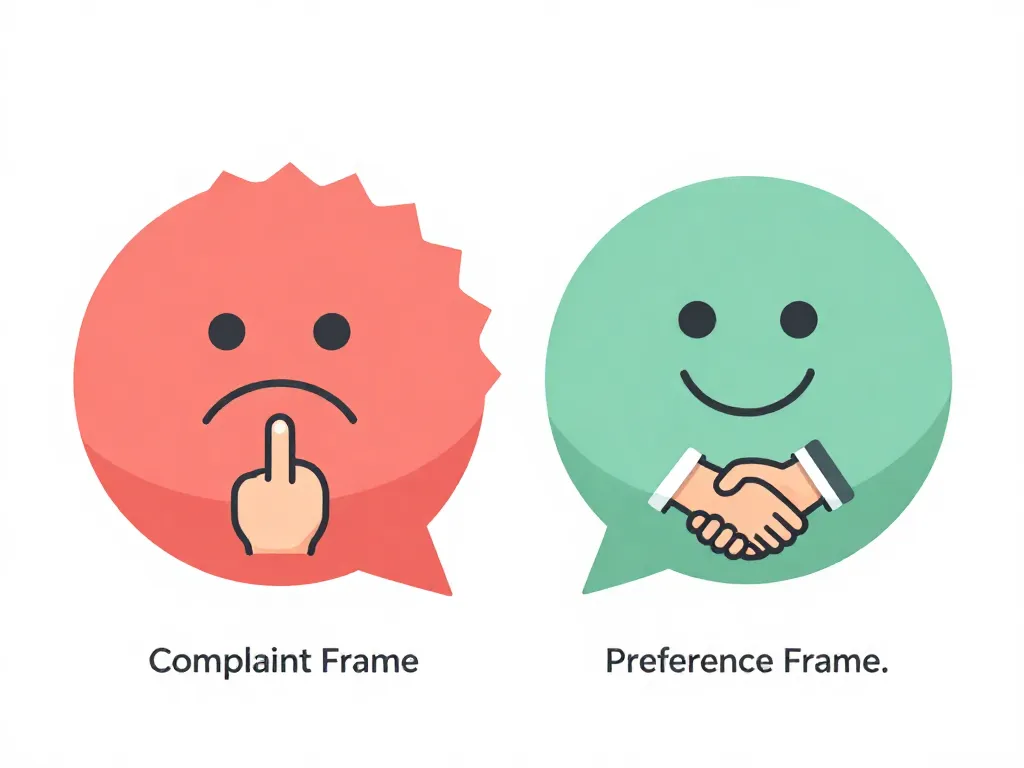
Step 3: Use the "Preference" Frame, Not the "Complaint" Frame
This is where psychotherapist-approved language makes all the difference. The goal is to lead with your need, not their behavior.
Complaint frame: "You always leave your stuff everywhere and it drives me crazy."
Preference frame: "I've realized I'm someone who really needs shared spaces to be tidy to feel relaxed at home. Could we figure out a system that works for both of us?"
Notice the shift? The preference frame:
- Centers on your experience ("I've realized I'm someone who…")
- Avoids the word "you" as the subject of a negative sentence
- Invites collaboration ("Could we figure out…")
- Acknowledges their needs too ("works for both of us")
Here are more scripts you can adapt:
For overnight guests:
"I really like [partner's name] — they're great. I've been thinking about what works for me in terms of how often we have overnight guests, and I'd love for us to set some loose guidelines so we both feel comfortable."
For noise:
"This is kind of awkward to bring up because I know you're not doing anything wrong, but I'm a lighter sleeper than I realized. Could we try keeping things quieter after 11 on weeknights? I'm totally flexible on weekends."
For borrowing things:
"I know this might seem small, but I'd feel better if we did a quick ask before borrowing each other's stuff. It's less about trust and more about me being a little particular about my things."
Step 4: Listen — Really Listen — to Their Response
Setting a boundary is not a monologue. After you share your need, pause. Give them space to respond.
They might:
- Agree easily. Great. Don't over-explain or apologize for asking.
- Get slightly defensive. This is normal. Don't match their energy. A simple "I totally get it — I'm not trying to make rules, I just want us to figure this out together" usually softens things.
- Bring up something that's been bothering them. This is actually a good sign. It means the conversation is now mutual, not one-sided.
The worst outcome isn't them pushing back — it's you never bringing it up and slowly resenting someone you used to enjoy living with.
Step 5: Write Down What You Agree On
This might feel overly formal between friends, but it's one of the most effective things you can do. A quick, casual written summary — even in a shared note on your phones — prevents the "I thought we agreed..." arguments that derail roommate relationships weeks later.
Your written agreement doesn't need to look like a legal contract. It can be as simple as:
- Guests: Overnight guests max 3 nights/week. Heads-up text appreciated.
- Kitchen: Clean up same day. Wipe counters after cooking.
- Quiet hours: 11pm–7am on weeknights. Weekends flexible.
- Borrowing: Ask first, always.
Tools like Servanda help roommates create written agreements that prevent future conflicts — especially useful if you want something more structured than a notes app but less intimidating than a formal lease addendum.
Step 6: Schedule a Low-Key Check-In
Boundaries aren't something you set once and never revisit. Life changes. Schedules shift. New annoyances emerge. Old ones resolve themselves.
Propose a casual monthly check-in: "Can we do a quick house meeting once a month? Like, 15 minutes, just to make sure everything's working? We can do it over takeout."
This normalizes the conversation. It stops boundary-setting from feeling like a "big talk" and turns it into routine maintenance.
Common Roommate Boundaries That Feel Awkward (But Aren't)
If you're not sure whether your boundary is "reasonable," here's a reality check. All of these are completely normal to discuss:
- Quiet hours and noise levels — including music, phone calls, and TV volume
- Guest policies — how often, how long, overnight vs. daytime
- Shared space cleanliness — kitchen, bathroom, living room standards
- Personal belongings — what's shared, what's off-limits
- Alone time in common areas — sometimes you need the living room to yourself
- Splitting expenses — beyond rent, how do you handle shared purchases?
- Temperature and thermostat preferences — a small thing that causes big tension
- Pet-related boundaries — feeding, cleaning, noise, allergies
None of these make you difficult. They make you self-aware.
What to Do If They Don't Respect Your Boundaries
Most roommates — especially ones you have a good relationship with — will respond well. But if they don't:
- Restate calmly and specifically. "Hey, I wanted to circle back on our agreement about [X]. I noticed [specific instance]. Can we revisit?"
- Assume good faith first. People forget. People slip. One violation isn't a pattern.
- If it continues, escalate gently. "This is the third time this has come up, and it's starting to affect how I feel at home. I need us to take this seriously."
- Know your dealbreakers. If a boundary is repeatedly ignored after clear, calm conversations, that's important information about whether this living situation works long-term.
Protecting yourself isn't selfish. It's sustainable.
FAQ
How do I set boundaries with a roommate without being rude?
Focus on your own needs rather than criticizing their behavior. Use phrases like "I've realized I need..." or "It would really help me if..." This keeps the conversation warm and collaborative. Rudeness usually comes from waiting too long and exploding — the earlier you address something, the calmer you'll be.
Is it normal to need boundaries with a roommate who's also a friend?
Absolutely. In fact, friendships that transition into living situations need more explicit boundaries, not fewer. You're used to seeing each other in fun, voluntary contexts — now you're sharing a bathroom. The expectations are completely different, and spelling them out protects the friendship.
What are some examples of healthy roommate boundaries?
Common healthy boundaries include agreed-upon quiet hours, guest policies (especially overnight guests), rules about borrowing personal items, cleaning schedules for shared spaces, and guidelines for when each person gets alone time in common areas. The "healthiest" boundary is any one that's clearly communicated and mutually agreed upon.
How do I bring up a boundary with my roommate if I've been avoiding it for months?
Acknowledge the delay honestly. Something like: "I should have brought this up sooner, but I kept putting it off because I didn't want to make it a big deal. It's actually pretty simple..." Most roommates will appreciate your honesty about the avoidance, and it sets a precedent for addressing things earlier in the future.
Can setting boundaries actually improve a roommate relationship?
Yes — and research on interpersonal conflict backs this up. Unspoken expectations are the number one driver of roommate resentment. When both people know what the other needs, day-to-day friction drops dramatically. Many roommates report feeling closer after a productive boundary conversation because it builds mutual trust and respect.
Conclusion
Setting boundaries with a roommate you like isn't about building walls — it's about laying a foundation strong enough to hold the weight of daily life together. The discomfort of one honest conversation is always smaller than the slow erosion of a friendship you neglected to protect.
Start small. Pick the one thing that's been nagging at you most. Use the preference frame. Choose a calm moment. And remember: a roommate who respects your boundaries is a roommate worth keeping. One who doesn't — no matter how fun they are — will eventually make your home feel like a place you're enduring rather than enjoying.
You deserve to feel at ease where you live. And so do they. That starts with a single, brave, kind conversation.