How to Survive a Bad College Roommate Situation
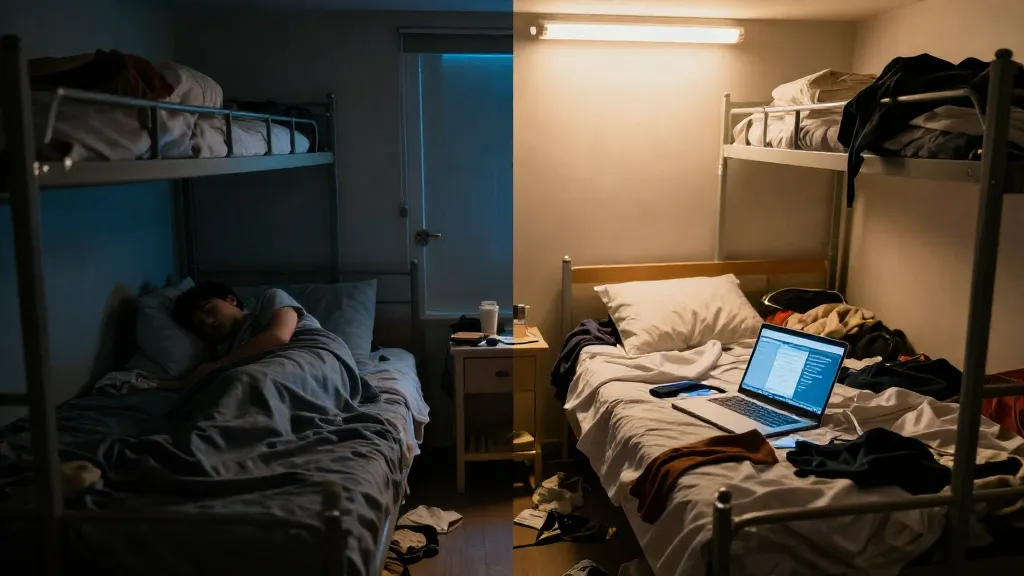
It's 2 a.m. on a Tuesday. Your alarm goes off in five hours, but your roommate's video call with friends back home has been going strong since midnight — speaker on, lights blazing. You've already asked once, politely, if they could keep it down. They said sure, then changed nothing. You're lying in bed wondering: Is this what the next eight months of my life look like?
If this sounds familiar, you're not alone. Nearly 30% of college students report significant conflict with a roommate during their first year. A bad college roommate situation doesn't just make your dorm room uncomfortable — it can tank your grades, spike your anxiety, and make you dread the one place that's supposed to feel like home. But here's what nobody tells you during orientation: most roommate problems are survivable, and some are even fixable, if you know what steps to take and when.
This guide walks you through it — from the first awkward confrontation to the decision about whether to stay or go.
Key Takeaways
- Name the specific problem before trying to solve it. Vague frustration leads to vague conversations that change nothing. Identify the exact behaviors causing conflict.
- Have a structured conversation, not an ambush. Timing and framing matter more than most people realize. Request a sit-down; don't vent mid-argument.
- Put agreements in writing. Verbal promises evaporate. A simple shared document about quiet hours, guests, and shared spaces prevents the "I never said that" spiral.
- Know when a room change is the right call, not a failure. Some situations — involving safety, harassment, or a roommate who refuses to engage — warrant an exit, and that's okay.
- Use campus resources before you hit a breaking point. Your RA, housing office, and campus mediation services exist for exactly this reason. Using them early is a sign of maturity, not weakness.
Understand What You're Actually Dealing With
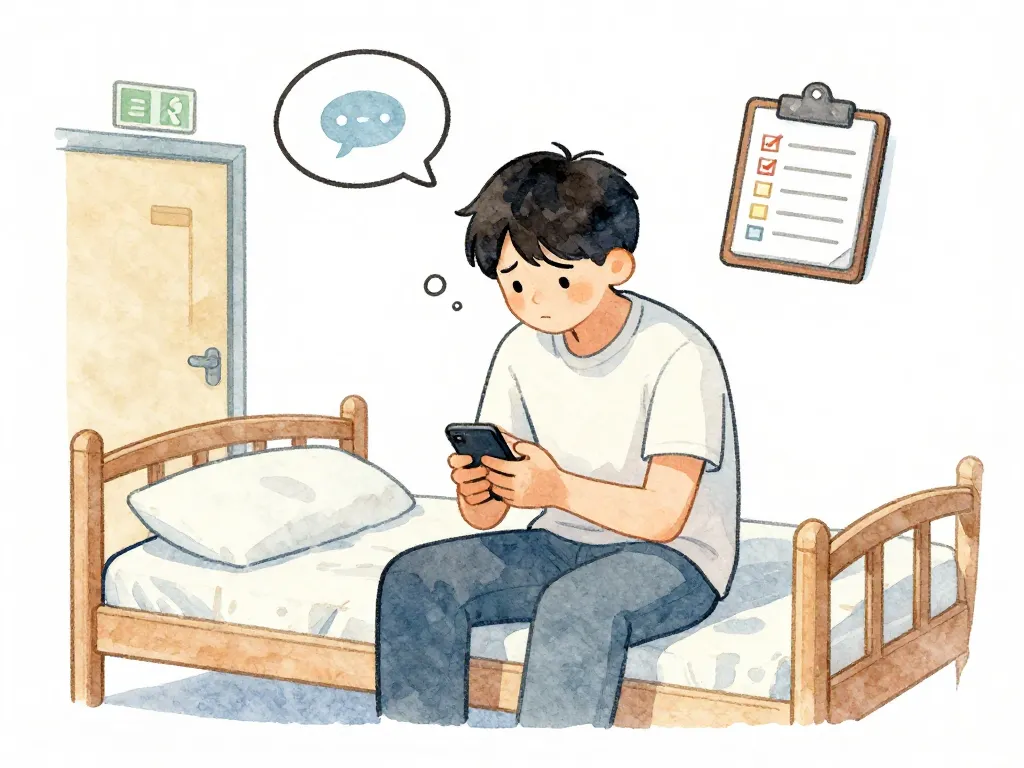
Before you do anything, take a step back and get honest with yourself about the nature of the problem. Not all bad college roommate situations are the same, and the right response depends on what's actually happening.
The Annoying vs. The Unacceptable
There's a meaningful difference between a roommate who leaves dishes in the sink and a roommate who brings people into your shared space in ways that make you feel unsafe. Get clear on which category you're in:
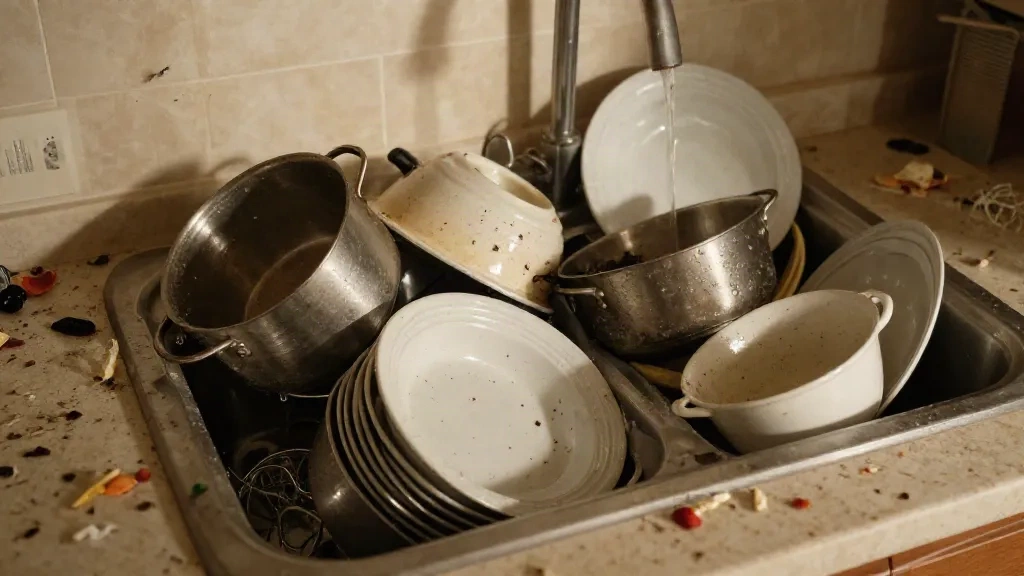
- Annoying but manageable: Different sleep schedules, messiness, playing music without headphones, borrowing things without asking, being a little too chatty when you need to study.
- Serious and boundary-crossing: Consistently having overnight guests without discussion, using your belongings without permission and damaging them, making hostile or discriminatory remarks, substance use that affects your space, or refusing to acknowledge any problem exists.
Annoying problems usually have practical solutions. Serious problems may require intervention from your RA or housing office — and possibly a room change.
Check Your Own Assumptions
This part is uncomfortable but necessary. Ask yourself a few honest questions:
- Have I actually told my roommate this bothers me, or have I just been silently fuming?
- Am I expecting my roommate to read my mind about preferences I've never stated?
- Is this a pattern, or did it happen once and I'm already catastrophizing?
One student — let's call her Priya — spent six weeks resenting her roommate for turning on the overhead light at 6 a.m. every morning. When she finally brought it up, her roommate was genuinely surprised. "Why didn't you say something? I'll use my desk lamp." Six weeks of resentment, solved in ten seconds.
Not every situation resolves this easily. But many do, and you owe it to yourself to try the direct route first.
How to Have the Conversation (Without Making Things Worse)
The talk itself is where most people either avoid the issue entirely or handle it in a way that escalates things. Here's a framework that actually works.

Step 1: Pick the Right Moment
Do not bring up a problem: - In the heat of the moment ("Can you PLEASE stop slamming the door?") - Right before either of you has an exam or deadline - Via passive-aggressive text message - In front of other people
Instead, say something like: "Hey, can we set aside 15 minutes this week to talk about how the room setup is working? Nothing dramatic — I just want to make sure we're both comfortable."
This framing is neutral, specific, and gives your roommate time to prepare rather than feel ambushed.
Step 2: Lead with Observations, Not Accusations
There's a reason "you always" and "you never" statements backfire — they put people on the defensive instantly. Compare these two approaches:
- ❌ "You're so inconsiderate. You never think about anyone but yourself."
- ✅ "I've noticed I'm having trouble sleeping when there are calls happening after midnight. Can we figure out a system that works for both of us?"
The second version describes the impact on you without assigning motive. It invites problem-solving rather than defensiveness.
Step 3: Propose Specific Solutions (Not Just Complaints)
Coming to the conversation with concrete ideas shows good faith and makes it easier for your roommate to say yes:
- "What if we agree on quiet hours from 11 p.m. to 7 a.m.?"
- "Could we take turns deciding when to have guests over?"
- "I'm fine with sharing the mini-fridge, but can we each keep our stuff on a designated shelf?"
Specific proposals give the other person something to react to, which is far more productive than the vague "we need to figure this out."
Step 4: Write It Down
This is the step almost everyone skips — and it's the one that matters most for preventing the same conflict from resurfacing.
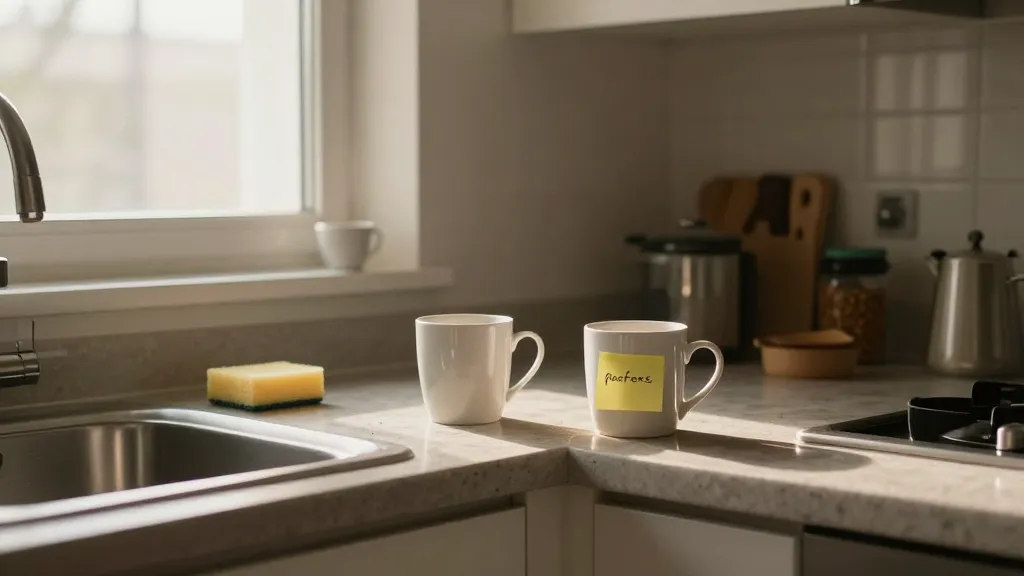
After your conversation, type up what you agreed to. It doesn't need to be formal. A shared Google Doc, a note on your phones, or even a whiteboard on the back of your door will work. The point is to create a shared reference so that three weeks later, nobody can say, "I don't remember agreeing to that."
Tools like Servanda can help roommates create clear written agreements and revisit them when circumstances change — which is useful because what works in September may not work in November.
When Your Roommate Won't Engage
Sometimes the problem isn't that you haven't tried — it's that your roommate refuses to have the conversation, dismisses your concerns, or agrees to changes and then immediately ignores them.
This is one of the most demoralizing places to be, and it's where many students get stuck in a cycle of frustration and self-doubt.
Recognize the Pattern
If you've had the conversation more than twice about the same issue, and nothing has changed, you're not dealing with a communication problem. You're dealing with a roommate who has decided their comfort matters more than yours. That's important information.
Bring in Your RA
This is literally what Resident Advisors are trained for. Despite what it might feel like, going to your RA is not "tattling" — it's using the system your university set up because they know roommate conflicts happen constantly.
When you talk to your RA:
- Be specific. Don't say "my roommate is terrible." Say "my roommate has had overnight guests four times this week without discussing it, and I've asked twice for us to set some ground rules."
- Bring your documentation. If you've been keeping notes (and you should be), share dates and details.
- State what you want. Whether that's a mediated conversation, a formal roommate agreement, or a room change — know your ask before you walk in.
Your RA can facilitate a structured conversation, document the situation for housing, and help you understand your options.
Should You Request a Room Change?
This is the question that haunts most students dealing with a bad college roommate: Should I just request a move?
The honest answer: it depends. Here's a framework for thinking through it.
Consider a Room Change If:
- Your physical safety or mental health is being affected
- Your roommate has made discriminatory, harassing, or threatening comments
- You've attempted direct conversation and RA mediation with no improvement
- The conflict is so consuming that your academic performance is suffering
- Your roommate is engaging in illegal activity in your shared space
Think Twice Before Requesting a Change If:
- You've never actually told your roommate what's bothering you
- The issue is about personality differences rather than boundary violations
- You're hoping a new roommate will be "perfect" (spoiler: they'll have their own quirks)
- You're in the first two weeks — some friction is normal as two strangers learn to share 200 square feet
What the Process Actually Looks Like
Most universities require you to demonstrate that you've attempted to resolve the conflict before approving a room change. That typically means:
- Documentation of conversations with your roommate
- At least one mediated session through your RA or housing office
- A written request explaining the situation
Timelines vary. Some schools can move you within a week; others have waiting lists. Talk to your housing office early so you understand the process at your specific school.
The Parent Perspective: When Your Kid Calls Home Upset
If you're a parent reading this because your student just called in tears about their roommate, a few things worth knowing:
Resist the urge to call the housing office yourself. Your student needs to learn to advocate for themselves, and most universities won't discuss housing situations with parents anyway due to FERPA.
Validate, then strategize. Your kid doesn't need to hear "well, in the real world you'll deal with difficult people." They know that. What they need is someone to say, "That sounds really frustrating. What do you think your options are?" and then help them think through next steps.
Ask about the full picture. Sometimes the roommate complaint is really about homesickness, social anxiety, or academic stress that's getting funneled into the most tangible problem in their life. Gently explore what else is going on.
Encourage them to use campus resources. RA. Housing office. Counseling center. These exist for exactly this reason.
Building a Better Setup for Next Year
If you survive freshman year with a difficult roommate, you've earned hard-won knowledge about what you actually need in a living situation. Use it.
For Sophomore Housing Decisions:
- Be brutally honest about your habits. If you're a light sleeper who studies in silence, don't room with your fun-but-chaotic friend from the third floor just because you get along at parties.
- Have the awkward conversations before you commit. Cleanliness standards, guest policies, sleep schedules, study habits, noise tolerance — discuss all of it before signing a housing agreement together.
- Don't assume friendship means compatibility. Some of the worst roommate situations happen between close friends who discover that "great to hang out with" and "great to live with" are completely different categories.
Protecting Your Mental Health in the Meantime
While you're working through a bad roommate situation, you still need to function. Some practical survival strategies:
- Find a second home base. The library, a coffee shop, a friend's common room, a campus lounge — identify places where you can study and decompress away from your room.
- Invest in noise-canceling headphones or earplugs. Seriously. A $30 pair of earplugs can be the difference between sleeping and not sleeping.
- Maintain your own routines. Don't let your roommate's chaos dictate when you eat, sleep, or study.
- Talk to someone. A friend, a counselor, a family member. Bottling up frustration makes everything worse.
- Set an internal timeline. "I'm going to try X approach for two weeks. If nothing changes, I'm going to the housing office." Having a deadline prevents you from drifting indefinitely in a bad situation.
Frequently Asked Questions
How long should I give a bad roommate situation before requesting a change?
Most housing professionals recommend giving it at least three to four weeks, provided there are no safety concerns. That window gives both of you time to adjust and allows for at least one or two structured conversations. If you've made genuine efforts and nothing has improved after a month, it's reasonable to explore a room change.
Can I request a specific person when I switch rooms?
It depends on your university's policy. Some schools will let you swap into a room with a friend if there's mutual agreement and space available. Others assign you to the next open bed. Contact your housing office directly to ask — the answer varies widely.
What if my roommate is my friend and the living situation is ruining the friendship?
This is painfully common. The best thing you can do is separate the friendship from the living arrangement. Have an honest conversation: "I value our friendship, and I'm worried that the roommate stuff is putting strain on it. What if we looked into different rooms for next semester so we can go back to just being friends?" Most people are relieved when someone says this out loud.
Is it normal to hate your college roommate?
Feeling frustrated, annoyed, or even resentful toward a roommate is extremely common — especially in the first semester when you're adjusting to college life and sharing a small space with a stranger. "Hating" your roommate doesn't make you a bad person. But it is a signal that something needs to change, whether that's a conversation, a boundary, or a new living situation.
Will requesting a room change go on my record or affect my housing priority?
At most universities, no. Room change requests are handled by housing and residence life and don't appear on academic records. They also typically don't affect your housing lottery standing for future years. But policies differ, so ask your specific housing office to be sure.
Moving Forward
A bad college roommate situation feels all-consuming when you're in the middle of it — but it's also temporary. Whether you resolve things through a direct conversation, a mediated agreement, or a room change, this experience teaches you something genuinely valuable: how to identify your own boundaries, advocate for your needs, and make hard decisions when a situation isn't working.
None of that is comfortable in the moment. But every student who's navigated a difficult roommate comes out the other side with a clearer sense of what they need, what they're willing to tolerate, and how to share space with another human being — skills that matter long after college ends.
Start with one step today: name the specific problem, pick a time to talk, and write down what you'd want to change. That's enough. You don't have to fix everything at once. You just have to stop pretending it's fine when it isn't.