Roommate Horror Stories: What To Do When It's You
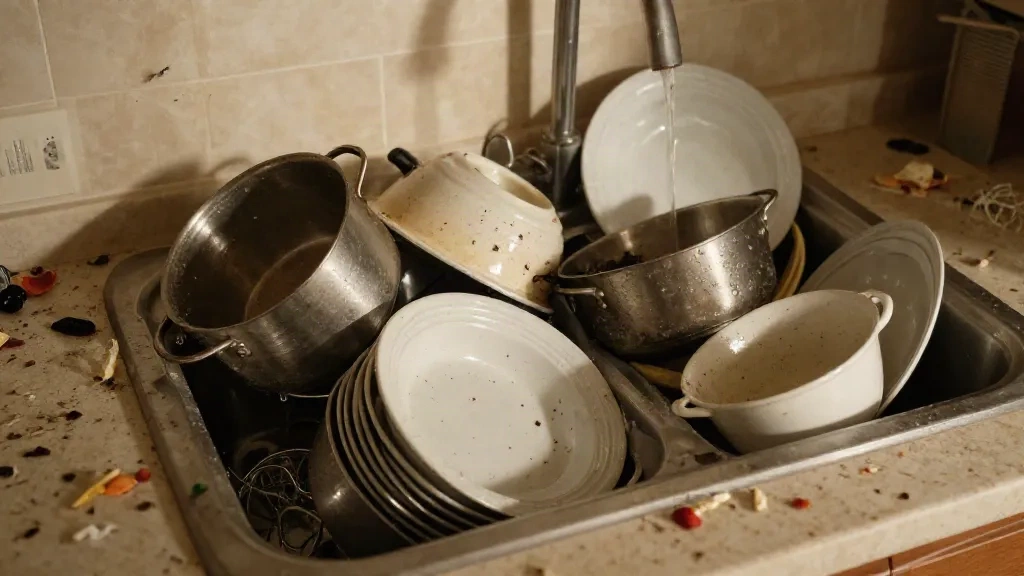
You found the dishes in the sink again. Not from today — from five days ago. There's a crust forming on the mac and cheese pot that could qualify as a geological event. Your roommate's boyfriend has been sleeping on the couch for two weeks straight, eating your groceries, and nobody asked if that was okay. You've dropped hints. You've sighed loudly. You've texted your group chat a dozen times. Nothing's changed.
Here's the uncomfortable truth: most roommate horror stories don't start with villains. They start with two normal people who never figured out how to share space. And if you're reading this, you're probably living one of those stories right now.
This article pairs real (anonymized) roommate horror stories with specific, expert-backed steps you can take — not someday, but today — to de-escalate, set boundaries, and actually fix what's broken.
Key Takeaways
- Most roommate horror stories escalate because of avoidance, not malice. The longer you wait to address something, the harder the conversation becomes.
- Written agreements aren't overkill — they're protection. Even a simple shared document covering chores, guests, and shared expenses prevents 80% of recurring conflicts.
- Use "the script" method for hard conversations. Planning your opening sentence and framing the issue around shared needs (not blame) dramatically changes outcomes.
- Know when a situation has crossed from annoying to unsafe. Some roommate problems require landlord involvement, lease review, or even legal advice — not just a chat.
- Document everything that matters. Texts, photos, and written records protect you if a conflict escalates beyond what a conversation can solve.

Horror Story #1: The Phantom Mess Maker
The Scenario
"My roommate, let's call her Sam, would cook elaborate meals at 11 p.m. and leave every single pot, pan, and utensil piled in the sink. I'm talking grease-splattered stovetop, food scraps on the counter, the works. When I finally said something, she said, 'Oh, I always clean up in the morning.' But morning never came. After three weeks, we had fruit flies."
Sound familiar? The messy roommate is the single most common character in roommate horror stories, and it's also the conflict most people handle badly — either by saying nothing for months or by exploding in frustration.
What To Do When It's You
Step 1: Name the specific problem, not the person.
Don't say: "You're so messy and it's disgusting."
Do say: "The dishes from last night are still in the sink, and I noticed we're getting fruit flies. Can we figure out a system?"
The difference matters. The first version makes your roommate the problem. The second version makes the situation the problem and invites collaboration.
Step 2: Propose a concrete system, not a vague standard.
Vague: "Let's just keep things cleaner."
Concrete: "What if we both agree to wash our dishes within two hours of cooking? And we alternate wiping down the stove each Sunday?"
People don't resist systems — they resist being told they're the dirty one.
Step 3: Write it down.
This doesn't need to be a formal contract. A shared note on your phones, a whiteboard on the fridge, or a simple chore chart works. The act of writing it creates accountability without nagging. Tools like Servanda help roommates create written agreements that prevent future conflicts, which is especially useful when you want something more structured than a sticky note but less intense than a legal document.
Horror Story #2: The Uninvited Guest Who Never Leaves
The Scenario
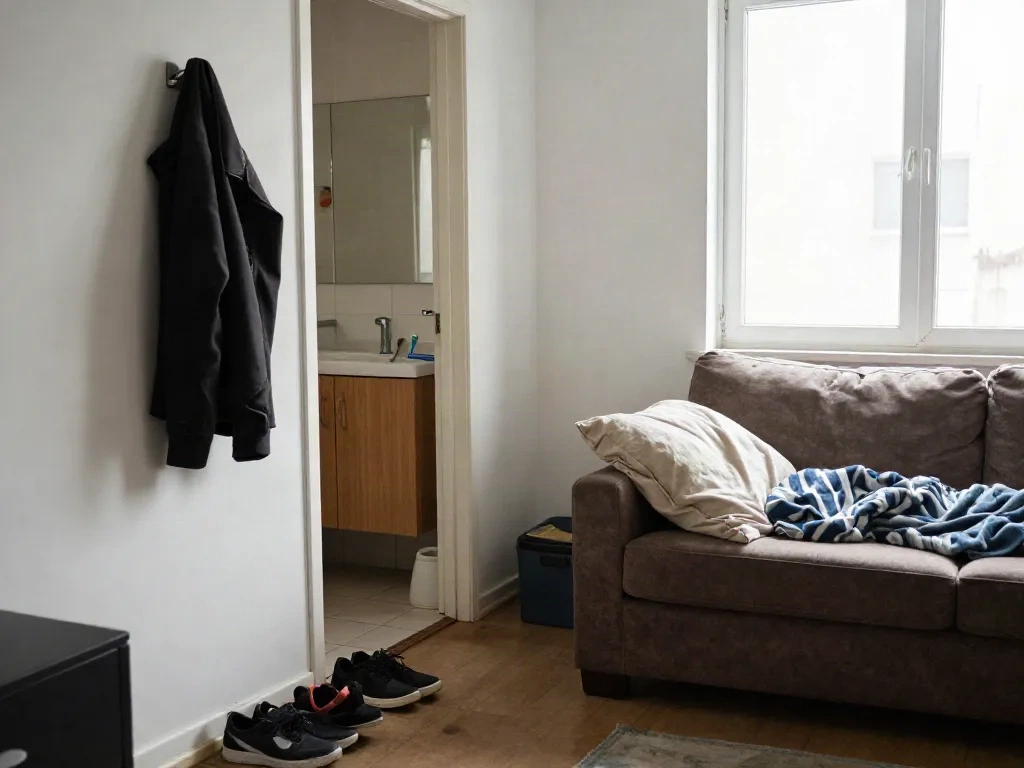
"My roommate's partner started coming over on weekends. Fine. Then it was three nights a week. Then they had a toothbrush in our bathroom, their leftovers in our fridge, and they were there when my roommate wasn't even home. I was paying for a two-person apartment and living with three people."
The "unofficial third roommate" is one of those roommate boundary violations that creeps in gradually. By the time you notice, it feels too late to say anything.
What To Do When It's You
Step 1: Acknowledge this is genuinely awkward — then have the conversation anyway.
Your opening line matters. Try: "Hey, I like [partner's name] — this isn't about them as a person. But I've noticed they're here most nights, and it's starting to feel like our two-person space is set up for three. Can we talk about guest expectations?"
Step 2: Set specific, measurable limits.
Don't leave it at "maybe they could come over less." That means something different to everyone.
Instead, agree on: - Maximum overnight stays per week (e.g., 2–3 nights) - Whether guests can be there when the roommate isn't home (many people reasonably say no) - Shared resource boundaries — if a guest is eating shared food or increasing utility costs, how does that get addressed?
Step 3: Reference your lease.
Many leases have guest policies — maximum consecutive nights, requirements for adding occupants. This isn't about being legalistic; it's about having an external reference point so you're not the bad guy. "I checked our lease and it says guests can't stay more than X nights per month" is a lot easier to say than "I don't want your partner here."
Horror Story #3: The Money Problem Nobody Wants to Talk About
The Scenario
"We split groceries 50/50, except I'm vegetarian and my roommate eats steak three times a week. We split utilities evenly, but he runs the AC at 65 degrees all summer and I work from home so I get blamed for the electricity bill. Every money conversation turned into a fight, so we just stopped having them. Now I resent every meal he cooks."
Financial conflicts between roommates have a special toxicity because they compound. Every unresolved dollar adds to the resentment pile.
What To Do When It's You
Step 1: Separate shared costs from individual costs.
Not everything needs to be split 50/50. In fact, forcing a 50/50 split on things that aren't used equally is a recipe for resentment.
Try this framework: - Truly shared items (toilet paper, dish soap, cleaning supplies): Split equally. - Groceries: Buy separately unless you genuinely eat the same things in the same quantities. - Utilities: If usage is drastically uneven, discuss a proportional split or agree on thermostat boundaries.
Step 2: Use a shared expense app for transparency.
Splitwise, Venmo, or even a simple shared spreadsheet removes the awkwardness of "you owe me" conversations. When expenses are visible to both parties in real time, there's nothing to argue about.
Step 3: Have a monthly money check-in.
Set a recurring five-minute conversation — first of the month, same time. Review what's been spent, address anything that feels off, adjust if needed. It's not a confrontation. It's maintenance.
Horror Story #4: The Noise That Never Stops
The Scenario
"My roommate started a podcast. In the living room. At 10 p.m. on weeknights. With guests. I have a 7 a.m. shift. When I asked if he could record earlier or use his bedroom, he said I was 'stifling his creativity.' We didn't speak for two weeks after that."
Noise conflicts are tricky because people genuinely experience sound differently. What feels like background noise to one person is unbearable to another, and neither person is wrong.
What To Do When It's You
Step 1: Lead with your need, not their fault.
"I need to be asleep by 10:30 to function at work" is harder to argue with than "You're too loud."
Step 2: Negotiate quiet hours.
Industry standard in most apartment complexes is 10 p.m. to 8 a.m. Use that as a starting point. Agree on: - Quiet hours for shared spaces - Headphone expectations (after a certain hour, headphones on) - Advance notice for anything louder than normal (recording sessions, small gatherings)
Step 3: Offer a compromise that costs you something too.
This signals good faith. "I'll wear earplugs and I won't complain about weekend noise before midnight, but weeknights I need things quiet by 10" shows you're not just demanding — you're meeting halfway.
When the Horror Story Becomes Serious: Knowing the Line
Not every roommate conflict is a miscommunication that can be solved with a conversation and a chore chart. Some situations cross into territory that requires more than interpersonal skills.
Red flags that mean it's time to escalate:
- You feel physically unsafe. Aggression, threats, or intimidation are not communication problems. Contact your landlord, campus housing office, or local authorities.
- Your roommate is damaging your property. Document with photos and timestamps. Notify your landlord in writing.
- Lease violations are occurring (unauthorized occupants, illegal activity, subletting without permission). This is your landlord's responsibility to enforce.
- You've tried direct conversation and written agreements, and nothing changed. At this point, you may need to involve a neutral third party — a mediator, resident advisor, or landlord.
How to document roommate conflicts:
- Save all relevant text messages and emails. Don't delete heated exchanges — they're your record.
- Take timestamped photos of property damage, messes left in shared spaces, or lease violations.
- Follow up verbal conversations with a text summary. "Just want to confirm what we agreed on today — [summary]." This creates a paper trail without being aggressive.
- Keep a brief log of recurring issues with dates. This is especially important if you end up needing to break a lease or involve a landlord.
The Conversation Framework That Actually Works
For every horror story above, the hardest part isn't identifying the problem — it's starting the conversation. Here's a framework that works for almost any roommate conflict:
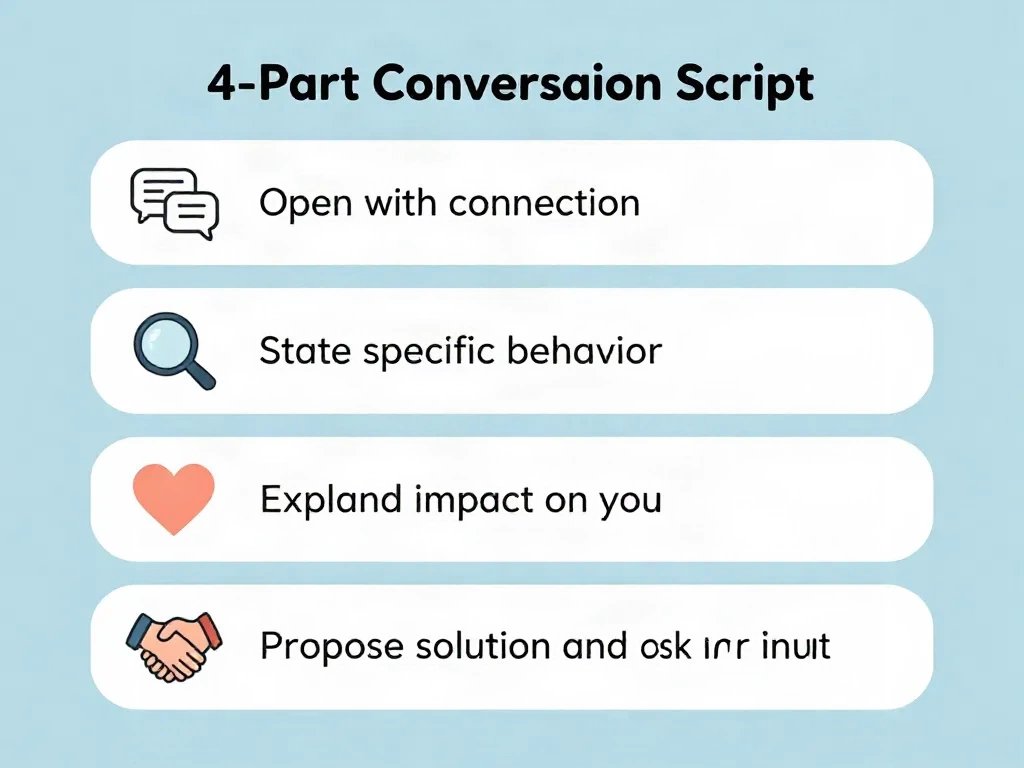
The 4-Part Script
- Open with connection, not complaint. "Hey, do you have a few minutes? I want to talk about something before it becomes a bigger deal."
- State the specific behavior, not a character judgment. "I've noticed [specific thing] happening [frequency]."
- Explain the impact on you. "It's affecting me because [concrete reason]."
- Propose a solution and ask for input. "I was thinking we could try [specific idea]. What do you think, or do you have a different idea?"
This framework works because it respects the other person's autonomy, avoids triggering defensiveness, and focuses on solving the problem rather than assigning blame.
Timing Matters
- Don't have the conversation when you're angry. Wait at least an hour after the triggering event.
- Don't ambush them walking in the door. Ask when they have time.
- Don't do it over text for serious issues. Tone gets lost. Text is fine for logistics ("Can we talk tonight?") but not for the actual conversation.
- Don't have it in front of other people. Private conversations produce better results.
FAQ
How do I deal with a messy roommate without starting a fight?
Focus on proposing a specific system (like a chore rotation or a "clean within two hours" rule) rather than criticizing their habits. Frame it as solving a shared problem, not correcting their behavior. Writing the agreement down — even casually — makes it easier to reference later without it feeling personal.
Can I break my lease because of a bad roommate?
It depends on your lease terms and local tenant laws. Some leases allow early termination with a penalty, and some jurisdictions allow lease-breaking if you can document safety concerns or lease violations by a co-tenant. Talk to your landlord first, and consider consulting a local tenant rights organization for free advice.
What should a roommate agreement include?
At minimum: cleaning responsibilities and frequency, guest policies (overnight limits, advance notice), quiet hours, how shared expenses are split, and how you'll handle disagreements. The more specific, the better — "clean the bathroom" is vague, but "scrub the bathroom every Saturday, alternating weeks" is enforceable.
Is it normal to not get along with your roommate?
Absolutely. Living with another person is inherently difficult, even when you're compatible on paper. The goal isn't to become best friends — it's to create a shared living situation that works for both of you. Many successful roommate relationships are politely functional rather than deeply personal, and that's completely fine.
How do I bring up a roommate problem I've been ignoring for months?
Acknowledge the delay honestly: "I should have brought this up sooner, and that's on me. But I want to address it now before it gets worse." Then use the 4-Part Script above. Most roommates will respect the honesty, and it prevents them from responding with "Why didn't you say something earlier?" because you've already answered that.
Moving Forward: From Horror Story to Livable Situation
Roommate horror stories make for great internet content, but living through one is genuinely miserable. The good news is that most of these situations — the messes, the uninvited guests, the money tension, the noise — are solvable. Not perfectly, and not overnight, but solvable.
The common thread in every solution above is the same: stop avoiding and start being specific. Vague frustration produces vague results. Specific requests, written agreements, and clear boundaries produce livable situations.
You don't need your roommate to be your best friend. You need them to wash their dishes within two hours, keep overnight guests to three nights a week, and turn the podcast off by 10 p.m. on weeknights.
That's not too much to ask. And now you know exactly how to ask for it.