How to Tell Your Roommate They're Bothering You
It's 11:47 p.m. on a Tuesday. You have an 8 a.m. meeting. Your roommate is in the kitchen, blending what sounds like gravel and playing a podcast at full volume. You lie in bed, jaw clenched, composing a furious text you'll never send. You tell yourself you'll say something tomorrow. Tomorrow comes. You don't.
If this sounds familiar, you're not alone. A 2023 survey by Apartment List found that nearly 40% of renters reported at least one significant conflict with a roommate in the past year, and the most common regret was waiting too long to address it. The problem isn't that you're a pushover. The problem is that no one ever gave you the actual words to use.
This article fixes that. Below, you'll find specific, word-for-word scripts to tell your roommate they're bothering you—scripts designed to be honest without being hostile, clear without being cruel.
Key Takeaways
- Use "I" statements that focus on your experience ("I have trouble sleeping when...") rather than accusations ("You always...").
- Choose the right moment: Never bring up an issue mid-conflict, when you're angry, or when either of you is rushing out the door.
- Lead with the relationship: Start by affirming that you value living together before raising the issue.
- Propose a specific solution, not just a complaint—it gives your roommate something concrete to agree to.
- Follow up in writing: A brief text summarizing what you agreed on prevents "I don't remember that" conversations later.

Why Most People Avoid the Conversation (and Why That Backfires)
Let's be honest about what's happening when you don't speak up. It's not laziness. It's a very rational fear: you're afraid the conversation will make things worse, that your roommate will get defensive, or that you'll come across as dramatic.
So instead, you do one of these:
- The Slow Simmer: You say nothing for weeks, then snap over something minor. Your roommate is blindsided.
- The Passive Signal: You slam cabinets, sigh loudly, or leave pointed sticky notes. Your roommate either doesn't notice or notices and resents you for it.
- The Vent-to-Everyone-Else Move: You tell your friends, your partner, your coworker—everyone except the person who can actually change the behavior.
All three strategies feel safer in the moment, but they guarantee a worse outcome. Resentment compounds. Small annoyances harden into genuine dislike. By the time you finally say something, you're not addressing dirty dishes—you're relitigating three months of accumulated grievances.
The alternative isn't a dramatic confrontation. It's a short, calm, specific conversation. And it starts with preparation.
Step 1: Get Clear on What's Actually Bothering You
Before you say anything, spend five minutes getting precise. Vague frustration leads to vague complaints, which lead to vague promises that nothing changes.
Ask yourself:
- What is the specific behavior? Not "they're inconsiderate," but "they leave dishes in the sink for 3+ days" or "they have friends over past midnight on weeknights."
- How does it concretely affect me? Not "it's annoying," but "I can't use the kitchen" or "I can't sleep before work."
- What would a realistic fix look like? Not "be a better roommate" but "wash dishes within 24 hours" or "keep gatherings to weekends."
This clarity isn't just for you. It's a gift to your roommate. It's much easier to respond to "Could you move your shoes off the hallway floor?" than "Could you be more respectful of shared spaces?"
Step 2: Choose Your Moment Deliberately
Timing can make or break this conversation. Here's a quick guide:
Good times to bring it up
- During a relaxed moment at home when you're both free (a weekend morning, after dinner)
- When you're both sober
- When neither of you has somewhere to be in the next 30 minutes
Bad times to bring it up
- Right when the annoying thing is happening (emotions are too high)
- As your roommate is walking out the door
- Over text for anything beyond minor logistical issues
- When you're angry, hungry, or exhausted
A simple opener to set the stage:
"Hey, do you have a few minutes to talk about something? Nothing major—I just want to make sure we're on the same page about a house thing."
That single sentence does a lot of work. It asks permission. It lowers the stakes. It frames the conversation as collaborative.

Step 3: Use These Word-for-Word Scripts
Here's where the article earns its keep. Below are real scripts for the most common roommate irritations. Each one follows a simple four-part structure:
- Affirm: Acknowledge the relationship.
- Describe: State the specific behavior without judgment.
- Impact: Explain how it affects you using an "I" statement.
- Request: Propose a concrete solution.
Script: Noise at Night
"Hey, I want to bring something up because I'd rather talk about it than let it become a thing. Some nights when you're up late with music or the TV, the sound carries into my room, and I have a hard time falling asleep before work. Would you be open to using headphones after 11 on weeknights? I'm totally flexible on the exact time—I just want to find something that works for both of us."
Script: Dishes and Kitchen Cleanliness
"I know this might seem small, but I want to mention it before it starts bugging me more than it should. When dishes sit in the sink for a few days, I feel like I can't really use the kitchen comfortably. Could we try a rule where we each wash our stuff within a day? I'm happy to do the same—keep me honest if I slip."
Script: Guests and Overnight Visitors
"I like that you have people over—it's your home too. But when someone stays over multiple nights in a row, it starts to feel like we have an unofficial third roommate, and it changes the dynamic for me. Can we talk about a general guideline? Like, maybe a heads-up if someone will be here more than two nights in a week?"
Script: Borrowing Things Without Asking
"This is kind of awkward to bring up, but I'd rather say something now than get quietly annoyed. I've noticed some of my food disappearing from the fridge, and it throws off my week when I'm counting on ingredients being there. Can we keep our groceries separate, or at least shoot each other a text before grabbing something?"
Script: Temperature and Thermostat Wars
"I know we probably have different comfort zones with the temperature. Lately I've been really cold at night, and I noticed the thermostat keeps getting turned down. Can we find a middle ground—maybe set it at 69 and both adjust with blankets or fans? I'm open to whatever works."
The Universal Template
If your situation isn't listed, use this fill-in-the-blank structure:
"Hey, I wanted to bring up [specific thing] because I'd rather address it early. When [specific behavior happens], I [specific impact on you]. Would you be open to [specific proposed solution]? I'm flexible—I just want something that works for both of us."
Notice what every script has in common: no "you always," no "you never," no character judgments. Each one describes a behavior, not a personality flaw.
Step 4: Handle Their Response (Even If It's Defensive)
Even perfectly worded scripts can land badly. Here's how to handle the three most common reactions:
If they get defensive
Resist the urge to backpedal or over-apologize. Instead:
"I'm not trying to criticize you—I just wanted to bring it up so we can figure it out together. What do you think would be a fair solution?"
Redirecting toward a solution moves the conversation out of blame territory.
If they minimize the issue
("It's not that loud" / "I barely leave any dishes")
"I hear you, and I know our experiences of it might be different. For me, it's been affecting [sleep/comfort/ability to use the kitchen], and I'd love to find a compromise."
You don't have to prove your case in court. Your experience is valid even if they don't share it.
If they agree but nothing changes
This is the most common frustration. Give it a week, then follow up calmly:
"Hey, I wanted to check in on what we talked about last week. I've still been running into [the issue]. Can we revisit the plan? Maybe we need to adjust it."
If the pattern continues after two or three follow-ups, it may be time to formalize the agreement. Tools like Servanda can help roommates create clear, written agreements that prevent the "I forgot" or "I didn't think it was a big deal" loop from repeating.
Step 5: Follow Up With a Quick Written Summary
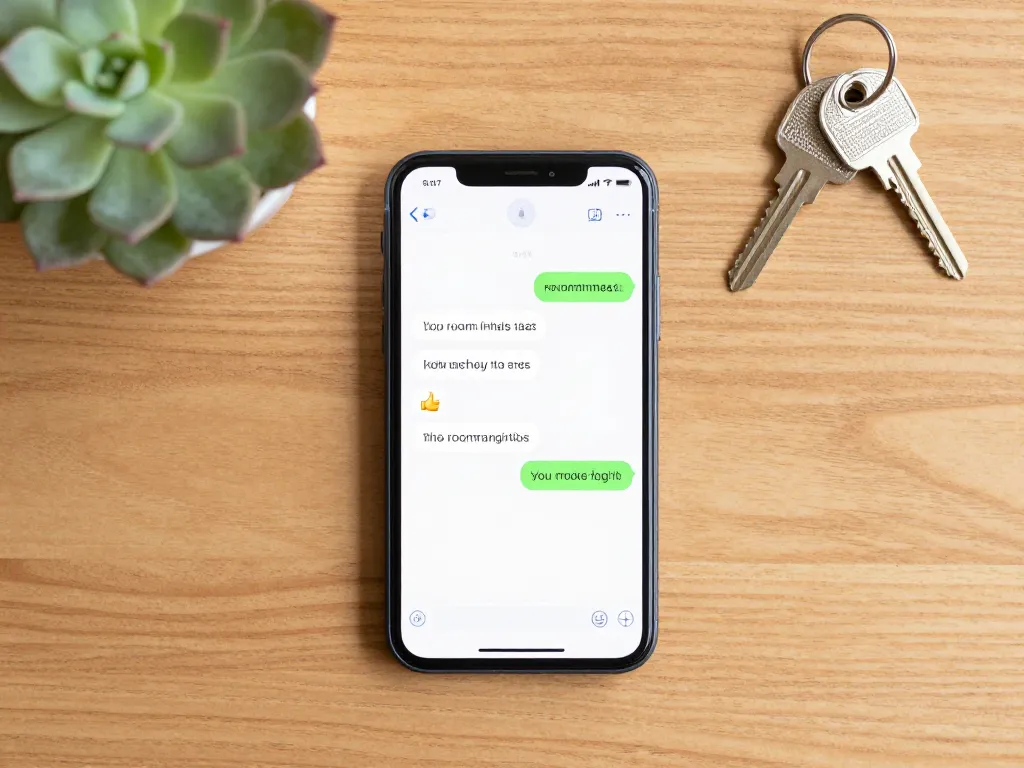
This step takes 30 seconds and prevents 90% of repeat conflicts. After your conversation, send a casual text:
"Hey, glad we talked! Just so we're both on the same page: headphones after 11 on weeknights, and I'll be better about wiping down the counter after cooking. Sound right?"
This isn't legalistic. It's practical. Memory is unreliable, especially about conversations we found slightly uncomfortable. A quick text creates a shared reference point.
Common Mistakes That Derail the Conversation
Even with good intentions, a few habits can sabotage your effort:
- Stacking issues: Address one thing at a time. If you bring up dishes, noise, guests, and thermostat settings in a single conversation, your roommate will feel attacked and shut down.
- Using "always" and "never": These words trigger defensiveness instantly. Replace them with "sometimes" or "lately" or "a few times this week."
- Apologizing for having the conversation: "Sorry, this is probably stupid, but..." undermines your point before you even make it. You're allowed to have needs.
- Expecting a personality change: You're asking for a behavior adjustment, not a new roommate. Keep your requests small and concrete.
- Having the conversation while angry: If you're heated, wait. Even 24 hours can shift your perspective from "I want to scream" to "I want to solve this."
When the Conversation Isn't Enough
Sometimes a calm, direct conversation doesn't resolve things—and that's not a failure on your part. Consider escalating if:
- Your roommate refuses to engage or dismisses your concerns repeatedly
- The behavior involves lease violations, safety issues, or harassment
- You've had the same conversation three or more times without change
Escalation might look like:
- A written agreement with specific terms both of you sign off on
- Involving your landlord or RA if the issue affects habitability or violates house rules
- Mediation through a neutral third party (many universities and community centers offer this free)
- Planning an exit if the living situation is genuinely unsalvageable
Not every roommate relationship can be saved, and recognizing that is its own form of maturity.
FAQ
How do I tell my roommate something bothers me without sounding rude?
Focus on your own experience rather than their character. Say "I have trouble concentrating when there's loud music in the afternoon" instead of "You're so loud." Framing the conversation around impact rather than blame makes it much easier for the other person to hear you without getting defensive.
Should I text my roommate about an issue or talk in person?
For anything beyond a quick logistical ask (like "can you move your car?"), talk in person. Tone is invisible in text, and even well-intentioned messages can read as passive-aggressive. A face-to-face conversation lets both of you read body language, ask clarifying questions, and reach a resolution faster.
What if my roommate gets angry when I bring something up?
Stay calm, don't match their energy, and avoid retreating from your point entirely. You might say, "I can see this caught you off guard—we can come back to it later if you'd prefer." Giving them space to process can prevent a blow-up while still making it clear the conversation needs to happen.
How long should I wait before saying something to my roommate?
As a rule of thumb, if something bothers you more than twice, bring it up. Waiting for the "perfect moment" usually means waiting until you're resentful. A slightly awkward conversation now is almost always better than an explosive one in two months.
Can a roommate agreement actually help?
Yes—especially for recurring issues. A written agreement removes ambiguity about expectations around noise, guests, chores, and shared expenses. It doesn't have to be formal or legal; even a shared Google Doc with a few bullet points gives both of you a reference point when memories differ.
Moving Forward
Telling your roommate they're bothering you isn't about winning an argument or proving a point. It's about protecting a living situation that works for both of you. The scripts in this article aren't magic, but they do something important: they give you a starting place when your brain goes blank and your instinct says "just let it go."
Don't let it go. Address it early, address it specifically, and address it with the assumption that your roommate would rather know than not know. Most people aren't trying to be difficult—they're just unaware.
The conversation you're dreading will probably last five minutes. The resentment you're carrying will last the entire lease. Pick the five minutes.