The Intimacy Argument: What It's Really About
It starts with a sigh. Maybe a turned back in bed, or a comment that lands like a grenade at the breakfast table: "We never have sex anymore." The other partner stiffens. Defensive walls go up. Someone says, "That's all you ever think about," and within minutes you're both standing in the kitchen replaying the same exhausting script you've performed a dozen times before.
The intimacy argument is one of the most common — and most misunderstood — conflicts couples face. It shows up in nearly every long-term relationship at some point, and it almost always leaves both people feeling worse than before. One partner feels rejected. The other feels pressured. Nobody feels heard.
But the fight about sex is almost never actually about sex. It's a surface-level proxy for something deeper, something harder to name. And until you decode what the intimacy argument is really asking for, you'll keep having it on repeat.
Why the Intimacy Argument Keeps Happening
If you've had this fight more than once, you already know it doesn't resolve easily. That's because the standard approach — one person asking for more sex, the other explaining why they don't want it — addresses the symptom, not the cause.
Research from the Gottman Institute consistently shows that sexual satisfaction in relationships is deeply intertwined with emotional connection. Couples who feel emotionally safe with each other tend to have more fulfilling intimate lives. When that safety erodes — through unresolved resentment, life stress, or simple neglect — physical intimacy is often the first thing to go.
The intimacy argument keeps recycling because both partners are reacting to what they see (behavior) rather than what they feel (unmet needs). Without that deeper translation, the conversation never reaches the actual problem.
The Pursue-Withdraw Trap
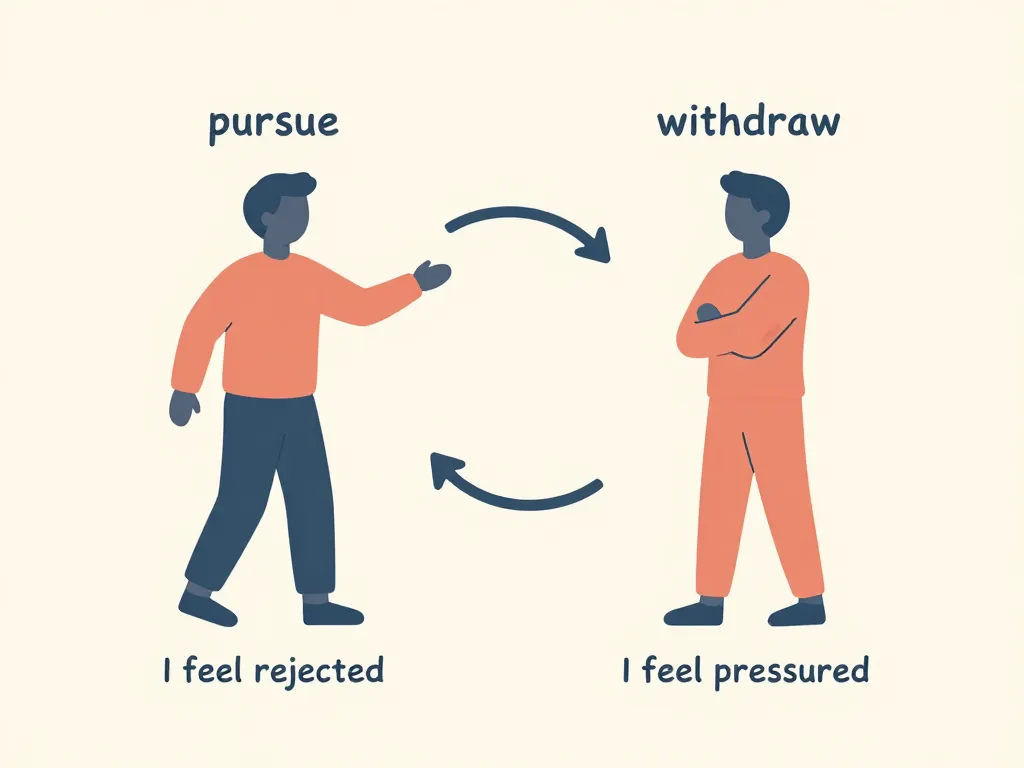
Most intimacy arguments follow a predictable pattern that therapists call the "pursue-withdraw" cycle:
- Partner A feels disconnected and initiates — either by making a sexual advance or bringing up the lack of intimacy.
- Partner B feels pressured or criticized, and pulls back — either deflecting, getting defensive, or shutting down.
- Partner A interprets the withdrawal as rejection, which confirms their fear: "You don't want me."
- Partner B interprets the pursuit as pressure, which confirms their fear: "You only want me for one thing."
- Both partners retreat to their corners, more disconnected than before.
Both people want the same thing — closeness — but their strategies for getting it are pushing them further apart.
What the Intimacy Argument Is Actually About
Beneath the surface of "we don't have enough sex" or "you're always pressuring me," there are deeper emotional needs at play. Here are the most common ones:
1. The Need to Feel Desired
For many people (regardless of gender), sexual initiation is one of the primary ways they feel wanted. When a partner consistently declines or seems uninterested, it doesn't just feel like a "no" to sex. It feels like a "no" to them — to their attractiveness, their worth, their place in the relationship.
What it sounds like on the surface: "You never want to have sex with me."
What it means underneath: "I need to know you still find me desirable. I need to feel like you choose me."
2. The Need for Emotional Safety
The partner who pulls away from physical intimacy often isn't lacking desire — they're lacking safety. Unresolved arguments, feeling unappreciated, carrying a disproportionate domestic load, or sensing that affection is only offered as a pathway to sex can all make physical vulnerability feel risky rather than inviting.
What it sounds like on the surface: "I'm just not in the mood."
What it means underneath: "I can't open up physically when I don't feel emotionally connected to you."
3. The Need for Autonomy
Sometimes the intimacy argument is about control. When one partner feels that their body or their choices are being monitored, scored, or guilted, they instinctively resist — not because they don't want closeness, but because they need to feel that closeness is freely chosen, not obligated.
What it sounds like on the surface: "Stop keeping score."
What it means underneath: "I need to feel like I have agency in this relationship, including over my own body."
4. The Need to Matter Beyond Function
For some partners, the fight is about role fatigue. They feel reduced to a function — a co-parent, a housekeeper, a paycheck — and intimacy has become one more item on someone's to-do list. They long to be seen as a whole person, not just a partner who "should" be performing.
What it sounds like on the surface: "You don't even notice me until you want something."
What it means underneath: "I need to feel valued for who I am, not just for what I provide."
How to Decode Your Own Intimacy Argument
Every couple's version of this fight has its own fingerprint. To understand yours, try this exercise — separately first, then together.
Step 1: Name the Surface Complaint
Write down the thing you typically say (or think) during the argument. Be honest, even if it's not flattering. Examples:
- "You never initiate."
- "All you care about is sex."
- "I feel like your roommate, not your partner."
- "I can't be intimate when I'm angry at you."
Step 2: Identify the Emotion Underneath
For each surface complaint, ask yourself: What feeling does this trigger in me? Common emotions include:
- Loneliness
- Shame
- Resentment
- Fear of abandonment
- Feeling invisible
- Loss of identity
Step 3: Trace It to a Need
Now translate that emotion into a need. Use the format: "I need to feel ______ in this relationship."
- "I need to feel wanted."
- "I need to feel safe."
- "I need to feel respected."
- "I need to feel like a priority."
Step 4: Share Without Blame
When you come to your partner, lead with the need — not the complaint. There is a profound difference between:
- "You never touch me anymore" (accusation)
- "I've been feeling disconnected from you and I miss feeling close" (vulnerability)
The first invites defense. The second invites empathy.
Rebuilding Intimacy: Practical Steps That Actually Work
Once you've identified what the intimacy argument is really about, you can start addressing the actual problem.
Remove the Scoreboard
Stop tracking frequency. The moment intimacy becomes a metric, it becomes a performance — and performance kills desire. Pay attention to how often you feel connected. Those are different numbers, and the second one matters more.
Rebuild the Bridge Outside the Bedroom
Intimacy doesn't start when the lights go off. It's built in the hundreds of micro-moments throughout the day:
- A genuine "how are you?" with eye contact
- A six-second kiss (long enough to actually feel something)
- Putting your phone down when your partner is talking
- A text in the middle of the day that says "I was thinking about you" — with no agenda attached
- Sharing something vulnerable about your day
These small deposits into what researchers call the "emotional bank account" are what make physical intimacy feel natural rather than forced.
Separate Affection from Initiation
One of the most damaging patterns happens when all physical touch becomes loaded — when a hug is always a prelude, when a back rub always has an implied question mark. The partner on the receiving end learns to avoid all touch to avoid the pressure, which starves both people of affection.
The fix: deliberately offer physical affection — holding hands, cuddling on the couch, a kiss on the forehead — with zero expectation that it leads anywhere. Over time, this rebuilds the safety that makes desire possible.

Have the Conversation You've Been Avoiding
Sit down at a neutral time (not in bed, not after a rejection, not during a fight) and have an honest conversation using the framework from the exercise above. Some ground rules:
- Use "I" statements exclusively. "I feel disconnected" instead of "You make me feel unwanted."
- Listen to understand, not to rebut. Your partner's experience is real, even if it's different from yours.
- Acknowledge what's true. If your partner says they feel pressured, acknowledge it and ask what would help.
- Make specific, small requests — not sweeping demands. "Could we spend 20 minutes together after the kids are in bed?" is actionable. "I need you to be more affectionate" is not.
For couples who find these conversations derail into old patterns, AI-powered mediation tools like Servanda can provide structured frameworks that keep the discussion focused on needs and agreements rather than grievances.
Address the Resentment Backlog
Sometimes intimacy has dried up because there's a dam of unresolved resentment blocking it. If there are unaddressed issues — the fight about in-laws that never got resolved, the financial decision that still stings, the parenting disagreement simmering beneath the surface — those need attention before physical intimacy can flow again. You can't build closeness on a foundation of unspoken anger.
When the Intimacy Argument Is About Something Bigger
Sometimes the intimacy gap isn't about emotional needs at all:
- Medical factors: Hormonal changes, medication side effects (especially antidepressants), chronic pain, and postpartum shifts all affect desire. These aren't relationship problems — they're health conversations.
- Mental health: Depression and anxiety suppress libido. If one partner is struggling, the compassionate response is support, not pressure.
- Trauma history: Past sexual trauma can profoundly affect a person's relationship with physical intimacy. This usually requires professional support.
- Fundamental incompatibility: In some cases, partners have genuinely different baseline levels of desire. This requires honest negotiation and often professional guidance.
If any of these factors are present, couples therapy with a provider who specializes in intimacy (such as a Certified Sex Therapist) is often the most effective path forward.
FAQ
Is it normal to argue about intimacy in a long-term relationship?
Absolutely. Research consistently shows that mismatched desire is one of the top sources of conflict in committed relationships. It doesn't mean your relationship is broken — it means you're navigating a genuinely difficult dimension of partnership that nearly every couple faces at some point.
How do I bring up the lack of intimacy without making my partner defensive?
Lead with your own feelings rather than your partner's behavior. Saying "I've been feeling distant from you and I miss our closeness" is far more likely to open a real conversation than "You never want to have sex." Choose a calm, neutral moment — not right after a rejection or during a disagreement.
What if my partner and I have completely different sex drives?
Differing levels of desire are common and manageable. The goal isn't to make both partners want exactly the same thing — it's to find a rhythm that feels respectful and connecting for both people. This usually means the higher-desire partner practices patience while the lower-desire partner makes intentional space for intimacy. A couples therapist can help you negotiate this with care.
Can a relationship survive without physical intimacy?
Some relationships thrive with very little or no sexual contact, especially if both partners are aligned on that. The problem arises when one partner wants intimacy and the other doesn't — that asymmetry, left unaddressed, tends to breed resentment. The key is honest conversation about what each person needs and whether compromise is possible.
When should we see a therapist about intimacy issues?
Consider professional help if you've been stuck in the same argument for months, if one or both of you have stopped trying, if there's a history of trauma involved, or if the disconnection is starting to erode your overall relationship satisfaction. A good therapist isn't a last resort — it's a smart investment in your partnership.
Moving Forward Together
The intimacy argument will keep showing up as long as it's treated as a debate about frequency. It's not. It's two people — both longing for connection — struggling to say what they actually need.
The way out is more honesty. It's the willingness to look underneath the complaint, find the vulnerable need hiding there, and offer it to your partner with open hands instead of clenched fists.
This isn't something you fix in one conversation. It's a practice — an ongoing decision to stay curious about each other instead of retreating into assumptions. Every couple who has come through the other side of this particular fight will tell you the same thing: the intimacy they found on the other side was deeper, more honest, and more sustaining than what they had before.
Start small. Start tonight. Not in the bedroom — just on the couch, phone down, turning toward each other and asking: "What do you need from me right now?"
That question, asked genuinely, is the most intimate thing you can do.