Long-Distance Coparenting: Making Video Calls Work
It's 6:45 PM and your seven-year-old is squirming on the couch, half-watching the tablet propped against a pillow. Your coparent's face fills the screen, mid-sentence about something that happened at school — but your child is already reaching for a toy dinosaur on the floor. The call dissolves into awkward silence, then a forced "Say goodbye to Daddy," and everyone hangs up feeling a little worse than before.
Video calls can work. Not perfectly every time, but consistently enough to sustain a real, meaningful connection. It just takes more intention — and less improvisation — than most of us assume.
Why Long-Distance Coparenting Video Calls Feel So Hard
Before jumping into fixes, it helps to understand why these calls go sideways in the first place. It's rarely about bad intentions from either parent.
Kids Aren't Wired for Passive Screens
Adults can sustain a face-to-face video conversation because we understand the social contract: you talk, I listen, I respond. Children under ten haven't fully developed that capacity. A video call asks them to sit still, maintain eye contact with a flat screen, and carry a conversation — three things that are genuinely difficult for developing brains.
This isn't your child rejecting their other parent. It's a developmental reality.
The Resident Parent Feels Like a Stage Manager
If you're the parent physically present during the call, you may find yourself constantly prompting: "Tell Mom about your art project." "Hold the tablet up." "Stop making that noise." It's exhausting, and it can start to feel like you're doing emotional labor to facilitate a relationship that isn't yours to manage.
From the other side, the pressure to make every call count can be paralyzing. You have maybe 20 minutes, the child is distracted, and you're trying to be fun, connected, and present — all through a five-inch screen.
Setting Up a Video Call Schedule That Actually Sticks
The single most impactful thing you can do for long-distance coparenting video calls is to make them predictable. Not spontaneous. Not "whenever works." Predictable.
Choose Consistency Over Frequency
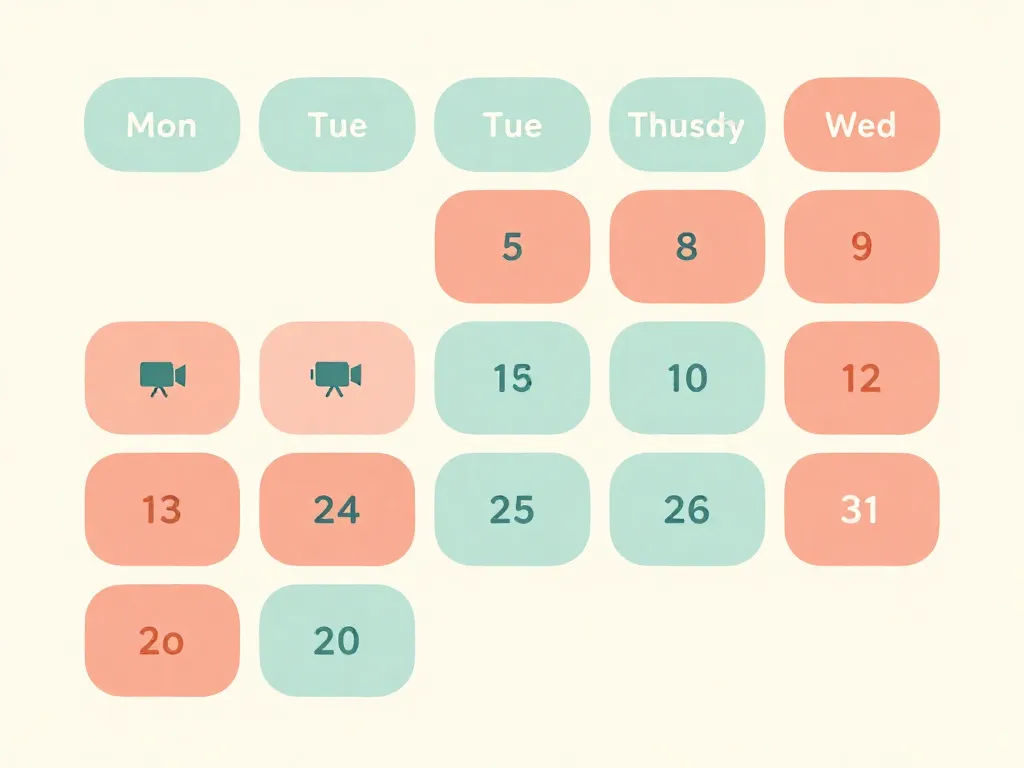
Three reliable calls per week at the same time will do more for your child than daily calls that happen erratically. Children thrive on routine, and knowing that "Tuesday, Thursday, and Sunday at 6:30 is when I talk to Dad" gives the call a place in their mental landscape.
Consider these factors when setting your schedule:
- Your child's energy levels: Right after school is usually difficult. Post-dinner but before the bedtime routine often works best.
- Time zone realities: If there's a significant time difference, find the overlap that's least disruptive to the child's rhythm — even if it's inconvenient for one or both adults.
- Activity conflicts: Soccer practice on Thursdays? Don't schedule a call for Thursday. Build around the child's life, not around the adults' preferences.
- A buffer window: Instead of "6:30 sharp," agree on "between 6:15 and 6:45." This small flexibility prevents a five-minute delay from becoming a coparenting conflict.
Put It in Writing
Verbal agreements about call schedules erode fast, especially when coparenting tensions are present. Write down the agreed schedule, including what happens when a call is missed — who initiates the makeup call, how much notice is needed to reschedule, and what counts as a legitimate reason to cancel.
Tools like Servanda can help coparents formalize these kinds of agreements in writing, so there's a clear reference point when misunderstandings arise — rather than a he-said-she-said spiral.
Making the Calls Themselves Better
Once you have a schedule, the next challenge is making those 15-to-25-minute windows actually feel good for everyone involved — especially the child.
The most common mistake distant parents make is turning the call into a Q&A session:
"How was school?" Fine. "What did you do?" Nothing. "Did you have fun?" Yeah.
This isn't connection. It's interrogation, and kids shut down fast.
Instead, try activity-based calls — doing something together rather than just talking. Here are options that work across age groups:
- Read a book together: The distant parent reads aloud while the child follows along with their own copy. This works beautifully for ages 3–9.
- Play an online game: Simple multiplayer games (think drawing games, trivia, or Minecraft) give you a shared focus and natural conversation starters.
- Cook or bake the same recipe: Each person gathers the ingredients beforehand, and you make it together on screen. Messy, fun, and memorable.
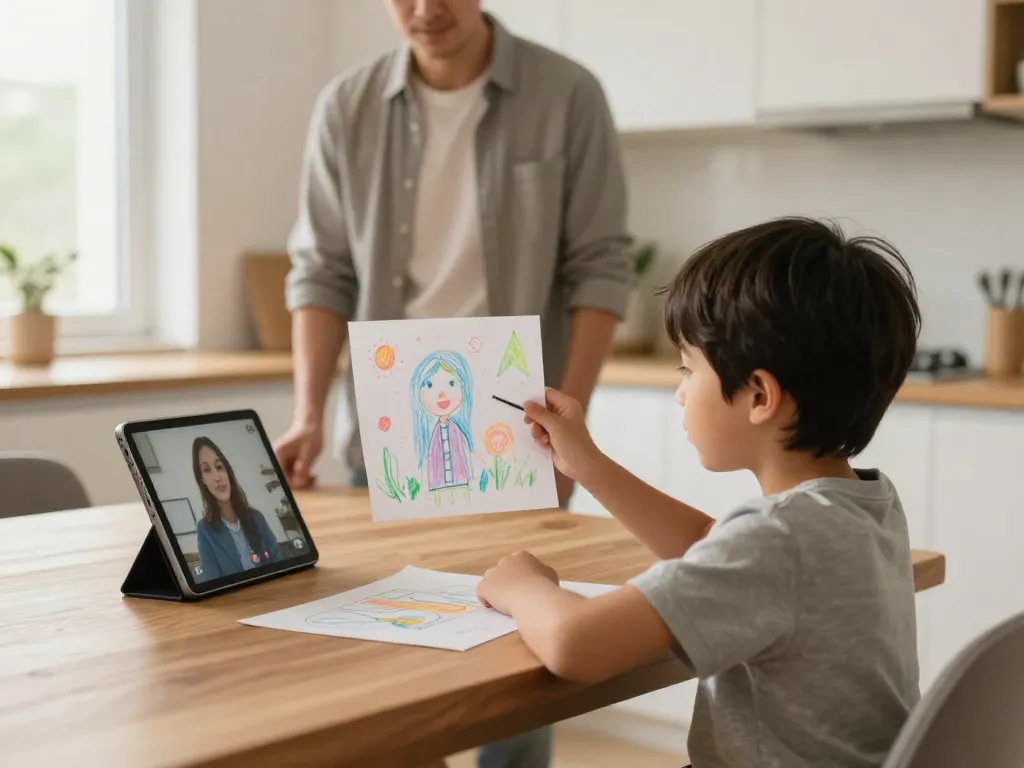
- Show and tell: Let the child lead. "Show me your room." "Show me what you built today." "Show me your weirdest face." Giving them control shifts the dynamic entirely.
- Homework help: Not glamorous, but surprisingly connecting. Working through a math problem together is a form of being present.
Let Silence Exist
Not every moment of the call needs to be filled with conversation. Some of the most natural parent-child time in the physical world is spent in parallel — sitting in the same room, each doing their own thing. You can replicate this on video.
A distant parent coloring on their end while the child colors on theirs, both on screen, barely talking — that's still connection. It's presence without pressure.
Match the Call Length to the Child's Age
| Age |
Realistic Call Length |
| 2–4 |
5–10 minutes |
| 5–7 |
10–15 minutes |
| 8–11 |
15–25 minutes |
| 12+ |
Varies widely; follow their lead |
Ending a call while it's still going well is far better than dragging it out until the child is begging to leave. A short, warm call beats a long, painful one every time.
What the Resident Parent Can (and Shouldn't) Do
The parent who is physically present during the call holds enormous power over how it goes — and that's a complicated position to be in.

Do: Set the Stage, Then Step Back
Your job is logistics, not emotional facilitation. That means:
- Making sure the device is charged and the Wi-Fi works
- Having the child available at the agreed time (not mid-bath or mid-meltdown)
- Positioning the device so the child can move naturally — a tablet propped on a table is better than one held in a small hand
Once the call starts, leave the room if possible. Your presence changes the dynamic. The child may perform for you, seek your approval, or feel caught between two parents. Giving them private space with their other parent communicates trust — to both the child and your coparent.
Don't: Weaponize the Calls
Using video calls as leverage — canceling them as punishment, hovering to monitor what's said, or coaching the child on what to share or withhold — causes real harm. Even if your coparent has done things that make you angry. Even if you feel the calls are disruptive.
The calls belong to your child's relationship with their other parent. Protecting that relationship, even when it's inconvenient or emotionally complicated for you, is one of the most important things you can do as a parent.
Do: Communicate Logistics Separately
If you need to discuss scheduling changes, behavioral concerns, or financial matters with your coparent, do it through a separate channel — text, email, or a coparenting app. Never use the child's video call as a segue into adult business. "Oh, while I have you, we need to talk about the insurance" turns the child into an audience for parental negotiations.
Handling Common Problems
"My Child Doesn't Want to Get on the Call"
This happens, and it doesn't necessarily mean something is wrong. Kids resist calls for the same reasons they resist anything routine — they'd rather keep playing, they're tired, or they're in a mood.
What helps:
- Treat it like brushing teeth — it's not optional, but it doesn't have to be a battle. A calm "It's time for your call with Mom" without excessive negotiation works better than a five-minute persuasion campaign.
- Explore the resistance if it persists. If your child consistently dreads the calls, something may need to change — the timing, the format, or the emotional tone. Talk to your child privately and listen without steering.
- Don't force performance. Getting the child on the call is reasonable. Requiring them to be cheerful, chatty, or enthusiastic is not.
"My Coparent Keeps Missing Calls"
Repeated missed calls erode a child's trust and can feel like rejection, even when the reasons are logistical. If this becomes a pattern:
- Document the missed calls (dates, times, whether notice was given)
- Raise the issue directly with your coparent in writing, focusing on the child's experience rather than your frustration: "Alex waited for 20 minutes on Tuesday and seemed disappointed. Can we find a way to make the schedule more reliable?"
- If the pattern continues despite direct conversation, it may be worth revisiting the arrangement through mediation or a parenting coordinator
"The Calls Always Turn Into Conflict Between Us"
If the handoff moments — the beginning or end of the call — consistently become tense, build in a buffer. Have the child already on the device and connected before the distant parent joins. End the call with a simple "Bye, love you" without the parents needing to speak to each other at all.
Your coparenting communication can happen entirely asynchronously. The video call is for the child. Period.
Tech Troubles
Bad Wi-Fi, dead batteries, frozen screens — technology fails at the worst moments. Reduce the friction:
- Designate one platform and stick with it. Switching between FaceTime, Zoom, and WhatsApp introduces unnecessary variables.
- Have a backup plan: If the video call drops, switch to a regular phone call rather than abandoning the session.
- Test the setup periodically, especially if your child is at a new location (grandparents' house, camp, etc.).
As Your Child Grows: Adapting the Approach
What works for a four-year-old won't work for a twelve-year-old. Be prepared to evolve.
Toddlers and preschoolers need very short calls with lots of visual stimulation — puppets, songs, silly faces. Don't expect conversation. Expect giggles or confusion, and count both as wins.
Elementary-aged kids benefit from the activity-based calls described above. They're also old enough to have some input on timing and format. Ask them what they'd enjoy doing on the call.
Tweens and teens will increasingly want autonomy over their communication. This is the age where the scheduled call may shift to texting, voice messages, or spontaneous FaceTimes initiated by the child. Let it. The goal was never to maintain a rigid video call schedule forever — it was to build a relationship strong enough that the child wants to stay connected on their own terms.
Conclusion
Long-distance coparenting video calls aren't a perfect substitute for being in the same room. No screen can replicate a bedtime hug or a shared laugh over dinner. But they can be something real — a consistent thread of connection that tells your child, "I'm here, even when I'm far away."
The ingredients aren't complicated: a predictable schedule, age-appropriate expectations, activities over interrogations, and two parents willing to protect the call as the child's space. Not every call will be magical. Some will be five awkward minutes of a kid showing you the ceiling while they roll around on the floor. That's okay. Showing up consistently matters more than showing up perfectly.
Start with one change this week — just one — and build from there. The distance is real, but it doesn't have to define the relationship.
Frequently Asked Questions
What do you do when your child refuses to get on a video call with the other parent?
Treat the call like any other non-negotiable routine — calmly let your child know it's time without over-negotiating or bribing. If the resistance becomes a consistent pattern, explore whether the timing, format, or emotional tone of the calls needs to change by talking privately with your child and listening without steering.
How long should a video call be for a young child in a long-distance coparenting situation?
For toddlers and preschoolers (ages 2–4), aim for just 5–10 minutes with lots of visual stimulation like puppets, songs, or silly faces. Ending on a high note is far more valuable than pushing for a longer call that leaves the child frustrated or checked out.
How do you handle a coparent who keeps missing scheduled video calls?
Document each missed call with dates, times, and whether advance notice was given, then raise the issue in writing by focusing on your child's experience rather than your own frustration. If the pattern continues after direct conversation, consider involving a mediator or parenting coordinator to create a more reliable arrangement.
Should the custodial parent stay in the room during the video call?
No — stepping out of the room is one of the most helpful things the resident parent can do. Your presence can cause the child to perform, seek your approval, or feel caught between two parents, so giving them private space signals trust to both your child and your coparent.
What's the best time of day to schedule coparenting video calls?
Post-dinner but before the bedtime routine tends to work best for most children, since energy levels right after school are usually too low for a quality call. Build the schedule around your child's natural rhythm and existing activities, even if the timing is less convenient for the adults.