Love Languages Revisited: Why Yours Changed
Three years ago, Maya would have said her love language was words of affirmation. Her partner, Jalen, knew the script: leave a sticky note on the bathroom mirror, text "thinking about you" at lunch, say "I'm proud of you" after a tough workday. It worked. She felt seen.
Then Maya went back to school, started a demanding graduate program, and began managing the bulk of the household logistics. Slowly, without either of them noticing, something shifted. Jalen's sweet texts started landing flat. What Maya actually craved—someone taking the dishes off her plate, literally and figuratively—looked nothing like the affirmation she once prioritized. Her love languages changed, and neither of them had the vocabulary to talk about it.
Love languages aren't fixed personality traits stamped into you at birth. They evolve. And when couples don't notice the shift, it becomes the invisible engine behind recurring arguments that seem to have no resolution.
What Love Languages Actually Are (and Aren't)
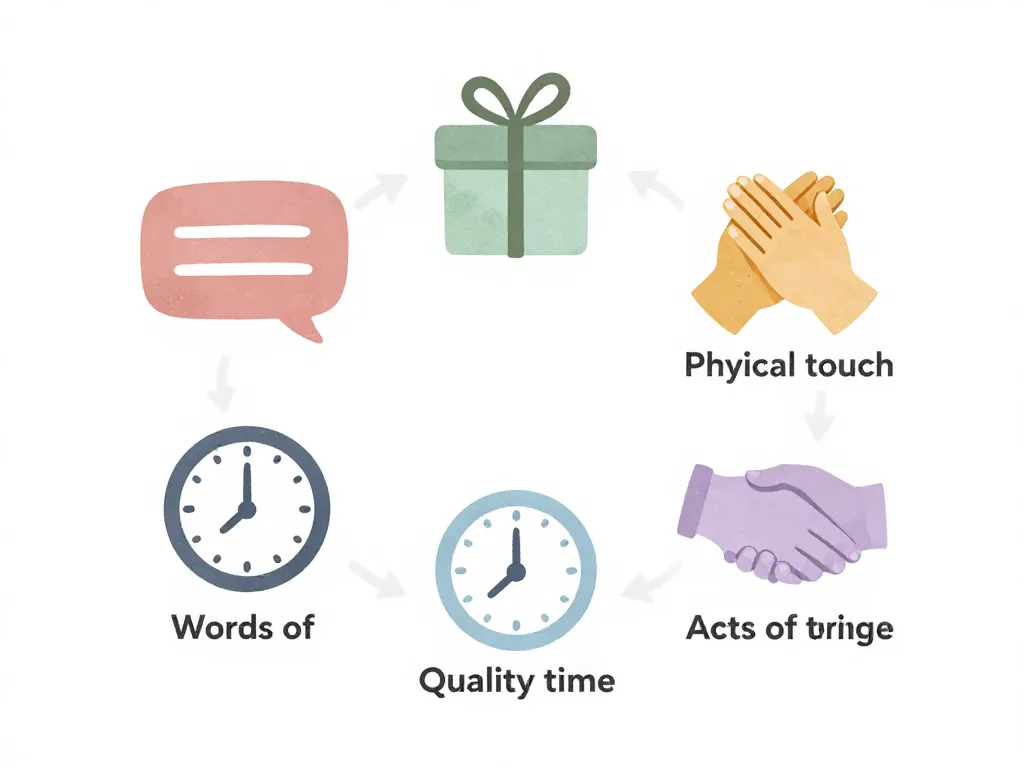
Gary Chapman's original framework identifies five love languages: words of affirmation, acts of service, receiving gifts, quality time, and physical touch. The idea is straightforward—people tend to feel most loved when their partner expresses care in a particular way.
But here's what the popular understanding gets wrong: love languages aren't a permanent diagnosis. They're more like a snapshot of your emotional needs at a given point in your life. Chapman himself has acknowledged that preferences can shift depending on circumstances, life stages, and personal growth.
Thinking of your love language as a fixed identity creates a specific problem: it gives couples a static playbook for a dynamic relationship. You took the quiz in 2019, you both memorized each other's results, and now you're running that same play in 2025—wondering why it doesn't land the way it used to.
The Quiz Trap
Many couples take a love language quiz once—often early in the relationship when everything feels electric—and treat the results like gospel. But consider what was happening in your life when you first answered those questions:
- Were you living alone or with roommates?
- Were you financially stressed or stable?
- Were you physically healthy or dealing with something chronic?
- Did you have young children, or was it just the two of you?
Every one of those variables shapes what you need emotionally. When the variables change, your needs change too.
Why Love Languages Change Over Time
1. Major Life Transitions
Parenthood, career changes, relocation, loss—any significant life event rewires your daily experience and, with it, your emotional priorities.
A partner who once valued quality time above everything might find that after becoming a parent, acts of service feel far more meaningful. It's not that quality time stopped mattering. It's that when you're running on four hours of sleep and someone quietly folds the laundry without being asked, that act is love in its most tangible form.
2. Healing and Personal Growth
Therapy, recovery from trauma, spiritual practice, even aging can shift what you need from a partner.
Consider someone who grew up in a household where affection was conditional. Early in a relationship, they might crave words of affirmation almost desperately because they're trying to fill an old wound. After years of therapy, that wound begins to close. The desperate need for verbal validation softens, and suddenly physical touch or quality time feels more nourishing because they're finally able to receive it without anxiety.
3. Unmet Needs in Other Areas
Sometimes a love language shifts because a different need has gone unaddressed for so long that it becomes urgent.
Think of it like hunger: if you've been well-fed for months, you might say your favorite thing is a great conversation over dinner. But skip a few meals, and suddenly the food matters a lot more than the conversation. Love languages can work similarly. When one emotional need becomes chronically unmet, it rises to the top—not because it's your "true" language, but because it's the one that's starving.
4. Relationship Maturity
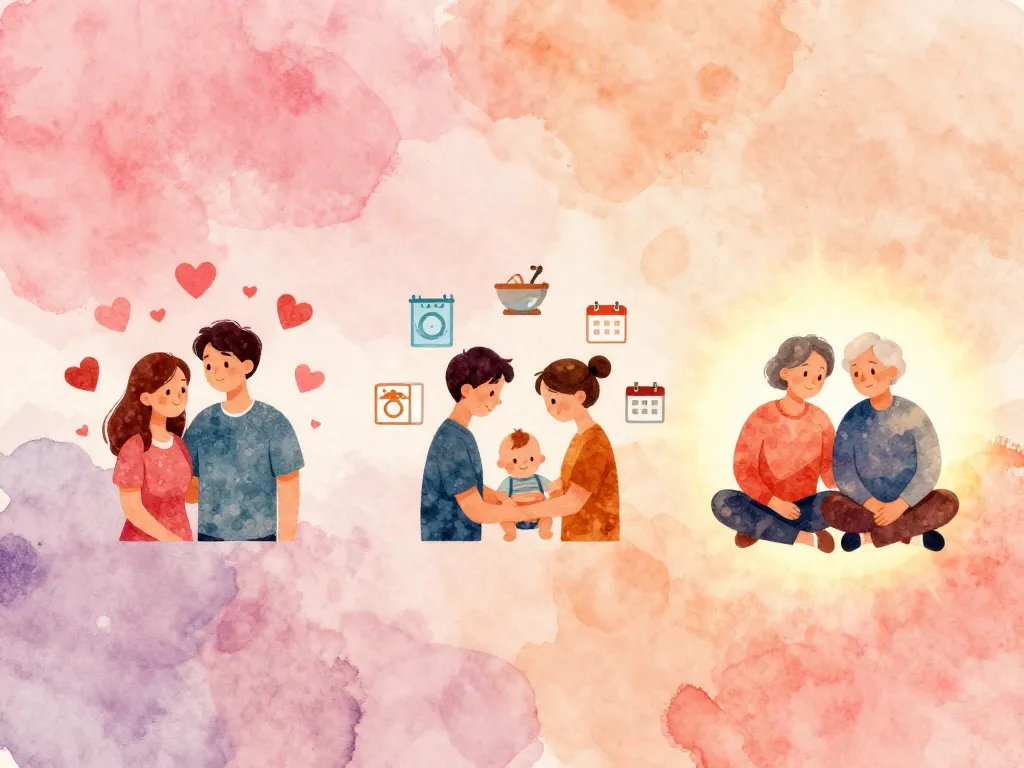
Early-stage relationships thrive on novelty and intensity. Physical touch and quality time often dominate because the relationship itself is the exciting new thing. But as a partnership matures—as you build a life together, share finances, co-parent, navigate illness—the emotional landscape broadens. What feels like love at year one rarely looks the same at year ten, and it shouldn't.
5. Burnout and Stress
Chronic stress doesn't just affect your mood; it reshapes your capacity to receive love. A partner experiencing burnout may not have the bandwidth for long quality-time conversations. What they might need instead is the quiet gift of someone handling the mental load—scheduling the vet appointment, remembering the school permission slip, ordering the groceries.
This doesn't mean they've stopped loving quality time. It means their system is in survival mode, and survival mode has its own love language: relief.
The Conflict Pattern Nobody Talks About
Here's where the recurring arguments come in.
When one partner's love language shifts and neither person recognizes it, a painful cycle begins:
- Partner A keeps expressing love the way that used to work.
- Partner B doesn't feel loved, despite Partner A's genuine effort.
- Partner B starts withdrawing or becoming irritable.
- Partner A feels rejected and confused—"I'm doing everything right, and it's never enough."
- Both partners feel unseen. Resentment builds.
This cycle is destructive because both people are acting in good faith. Partner A is actively trying to show love. Partner B isn't being ungrateful—they're experiencing a real emotional gap. Without the language to name what's happening, the argument becomes about dishes or screen time or who forgot to call the plumber, when it's really about a mismatch in emotional needs that neither person has updated.
A Real-World Example
Daniel and Sam had been together for eight years. Early on, Sam's primary love language was receiving gifts—not extravagant ones, but thoughtful tokens. A book they'd mentioned wanting. Their favorite snack after a bad day. Daniel was great at it.
After Sam's mother passed away, everything shifted. Sam didn't want objects. They wanted presence—someone sitting with them in silence, someone putting a hand on their back while they stared out the window. Daniel kept bringing gifts, trying harder and harder, and Sam kept feeling more and more alone.
It wasn't until a particularly painful argument—Sam snapping "I don't need another candle, I need you"—that they both realized the playbook had changed. Sam's love language had shifted from receiving gifts to physical touch and quality time, and the shift was driven by grief.
How to Catch the Shift Before It Becomes a Fight
Retake the Quiz—Together, Regularly
Not as a one-time diagnostic, but as a recurring conversation starter. Every six months or after a major life change, sit down and revisit the questions together. Compare your new answers to your old ones. Talk about what surprised you.
The quiz itself matters less than the conversation it opens.
Ask the Right Question
Instead of "What's your love language?" try:
- "What made you feel most loved this week?"
- "What's one thing I could do that would really take something off your plate right now?"
- "When was the last time you felt deeply connected to me? What were we doing?"
These questions are grounded in the present. They don't ask your partner to theorize about themselves—they ask them to reflect on recent, lived experience.

Watch for Behavioral Clues
People often express love the way they want to receive it. If your partner has recently started doing more acts of service—handling tasks without being asked, organizing shared spaces—it might signal that acts of service is what they're currently craving.
Pay attention to:
- What your partner does for you unprompted
- What they complain about most (complaints often point to unmet needs)
- What they thank you for most enthusiastically
- What they request, even casually
Create a "Needs Check-In" Ritual
This doesn't have to be formal. It can be a five-minute conversation on a Sunday evening:
- What filled your cup this week? (Identifies what's working)
- What drained it? (Identifies stress points that might be shifting needs)
- What's one thing that would help you feel more supported next week? (Creates a concrete, actionable request)
The ritual works because it normalizes the idea that needs change. It removes the pressure of having one big "state of the relationship" conversation and replaces it with ongoing dialogue.
Separate Identity from Preference
Stop saying "I am a quality time person" and start saying "Right now, quality time is what I need most." This language shift is small but powerful. It gives both you and your partner permission to evolve without feeling like someone is being dishonest or inconsistent.
When the Shift Feels Like a Bigger Problem
Sometimes a love language shift is straightforward—life changed, needs changed, adjust and move on. But sometimes the shift is a symptom of something deeper:
- Emotional withdrawal: If a partner who once craved physical touch suddenly flinches at contact, that's worth exploring gently.
- Chronic resentment: If no expression of love seems to land, the issue may not be how love is expressed but unresolved hurt that's blocking reception entirely.
- Fundamental misalignment: In rare cases, two partners' evolving needs may move in genuinely incompatible directions.
In these situations, structured support—whether from a couples therapist or an AI-powered mediation tool like Servanda—can help you articulate shifting needs without the conversation spiraling into blame.
The Myth of "Speaking the Same Language"
There's a romantic notion that the goal is to find someone who speaks your exact love language fluently. The reality is messier and, honestly, more interesting: the goal is to find someone willing to keep learning your language as it evolves—and to do the same for them.
The couples who navigate love language shifts well aren't the ones who never experience friction. They're the ones who treat friction as information rather than failure. When something stops working, they get curious instead of defensive. They ask "what changed?" instead of "what's wrong with you?"
That curiosity is a love language all its own.
Conclusion
Your love language isn't a personality trait carved in stone—it's a living reflection of your current emotional needs, shaped by your life stage, stress levels, personal growth, and the unique dynamics of your relationship. When those needs shift and nobody names it, the result is a frustrating pattern of well-meaning gestures that miss the mark and arguments that never fully resolve.
The fix isn't dramatic. It's a willingness to stay curious about the person you chose, even—especially—when you think you already know them. Revisit the conversation regularly. Ask specific, present-tense questions. Watch for clues. And give each other the grace to be different people than you were when you first fell in love.
The love language that matters most is the one your partner needs right now.
Frequently Asked Questions
Can your love language really change over time?
Yes. Love languages reflect your current emotional needs, which are shaped by life stage, stress, personal growth, and relationship maturity. Gary Chapman has acknowledged that preferences can shift depending on circumstances, so it's normal for your primary love language to evolve.
How often should couples revisit their love languages?
Every six months or after any major life change such as a new job, becoming a parent, a move, or a significant loss. The goal is to use the conversation as a way to keep both partners current on each other's needs.
Why does my partner's effort to show love not feel like enough anymore?
This often happens when one partner's love language has shifted but neither person has recognized the change. Your partner may still be expressing love the way that worked months or years ago, while your emotional needs have evolved, creating a gap that feels like rejection even though both of you are acting in good faith.
What's the difference between a love language shift and a deeper relationship problem?
A straightforward love language shift usually responds well to open conversation and small adjustments in how you show care. If no expression of love seems to land, if a partner withdraws from previously welcome forms of affection, or if chronic resentment is blocking emotional reception entirely, the shift may signal unresolved hurt that benefits from structured support like couples therapy or guided mediation.
Watch for behavioral clues: notice what your partner does for you without being asked, what they complain about most frequently, and what prompts their most genuine gratitude. People often express love in the way they most want to receive it, so a partner who suddenly starts handling more household tasks unprompted may be signaling that acts of service is their current primary need.