Why Couples Fight About Tone More Than Big Issues
You're loading the dishwasher when your partner walks in and says, "Did you seriously forget to call the electrician again?" The words themselves are a simple question. But the sigh before it, the emphasis on seriously, the slight eye roll—suddenly you're not talking about the electrician anymore. You're defending your character. Ten minutes later, you're both in separate rooms, furious, and neither of you can clearly explain what just happened.
YouGov survey data consistently shows that tone and attitude outrank classic conflict triggers like money, sex, and household chores as the number-one reason couples argue. Yet almost every piece of relationship advice focuses on the big-ticket topics, ignoring the micro-moments that actually light the fuse.
The Data Is Clear: Tone Beats Money, Sex, and Chores
A widely cited YouGov survey found that tone of voice and general attitude was the most common argument trigger among couples—more common than disagreements over finances, intimacy, parenting, or division of labor.
This doesn't mean those bigger issues don't matter. But here's the critical distinction: most couples can navigate a conversation about budgeting or parenting styles when both people feel respected. The conversation derails when one partner perceives contempt, dismissiveness, or condescension in the other's delivery.
In other words, tone is rarely the topic of the argument. It's the accelerant. A calm discussion about whose turn it is to pick up the kids becomes a shouting match not because of the logistics, but because someone felt belittled by the way the question was asked.
Why Relationship Advice Misses This
Most traditional relationship guidance focuses on conflict topics—how to talk about money, how to negotiate household responsibilities, how to align on parenting. But it skips the layer where most arguments actually ignite. You can follow every script in every relationship book, and if your tone signals irritation or superiority, your partner will respond to the tone, not the script.
Why Tone Hits Harder Than Words
Your brain processes vocal tone through the amygdala—the part of the brain responsible for threat detection—before the prefrontal cortex fully decodes the meaning of the words. In practical terms, your body has already entered a stress response before you've consciously understood the sentence.
This is why your partner can say something objectively reasonable—"Can you take out the trash?"—and if the tone carries a whiff of exasperation, your heart rate spikes. Your nervous system is scanning for social threats.
The Contempt Connection
Dr. John Gottman's research at the University of Washington identified contempt—communicated primarily through tone, facial expressions, and body language—as the single strongest predictor of divorce. Not financial stress. Not incompatible values. Contempt. And contempt lives almost entirely in how something is delivered, not in the words themselves.
This is why the phrase "It's not what you said, it's how you said it" isn't a deflection or an emotional overreaction. It's a neurologically accurate description of what's happening.
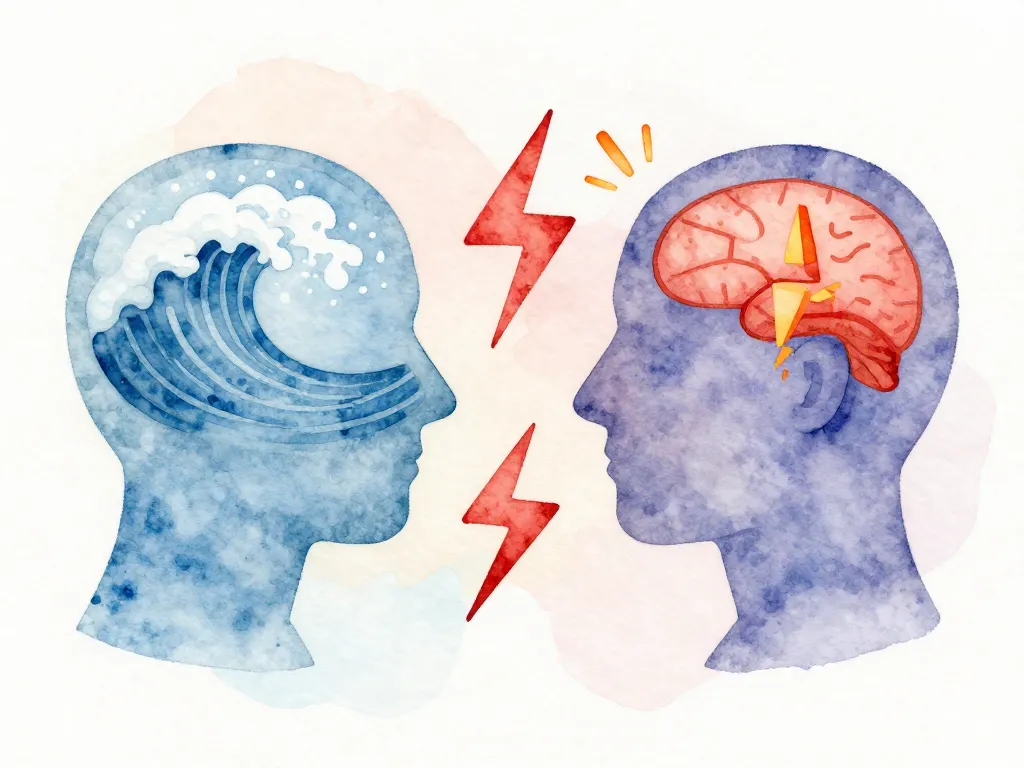
The Escalation Anatomy: How a 10-Second Moment Becomes a 2-Hour Fight
Let's walk through a realistic example.
The Setup: Jamie and Alex have had a long day. Jamie notices the kitchen counter is still cluttered.
The Trigger (3 seconds): Jamie says, "I thought you were going to clean this up," with a flat, clipped tone and a slight head shake.
The Perception (1 second): Alex's brain registers: I'm being criticized. I'm not good enough. I'm being treated like a child.
The Defense (5 seconds): Alex responds, "I've been working all day, but sure, I'll just do everything."
The Escalation (10+ minutes): Now they're arguing about who does more around the house, who respects whom, and whether they even appreciate each other at all.
Notice that the actual issue—a cluttered counter—was never the problem. The problem was that Jamie's tone activated Alex's threat response, and Alex's defensive response activated Jamie's. Within seconds, both nervous systems were in fight mode, and the original topic was irrelevant.
The Tone Trap: Both Partners Are Right
This is what makes tone-based arguments so maddening. Jamie feels justified: the counter is messy, and they're just stating a fact. Alex feels justified: they're being spoken to disrespectfully. Both are correct. Jamie is right about the counter. Alex is right about the tone. And because neither person feels heard on their specific point, the argument loops endlessly.
5 Actionable Strategies to Stop Fighting About Tone
1. The 5-Second Reset
Before you say something to your partner about a frustration, pause for five seconds. During that pause, consciously relax your jaw, drop your shoulders, and take one full breath.
This isn't about suppressing your feelings. It's about giving your prefrontal cortex a chance to catch up with your amygdala. Five seconds is often enough to shift your delivery from clipped and accusatory to direct and neutral.
Try this today: The next time you feel a flash of irritation, count to five before speaking. Notice whether the sentence that comes out at second five sounds different from what would have come out at second zero.
2. Lead With the Need, Not the Critique
Most tone problems stem from framing requests as criticisms. Compare:
- ❌ "You never take out the trash without being asked." (criticism, generalization)
- ✅ "Hey, could you grab the trash on your way out? That would help me." (clear request, collaborative framing)
The first version almost guarantees a defensive response, regardless of your tone. The second version gives your partner a chance to be helpful.
3. Name the Tone Before It Escalates
If you notice your own tone going sideways mid-sentence, call it out yourself:
- "Wait—that came out sharper than I meant. Let me try again."
- "I'm hearing my own tone right now, and it's not how I want to sound. Give me a second."
This disarms your partner's threat response because you've acknowledged the problem before they had to. Over time, it builds trust—your partner learns that you're paying attention to how you land, not just what you intend.

4. Establish a "Tone Check-In" Agreement
Sit down during a calm moment (not mid-argument) and agree on a low-stakes phrase either partner can use when they feel the other's tone is escalating. Some couples use:
- "Can you say that differently?"
- "I want to hear you, but your tone is making it hard."
- "Rewind?"
The key is that this phrase is pre-agreed and non-punitive. When your partner uses it, you pause and rephrase without debating whether your tone was actually problematic.
For couples who want extra structure around communication ground rules, AI-powered mediation platforms like Servanda can help formalize these agreements so both partners have a clear, written reference to return to when emotions run high.
5. Separate the Topic From the Tone—Explicitly
When you find yourselves mid-argument and the conversation is spiraling, try this sentence:
"I think we're arguing about two things right now. One is [the actual topic]. The other is how we're talking to each other. Can we address the tone first?"
This reframe often de-escalates conflict immediately because it validates both partners' experiences. The person upset about the topic feels heard. The person upset about the tone feels heard. And you've created a path to resolve both.
What to Do When You're the One Reacting to Tone
Recognize the Trigger Without Weaponizing It
There's a difference between:
- "Your tone is making it hard for me to stay in this conversation" (honest, vulnerable)
- "There you go again with that tone" (accusatory, escalating)
The first version describes your internal experience. The second version assigns blame. One invites repair. The other invites combat.
Ask Yourself the 10% Question
When you feel stung by your partner's tone, ask: Is there at least a 10% chance they didn't mean it the way I heard it?
Usually, the honest answer is yes. Your partner may be tired, stressed, distracted, or simply unaware of how they sounded. This doesn't excuse a habitually harsh tone, but it creates space between their delivery and your reaction.
Know When Tone Is a Bigger Pattern
If one partner consistently uses a dismissive, contemptuous, or condescending tone and is unwilling to acknowledge it or work on it, that's a pattern signaling deeper relational issues. Working with a couples therapist can help identify and address what's driving the pattern.
Why This Matters More Than You Think
Couples who learn to manage tone don't just argue less—they argue better. They can still disagree about money, parenting, and the division of household labor. But because the delivery feels respectful, both partners stay in their window of tolerance, which means they can actually problem-solve instead of defend.
Over time, this creates a compounding effect. Each successful conversation where tone was managed well builds trust. That trust makes the next hard conversation easier. And gradually, the sensitivity to tone softens—not because you stop caring about how you're spoken to, but because your nervous system has learned that your partner is safe, even when they're frustrated.
Frequently Asked Questions
Why does my partner's tone bother me so much?
Your brain processes tone of voice through the amygdala—your threat detection center—before it fully processes the words being said. You can feel attacked or dismissed before you've consciously understood the sentence. Past experiences, including childhood dynamics, can make certain tones feel especially threatening.
How do I tell my partner their tone hurts without starting another fight?
Bring it up during a calm moment, not mid-argument. Use language that describes your experience rather than assigning blame—for example, "When I hear a sharp tone, I shut down and can't listen to what you're actually saying. Can we come up with a way to flag that in the moment?" This invites collaboration instead of defensiveness.
Is it normal for couples to fight about tone more than big issues?
Yes—survey data consistently shows that tone and attitude are the most common triggers for couple arguments, outranking money, sex, and household responsibilities. Tone determines whether a conversation feels safe or threatening, regardless of the topic. Addressing tone is not avoiding "real" issues; it's addressing the mechanism that prevents you from resolving those issues.
Can tone problems in a relationship be fixed, or is it a personality thing?
Tone habits are learned behaviors, not fixed personality traits. While some people are naturally more expressive or blunt, the specific patterns of contempt, dismissiveness, or sarcasm that damage relationships can be changed with awareness and practice. Techniques like the 5-second reset and tone check-in agreements give couples concrete tools to interrupt old patterns and build new ones.
What if I don't think my tone is the problem but my partner keeps saying it is?
Take their perception seriously, even if it doesn't match your intention. In communication, impact often matters more than intent. Try recording a normal conversation (with both partners' consent) and listening back—many people are surprised by how they sound. If the disconnect persists, a couples therapist can help you both understand what's being communicated beyond the words.