Money Fights Are Ruining Your Relationship: 5 Fixes
It's 9:47 p.m. on a Tuesday. You're scrolling through your bank's app when you see it — a $280 charge at a store you don't recognize. Your stomach drops. Not because of the amount, exactly, but because you just talked about cutting back. You set down your phone, take a breath, and say something. Twenty minutes later, you're both in separate rooms, furious about something that stopped being about $280 roughly nineteen minutes ago.
Money fights in relationships are among the most common sources of conflict couples face. Research consistently ranks financial disagreements as a top predictor of divorce, ahead of arguments about chores, sex, or in-laws. These fights aren't actually a financial problem. They're a communication and values alignment problem wearing a financial disguise.

Why Money Fights in Relationships Are Never Really About Money
The couple who fights about a $6 coffee and the couple who fights about a $60,000 car are often having the exact same argument.
That argument is about one or more of these deeper tensions:
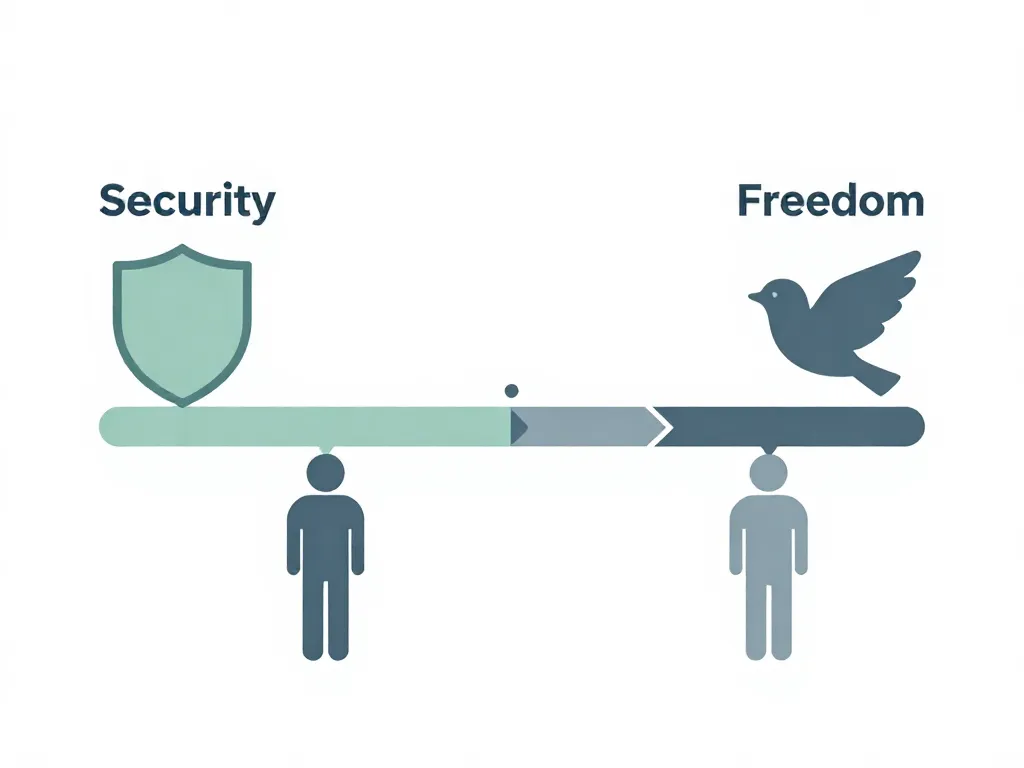
- Security vs. freedom. One partner saves because unpredictability terrifies them. The other spends because life feels too short to hoard.
- Control vs. trust. One partner tracks every dollar because it gives them a sense of order. The other feels surveilled and micromanaged.
- Present vs. future orientation. One partner wants to enjoy today. The other is optimizing for a retirement that's decades away.
- Identity and worth. For some people, earning more means contributing more, and that perceived imbalance quietly poisons everything.
None of these tensions are solved by a spreadsheet. They're solved by understanding what money means to each of you — and negotiating from that level instead of the surface level.
The "Money Story" Exercise
Before you can fix your money fights, you need to understand the origin stories behind them.
Sit down with your partner (not during or after a fight) and take turns answering these questions:
- What did money feel like in your household growing up? Was it scarce? Abundant? A source of tension? Something nobody talked about?
- What's the first money-related memory that comes to mind? Maybe it's a parent hiding purchases. Maybe it's the pride of a first paycheck. Maybe it's the electricity getting shut off.
- When you spend money freely, what feeling are you chasing? Relief? Joy? Status? Normalcy?
- When you save or restrict spending, what feeling are you protecting yourself from? Shame? Helplessness? The chaos you grew up with?
This 30-minute conversation can reframe years of arguments. When you understand that your partner's spending is actually them trying to feel like they finally made it out of poverty, the conversation changes. When they understand that your budgeting is how you self-soothe against a childhood of financial instability, the judgment softens.
Fix #1: Identify Your Top 3 Recurring Money Arguments
Most couples don't have dozens of unique money fights. They have the same three or four fights, recycled with different dollar amounts and slightly different triggers.
Common patterns include:
- The surprise purchase fight. One partner buys something the other considers unnecessary or excessive without discussing it first.
- The lifestyle creep fight. Income goes up but savings don't, and one partner notices before the other does.
- The income disparity fight. One partner earns significantly more and — consciously or not — uses that as leverage in financial decisions.
- The family money fight. One partner sends money to or spends on their extended family in ways the other resents.
- The "we can't afford it" fight. Partners disagree on what constitutes a need vs. a want.
Action step: Sit down together and name your top three recurring money fights. Write them down. Don't solve them yet — just name them. The act of identifying a pattern breaks its power. You go from "Why do you ALWAYS do this?" to "Ah, this is Pattern #2 again. We know how to handle this one."
Fix #2: Create a Spending Threshold Agreement
A spending threshold agreement answers one question: At what dollar amount does a purchase require a conversation?
Here's how to set one:
- Each partner independently writes down the number they think should require a heads-up before purchasing. Don't share yet.
- Reveal your numbers. They will almost certainly be different. That gap is the conversation.
- Negotiate a number you can both live with. It doesn't have to be the midpoint. It has to be a number where neither person feels controlled and neither feels blindsided.
- Clarify what "a conversation" means. Does it mean asking permission? Getting a quick okay via text? Simply informing the other person? Define this explicitly, because ambiguity here breeds resentment.
Example: Priya and James set their threshold at $150. Anything under that, no explanation needed. Anything over, a quick text: "Hey, thinking about getting X for $Y — thoughts?" Not permission. Not a debate. Just visibility.
This single agreement eliminated roughly 70% of their money arguments within a month.
AI-powered mediation platforms like Servanda can help you formalize agreements like these in writing, so they're documented and easy to revisit when tensions flare — rather than relying on each person's (often conflicting) memory of what was agreed upon.
Fix #3: Establish Personal "No-Judgment" Accounts
If the spending threshold handles big purchases, personal discretionary accounts handle the small daily friction that grinds couples down over time.
The concept is straightforward:
- After shared bills, savings contributions, and joint goals are funded, each partner gets a fixed amount of personal spending money each month.
- This money is theirs. Completely. No questions, no justifications, no eye rolls.
- If one partner wants to spend their entire discretionary budget on collectible sneakers and the other wants to save theirs for a solo trip, both choices are equally valid.
Why This Works
Personal accounts address the control vs. autonomy tension that underlies day-to-day money friction. When every dollar is shared, every purchase becomes a potential negotiation. That's exhausting, and it breeds low-grade resentment that slowly corrodes a relationship.
The key details to agree on:
- Equal amounts or proportional to income? There's no objectively right answer, but couples where one partner earns significantly more often find proportional allocations feel fairer.
- What counts as "personal" vs. "shared"? Is a haircut personal or shared? What about lunch with friends? Define the gray areas up front.
- Can personal money be rolled over month to month? Most couples say yes. This lets the saver save and the spender spend without conflict.
Fix #4: Schedule Monthly Money Meetings (and Make Them Bearable)
Reactive money conversations — the ones triggered by a bank notification, a bounced payment, or an overheard phone call — almost always escalate. Proactive money conversations happen on neutral ground. Nobody's defensive because nobody's been caught off guard.
How to Structure a Monthly Money Meeting
Duration: 30-45 minutes. Set a timer. When it goes off, you stop — even if you're not done.
Format:
- Wins (5 minutes). What went well financially this month? Did you stay under budget somewhere? Pay off a bill? Resist an impulse buy? Start here so the conversation begins with shared accomplishment, not shared blame.
- Review (10 minutes). Look at actual spending together. No editorializing. Just data. "We spent $X on dining out. We budgeted $Y." Facts first.
- Adjustments (10 minutes). Does anything need to change for next month? A one-time expense coming up? A budget category that's consistently unrealistic?
- Big picture (10 minutes). Where are you on longer-term goals — emergency fund, vacation savings, debt payoff? This keeps you connected to why you're managing money together.
Ground rules:
- No ambushing. If something bothered you, you can raise it, but the goal is problem-solving, not prosecuting.
- Use "I noticed" language instead of "You always" language. "I noticed our grocery spending went up $200" hits differently than "You spent $200 more on groceries."
- If either partner feels flooded (overwhelmed, shutting down, heart racing), call a 20-minute break. Come back when your nervous system has settled.

Making It Sustainable
The reason most couples abandon monthly money meetings is that they feel like a chore — or worse, like a tribunal. Combat this by pairing the meeting with something enjoyable. Order takeout. Open a bottle of wine. Have the meeting at a coffee shop on a Saturday morning. The association matters: if your brain links "money talk" with "miserable experience," you'll avoid it. If it links "money talk" with "Saturday morning lattes," you'll show up.
Fix #5: Align on Values Before You Align on Numbers
This is the fix that makes all the others stick.
Most couples try to agree on a budget without first agreeing on what the budget is for. That's like trying to plan a road trip without agreeing on the destination. You'll fight about every turn.
The Values Alignment Conversation
Instead of starting with "How much should we save each month?" start with:
- "What kind of life do we want in five years?"
- "What are we willing to sacrifice for that, and what's non-negotiable?"
- "What does 'enough' look like for each of us?"
These questions surface the values underneath the numbers. One partner values experiences over things. Another values stability over adventure. Neither is wrong — but if you don't surface these differences explicitly, they'll show up as fights about specific purchases instead of honest conversations about priorities.
A Practical Framework: The Three Buckets
Once you've had the values conversation, organize your financial life into three categories:
- Non-negotiables. These are the expenses and savings goals you both agree are essential. Rent, utilities, minimum debt payments, emergency fund contributions. No debate needed here.
- Shared priorities. These are the things you've agreed matter to both of you, even if they're not survival essentials. A family vacation. A home renovation. Your child's education fund. You fund these together, in order of shared priority.
- Individual priorities. These are the things that matter to one partner but not the other. This is where personal discretionary accounts come in. Your partner's hobby isn't your priority, and your passion project isn't theirs — and that's fine.
This framework prevents the most toxic dynamic in couple finances: one partner becoming the financial parent and the other becoming the financial child. When you've both agreed on what falls into each bucket, neither person is policing the other. You're both accountable to a shared plan.
Frequently Asked Questions
How do you stop fighting about money in a relationship?
Identify your recurring money fight patterns and address the values conflict underneath them — not just the dollar amounts. Implement a spending threshold agreement and personal discretionary accounts to reduce daily friction. Schedule proactive monthly money meetings so conversations happen on neutral ground, not in the heat of a financial surprise.
Is it normal for couples to argue about money?
Financial disagreements are consistently ranked among the top sources of conflict for couples at every income level. The issue isn't that you argue about money — it's whether those arguments are productive or destructive. Couples who develop shared frameworks for financial decisions argue less frequently and recover faster when they do.
Should couples combine finances or keep them separate?
There's no single right answer. Many couples find a hybrid approach works best: a joint account for shared expenses and savings goals, plus individual accounts for personal discretionary spending. The structure matters less than the agreement behind it — whatever system you choose, both partners need to understand it, consent to it, and feel it's fair.
What do you do when your partner has completely different spending habits?
Different spending habits aren't the problem — unspoken expectations about spending are. Start with the "money story" exercise to understand why each of you spends the way you do. Then create explicit agreements about thresholds, discretionary budgets, and shared goals. The goal isn't to make your partner spend like you do; it's to build a system that respects both approaches.
When should couples seek professional help for money fights?
If money arguments consistently escalate to personal attacks, if one partner is hiding financial activity (secret accounts, hidden debt), or if you've tried implementing agreements and can't stick to them, consider working with a couples therapist who specializes in financial conflict. Financial dishonesty in particular often signals deeper trust issues that benefit from professional support.
Money fights in relationships are painful not because of the money itself, but because they tap into our deepest fears — about security, control, fairness, and whether our partner truly understands what matters to us.
The five fixes in this article aren't about becoming financial experts together. They're about building a shared language for a topic that most couples navigate in silence until it explodes.
Start small. Tonight, try the money story exchange. This weekend, name your top three recurring fights. Next week, agree on a spending threshold. You don't have to overhaul your entire financial life in one conversation. You just have to start having the right conversations — proactively, honestly, and with the understanding that your partner isn't your opponent. They're your teammate with a different playbook.
The couples who thrive financially are the ones who've built systems that make disagreements productive instead of destructive. You can be one of those couples — starting now.