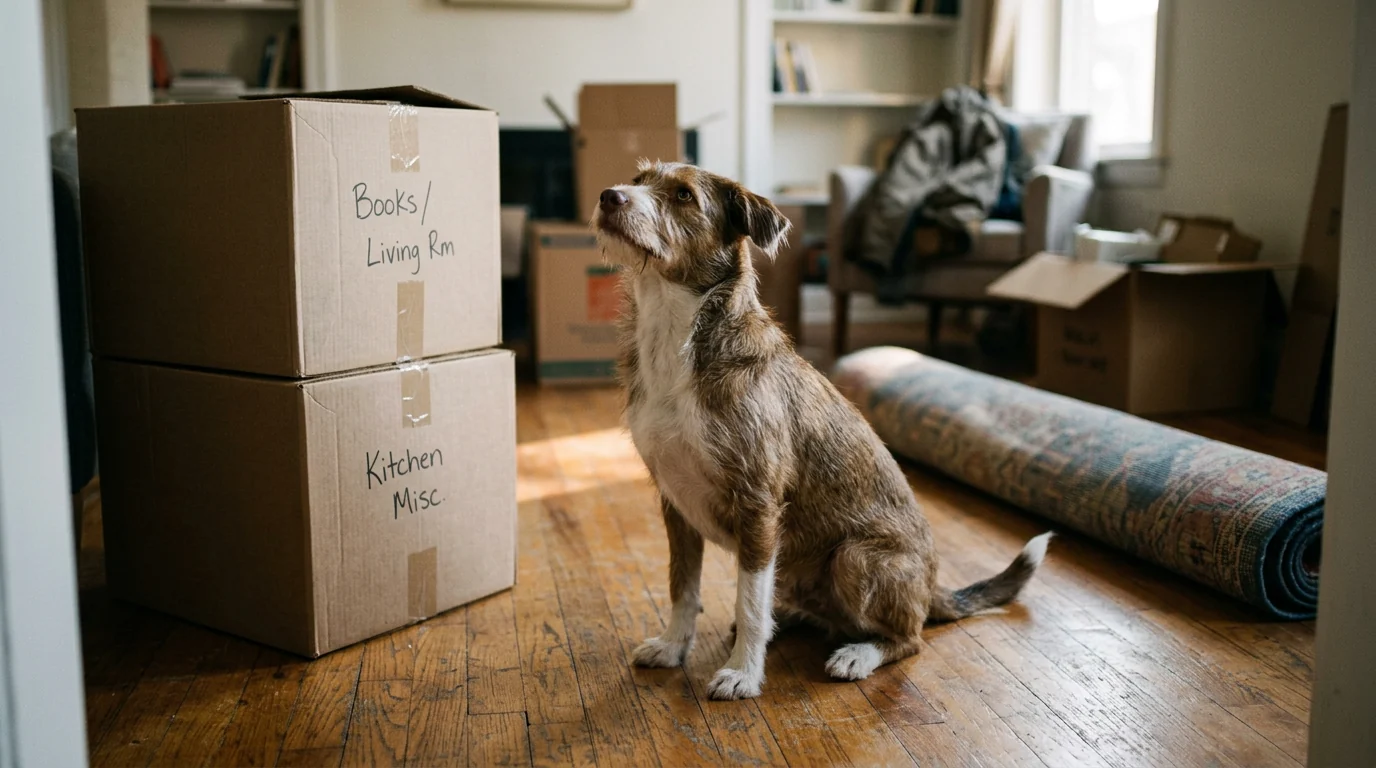
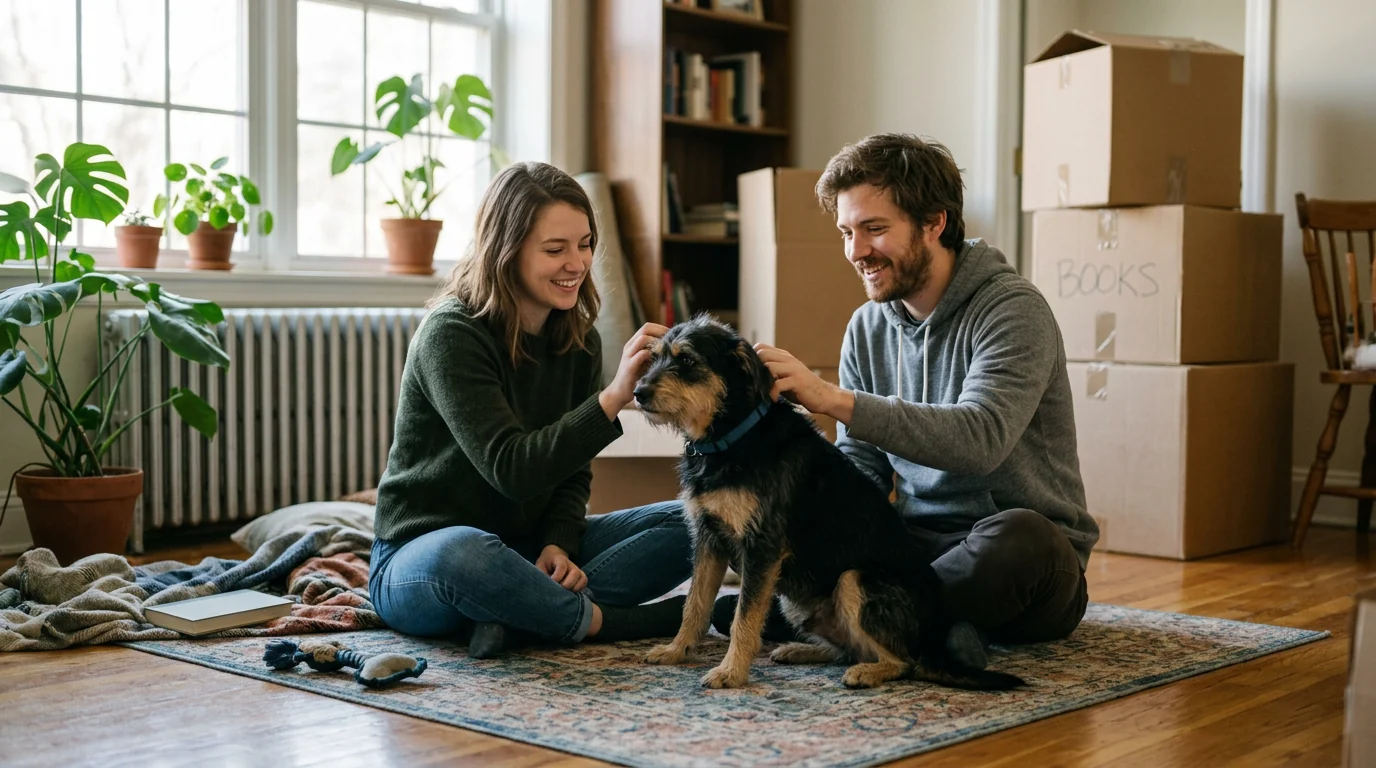
Whoever's name is on the adoption contract owns the dog. That's the legal answer to who keeps the dog after a breakup when you're not married, and it satisfies almost nobody, which is why almost nobody uses it. In practice, separating couples settle this one of three ways: one person keeps the dog and compensates the other for the loss, you share the dog on a fixed written schedule, or you decide based on whose life the dog can actually live in. Paperwork only decides it if this ends up in front of a judge. For one dog and two people who used to share a bed, court is the worst option on the table.
What does the law say about who keeps the dog if you're not married?
Dogs are personal property in every US state. If you're not married, there's no family court to divide anything, because there's nothing to divide legally: you'd have to file a civil claim like replevin or conversion, usually in small claims, and argue about who owns a chattel that happens to have a name and a favorite blanket.
Here's the part the law blogs skip. Many small claims courts can only award money, not order someone to hand an item back. Win, and you might collect the dog's replacement value, a few hundred dollars, while your ex keeps the dog. You'll have paid a filing fee, taken a day off work, and stood in front of a judge with a folder of vet receipts to end up with a check for the price of a shelter fee.
The pet custody statutes people cite don't help you either. Alaska led with HB 147 in 2017, the first state law directing courts to consider an animal's wellbeing when dividing property. Illinois followed in 2018, California in 2019 under AB 2274 (Family Code 2605), New York in 2021. Every one of them sits inside divorce law. They apply to married couples dissolving a marriage. If you never married, none of them reach you.
So the courts are a dead end. What courts do weigh when ownership is contested is worth borrowing, though, because it's the same evidence you two are already arguing about: who paid the adoption or breeder fee, whose name is on the microchip and the city license, who's listed as the client at the vet, who paid the bills. You can look at all of that yourselves tonight, for free, without a docket number.
Why "whoever's name is on the paperwork" settles nothing
The name on the form is usually an accident of whose ID was in whose pocket at the shelter. That's the whole reason this answer fails: it records a five-minute administrative moment, not four years of who got up at six in the rain.
You already know how this conversation goes.
"I paid the four hundred and fifty dollar adoption fee. I have the receipt."
"You paid it because my card was declined that week. I'm the one who taught her to walk on a leash. I did every single vet visit."
Both of those are true. Neither one wins. Money spent and care given are different currencies and there's no exchange rate, which is why couples can argue this for six weeks without moving an inch.
There's a second thing the receipt can't measure, and it's the one that actually decides most of these: which of you the dog's daily life is built around. Say one of you is moving into a fourth-floor walk-up with a landlord who allows pets under 25 pounds, and the dog is a 70-pound shepherd mix. Say one of you travels four days a week for work and the other works from home. The paperwork is silent on all of it. The dog is not.
Should you share custody of the dog after a breakup?
Shared custody works, but only under three conditions, and if you're missing any one of them it will fail inside a year. You need to live close enough that handoffs are a fifteen-minute errand rather than a two-hour round trip. You need a dog that transitions well rather than one who stops eating for two days in a new house. And you need to be able to send a text about heartworm medication without it turning into the breakup again.
If you have all three, here's what actually holds up:
Week on, week off. Not two days here, three days there. Long blocks are easier on dogs and dramatically easier on humans. Same handoff day, same time, every week. Sunday at five.
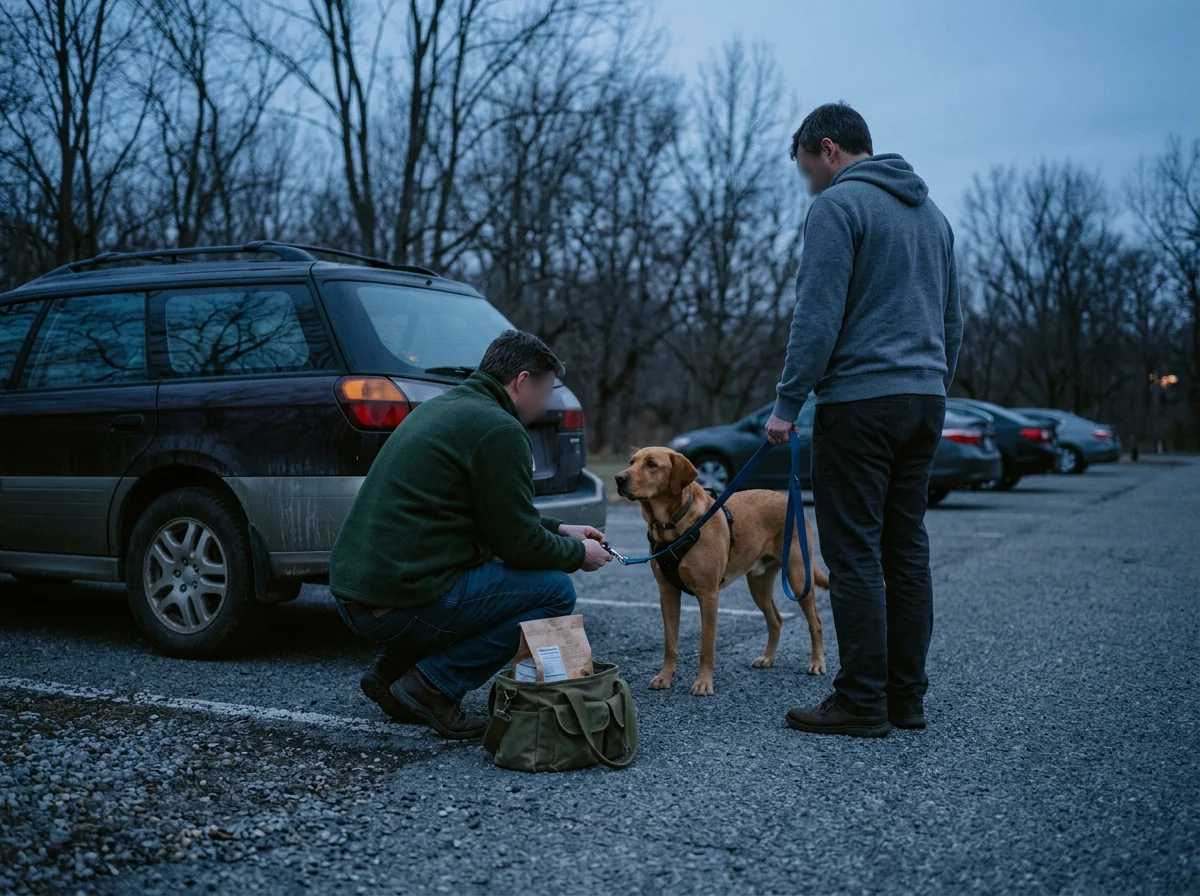
A neutral handoff spot. The vet parking lot. A park halfway between you. Not the apartment where one of you still has boxes in the hall.
A rule that handoffs are ninety seconds long. Leash, food bag, done. The number one way this collapses is that the dog becomes the excuse for a weekly relationship check-in, and then a fight, and then someone starts being late on purpose.
A review date. Put it at twelve months. Most shared arrangements have a natural end, and building the review in means nobody has to be the one who breaks the news that they're moving to Denver.
What kills these arrangements is rarely the dog. It's a new partner who has opinions about the ex-shaped hole in the calendar, a job in another state, or one person getting a second dog and quietly deciding the schedule is now inconvenient. Watch for the tell: "she seems anxious when she comes back from your place." Sometimes that's true. Often it's the opening move in taking the dog back full time. Name it early if you hear it, calmly, before it becomes six weeks of passive-aggressive texts about her stool quality.
How do you decide who keeps the dog when you both want it?
Use the oldest fair-division trick there is: one person names a number, the other chooses which side of it to take. One of you says, "Twelve hundred dollars." The other then picks: keep the dog and pay twelve hundred, or take the twelve hundred and let the dog go. The person setting the price has every incentive to be honest, because they might end up on either side of it.
It works because it stops the argument about who deserves the dog and replaces it with a question each of you can answer privately. It also surfaces the truth fast. Somebody who's been fighting hard for two months will occasionally look at the number, look at their new apartment, and take the money. That's not a betrayal. That's information.
The payment doesn't have to be cash. It's frequently cleaner as part of the wider split: the person keeping the dog gives up their half of the security deposit, or the couch and the TV, or the shared savings account. The point of a buyout isn't paying for the animal. It's making the loss cost the other person something real, so the person who walks away has been compensated rather than beaten.
One thing to be honest about: "you can see her whenever you want" is not a plan. It's a kindness that expires the first time either of you starts dating someone new. Either build a real schedule with real dates, or make it a clean break and grieve it properly. The vague middle is where people spend two years hurting.
What should go in a pet agreement?
A pet agreement should cover the things you'll fight about at eleven at night nine months from now, not the things that feel obvious today. Write it while you still like each other enough to be reasonable. Both of you sign it. Keep a copy each.
At minimum:
- Who the dog lives with, and the exact schedule if you're sharing. Dates and times, not "we'll trade off."
- Who makes medical decisions, and the dollar figure that triggers a phone call before treatment. Pick a real number. Eight hundred dollars is a reasonable trigger for most people.
- Who's authorized at the vet. If only one of you is listed as the client, the other legally can't consent to emergency surgery. Call the clinic and get both names on the file.
- Microchip and license registration, including whose phone number is primary and whether the second person's number is listed as backup.
- Who pays what, as a percentage or a flat monthly amount. Food, insurance, routine care, and how emergencies get split.
- Right of first refusal. If the person keeping the dog ever can't keep her, the other person gets called before a shelter, a friend, or Craigslist. This is the single clause people are most grateful for later.
- A distance clause. What happens if one of you moves more than fifty miles away.
- What happens at the end of her life, including who's in the room and who decides.
Writing it down is what separates an arrangement that survives from one that dissolves the first time someone's memory gets convenient. If you'd rather not draft it from a blank page while you're both raw, Servanda walks two people through the terms one at a time and produces a written agreement you've both actually agreed to, which is a very different document from the one either of you would write alone.
How do you tell which situation you're in?
Answer these four questions honestly and the path picks itself. Most couples already know the answer and are avoiding it because it's the one where they lose.
- Can both of you house the dog right now? Not in six months. Right now, in the actual place you've signed for. If only one of you can, that person keeps the dog and buys the other out. This is the most common answer and the one people spend the longest resisting.
- Will you both be within twenty miles of each other for the next two years? If no, shared custody is a countdown, not a plan. Decide now instead of unwinding it later.
- Can you exchange three logistics texts without one of them becoming about the relationship? Test it this week. If it fails, you need a single-home arrangement with a defined visit schedule, or none at all.
- Does the dog handle change well? Some dogs genuinely thrive on two houses and two sets of walks. Some spend the first thirty-six hours of every rotation refusing food and pacing at the door. You've both seen which one you have.
The hardest version of this is when both of you can house her, you both live nearby, you're both good to her, and neither of you is wrong. That's when the named-number buyout earns its keep. Someone has to choose, and choosing badly on purpose (delaying, hoping, letting it drift) costs the dog more than either outcome would.
Questions people ask next
Can I take my ex to small claims court over the dog?
You can file, and people do. But many small claims courts award money rather than ordering property returned, so the realistic outcome is a judgment for the dog's replacement value, often a few hundred dollars, while your ex keeps the dog. Check whether your state's small claims court has replevin authority before you spend the filing fee.
Does the microchip registration decide who owns the dog?
No, but it's strong evidence and it's the fastest thing to check. Microchip registration, the city license, and the name on the vet's client file together carry more weight than a receipt, because they show ongoing responsibility rather than a single payment. If you're sharing the dog, list both names and both phone numbers with the registry.
What if one of us paid for everything?
Paying for the dog isn't the same as caring for the dog, and no judge or mediator treats it that way. Money you spent is real and belongs in the buyout number, but it doesn't settle the question by itself. Put the receipts on the table as a factor, not as a trump card.
Should we split up two dogs, one each?
Only if they aren't bonded. Two dogs who came into the house separately and tolerate each other can be split without much damage. A bonded pair, especially littermates or two dogs who sleep touching, should stay together, and if that means one person takes both, the buyout number goes up accordingly.
What if the person keeping the dog can't manage it later?
That's exactly what a right of first refusal is for. Write it in now: if the person with the dog can no longer keep her, for any reason, the other person is offered her back before any shelter, rescue, or third party. It costs nothing to include and it's the clause people are most relieved to have when the call comes.