The #1 Argument That Leads to Divorce, Per Experts
It starts with a credit card statement left on the counter. Or maybe it's a passing comment about a new purchase. Within minutes, the conversation escalates into something that feels far bigger than the item in question. Voices rise. Defenses go up. One person shuts down. The other keeps pushing. By the end, neither of you can remember exactly what was said — only that it felt like you were fighting about everything and nothing at once.
According to recent research highlighted by psychologists in 2025, the argument you just had — the one about money — is statistically the most dangerous fight a couple can have. Not because money itself is inherently toxic, but because of what money arguments reveal about power, trust, values, and unmet needs beneath the surface. The argument that leads to divorce most often isn't about spending. It's about what spending represents.
Let's break down exactly why this fight is so corrosive, what it's really about, and what you can do to stop it from eroding your relationship.

Why Money Is the #1 Argument That Leads to Divorce
The Research Is Clear
A landmark study published in Family Relations found that arguments about money are the strongest predictor of divorce — stronger than disagreements about children, household responsibilities, in-laws, or sex. Researcher Sonya Britt-Lutter and her colleagues found that financial disagreements were more intense, lasted longer, and were resolved less often than any other category of couple conflict.
More recent analysis from psychologists featured in CNBC's 2025 coverage confirms this pattern hasn't changed. If anything, economic pressures — rising housing costs, inflation, student loan burdens — have made money fights even more charged. Couples today are navigating financial terrain that previous generations didn't face with the same intensity, and the emotional toll is showing up in therapists' offices across the country.
It's Not About the Money
The argument that leads to divorce isn't really about money. It's about what money means to each partner.
Consider two people:
- Partner A grew up in a household where money was always tight. Unexpected expenses meant crisis. For them, a healthy savings account equals safety. Spending on non-essentials triggers a deep, almost primal anxiety.
- Partner B grew up in a household where money was used to express love and enjoy life. For them, spending on a nice dinner or a spontaneous trip is an act of connection. Being told they "can't" spend feels like being controlled.
When these two argue about a $200 purchase, they're not really arguing about $200. Partner A is saying, "I don't feel safe." Partner B is saying, "I don't feel free." Neither is wrong. But neither can hear the other, because the conversation stays stuck at the surface level of dollars and cents.
This is why money fights are so uniquely destructive. They activate core emotional needs — security, autonomy, trust, respect — and they do it repeatedly, because financial decisions happen every single day.
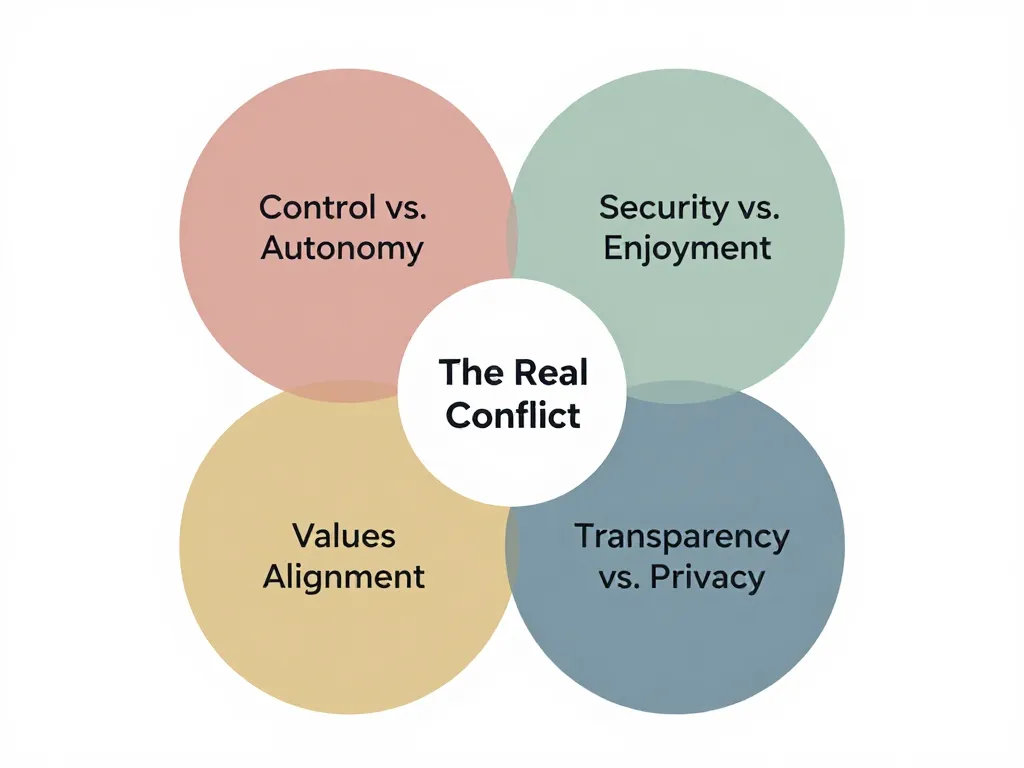
The Four Hidden Conflicts Inside Every Money Fight
To stop the argument that leads to divorce, you first have to understand what's actually fueling it. Most financial disagreements contain one or more of these deeper conflicts:
1. Control vs. Autonomy
One partner wants to set budgets, track spending, and approve purchases. The other feels micromanaged. The fight sounds like it's about a grocery bill, but it's really about who gets to make decisions and whether both partners feel like equal adults in the relationship.
What it sounds like:
- "Why didn't you tell me before you bought that?"
- "I shouldn't have to ask permission to spend my own money."
2. Security vs. Enjoyment
One partner prioritizes saving and planning for the future. The other prioritizes living fully in the present. When they collide without mutual understanding, each person feels like the other is being reckless or rigid.
What it sounds like:
- "We can't afford that right now."
- "We never do anything fun. What's the point of earning money if we never enjoy it?"
3. Transparency vs. Privacy
Some partners believe full financial transparency is a baseline of trust. Others maintain that having some financial privacy — a personal account, an unquestioned discretionary budget — is healthy and normal. When expectations aren't aligned, hidden purchases feel like betrayal, and demanded disclosures feel like surveillance.
What it sounds like:
- "What is this charge from last Thursday?"
- "Why are you going through my statements?"
4. Values Alignment
Money fights can reveal that two people have fundamentally different priorities — one wants to invest in travel, the other in their children's education fund. One donates generously, the other considers it wasteful. When they're never surfaced and negotiated, they create a slow, grinding resentment that compounds over years.
What it sounds like:
- "I can't believe you spent that much on [thing I don't value]."
- "You never support the things that matter to me."
Why Recurring Money Arguments Are the Real Threat
Every couple argues about money sometimes. A single fight about an unexpected expense or a budget shortfall is normal and manageable.
The danger is in the pattern.
Relationship researcher John Gottman's work has shown that it's not the presence of conflict that predicts divorce — it's the presence of unresolvable, recurring conflict paired with emotional withdrawal or contempt. Money fights check both boxes more than any other topic:
- They recur constantly because financial decisions are daily.
- They escalate quickly because they activate identity-level emotions.
- They rarely reach resolution because couples argue about the surface issue ($200) instead of the underlying need (safety, freedom, respect).
Over time, this pattern creates what therapists call negative sentiment override — a state where you begin interpreting your partner's neutral or even positive actions through a negative lens. Your partner buys you a gift, and instead of feeling loved, you feel anxious about the cost. Your partner suggests a budget, and instead of feeling supported, you feel controlled.
Once negative sentiment override takes hold, every financial interaction becomes a potential trigger. That's when the argument that leads to divorce stops being an argument and starts becoming the atmosphere of the relationship.
How to Break the Cycle: A Practical Framework
Money fights are not a death sentence for your relationship. They're a signal — loud and clear — that something underneath needs attention. Here's how to respond to that signal.
Step 1: Name the Pattern, Not the Problem
Instead of trying to solve the specific financial issue ("We need a better budget"), acknowledge the cycle you're stuck in.
Try saying:
"I've noticed that we keep having the same fight about money, and it never feels resolved. I don't think the problem is really about the money. Can we talk about what's going on underneath?"
This single reframe can change the trajectory of the entire conversation.
Step 2: Explore Your Money Stories
Sit down separately and answer these questions, then share your answers:
- What was money like in your household growing up?
- What's your earliest memory of money stress?
- What does financial security look like to you? Be specific.
- What does financial freedom look like to you?
- When your partner spends money in a way that bothers you, what emotion comes up first — before the anger?
Most couples who do this exercise are stunned by what they learn. You may have been together for years and never understood the emotional architecture behind your partner's financial behavior.
Step 3: Build a Shared Financial Agreement
Once you've done Steps 1 and 2, create a written agreement that addresses:
- Individual discretionary spending (an amount each person can spend without discussion)
- Shared financial goals with timelines
- How and when you'll discuss finances (a monthly money meeting, not daily monitoring)
- What transparency looks like for both of you
- How you'll handle disagreements about non-budgeted expenses

The act of writing it down matters more than you think. Verbal agreements about money tend to be remembered differently by each person, which creates its own set of conflicts. AI-powered mediation platforms like Servanda can provide structure when emotions run high, helping you formalize agreements in neutral language that both partners can reference later.
Step 4: Schedule Regular Financial Check-Ins
The couples who successfully break the cycle of destructive money fights share one habit: they discuss money proactively, not reactively.
Set a recurring monthly meeting — 30 minutes, no longer — where you:
- Review spending against your agreement
- Celebrate financial wins (even small ones)
- Raise any concerns before they become resentments
- Adjust the plan as your lives change
The key is keeping these check-ins low-stakes and collaborative. This is a team huddle, not an audit.
Step 5: Recognize When You Need Support
If your money fights consistently include:
- Name-calling or contempt
- Stonewalling (one person shutting down entirely)
- Hidden spending or secret accounts
- Threats about leaving
...these are signs that the conflict has moved beyond what self-help strategies can address. A couples therapist who specializes in financial conflict — sometimes called a financial therapist — can help you untangle the emotional and practical dimensions together.
Seeking support isn't a sign of failure. It's a sign that you value the relationship enough to invest in it — which is exactly the kind of financial decision you can both agree on.
Real-World Example: How One Couple Stopped the Cycle
Mark and Leila (names changed) had been married for eight years when they nearly separated. The presenting issue? A home renovation that went over budget.
But when they dug deeper in therapy, the renovation wasn't the problem. Mark, who managed the family finances, felt overwhelmed and unappreciated. Every time Leila suggested an upgrade — better countertops, a bigger window — he heard: "What you've planned isn't good enough."
Leila, who had deferred all financial management to Mark since their wedding, felt excluded and powerless. Every time Mark said no to an upgrade, she heard: "Your opinion doesn't matter."
The argument that nearly led to their divorce wasn't about countertops or budgets. It was about feeling unseen.
Their turning point came when they stopped trying to "win" the renovation argument and started building a shared financial framework. They created individual discretionary budgets, scheduled monthly check-ins, and — most importantly — each took responsibility for understanding their own emotional triggers around money.
Eighteen months later, they describe their relationship as stronger than it was before the crisis. Not because they stopped disagreeing about money, but because their disagreements stopped being existential threats.
Frequently Asked Questions
What is the most common argument that leads to divorce?
Money is consistently identified by researchers as the #1 argument topic that predicts divorce. Studies from Family Relations and psychologist analysis featured in 2025 confirm that financial disagreements are more intense, longer-lasting, and less likely to be resolved than conflicts about any other topic, including parenting, intimacy, or household chores.
Why do couples fight about money so much?
Couples fight about money frequently because financial decisions happen daily and because money is deeply tied to emotional needs like security, freedom, control, and identity. Two partners can have completely different "money stories" shaped by their upbringing, and without understanding these differences, every financial decision becomes a potential conflict.
Can fighting about money actually cause divorce?
Fighting about money doesn't automatically cause divorce. What's dangerous is the pattern — recurring, unresolved financial conflicts that lead to contempt, withdrawal, and negative sentiment override. Couples who address the underlying emotional needs behind their money fights, rather than just the surface-level financial disagreements, can break this cycle.
How do you stop arguing about money with your partner?
Start by understanding each other's emotional relationship with money — not just your budget. Share your money histories, identify the hidden needs beneath your arguments (safety, autonomy, respect), and create a written financial agreement that reflects both partners' values. Regular, proactive money check-ins also help prevent reactive blowups.
When should couples seek professional help for money arguments?
Consider seeking professional help if your money fights consistently involve contempt, stonewalling, hidden spending, or threats. A couples therapist — especially one specializing in financial conflict — can help you address both the emotional and practical dimensions of the issue before permanent damage is done.
Moving Forward Together
The argument that leads to divorce isn't really about money. It's about the unspoken needs, fears, and values that money forces to the surface. That's good news, because it means the solution isn't a better spreadsheet — it's a deeper understanding of each other.
If you recognized your relationship in this article, take one step today. Not a budget overhaul. Not a difficult confrontation. Just ask your partner: "What did money feel like when you were growing up?" Then listen without defending, fixing, or advising.
That single conversation might be the most valuable financial investment you ever make. The couples who thrive aren't the ones who never argue about money. They're the ones who learned what the argument was really about — and chose to face it together.