My Partner's Career Is Destroying Our Weekends
It's Saturday morning. You imagined the two of you lingering over coffee, maybe hitting the farmers market, maybe doing absolutely nothing together. Instead, your partner is already at the desk—laptop open, headphones on, mentally somewhere else entirely. By Sunday evening, you've barely exchanged fifty words that weren't about logistics.
When your partner's career starts consuming weekends, the frustration is specific and sharp. It's not that you don't support their ambitions. It's that the relationship feels like it's surviving on scraps of leftover time. The accumulation is what damages: a canceled brunch here, a distracted dinner there, a growing sense that you're living parallel lives under the same roof.
Why Weekend Work Hits Relationships Harder Than You'd Expect
On paper, weekday work and weekend work consume the same number of hours. But the emotional math is different.
Weekdays already feel spoken for—commutes, routines, obligations. Most couples unconsciously treat weekdays as "survival mode" and weekends as "us mode." When weekend hours get absorbed by a career, it doesn't just reduce shared time; it eliminates the type of shared time that makes people feel like partners rather than roommates.
Research from the American Time Use Survey consistently shows that couples who spend leisure time together on weekends report higher relationship satisfaction than those who only share weekday evenings. It's because unhurried, unstructured time is where intimacy regenerates. Remove it, and the relationship runs on fumes.
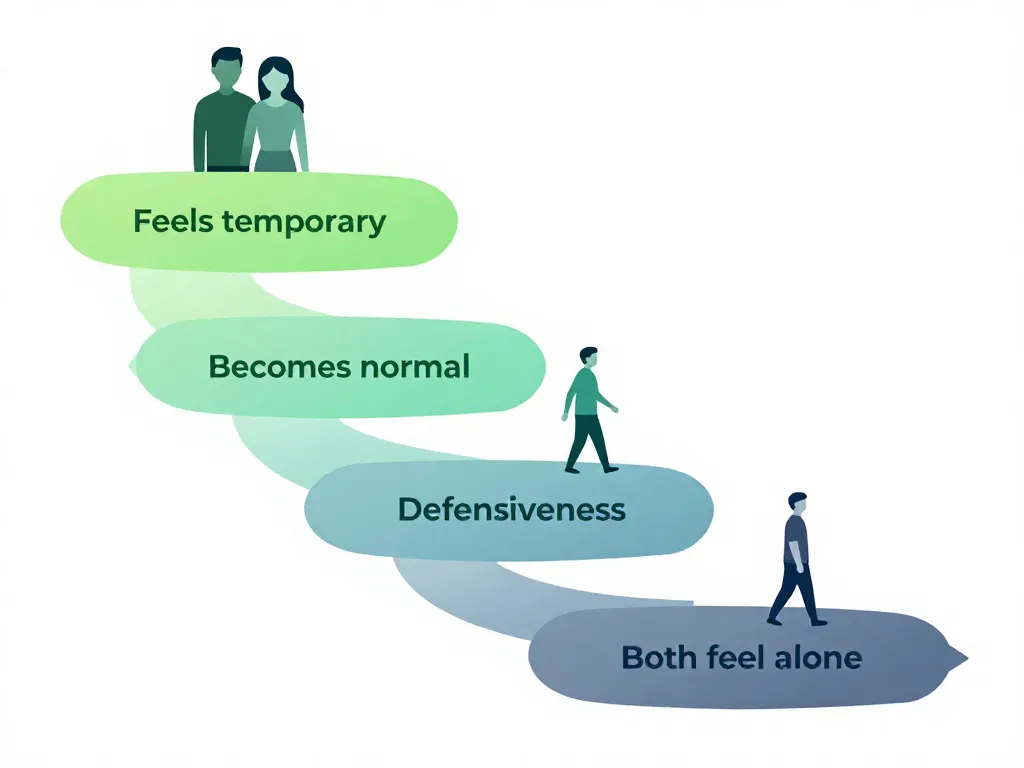
The Resentment Spiral
Here's how the pattern typically unfolds:
- The first few weekends feel temporary. "It's just this project" or "Once this quarter ends, things will calm down."
- Temporary becomes normal. The deadline passes, but another replaces it. Weekend work stops being an exception and starts being the default.
- The non-working partner starts keeping score. Not consciously—but they notice every Saturday lost, every plan abandoned.
- The working partner feels defensive. They sense the disappointment and interpret it as a lack of support. They pull away further into work, where at least their effort feels appreciated.
- Both partners feel alone. One is lonely in the relationship. The other is lonely in their own home.
What's Really Going On Beneath the Surface
Before jumping to solutions, it's worth understanding what each partner is actually experiencing.
For the Partner Who's Working
Weekend work often comes with its own set of anxieties:
- Fear of professional consequences. In many industries, visibility equals viability. Saying no to weekend work can feel like career suicide.
- Identity entanglement. When someone's self-worth is closely tied to professional achievement, stepping away from work triggers genuine anxiety.
- Financial pressure. Sometimes the weekend hours are non-negotiable because the money is non-negotiable. This is especially true for freelancers, entrepreneurs, and people in commission-based roles.
- Avoidance. Sometimes work becomes a refuge from relationship tension that already exists. The laptop is a socially acceptable escape hatch.
For the Partner Who's Waiting
The frustration of watching your weekends disappear often masks deeper fears:
- Fear of irrelevance. "If they can so easily skip time with me, maybe they don't need me."
- Grief for a version of the relationship that's fading. You remember when weekends were yours. You mourn what they've become.
- Helplessness. You can't control their workload, their boss, or their ambition. That powerlessness breeds resentment.
- Guilt about your own feelings. You know their career matters. You feel selfish for being upset. That guilt doesn't make the loneliness go away—it just adds shame on top of it.

Five Strategies That Actually Work
1. Define "Protected Time" Instead of Fighting Over Total Hours
Trying to reduce your partner's total work hours is usually a losing battle—and it positions you as an obstacle to their career. Instead, negotiate for protected windows of time that are non-negotiable for the relationship.
This looks like:
- Saturday mornings from 9 to noon are ours. No exceptions short of a genuine emergency.
- Sunday dinners are sacred. Phones away, no laptop nearby, a real meal together.
- One full weekend day per month is completely work-free.
The key is specificity. "Let's spend more time together" is a wish. "Saturday mornings are protected" is a plan. When both partners agree to defined windows, the working partner can structure their tasks around those blocks instead of defaulting to an open-ended work sprawl.
2. Separate the Logistical Conversation from the Emotional One
One of the biggest mistakes couples make is trying to solve the schedule problem and process the feelings in the same conversation. It almost always derails.
Have two distinct conversations:
- The emotional conversation: "I want you to understand how it feels when the weekend disappears. I feel disconnected from you. I miss us." No solutions. No calendar. Just honesty.
- The logistical conversation: "Okay, looking at next month, which weekends have hard deadlines? Where can we carve out protected time? What's flexible?"
The emotional conversation needs to happen first. If the person who's been waiting doesn't feel heard, they won't trust any schedule you create together.
3. Audit What's Actually Required vs. What's Self-Imposed
Many weekend workers haven't honestly examined which tasks genuinely require weekend hours and which have become weekend habits. This isn't about judgment—it's about awareness.
Sit down together (or have the working partner do this independently) and categorize recent weekend work:
| Category |
Example |
Truly Weekend-Required? |
| Deadline-driven |
Client deliverable due Monday |
Yes |
| Catch-up work |
Emails that piled up during the week |
No |
| Perfectionism |
Revising something that's already good enough |
No |
| Anxiety-driven |
Checking Slack "just in case" |
No |
| Advancement-oriented |
Side project, networking, extra effort |
Debatable |
Often, partners discover that 30-40% of their weekend work isn't structurally required—it's driven by anxiety, habit, or a workplace culture they've internalized without questioning. That awareness alone can free up significant time.
4. Create a "State of the Weekend" Check-In
Instead of letting each weekend unfold with unspoken expectations and quiet disappointment, institute a brief check-in every Thursday or Friday evening.
The format is simple:
- "Here's what my weekend work looks like" — The working partner shares what they need to get done.
- "Here's what I'd love for us" — The other partner names one specific thing they want to do together.
- "Here's our plan" — Both agree on when work happens and when couple time happens.
This takes five minutes and eliminates the most corrosive element: ambiguity. When you know Saturday afternoon is work time and Sunday morning is yours, you can relax into both.
Consider formalizing your agreements with a tool like Servanda before small misunderstandings compound into larger conflicts—having a written record of what you've both committed to can make check-ins more productive and accountable.
5. Invest in Your Independent Life
If your partner is going to work some weekends, you need a weekend life that doesn't depend entirely on them.
This doesn't mean giving up on shared time. It means building resilience so that a working Saturday doesn't leave you feeling stranded.
- Cultivate friendships that include weekend plans
- Pursue a hobby or project that excites you
- Use some of that solo time for things you enjoy but your partner doesn't
Partners who have rich independent lives tend to fight less about shared time—because they're not approaching every weekend from a place of scarcity and desperation.

When the Problem Is Bigger Than Weekends
Sometimes the weekend issue is a symptom of something deeper that no scheduling hack will fix. It's worth being honest about whether any of these dynamics are in play:
- Your partner uses work to avoid the relationship. If they seem relieved to have an excuse not to spend time together, the conversation needs to shift from calendars to connection.
- There's a fundamental values mismatch. One partner prioritizes career achievement above almost everything. The other prioritizes relational presence. Neither is wrong, but the gap may be wider than a Thursday check-in can bridge.
- The career pressure is unsustainable. If your partner is working weekends because their job genuinely demands it and there's no end in sight, the real question might be whether this job—not this weekend—is compatible with the life you both want.
- Resentment has already calcified. If you've been silently keeping score for months or years, you may need a third party—a couples therapist, a mediator—to help you both get back to honest ground.
None of these scenarios means the relationship is doomed. They just mean the weekend conversation is the entry point to a bigger, more important one.
What to Say Tonight
If you want to start a conversation with your partner, here's a framework that avoids blame while staying honest.
For the partner who's been waiting:
"I want to talk about our weekends—not to pressure you about work, but because I miss feeling connected to you. I have some ideas about how we could protect some time together without asking you to sacrifice your career. Can we find twenty minutes this week to talk about it?"
For the partner who's been working:
"I know my weekend schedule has been heavy, and I can see it's affecting us. I don't want you to feel like you're less important than my job, because you're not. Can we figure out a plan together that works for both of us?"
Neither script is magic. But both frame the issue as a shared problem rather than an accusation.
Moving Forward Without Keeping Score
The couples who navigate this successfully share a few traits. They accept that perfect balance is a myth—some seasons of a career are simply more demanding than others. They protect specific, meaningful windows of time rather than fighting over vague ideals. They check in regularly so resentment doesn't build silently. And they maintain rich individual lives that make the relationship a choice, not a dependency.
Your weekends may never look like a lifestyle blog. What matters is that both of you feel chosen—not by default, not with whatever energy is left over, but deliberately, even when life is demanding. That feeling doesn't require an entire free weekend. It requires intention. And intention is something you can start building today.
Frequently Asked Questions
How do I tell my partner their work schedule is hurting our relationship without sounding unsupportive?
Frame the conversation around your feelings and your shared connection rather than criticizing their work ethic. Try something like, "I miss feeling connected to you on weekends—can we find a way to protect some time together without you having to sacrifice your career?" This positions the issue as a shared problem to solve, not an accusation.
Is it normal to feel resentful when my partner works every weekend?
Yes. Research shows that unstructured weekend leisure time is where relationship intimacy regenerates, so losing it consistently creates a real emotional deficit. Addressing the resentment early prevents it from calcifying.
How much weekend time together do couples actually need to stay connected?
What matters more than total hours is having specific, protected windows of unhurried time where both partners are fully present. Even a single sacred block—like Saturday morning coffee with no devices—can sustain a sense of connection through demanding career seasons.
What if my partner's job genuinely requires weekend work with no end in sight?
The conversation may need to shift from scheduling fixes to whether this particular career path is compatible with the relationship you both want. This doesn't mean the relationship is doomed, but it does mean you're facing a values-level discussion.
How do I stop keeping score of all the weekends my partner has worked?
Score-keeping usually stems from feeling unheard, so the first step is having an honest emotional conversation where your partner acknowledges the impact of their absence. Establishing regular check-ins and protected time blocks also helps because you shift from tracking losses to anticipating planned connection.