How Relocation Impacts Kids: What Research Really Says
You've just been offered a promotion — the kind you've been working toward for years. There's one catch: it's 400 miles away. Your stomach drops, not because of the job, but because of your eight-year-old. You and your co-parent have built a functional routine. She spends every other weekend at Dad's, Wednesday dinners are sacred, and she's finally settled into a school she loves. Now you're staring at a decision that could unravel all of it.
Or maybe you're on the other side. You just got a text that says, "We need to talk about a possible move," and suddenly the ground beneath your co-parenting arrangement feels like it's shifting.
Relocation is one of the most emotionally loaded decisions co-parents face. But beneath the fear, guilt, and conflict, there's a body of research that can help you make clearer, more grounded choices. Understanding how relocation impacts kids — what the evidence actually says, not just what anxiety tells you — is the first step toward protecting your child through a transition like this.
What the Research Actually Tells Us About Kids and Relocation
The research on relocation and children is not as simple as "moving is bad" or "moving is fine." It's nuanced, and it depends heavily on context.
The Large-Scale Studies
Several significant longitudinal studies have examined how relocation impacts kids across different family structures:
- A 2010 study published in the Journal of Family Psychology found that children who experienced frequent moves showed higher rates of behavioral problems and lower academic performance — but primarily when moves were associated with family instability (divorce, financial stress, conflict) rather than the move itself.
- Research by sociologist David Burkam and colleagues at the University of Michigan found that children who moved three or more times before age six scored lower on reading and math assessments, though the effect was modest and intertwined with socioeconomic factors.
- Sandler, Miles, Cookston, and Braver (2008) studied relocation specifically in divorced families and found that the distance of the move mattered less than the quality of the child's relationship with both parents after the move.
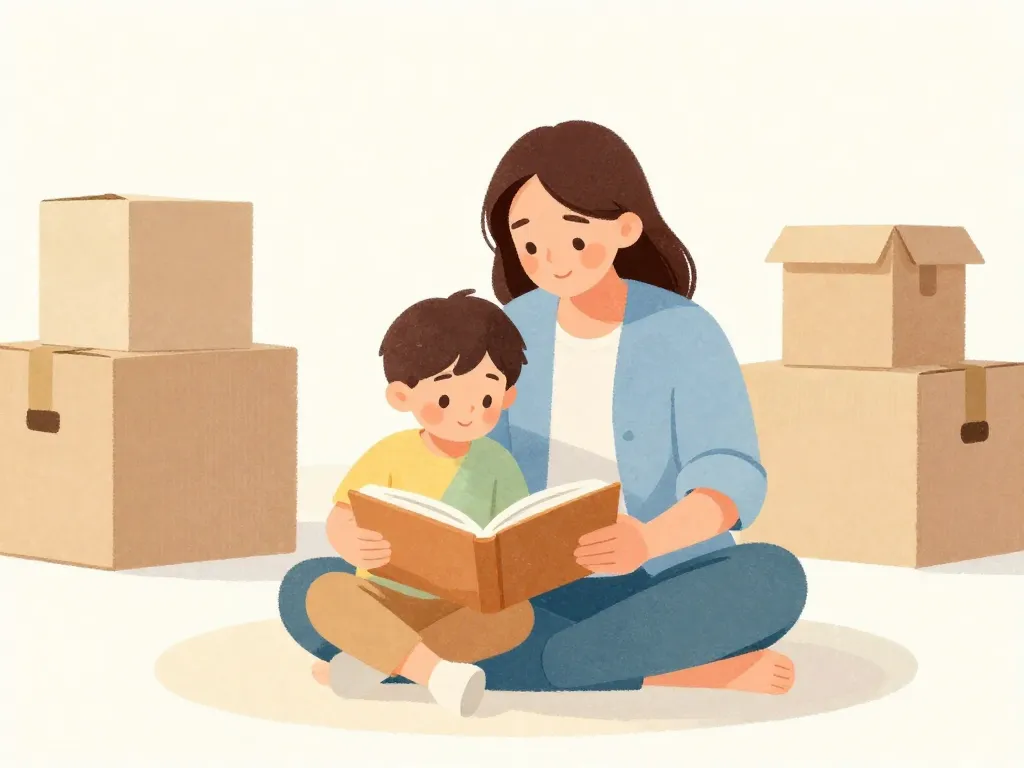
The takeaway is important: it's not the moving boxes that hurt kids. It's what happens to their relationships, routines, and sense of security during and after the move.
What Matters More Than the Move Itself
Researchers consistently point to several factors that predict how well a child adjusts to relocation:
- The level of conflict between co-parents — High-conflict transitions are the strongest predictor of poor outcomes, regardless of whether anyone moves.
- The child's continued access to both parents — Children who maintain frequent, meaningful contact with the non-relocating parent fare significantly better.
- The child's temperament and age — Younger children (under 5) may adapt more easily to new environments but are more sensitive to attachment disruptions. School-age children struggle more with losing peer networks. Adolescents often experience relocation as a loss of autonomy.
- Parental well-being — A parent who moves into a better job, lower stress, or a stronger support system often creates a more stable home, which benefits the child.
- How the decision is handled between co-parents — Collaborative decision-making predicts better outcomes than unilateral moves or court battles.
The Emotional Reality for Children at Different Ages
Research gives us averages. But your child isn't an average. Understanding developmental stages can help you anticipate what your specific child might need.
Toddlers and Preschoolers (Ages 2–5)
At this age, children's primary concern is attachment security. They don't understand geography — they understand presence. A toddler won't grieve losing their neighborhood park, but they will notice that one parent isn't showing up for bedtime anymore.
What helps: Maintaining consistent physical contact with both parents, even if it requires creative scheduling. Video calls can supplement but not replace in-person time for this age group.
Early School Age (Ages 6–9)
This is often the trickiest window. Children in this range are deeply embedded in school friendships, extracurricular activities, and neighborhood routines. They also tend to internalize blame — a six-year-old might quietly decide the move is somehow their fault.
What helps: Honest, age-appropriate conversations. Letting them keep connections to old friends. Allowing them to express anger or sadness without dismissing those feelings.
Example: Marcus, age 7, started having stomachaches every Sunday night after his mom moved two hours away. His dad assumed Marcus didn't want to go to Mom's, but a child therapist helped them see that Marcus was anxious about the transition itself — the long car ride, the unfamiliar bedroom, the different rules. Small adjustments (a familiar blanket, a consistent pickup routine, a brief call to Dad before bed) reduced his symptoms significantly within a month.
Preteens and Teenagers (Ages 10–17)
Adolescents experience relocation as a disruption to their emerging independence. Their social world is everything. A forced move can feel like an erasure of their identity.
What helps: Involving them in the process without burdening them with the decision. Giving them genuine input on logistics — which weekends, how they'll stay connected to friends, whether they can visit independently. Respect their feelings even when their reactions feel disproportionate.
Common Myths Co-Parents Believe About Relocation
Misinformation often drives the worst decisions. Here are some persistent myths the research doesn't support:
Myth 1: "Kids are resilient — they'll bounce back."
Children can be resilient, but resilience isn't automatic. It depends on the scaffolding adults provide. Using "kids are resilient" as a reason to avoid careful planning is one of the most common mistakes parents make during relocation.
Myth 2: "If one parent moves away, the child will eventually choose to live with the closer parent."
Research doesn't support the idea that distance automatically weakens the relocated parent's bond. What weakens it is inconsistency — canceled visits, unpredictable schedules, and the slow erosion of routine contact.
Myth 3: "It's better for the child to just make a clean break."
This myth is particularly harmful. Studies consistently show that children benefit from continuity with both parents, even when the logistics are complicated. A "clean break" from a loving parent is not clean for the child — it's a loss.

Myth 4: "The court will decide what's best."
Courts decide based on legal standards, which vary by jurisdiction and often rely on limited information. Judges don't know your child. Research by Marsha Kline Pruett and others suggests that parent-created relocation plans — developed collaboratively — tend to serve children's interests better than court-imposed arrangements, because parents have information a judge never will.
A Research-Backed Framework for Handling Relocation
If relocation is on the table — whether you're initiating it or responding to it — here's a framework grounded in what the evidence supports:
Step 1: Separate the Parenting Decision from the Personal Decision
You might have excellent reasons to move: a job, family support, a lower cost of living, a new partner. Those reasons are valid. But the parenting question is separate: How will this move affect my child's relationship with their other parent, and what am I willing to do to protect that relationship?
Write down both sides honestly. Not to justify a decision you've already made, but to genuinely weigh the tradeoffs.
Step 2: Propose Before You Announce
One of the most damaging patterns researchers observe is the "announce and defend" approach — telling your co-parent you're moving, then digging in when they object. This almost guarantees escalation.
Instead, bring it as a proposal. Share the reasoning, acknowledge the impact, and invite collaborative problem-solving. This isn't about asking permission — it's about treating your co-parent as a stakeholder in your child's life, because they are.
Step 3: Build a Detailed Transition Plan
A strong relocation plan addresses:
- Parenting time: Specific schedules for regular weekends, holidays, school breaks, and summer
- Transportation: Who drives, who flies, who pays, pickup and drop-off logistics
- Communication: How the child will stay in touch with the non-relocating parent (calls, video, texts) and how often
- Decision-making: How you'll handle school choices, medical decisions, and extracurriculars from a distance
- Review dates: When you'll revisit the plan to see if it's working
Tools like Servanda can help co-parents formalize these agreements in writing, creating a clear record that reduces misunderstandings and keeps both parents accountable to what they've agreed.
Step 4: Monitor Your Child — Not Just Their Behavior, But Their Inner World
After a move, watch for changes that go beyond the surface. A child who seems "fine" may be performing fineness to avoid adding to a parent's stress. Check in with open-ended questions, not just "How was your day?" but "What's been the hardest part of the change?" or "Is there anything you miss that we haven't talked about?"
Consider involving a child therapist during the transition — not because something is wrong, but because having a neutral adult to talk to can be profoundly helpful.
Step 5: Protect the Other Parent's Role
This is the step that requires the most maturity, and it's the one the research is most emphatic about. Children who maintain strong relationships with both parents after relocation do better on virtually every measure — academic performance, emotional regulation, self-esteem, and long-term relationship quality.
That means:
- Not scheduling over the other parent's time
- Speaking positively (or at least neutrally) about the other parent
- Making transitions as smooth as possible
- Encouraging your child to call, write, or visit their other parent without guilt
When Relocation Becomes a Legal Battle
Sometimes, despite best efforts, co-parents can't agree. If your case heads to court, here's what you should know:
- Most jurisdictions require the relocating parent to demonstrate that the move serves the child's best interests, not just the parent's.
- Courts generally consider the child's relationship with both parents, the reason for the move, the feasibility of maintaining the non-relocating parent's involvement, and the child's own wishes (especially for older children).
- Documentation matters. Courts respond to concrete plans, not vague promises. Having a detailed, written proposal for how you'll preserve the child's relationship with their other parent strengthens your position regardless of which side you're on.
If you're facing a legal dispute, consult a family law attorney in your jurisdiction. Research informs the conversation, but local law governs the outcome.
What the Research Points To
After reviewing decades of studies on how relocation impacts kids, one theme emerges more clearly than any other: the move matters far less than what the adults do with it.
Children can thrive after relocation. They can also struggle after one. The difference almost always comes down to whether their parents managed the transition with intention, collaboration, and a willingness to put the child's relational needs at the center of every decision.
That doesn't mean sacrificing your own well-being — burned-out, resentful parents aren't good for children either. It means being honest about the costs, creative about the solutions, and committed to doing the hard relational work that a move demands.
If you're facing a relocation decision, start with the evidence, not the emotion. Build a specific plan. Put your child's relational world at the center. And remember that the way you and your co-parent handle this transition will teach your child more about navigating hard things than the move itself ever will.
The research says your child can come through this well. What matters now is what you do next.
Frequently Asked Questions
Does moving away from the other parent hurt my child?
Research consistently shows that the distance of a move matters far less than the quality of the child's ongoing relationship with both parents. Children who maintain frequent, meaningful contact with their non-relocating parent — through consistent visits, calls, and predictable routines — tend to adjust well. The biggest risk factor isn't the miles; it's high conflict between co-parents and inconsistent contact.
At what age is relocation hardest on kids?
School-age children (ages 6–9) often have the toughest time because they're deeply embedded in friendships, school routines, and extracurricular activities, and they tend to internalize blame for the move. Adolescents also struggle significantly because relocation disrupts their emerging independence and social identity. Younger children may adapt to new environments more easily but are more sensitive to changes in attachment and parental presence.
How do I tell my co-parent I want to relocate?
Bring it as a proposal rather than an announcement — share your reasoning, acknowledge the impact on your co-parent's time with your child, and invite collaborative problem-solving. Research shows that the "announce and defend" approach almost always escalates conflict, which is the single strongest predictor of poor outcomes for children. Having a specific, written plan for preserving the other parent's involvement demonstrates good faith and leads to better agreements.
Can kids actually do well after a parent relocates?
Yes — decades of research confirm that children can thrive after a relocation when their parents manage the transition with intention and collaboration. The key factors are maintaining strong relationships with both parents, keeping routines as stable as possible, and handling co-parent disagreements with low conflict. Children's long-term outcomes depend much more on what the adults do during and after the move than on the move itself.
Do courts favor the parent who wants to stay over the parent who wants to move?
Courts don't automatically favor either side — most jurisdictions require the relocating parent to show the move serves the child's best interests, while considering factors like both parental relationships, the reason for the move, and the feasibility of maintaining contact. Research by family law scholars suggests that parent-created relocation plans developed collaboratively tend to serve children better than court-imposed arrangements. Having a detailed, concrete proposal for preserving the child's relationship with both parents strengthens your position regardless of which side you're on.