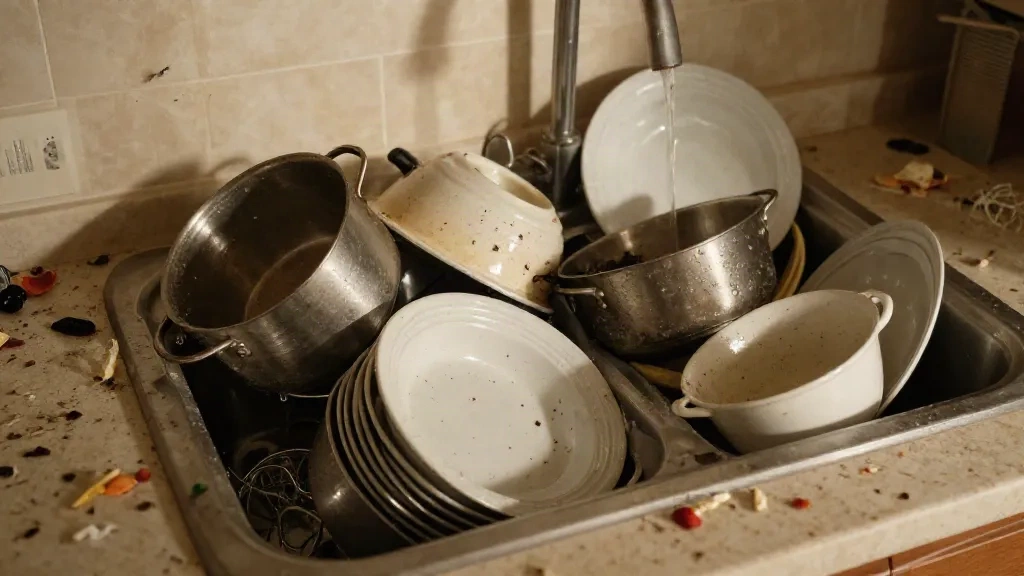
Most roommate agreement templates online were written for university halls. They ask you to circle whether you're a morning person and to promise to respect your roommate's study time. That's useless when you're 29, splitting a two-bedroom on a private tenancy, and the actual problem is that the electricity bill doubled in January and nobody has taken the recycling out since Christmas.
There are two ways to write a roommate agreement for chores, bills and guests, and they produce genuinely different documents. Call them the Rota and the Standard.
The Rota names a person, a day and an amount for every recurring obligation. Sam does the bathroom on Saturdays. £62 leaves your account on the 5th. Three guest nights a week, no more.
The Standard names an outcome and leaves the how to whoever's turn it is. The bathroom doesn't get gross. Bills get paid on time. Guests are fine if they're not disruptive.
Both sound reasonable on paper. Only one of them holds up in month seven.
What does a roommate agreement actually need to cover?
Five things: how bills are split and when money moves, what cleaning happens and what "clean" means, overnight guests, noise, and what you do when someone breaks the agreement. Everything else is padding that makes the document longer and less likely to be read.
This is not your lease. Your lease is between you and the landlord, and if you're on a joint tenancy it almost certainly contains joint and several liability, meaning the landlord can pursue any one of you for the entire rent regardless of what you agreed privately. Check that clause before you sign anything. Your roommate agreement governs the space between you, and it has no power over the landlord at all. That's fine. The landlord isn't the one leaving pans in the sink.
Should you split bills evenly or by usage?
Split evenly, on a fixed date, with a named account holder for each bill. Usage-based splitting sounds fairer and it is the single most reliable source of low-grade financial resentment in a shared flat.
Here's the Rota version, and it fits in four lines. Priya holds the electricity and internet accounts. Sam holds gas and water. Whoever holds a bill posts a photo of it to the shared thread by the 3rd of the month. Transfers land by the 5th. Rent goes out on the 1st from a standing order each person sets up themselves, not from one person's account.
The Standard version says "we each pay our share of what we use." Say one of you works from home five days a week and the other is in an office. The heating runs all day for one person's benefit. Who measures that? You don't have a submeter. You have a £180 quarterly bill and a feeling. Six weeks later somebody says "I'm barely here, I don't think it's fair I pay half" and now you're negotiating a £40 delta with no data, which is a fight nobody wins.
Where the even split genuinely breaks: unequal rooms. If one bedroom is forty percent larger with an en suite and the other looks onto a lightwell, a 50/50 rent split is a grievance with a slow fuse. Fix it before anyone moves in. Write 55/45, write why, and never reopen it mid-tenancy.
The failure mode to write out of existence is the fronting problem. One person pays everything on their card and "sends a total when I get round to it." By week six they're owed £340 and asking for it feels like a confrontation instead of a transfer. Put a clause in: no one carries a balance for another housemate for more than fourteen days. If a bill isn't posted by the 3rd, the holder eats the delay.
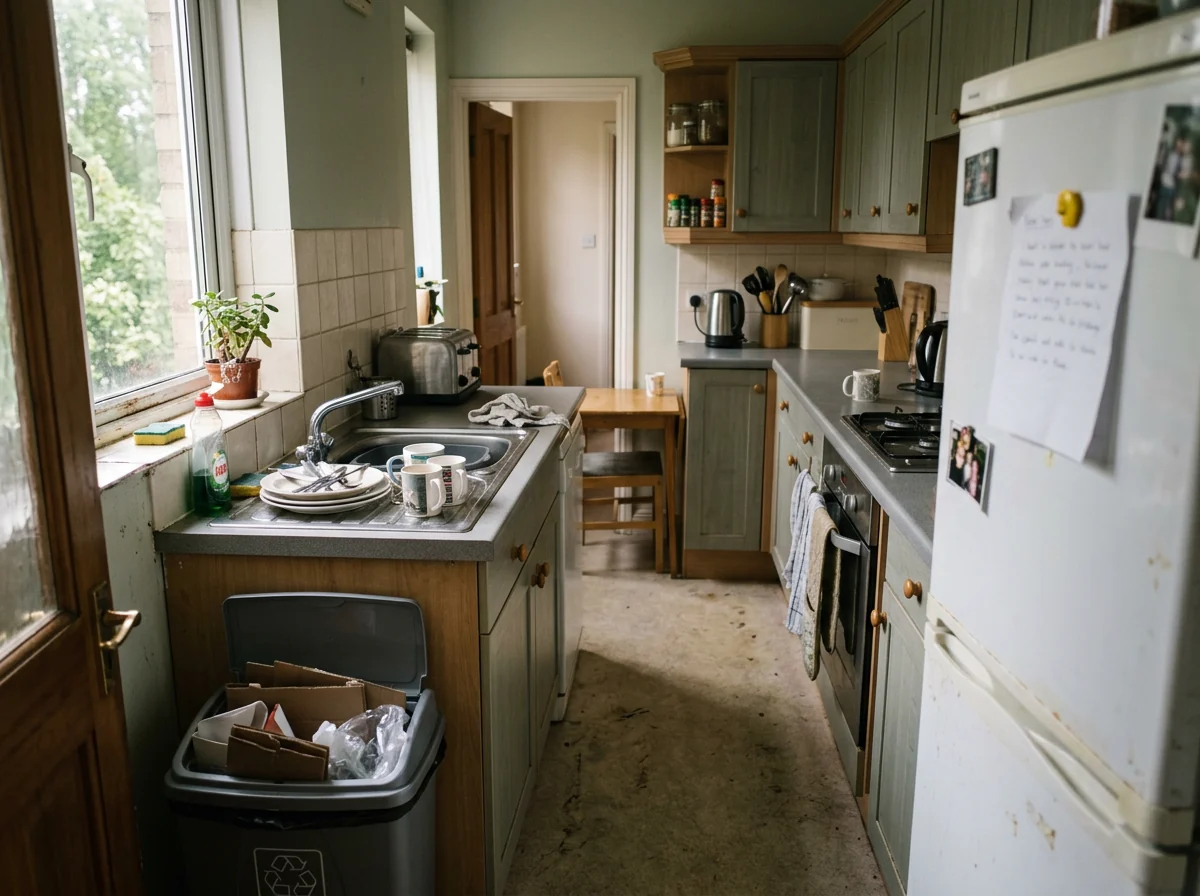
How do you write a cleaning rotation that people actually follow?
Define what "clean" means for each task first, then attach it to a named person on a named day. The definition is worth more than the schedule, and it's the part every template skips.
"Clean the kitchen" means nothing. Two people can hear that sentence and picture completely different rooms. Write it out instead:
- Kitchen (twice weekly, Tuesday and Saturday, alternating): counters wiped down, sink empty and rinsed, hob wiped, bin taken out if it's three-quarters full, anything in the fridge past its date binned.
- Bathroom (weekly): toilet inside and out, sink and taps, shower tray with the hair out of the drain, mirror, floor.
- Floors and common areas (weekly): vacuum the hallway and living room, surfaces cleared of your own stuff.
Now the Standard version. "We both keep on top of it." This works fine for dishes, because dirty dishes are visibly binary and the pressure is immediate. It collapses everywhere else, because tolerance for a grimy shower tray varies enormously between adults, and the person with the lower threshold ends up doing all of it while also being cast as the nag. You know the sound of this clause failing. It's someone saying, flatly, "I'm not going to keep asking you."
Two additions that prevent most chore arguments. First, a swap rule: you can trade weeks by text, but the trade has to be accepted in writing before the deadline, not claimed afterwards. Second, consumables. Write down who buys toilet paper, bin bags, dish soap and cleaning products. Alternate months. Set a cap, say £25 a month, above which you check first. And write what happens when they forget, because they will: whoever buys it out of turn posts the receipt and gets it back on the 5th with the bills.
This is the point where a verbal understanding stops being enough, and it's worth putting the agreed version somewhere you both signed off on rather than somewhere you both half-remember. Servanda gives you a structured way to write the clauses down and get the other person to actually agree to them, which matters most for the ones you've already had a scratchy conversation about once.
How many nights can a partner stay over?
Write a number. "Guests are welcome as long as it's not disruptive" has never once survived somebody starting a new relationship.
The Rota clause: up to three nights a week, no more than five consecutive nights, and a heads-up in the group chat before a first-time overnight guest. That's it. It's blunt and it's enforceable because there's nothing to interpret.
The resentment here rarely attaches to the guest as a person. It attaches to the quiet change in the flat that nobody agreed to. Say your flatmate's boyfriend is there Thursday through Sunday. He's in the shower first, he's on the sofa working on Friday, he's using the good pan. Neither of you can point to a single unreasonable act, and you now have a third person in a two-person tenancy paying nothing toward the hot water.
Where the hard cap breaks: a long-distance partner who visits once a month for six days. A three-night ceiling makes that relationship impossible, and enforcing it will cost you the friendship. So bolt on an exception rather than softening the rule. Three nights a week as standard, plus the option to book a longer visit with seven days' notice, up to four times a year. Notice is the mechanism, not permission.
Add the tipping-point clause while you're both still relaxed about it. If a guest stays more than twelve nights in a month for two consecutive months, they start contributing a third of a share toward bills, or the whole arrangement gets renegotiated. Naming the number now means you never have to invent it while annoyed.
What are reasonable quiet hours in a shared flat?
11pm to 7:30am on weeknights, 1am to 9am at weekends, with headphones required for anything with bass outside those windows. Fixed clock times beat "be considerate" for one reason: considerate is measured against your own sleep schedule, and yours is not the only one in the flat.
Say one of you starts a shift at 5am and the other works until 8pm. The Standard clause hands the early riser a permanent complaint and the night owl a permanent apology. A written window ends it. Add the specific irritants while you're at it: no washing machine after 10pm if it sits under a bedroom, and calls taken in your own room after midnight rather than the kitchen.
What happens when someone breaks the agreement?
The escalation clause is the part every template leaves out and the only part that matters once things go wrong. Write three steps with time limits attached.
- Say it once, directly, within 48 hours. In person or by text to that person. Not a note on the fridge, not a comment in the group chat aimed sideways.
- If the same thing happens twice more inside a month, book a sit-down. Twenty minutes, one agenda item, written down beforehand so nobody arrives with a list of grievances from March.
- If that doesn't fix it, revise the clause rather than repeat the conversation. The rota moves, the number changes, or a third party helps you rewrite it.
The Rota approach to enforcement is financial: a fixed £10 late fee after five days on bills. That works, because money problems respond to money penalties and everyone understands the arithmetic. Do not extend it to chores. Fining your flatmate £5 for a missed bathroom week turns two adults into a landlord and a tenant, and the relationship never recovers from that framing. Missed chores get made up, not paid for. Miss your week, you take the next one too.
Which approach would I actually pick?
The Rota, without much hesitation. Named person, named day, named amount, on every clause.
The Standard reads like the more grown-up document. It trusts people. And that's exactly why it fails, because it requires goodwill to be present at precisely the moment goodwill has run out. Every Standard clause quietly assigns the work to whoever cares more, and that person burns through their patience within a few months. The Rota is uglier to read and it keeps working when you're annoyed at each other, which is the only test that counts.
Switch a clause to the Standard once you've run it as a Rota for three months and nobody has needed a single reminder. At that point the schedule is doing no work and you can drop it. Switch the bills clause when circumstances make the even split obviously wrong: one of you moves into the bigger room, or someone drops to part-time hours and the flat stays warm all day.
And put a revisit date in the document itself. Ninety days after move-in, twenty minutes, anything is open. Far easier to change a clause on a date you both chose than to raise it cold on a Tuesday night.