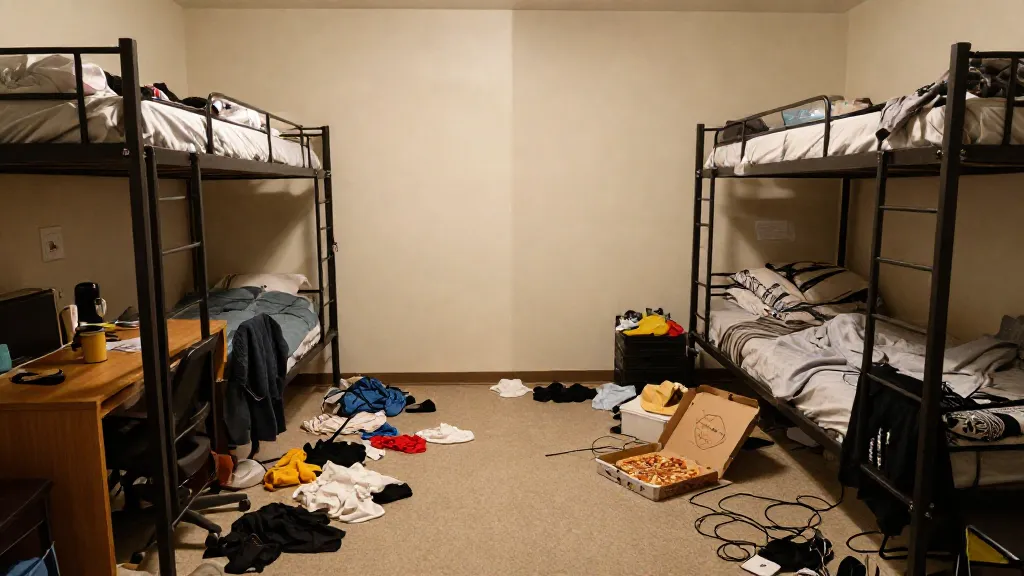
Roommate Conflict Resolution: A Step-by-Step Guide
It's 11:47 PM on a Tuesday. You have a job interview at 8 AM. And your roommate just invited six friends over for an impromptu karaoke session — for the third time this month. You're lying in bed, jaw clenched, drafting a passive-aggressive text you'll probably regret. Or maybe you're the one whose roommate leaves towers of dirty dishes in the sink until the kitchen smells like a biology experiment. Or perhaps rent was due five days ago and your roommate "forgot" again.
Whatever brought you here, you're likely in the middle of a conflict that feels like it has no clean solution. The good news: it almost certainly does. The problem isn't that roommate conflicts are unsolvable — it's that most people have never been taught a structured process for resolving them. This guide gives you exactly that: a repeatable, step-by-step framework for roommate conflict resolution that you can use tonight, this weekend, or whenever you're ready to stop stewing and start fixing things.
Key Takeaways
- Name the specific behavior, not the character flaw. Conflict resolution breaks down the moment you make it about who your roommate is rather than what they did.
- Use the 5-step resolution process: Pause → Define → Meet → Negotiate → Document. Skipping any step dramatically increases the chance of the conversation going sideways.
- Written agreements aren't overkill — they're insurance. The most common reason roommate conflicts recur is that verbal agreements are remembered differently by each person.
- Timing matters more than you think. Bringing up a conflict when either person is hungry, stressed, or rushing out the door almost guarantees a bad outcome.
- Escalation is a choice, not an inevitability. Most roommate disputes that spiral into lease-breaking disasters could have been resolved in a 20-minute conversation if addressed early.
Why Most Roommate Conflicts Spiral (And Yours Doesn't Have To)

Here's what typically happens: a small annoyance occurs. You let it slide. It happens again. You let it slide again, but now there's a seed of resentment. By the fifth or tenth occurrence, you're not just annoyed about the dirty pan on the stove — you're furious about a pattern, a perceived lack of respect, and every other minor irritation you've been cataloging for weeks.
This is called conflict stacking, and it's the single biggest reason roommate disputes feel so explosive. By the time you actually say something, you're not addressing one issue. You're unloading a backlog.
The framework below is designed to interrupt that cycle. It works whether you're dealing with:
- Noise and sleep schedule conflicts
- Uneven distribution of chores
- Guests and overnight visitors
- Shared expenses and late payments
- Personal space and boundary violations
- Different standards of cleanliness
- Thermostat and utility usage disagreements
Let's walk through it.
The 5-Step Roommate Conflict Resolution Process
Step 1: Pause and Separate the Problem from the Person
Before you say a single word to your roommate, do this: write down exactly what's bothering you, using only observable behaviors. No adjectives about their character. No assumptions about their motives.
Instead of: "My roommate is a selfish slob who doesn't care about anyone else."
Write: "My roommate left dirty dishes in the sink on Monday, Wednesday, and Friday this week. Each time, they sat there for over 24 hours."
This isn't just an exercise in being polite. It's a strategic move. When you lead with character judgments, the other person's brain immediately shifts into defense mode, and a defensive person cannot problem-solve. When you lead with specific, observable facts, you give your roommate something concrete to respond to.
The pause also protects you. Research from the field of interpersonal neurobiology shows that when we're emotionally flooded — heart rate above roughly 100 BPM from stress — our capacity for creative problem-solving drops dramatically. If you're furious right now, the best thing you can do for the resolution process is wait until you're not.
A practical rule: if you can't describe the problem without using words like "always," "never," "disrespectful," or "ridiculous," you're not ready for Step 2 yet.
Step 2: Define What You Actually Need
This is where most people skip ahead to the confrontation and pay for it later. Before you talk to your roommate, get clear on two things:
- What specific change would resolve this for you?
- What are you willing to flex on?
For example, consider this scenario: "Jordan" was frustrated because their roommate "Alex" practiced guitar in the living room most evenings. Jordan initially felt the solution was simple — Alex should stop playing guitar at home entirely. But when Jordan actually sat with the question, they realized the real need was quieter evenings after 9 PM so they could wind down before bed. That opened up multiple possible solutions: Alex could use headphones with an electric guitar, practice in their own room, or simply wrap up by 9 PM.
Defining your actual need — rather than your first-instinct demand — gives the negotiation room to breathe.
Try filling in this template:
"The specific situation is [observable behavior]. It affects me because [concrete impact on your daily life]. What I need is [specific, measurable change]. I'm flexible on [aspects you'd be willing to negotiate]."
Step 3: Request a Dedicated Conversation

Do not ambush your roommate. Do not bring it up while they're cooking dinner, walking in the door from work, or watching their favorite show. Do not send a multi-paragraph text and expect a productive response.
Instead, request a specific time to talk. This can feel awkward, but it's non-negotiable for a good outcome. Here's language that works:
- "Hey, I want to talk about how we're handling kitchen cleanup. Can we sit down for 15 minutes this weekend?"
- "I've been thinking about our guest situation and I'd like us to get on the same page. When's a good time to chat?"
- "There's something about our living situation I want to work through together. Are you free tomorrow evening?"
Notice the framing: you're inviting collaboration, not issuing a summons. You're also signaling that this is about a specific topic, which reduces the anxiety your roommate will feel between now and the conversation.
Why this matters: When people feel blindsided, they either shut down or lash out. Giving your roommate time to mentally prepare makes it far more likely they'll show up ready to actually listen.
Step 4: Have the Conversation Using the STATE Framework
Now you're face to face. Here's a structure that keeps the conversation productive, borrowed and adapted from crucial conversations methodology:
- S — Share the facts. Start with the observable behaviors you wrote down in Step 1. "I've noticed the dishes have been in the sink for a day or more several times this week."
- T — Tell your experience. Describe the impact on you without blaming. "When I come home and need to cook, I don't have counter or sink space, and it's been stressful."
- A — Ask for their perspective. Genuinely. "I want to hear how you see it — is something going on, or do we just have different approaches to this?"
- T — Talk through solutions. Brainstorm together. Don't arrive with a single demand. "What if we set a rule that dishes get washed within 12 hours? Or we could alternate kitchen cleanup nights?"
- E — Establish a specific agreement. Don't leave the conversation with a vague "we'll try to do better." Pin down who does what, by when, and how you'll handle it if the agreement isn't followed.
Ground rules for the conversation:
- No interrupting. If needed, use a timer — each person gets 3 uninterrupted minutes to share their perspective.
- Stick to the one topic you agreed to discuss. Do not let it metastasize into a general airing of grievances.
- If either person starts yelling or shutting down, take a 10-minute break and return.
- Assume good intent until proven otherwise. Most roommate conflicts stem from different habits and expectations, not malice.
Step 5: Document the Agreement
This is the step that everyone skips and everyone regrets skipping.
After your conversation, write down what you agreed to. This can be as simple as a shared note on your phones or a message in your group chat. It should include:
- The specific agreement (e.g., "Dishes will be washed within 8 hours of use")
- Who's responsible for what (e.g., "We'll alternate weekly deep-cleaning of the kitchen — Taylor takes odd weeks, Sam takes even weeks")
- A check-in date (e.g., "We'll revisit this in two weeks to see if it's working")
- What happens if the agreement isn't followed (e.g., "If dishes sit for more than 12 hours, the other person sends a no-judgment reminder text")
This isn't about distrust. It's about the reality that human memory is unreliable, and two people will genuinely remember the same conversation differently a week later. Tools like Servanda can help you create and store written roommate agreements so that you have a clear reference point when memories diverge — which they will.
Applying the Process to Common Roommate Disputes
Noise and Quiet Hours
This is the most frequently cited source of roommate friction. The trap: one person frames it as "you're too loud" and the other hears "you can't enjoy your own home."
Better approach: Negotiate specific quiet hours rather than arguing about what counts as "too loud." For example, "After 10 PM on weeknights and midnight on weekends, we keep noise to headphone-level in shared spaces." Define what "headphone-level" means. Write it down.
Chores and Cleanliness
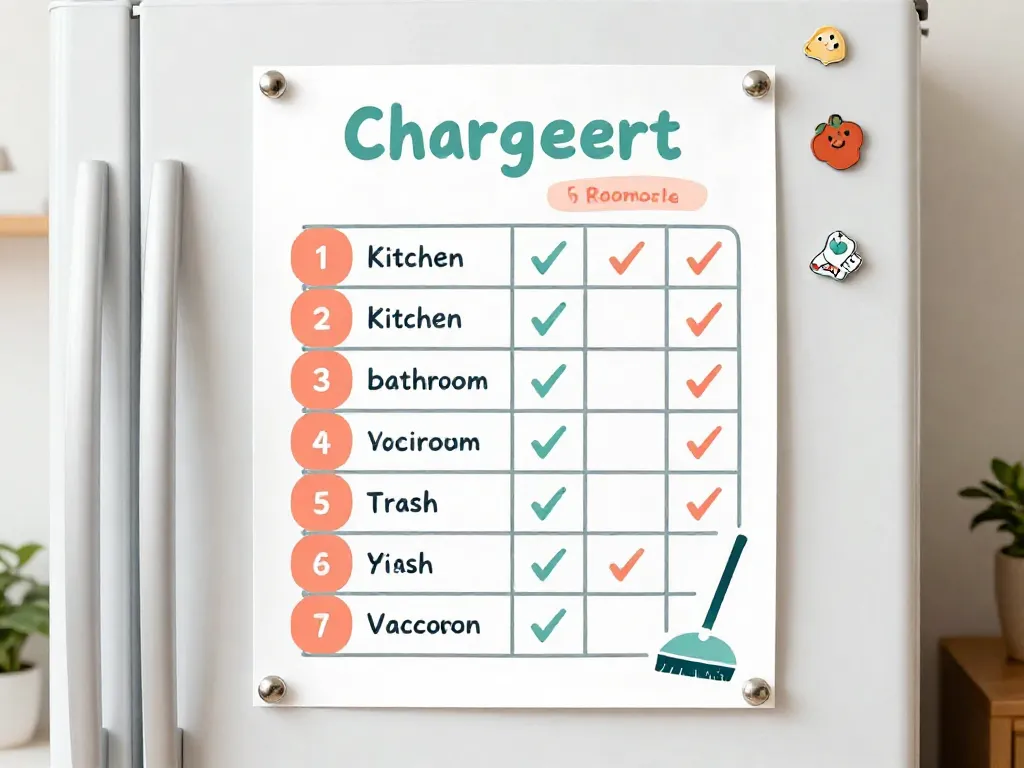
The core problem here is almost never laziness. It's that two people have genuinely different thresholds for what "clean" means. One person's "reasonably tidy" is another person's "this place is a disaster."
Better approach: Create a simple chore chart or rotation with specific tasks and frequencies. "Clean the bathroom" is too vague. "Scrub the toilet, wipe the sink and mirror, and mop the floor every Sunday" is actionable. If one roommate cares more about certain tasks, let them own those in exchange for their roommate taking other responsibilities.
Shared Expenses and Late Payments
Money conflicts corrode trust faster than almost anything else.
Better approach: Decide on a system before feelings get involved. Use a shared expense app so everything is tracked transparently. Agree on a specific date rent and utility shares are due each month, what happens if someone's going to be late (they notify 48 hours in advance, for example), and how shared household purchases are split.
Guests and Overnight Visitors
Better approach: Establish a notification system — not a permission system, unless you both prefer that. For example: "If you're having a guest stay overnight, send a text by 6 PM that day." Set a maximum number of overnight guest stays per week. Discuss boundaries around shared spaces when guests are present.
What to Do When the Conversation Goes Wrong
Sometimes, despite your best efforts, the conversation derails. Your roommate gets defensive. You get triggered. Someone brings up something unrelated. Here's your recovery plan:
- Call a timeout. "I think we're getting off track. Can we take 10 minutes and come back to this?" This is not quitting — it's preserving the possibility of a productive outcome.
- Revisit the facts. Return to the observable behaviors, not the emotions. Emotions are valid, but they can't be the foundation of problem-solving.
- Bring in a neutral third party. This could be a mutual friend, an RA (if you're in student housing), a mediator, or even an AI-powered mediation tool. The point is to have someone who isn't emotionally invested help facilitate.
- Accept that some conflicts require compromise, not resolution. You may not get everything you want. The question is whether you can get enough to make the living situation workable.
When to Recognize a Deeper Problem
Not every roommate conflict is fixable, and this guide wouldn't be honest if it pretended otherwise. Consider whether the situation has crossed a line if:
- Your roommate consistently violates agreements they made voluntarily
- There's any form of intimidation, threats, or harassment
- The conflict is causing you significant anxiety, sleep disruption, or emotional distress that doesn't ease between incidents
- You've gone through the resolution process multiple times on the same issue with no lasting change
In these cases, the right move may be to involve your landlord, explore a lease transfer, or begin planning a move. Protecting your well-being isn't giving up — it's making a mature assessment of the situation.
Frequently Asked Questions
How do I bring up a roommate issue without making it awkward?
Acknowledge the awkwardness directly — it actually reduces it. Try: "Hey, this is a little uncomfortable to bring up, but I'd rather talk about it than let it build up. Can we chat about [specific topic]?" Most roommates will respect the honesty, and naming the discomfort takes away its power.
What if my roommate refuses to talk about the problem?
Put your concern and proposed solution in writing — a calm, factual message — and give them time to process it. Some people avoid verbal confrontation but engage well in writing. If they still refuse to engage after a reasonable period, consider involving a neutral third party like an RA, mutual friend, or mediator.
Should roommates have a written agreement even if there's no conflict?
Absolutely. The best time to create a roommate agreement is before any conflict arises. Cover chores, guests, quiet hours, shared expenses, and how you'll handle disagreements. Think of it like a relationship prenup — not because you expect things to go wrong, but because having clarity makes everything easier.
How do I handle a roommate who's passive-aggressive instead of direct?
Model the behavior you want to see. When you notice passive-aggressive signals — the heavy sighing, the sarcastic comments, the aggressive cabinet-closing — address it directly but gently: "It seems like something's bothering you. I'd rather us talk about it openly. What's going on?" You can't force someone to be direct, but you can make it safe for them to be.
Can roommate conflicts actually make the living situation better?
Yes, genuinely. Conflict that's handled well often results in clearer boundaries, greater mutual understanding, and more respect than existed before the disagreement. The problem was never the conflict itself — it was the absence of a process for working through it.
Moving Forward
Roommate conflict resolution isn't a talent some people are born with. It's a skill, and like any skill, it gets easier with practice and structure. The five-step process — Pause, Define, Meet, Negotiate, Document — works not because it's magic, but because it slows you down enough to be strategic instead of reactive.
You don't have to resolve every issue tonight. But you can take the first step: write down the specific behavior that's bothering you, separate it from your feelings about your roommate as a person, and figure out what you actually need to change. That alone puts you ahead of most people navigating shared living situations.
Conflict in a shared space isn't a sign that the living arrangement is doomed. It's a sign that two humans with different habits and expectations are trying to coexist — which is one of the most fundamentally human challenges there is. You've got a framework now. Use it.